Art Bell
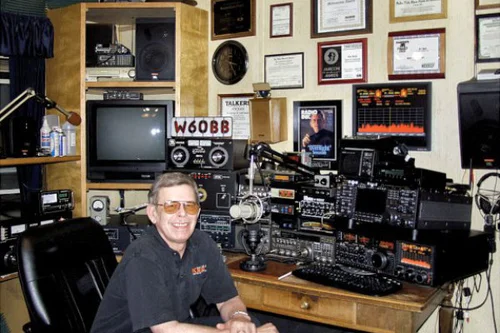
Arthur William Bell III, known throughout his broadcasting career as Art, ran the overnight syndicated radio programme that did more than any other postwar institution to keep the UFO question, the contactee tradition, the conspiracy literature and the paranormal-witness register in continuous American public conversation from the late 1980s through the early 2000s. Coast to Coast AM ran from his home studio in Pahrump, Nevada, across more than five hundred American stations, with a regular audience of fifteen million weekly listeners at its peak. The Area 51 caller of 11 September 1997, the Mel's Hole episodes of 1997 and 2000, the November 1996 Hale-Bopp companion-object broadcast, and the long-running guest list (Linda Moulton Howe, Richard Hoagland, Whitley Strieber, John Lear, Stanton Friedman, Father Malachi Martin) are the broadcast-history primary sources for the period. He retired three times, returned twice, and died on 13 April 2018 at his home in Pahrump.
A Life
Arthur William Bell III was born on 17 June 1945 in Jacksonville, North Carolina, into a United States Marine Corps family. Both his father and his mother were Marines. The household moved with the postings; Bell grew up on bases across the United States and overseas. He was an Eagle Scout, a keen amateur radio operator from boyhood (call sign W6OBB, which he kept for the rest of his life), and a serious student of broadcast electronics. He enlisted in the United States Air Force in 1964 at the age of nineteen, served as a medic during the Vietnam War with stations including Amarillo Air Force Base in Texas and Okinawa, and ran a pirate FM station from his off-duty quarters on Okinawa playing American rock music for the American forces in the Pacific.
He left the Air Force in 1968, moved to Las Vegas, and worked through a series of FM radio jobs in California and Nevada through the 1970s and into the 1980s. He set up KNYE-FM in Pahrump, Nevada, a small town in the desert sixty miles west of Las Vegas, in 1986, broadcasting from a home studio. In 1988 he launched a late-night call-in programme on KDWN Las Vegas called West Coast AM, which he syndicated to a small initial network of West Coast stations. The format was open-line listener calls on subjects the daytime political talk shows would not touch: paranormal phenomena, alleged government secrecy, UFO encounters, predictive prophecy, conspiracy claims about events of the day.
In 1993 the programme was renamed Coast to Coast AM and went national. By 1996 it was on more than three hundred stations. By 1999 it was on more than five hundred. The audience reach at peak was estimated at fifteen million weekly listeners. The programme ran live overnight from ten o'clock Pacific time to two o'clock Pacific time, five nights a week, every weeknight, from Bell's home studio in Pahrump. He installed industrial-grade broadcast hardware in the back of the house. He named the studio "the cave."
The retirements began in 1998. Bell retired the first time citing family circumstances; he returned to the programme within a year. He retired again in 2002 for back-injury rehabilitation and returned in 2003. The third retirement, in 2007, was the durable one: Bell handed Coast to Coast AM over to George Noory, who has continued the programme since. Bell tried two further broadcasting projects after 2007. Art Bell's Dark Matter on Sirius XM ran from September to November 2013 and ended after Bell disputed Sirius management's editorial constraints. Midnight in the Desert, streamed online from Bell's home studio, ran from July 2015 to December 2015, then was sold on after Bell received a credible death threat at the property and stepped back from live broadcasting.
Bell died on 13 April 2018 at his home in Pahrump, aged seventy-two. The Nye County coroner ruled the cause of death prescription drug intoxication, principally opioids prescribed for chronic back pain. He was survived by his fourth wife Airyn Ruiz, two daughters, his son Arthur William Bell IV, and his sister.
I have rules, and the first rule is that I take no caller on faith. The second rule is that I take every caller seriously. They are not the same rule.Bell, interview with the Las Vegas Review-Journal, 1998
Photographs
Bell was photographed extensively by the press across the Coast to Coast years, but he was a private broadcaster who declined television and avoided public appearances. The Las Vegas Review-Journal archive, the Nye County press, and the KDWN station archive together hold most of what survives of his working photography. Photographs of the Pahrump home studio (the cave) are unusually scarce. Most photographs of Bell in the archive's possession remain at the sourcing-verification stage and are not yet EXIF-confirmed for display.
Coast to Coast AM
The Coast to Coast AM format was simple and consistent across nineteen years. Each programme ran four hours live. The first hour typically opened with a featured guest interviewed by Bell, usually on a single subject of paranormal, ufological, conspiratorial or fringe-scientific interest. The middle two hours took open-line listener calls, with Bell screening callers lightly and engaging them directly on air. The final hour returned to the featured guest or moved to a second guest. The programme aired five nights a week, weeknights, with weekend repeats and a Sunday-night programme called Dreamland covering similar material with different guest emphasis.
The regular guest list across the nineteen years constituted a who's-who of the late twentieth century American fringe-research community. Linda Moulton Howe, the cattle-mutilation researcher, appeared more than two hundred times across the run and developed her own segment Earthfiles on the programme. Richard Hoagland, the former Walter Cronkite collaborator turned anomalous-Mars researcher, appeared regularly from 1996 onwards. Whitley Strieber, the author of Communion (1987), appeared regularly through the late 1990s. John Lear, the airline pilot and contactee-tradition figure, was a regular. Stanton Friedman, the nuclear physicist and Roswell researcher, appeared multiple times. Father Malachi Martin, the former Jesuit priest, appeared discussing Vatican secrecy in a series of broadcasts that became among the programme's most-replayed segments. Other repeat guests included Major Ed Dames (remote viewing), Richard C. Hoagland again on lunar imagery, Dr Steven Greer (Disclosure Project), and the early-1990s contactee figures of the New Age period.
The programme was an open marketplace for a particular kind of late-night American broadcast culture: the long, slow, conversational interview, the live caller, the willingness to take a fringe claim seriously enough to engage with it on its own terms before testing it. Bell's editorial signature was the combination of obvious scepticism in his own voice and obvious refusal to dismiss callers in their voices. He let people finish their accounts. He asked follow-up questions. He let the air-time silences run.
The Famous Broadcasts
Four Coast to Coast broadcasts have entered the documentary record of the period as broadcast-history primary sources in their own right.
The Area 51 caller, 11 September 1997. An unidentified male caller, audibly distressed, telephoned the programme at approximately the second hour and claimed to be a former Area 51 employee speaking from a fugitive position. He spoke for roughly two minutes about extra-dimensional beings and the imminent disclosure of catastrophic information before the call was cut. The radio network experienced a transmission failure across multiple satellite affiliates immediately after the cut. The failure has been attributed by network engineers to a routine satellite re-acquisition rather than to censorship; the timing was nonetheless treated by the listening audience as remarkable. The 11 September 1997 broadcast has been replayed, transcribed, and discussed continuously since.
The Hale-Bopp companion-object broadcast, 14 November 1996. Amateur astronomer Chuck Shramek of Houston, Texas, called the programme with a CCD telescope image of comet Hale-Bopp that he claimed showed an unidentified companion object trailing the comet. The image was discussed live with Bell and several listeners. Shramek's image was subsequently identified by professional astronomers as the star SAO 141894, a coincidental alignment misread as a companion object. The broadcast and its image circulated through the alternative-research community over the following months. The Heaven's Gate group, whose mass suicide followed in March 1997 at Rancho Santa Fe, California, cited the Hale-Bopp companion object as the operational trigger for their departure. Bell did not endorse the Heaven's Gate reading and was visibly distressed in subsequent broadcasts about the connection. The episode remains the most-discussed broadcast in the programme's history.
Mel's Hole, 21 February 1997. A caller named Mel Waters telephoned from Manastash Ridge, Washington State, claiming to have discovered a bottomless pit on family property with paranormal properties including the apparent restoration of a dead dog to life when its body was retrieved from the hole. Waters returned for further calls on 24 April 1997, 24 February 2000 and 1 May 2002, with progressively more elaborate accounts. No physical evidence of any such pit has ever been produced. The Mel's Hole calls are a defining example of the programme's open-line tradition and have been catalogued as broadcast fiction by some commentators and as documentary record of an open caller mythology by others.
The Father Malachi Martin appearances, 1996 to 1998. Martin, a former Jesuit priest and author of Hostage to the Devil (1976) and The Keys of This Blood (1990), appeared on the programme repeatedly across the late 1990s discussing what he said were Vatican concerns about an artefact installed in the Vatican Astronomical Observatory at Castel Gandolfo and what he characterised as imminent ecclesiastical preparations for extraterrestrial contact. Martin died in July 1999. His Coast to Coast appearances are the most substantial recorded source for his late-period claims and are cited regularly in Catholic-tradition contactee literature.
The Coast to Coast AM broadcast archive from 1993 to 2007 is held by Premiere Radio Networks and is available through Coast to Coast AM's subscription archive service. The Bell-era broadcasts have been catalogued by a variety of fan and research projects. Notable archival collections include the Linda Moulton Howe Earthfiles archive at earthfiles.com and the Heaven's Gate broadcast extracts held at heavensgate.com (the surviving public archive maintained by the two members who did not participate in the March 1997 deaths).
The Bell Broadcast Tradition
Bell's significance in the postwar UAP and paranormal-research tradition is the significance of the venue itself. Coast to Coast AM was the institution that took the conversations the daytime political-talk format would not host, gave them a national broadcast platform with serious technical infrastructure and a five-night-a-week schedule, and ran them under an editorial discipline that treated the witness register as worth engaging without endorsing it. The newsletters of the 1950s and 1960s had been the place the witness accounts circulated in print; Coast to Coast AM was where they circulated in voice across the 1990s and 2000s. The programme connected the older civilian-research figures (Friedman, Hoagland, Lear, Howe) with a younger audience reached by overnight syndication. It also opened the registers that the academic and journalistic press of the period would not engage with at all.
The cultural footprint extended well beyond UFO-specific material. The conspiracy literature of the late 1990s, the millennial expectation culture surrounding the 1999-2000 transition, the early-internet paranormal subcultures, and the audience that would later become the demographic for the post-2017 disclosure cycle all found themselves on Coast to Coast AM at some stage. The programme is one of the principal bridges between the old contactee-era and civilian-research traditions that the archive's newsletter collections document and the post-2017 disclosure cycle that the archive's Disclosure Network covers. Without the Bell years, the audience for the December 2017 New York Times story would have been a smaller and less prepared audience than it was.
The Coast to Coast AM broadcasts are documentary record of what was said on air and of what callers and guests claimed. They are not, in themselves, documentary record of the underlying events. The Area 51 caller has never been identified or his account verified; Mel's Hole has never been physically located; the Hale-Bopp companion object was a misidentified star; Father Martin's Vatican claims have never been confirmed by ecclesiastical sources. The archive holds the broadcast material as audio-record primary source for the period's broadcast culture, not as adjudicated evidence for the claims the broadcasts carried. Anyone working from the Bell era should keep the distinction between the broadcast and the underlying claim clearly in view.
Connected People
American broadcaster who took over Coast to Coast AM from Bell on the 2007 retirement and has continued the programme since. The format and the regular guest list survived the handover substantially intact. Noory's editorial register is more declarative than Bell's was; the audience overlap is high.
American documentary filmmaker and reporter, author of An Alien Harvest (1989), best known for cattle-mutilation research from the late 1970s onwards. Appeared more than two hundred times on Coast to Coast AM across the Bell years and developed her Earthfiles segment as a regular feature of the programme.
American novelist whose 1987 memoir Communion framed an account of his own abduction experiences and brought the abduction register into mass-market American publishing. Regular Bell-era guest. Strieber's Unknown Country radio show ran in parallel to Coast to Coast through the late 1990s as a smaller sister production.
American author and broadcaster, former science adviser to CBS News during the Apollo programme, principal proponent of the "Face on Mars" anomalous-imagery thesis from the late 1980s. Regular Bell-era guest from 1996 onwards. Author of The Monuments of Mars (1987) and Dark Mission (2007).
American airline transport pilot, son of Learjet founder William Powell Lear, who from the late 1980s onwards circulated detailed claims about extraterrestrial bases at Dulce, New Mexico, and elsewhere. Regular Bell-era guest. The Lear hypothesis was one of the recurring conceptual frameworks of the Coast to Coast late-1990s period.
Irish-American former Jesuit priest, Vatican insider, author of Hostage to the Devil (1976) and The Keys of This Blood (1990). His late-1990s Coast to Coast appearances discussing alleged Vatican preparations for extraterrestrial contact, particularly involving an instrument at the Vatican Astronomical Observatory, are the most substantial recorded source for his late-period claims. Died July 1999.
American-Canadian nuclear physicist (1934 to 2019) who from the late 1970s onwards conducted the principal civilian-research investigation of the Roswell incident. Multiple Bell-era appearances. Friedman's "Operation Majestic 12" investigations and the wider Roswell-era documentation work he conducted form the substantial through-line between the older civilian-research tradition and the Bell years.
Retired United States Army officer, former participant in the Stargate Project remote-viewing programme, who appeared on Coast to Coast AM repeatedly through the late 1990s making predictive remote-viewing forecasts. Dames was one of the regular Bell-era guests whose claims most frequently divided the audience and whose appearances generated the largest listener response.
In the Archive
Bell appears across three sections of the archive. The Coast to Coast AM broadcast era is the principal documentary period and is referenced across the archive's timeline for major broadcasts from the 1990s and 2000s. The connected guest list runs through the encyclopedia entries for Howe, Hoagland, Strieber, Lear, Friedman and Martin. The wider postwar paranormal-broadcasting tradition runs back through Long John Nebel's WOR programme of the 1950s and 1960s (held in the archive's Long John Nebel Collection), through Joe Pyne and others, and forward through George Noory's continuation of Coast to Coast and Whitley Strieber's Dreamland programme into the present.
The predecessor broadcaster tradition runs through the Long John Nebel Collection, the principal 1950s and 1960s parallel for the Bell format. The contactee-era guest material on which Bell drew is documented through the Contactee Era 1950 to 1965 page and the connected newsletter collections. The post-2017 disclosure cycle the Bell audience prepared the way for is documented through the Disclosure Network hub.
Sources
Bell, Art. The Quickening: Today's Trends, Tomorrow's World, Paper Chase Press, 1997. Bell, Art and Brad Steiger. The Source: Journey Through the Unexplained, Paper Chase Press, 1999. Bell, Art and Whitley Strieber. The Coming Global Superstorm, Pocket Books, 1999. Coast to Coast AM broadcast archive, Premiere Radio Networks, 1993 onwards. Bell obituaries: Las Vegas Review-Journal, 14 April 2018; New York Times, 17 April 2018; Washington Post, 14 April 2018. Nye County, Nevada, coroner's report on Bell's death, 13 April 2018. Heavensgate.com archive (surviving public archive of the Heaven's Gate group), for the Hale-Bopp companion-object context. Earthfiles.com archive, Linda Moulton Howe, for the Earthfiles segment continuity. The Premiere Radio Networks promotional and station-affiliate material for the syndication history. Bell's amateur radio biographical material from W6OBB call-sign records.