Project Archives
Timeline
1944 to present. A continuous chronology, updated as events enter the public record.
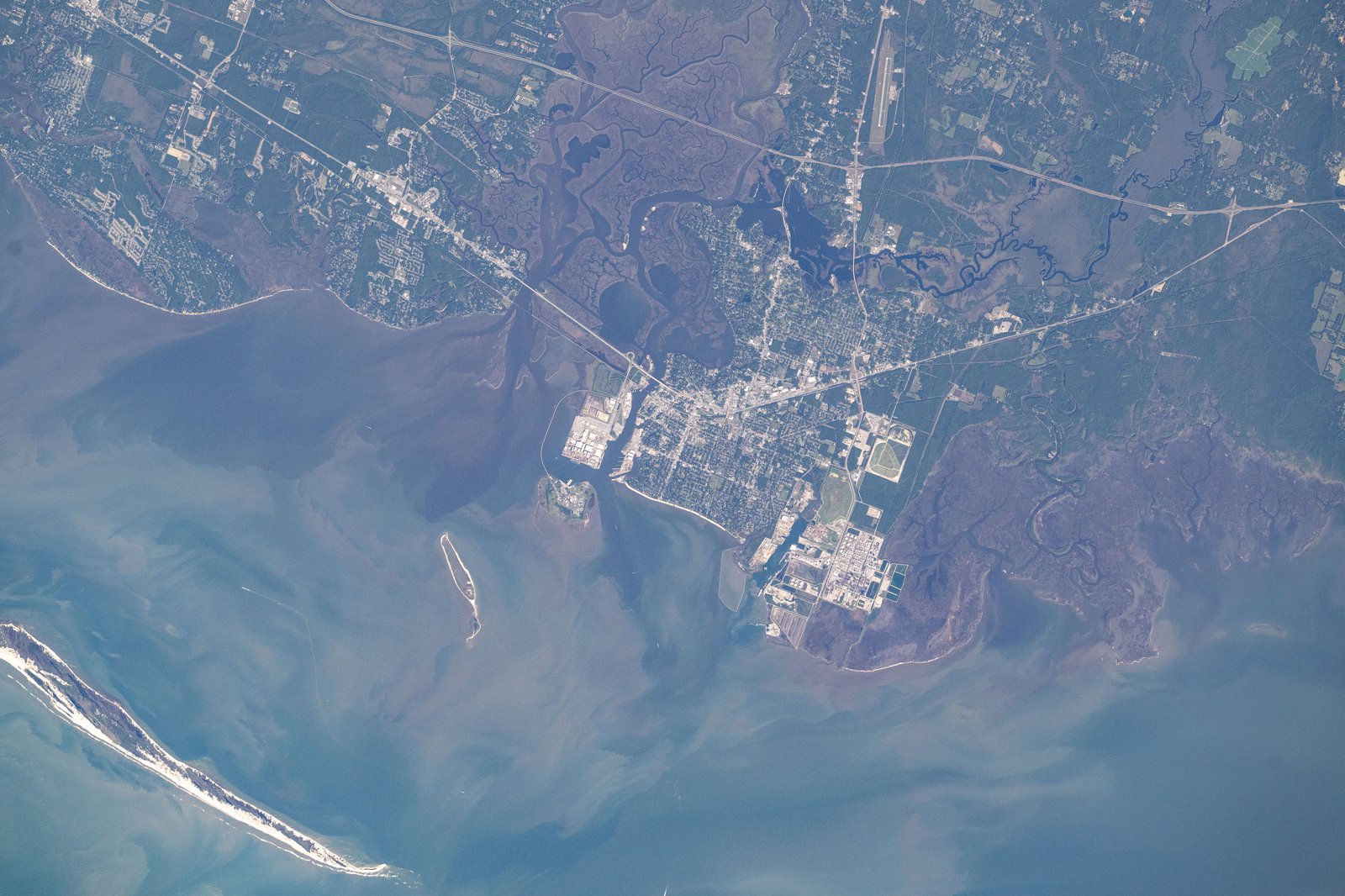
Sworn congressional testimony from David Grusch, Ryan Graves, and David Fravor (July 2023) opened the era of binding congressional process. Three UAP Disclosure Act attempts (2023, 2024, 2025) stripped or blocked. AARO formed and renamed. The Task Force on Declassification convened (September 2025).
Scientific Coalition for UAP Studies Confirms Annual Conference in Toronto, 24 to 26 July 2026, with Christopher Mellon as Opening Keynote
The Scientific Coalition for UAP Studies (SCU) confirmed its 2026 annual conference for 24 to 26 July 2026 in Toronto, Canada, under the theme 'The Role of Science and Global Governments in UAP Research'. The opening keynote was confirmed in mid-May 2026 as Christopher Mellon, former United States Deputy Assistant Secretary of Defense for Intelligence and one of the most consistent figures in the post-2017 disclosure cycle. The keynote will be held at the Windsor Arms Hotel, with subsequent conference sessions running at the Toronto Marriott Downtown Eaton Centre. Mellon is expected to speak directly to the Presidential Unsealing and Reporting System for UAP Encounters (PURSUE) release of 8 May 2026, where his 14 May 2026 statement that 'data alone is not disclosure' became the most-quoted research-community response. The Toronto venue marks the first time the SCU annual conference has been held outside the United States and reflects the organisation's stated emphasis on global government engagement. SCU has been a primary publisher of peer-reviewed UAP-related research and has worked with academic groups in Ireland, Germany, Norway, and Sweden documenting the 'new science' of UAP. The confirmation of dates and venue establishes a fixed reference point for any second or third PURSUE tranche to be discussed publicly by United States former-government voices in a structured scientific setting.
science
Pentagon Posts Third PURSUE Tranche: FBI Investigative Case Files, ICA Analysis, CIA Harare Cable
The Department of War posted PURSUE Release 03 to war.gov/UFO on 12 June 2026, the third tranche under the Presidential Unsealing and Reporting System for UAP Encounters. Eleven documents and two FBI video files spanning 1948 to 2026. The first PURSUE release to include complete FBI investigative case packages (FD-302 witness interviews, FD-1057 forensic sketch sessions, site surveys), an Intelligence Community Agency analytical assessment, and a sighting from Africa. Headline material includes the FBI Northeastern US case file documenting agent direct observation of UAP phenomena, the Colorado Springs Cheyenne Mountain forensic-sketch package, a SECRET/NOFORN CIA cable from Harare 2008, and the 1949 US Army flying-saucer evaluation study.
government
Pentagon Posts Second PURSUE Tranche: ODNI USPER Narrative, CIA Sary Shagan, Sandia 1949 Green Fireballs File
The Department of War posted PURSUE Release 02 to war.gov/UFO on 22 May 2026, the second tranche under the Presidential Unsealing and Reporting System for UAP Encounters. Six documents and 57 video files spanning 1949 to 2025. Headline material includes a senior US intelligence officer's USPER narrative of a multi-hour helicopter encounter with orange orb formations and fighter-jet interaction; the 1973 CIA report covering the Soviet Sary Shagan weapons testing range with a paragraph documenting a defector's UAP observation; a PANTEX nuclear facility incident report (with UCNI redactions); two letters from Manhattan Project physicist James L. Tuck on UFO-related atmospheric vortices; a 1986 Pajarito Astronomers bulletin announcing a UFO lecture by a Los Alamos AT-6 division scientist; and the 116-page Sandia Base 1949 Green Fireballs correspondence file with Dr. Lincoln La Paz.
government
Burchett Warns Second PURSUE Tranche May Contain Deliberate Misinformation
Representative Tim Burchett (R-TN) told Real America's Voice on 21 May 2026 that some of the videos being prepared for the second Presidential Unsealing and Reporting System for UAP Encounters tranche are identifiable as balloons or other ordinary objects, and questioned why such clips were being teed up for release at all. Burchett attributed the inclusion to continued resistance from 'agencies and the deep state' working against the White House push for transparency, framing the move as a slow-walk on the part of career officials rather than a White House decision. The statement is a notable pivot from his 8 to 9 May 2026 framing, in which he told NewsNation and posted on X that 'the 1st drop will be big but in comparison to what is coming they will be a drop in the bucket' and 'I would say Holy Crap is coming'. Burchett is simultaneously the loudest cheerleader for PURSUE inside the House Task Force on the Declassification of Federal Secrets and now its first significant in-house critic of the second tranche's expected content. The remarks land against the backdrop of Pentagon Chief Spokesperson Sean Parnell's 18 May 2026 confirmation that documents are 'actively being processed for publication', Representative Anna Paulina Luna's parallel demand for the 46 video files her March 31 letter to Defense Secretary Pete Hegseth had requested, and Ross Coulthart's NewsNation prediction of a 22 May 2026 Friday release window. The pivot pre-emptively manages public expectations downward in advance of the second drop.
congressional
Fox News Spotlights Helicopter Near-Miss Account in PURSUE First Tranche, Pushing Specific Cases Into Mainstream Coverage
Fox News published a 20 May 2026 piece pulling a single account out of the 8 May 2026 Presidential Unsealing and Reporting System for UAP Encounters (PURSUE) release and treating it as a stand-alone news event. The account describes an aerial search in which fast-moving, 'super-hot' unidentified objects approached within roughly ten feet of a United States military helicopter. The report attributes the description to a senior United States intelligence official cited in the underlying Department of War memo. The piece is a marker for how the mainstream press is starting to mine individual files from the 162-document first tranche rather than covering the release as a single aggregated story. It also extends the pattern flagged by Space.com on 18 May 2026, in which specific imagery and incident-level material drawn from the war.gov/UFO portal becomes the focus of secondary reporting, often days or weeks after the release. The helicopter incident itself was not previously a public case, although the absence of date, location, and unit identifiers in the memo makes independent corroboration impossible at this stage. The piece does not name the helicopter platform, the year, or the operational theatre.
disclosure
Pentagon Chief Spokesperson Parnell Confirms Second PURSUE Tranche Actively Being Processed for Publication
Chief Pentagon spokesperson Sean Parnell stated in a social-media post in the 18 to 19 May 2026 window that further declassified Presidential Unsealing and Reporting System for UAP Encounters (PURSUE) documents are 'actively being processed for publication', with 'more to come very soon'. The statement, picked up by Fox News on 18 May 2026, is the first on-the-record confirmation from the Department of War since the 8 May 2026 first tranche that a second batch is in active preparation rather than merely planned. Representative Anna Paulina Luna had previously teased a 'holy crap moment' tied to the next release. Parnell's framing does not commit to a specific release date, leaving open both Ross Coulthart's NewsNation prediction of a 22 May 2026 Friday window and Luna's separately stated thirty-day cadence pointing to early June 2026. The statement reinforces that the rolling release model the Department of War announced on 8 May 2026 is operational and ongoing rather than indefinitely paused.
disclosure
Galileo Project Issues Public Call for Volunteer Image-Labelling Help as Three Observatories Run Continuously
The Galileo Project at Harvard University, led by astrophysicist Avi Loeb, issued a public call in mid-May 2026 for volunteer help labelling objects detected by its three operational observatories in Massachusetts, Pennsylvania, and Nevada. The observatories now record continuously across infrared, optical, radio, and audio bands, with artificial intelligence models filtering the data stream for outliers. The labelling task is a human-in-the-loop step needed before the machine-learning pipeline can classify rarer object categories with confidence. Loeb framed the call as a structured alternative to the United States Government's Presidential Unsealing and Reporting System for UAP Encounters (PURSUE) approach, arguing in a series of Medium essays during May 2026 that scientific provenance, sensor metadata, and reproducible triangulation are the elements PURSUE has so far failed to deliver. The volunteer call is open to members of the public who register through the Galileo Project's Harvard-hosted site. It does not require formal scientific training, but classifies users by experience tier. The development is significant because it converts the project's earlier triangulation milestone of March 2026 into an actively scaling data-labelling operation, the kind of structural step that distinguishes a sustained scientific programme from a one-off observation campaign.
science
Coulthart Posts Single-Source Claim That Trump Is Now Briefed on Legacy UAP Crash-Retrieval Program
On 18 May 2026, journalist Ross Coulthart posted on social media that President Donald Trump is 'indeed now briefed on the legacy UAP crash retrieval program', crediting sustained pressure from Senator Marco Rubio, Representative Anna Paulina Luna, Representative Eric Burlison and Representative Tim Burchett. Cybernews carried the claim the same day. The post is uncorroborated by the White House and was not accompanied by named sources, documents or supporting material. Coulthart contrasted his assertion with the public record of physicist Eric Davis, who has previously stated that the UAP Task Force briefing sent to the first Trump White House excluded all legacy crash-retrieval material. Whistleblower David Grusch has separately maintained on the record that Trump was briefed on the full crash-retrieval program. Reddit and X commentators flagged the absence of concrete evidence accompanying Coulthart's claim. The archive treats the post as a single-source assertion, noted for record but not yet corroborated.
disclosure
Oakland Jury Sides With Altman and OpenAI in Musk v. Altman, Verdict Hinges on Statute of Limitations
On Monday 18 May 2026, a federal advisory jury in Oakland, California, returned a verdict for Sam Altman and OpenAI in Musk v. Altman after less than two hours of deliberation. The nine-person jury found that Elon Musk's claims of breach of charitable trust and unjust enrichment fell outside the three-year statute of limitations. District Court Judge Yvonne Gonzalez Rogers, who retained final authority on the two remaining equitable claims, immediately adopted the advisory verdict. The court did not reach the merits of Musk's underlying allegation that OpenAI's for-profit conversion violated the original founding mission. Musk posted on X that the decision was a 'calendar technicality' and announced his legal team would appeal to the Ninth Circuit US Court of Appeals. The verdict closes the Oakland phase of a trial that has been tracked across the archive's AI-governance line, with prior entries covering Satya Nadella's 11 May testimony, Altman's 12 May testimony, the 14 May closing arguments and the 16 May Week 3 wrap-ups. The substantive question of whether OpenAI's structural conversion is consistent with its 2015 founding charter remains undecided in any forum.
ai
NSA Releases 334 Pages of Formerly Top Secret UMBRA UAP Records After Disclosure Foundation FOIA Appeal
The Disclosure Foundation announced on 18 May 2026 that the National Security Agency had produced a 334-page tranche of historical Unidentified Anomalous Phenomena records, with many entries previously bearing the TOP SECRET UMBRA classification marking, one of the most restrictive signals-intelligence compartments in the United States classification system. The production responds to a Disclosure Foundation administrative FOIA appeal whose procedural lineage traces to a 1980 watchdog lawsuit against the agency, in which classified affidavits were submitted in camera and the underlying intelligence material was withheld in full. Specific entries highlighted in the initial review include an object 'spherical or disc-like in form, brighter than the sun' and roughly half the moon's diameter, an object described as 'going up and down vertically' with 'white-bluish luminous light' and 'erratic turning movements' assessed by witnesses as 'impossible to be an aircraft' (p. 330), and a low-altitude object showing two yellow lights that silently changed heading from north to west (p. 314). Substantial NSA redactions remain on later 1960s material, and the Foundation's legal team has flagged plans to challenge them. This is the first significant non-PURSUE federal UAP document release of 2026 and the first time the agency itself has produced this material on the public record, although NSA had previously released bibliographic indices of its UFO holdings under prior FOIA actions. The full 334-page production is hosted on the Disclosure Foundation site pending location of the agency's own copies in the NSA FOIA reading room.
government
Ryan Graves of Americans for Safe Aerospace Warns PURSUE Transparency Lacks Pilot Reporting Structure
Ryan Graves, executive director of Americans for Safe Aerospace (ASA) and former United States Navy F/A-18F pilot, told reporters on or around 18 May 2026 that the Pentagon Presidential Unsealing and Reporting System for UAP Encounters (PURSUE) release of 8 May 2026 does not address the underlying problem that pilots and aircrew still face institutional barriers to reporting Unidentified Anomalous Phenomena sightings. Graves stated that 'transparency is an important first step, but it must be paired with practical procedures that protect flight safety, reduce stigma, and ensure pilots know what to do when they observe anomalous activity in or near controlled airspace'. The intervention reframes the disclosure conversation away from historical declassification and towards live operational reporting. Graves first publicly testified to Congress on this gap in July 2023 and has continued advocacy through ASA, which acts as the primary advocacy channel for current and former aviators reporting unexplained airspace incursions.
disclosure
Space.com Pushback Notes Apollo Frames in PURSUE Tranche Were Already Public for Decades
A Space.com analysis published on 18 May 2026 pushed back against framing of the Apollo 12 and Apollo 17 imagery included in the 8 May 2026 Pentagon Presidential Unsealing and Reporting System for UAP Encounters (PURSUE) first tranche as 'newly declassified'. The article documents that the frames in question have circulated in the public domain for decades through NASA's mission imagery archives, and accuses some commentators of misrepresenting the release as a breakthrough. The pushback joins earlier critical assessments from NPR's 13 May 2026 astrophysicist segment, The War Zone's 14 May 2026 'will leave readers shrugging' analysis, and DefenseScoop's 14 May 2026 'data alone is not disclosure' verdict in shaping reader perception of the corpus heading into the second tranche. The episode shows how the rolling PURSUE drip is being parsed source by source, with each frame and document set checked against pre-existing public records before being accepted as new disclosure.
disclosure
Coulthart on NewsNation Predicts PURSUE Second Tranche This Week, Friday 22 May Window
Journalist Ross Coulthart told NewsNation on 17 May 2026 that the next Pentagon Presidential Unsealing and Reporting System for UAP Encounters (PURSUE) tranche could arrive as early as Friday 22 May 2026, following the Friday cadence set by the 8 May 2026 first drop. Coulthart cited Department of War spokesperson Sean Parnell's signalling and Representative Anna Paulina Luna's public statements that a second batch is on the way, including some of the 46 video files Luna formally requested in her 31 March 2026 letter to Secretary Pete Hegseth. The prediction sits alongside Luna's separately stated thirty-day expectation, which would point to a window closer to 7 to 8 June 2026. Coulthart's NewsNation appearance is the second such prediction he has made for a Friday tranche, after the 12 May 2026 Prime appearance flagged 15 May 2026 as a possible date. That window passed without a release on 15 May 2026.
disclosure
Japan's Parliamentary League for UAP Clarification Delivers Formal Proposal to Defence Minister Gen Nakatani
On 16 May 2026, members of Japan's cross-party Parliamentary League for UAP Clarification from a Security Perspective delivered a formal proposal to Defence Minister Gen Nakatani, asking the Ministry of Defence to establish a specialised division focused on three tasks: collecting and analysing UAP-related data, disclosing relevant findings to the public, and reporting investigation results regularly to the National Diet. Nakatani, one of the original supporters of the parliamentary league, acknowledged the proposal and stated, 'As one of the league's founding members, I continue to recognise the strategic importance of UAPs.' The proposal lands five days after Chief Cabinet Secretary Minoru Kihara's 11 May 2026 on-the-record confirmation that Tokyo possesses its own UAP video footage and is analysing the Pentagon's 8 May PURSUE release. It also follows the 24 March 2026 announcement by the same caucus of plans for a coordination body under the Deputy Chief Cabinet Secretary for Crisis Management. Together, the Kihara confirmation, the Nakatani submission and the cabinet-level proposal mark the fastest sustained pivot by any major US ally toward a structured UAP transparency framework since PURSUE began.
international
Local News Matters and MIT Technology Review Publish Week Three Musk v. Altman Analyses Ahead of Jury Deliberation
Local News Matters published its Week 3 analysis of Musk v. Altman on 16 May 2026, characterising the case heading into the jury room as a tangle of questions about trust, timing and the meaning of OpenAI's founding mission. The piece followed MIT Technology Review's parallel Week 3 wrap-up published 15 May 2026, which framed the credibility contest between Elon Musk and Sam Altman as a question the nine-person Oakland jury would now resolve. Closing arguments concluded on 14 May 2026 in front of Judge Yvonne Gonzalez Rogers. The advisory jury is scheduled to begin deliberations on Monday 19 May 2026, with Judge Gonzalez Rogers retaining final authority on the two remaining claims, breach of charitable trust and unjust enrichment. Musk has asked the court to require OpenAI to disgorge up to USD 134 billion to the nonprofit entity, remove Altman and Brockman from leadership, and unwind OpenAI's for-profit conversion. The trial is being watched closely by AI governance and disclosure researchers because OpenAI's mission language and governance structure intersect with debates over advanced model accountability.
ai
Anticipated Friday PURSUE Second Tranche Does Not Materialise, Rolling Thirty-Day Cadence Holds
The second Pentagon PURSUE tranche that Ross Coulthart had flagged on NewsNation Prime three days earlier as possible for Friday 15 May 2026 did not appear on the war.gov/UFO portal during the day. The portal continued to display only the 8 May initial corpus of 162 files (120 PDFs, 28 videos, 14 images). Department of War language since the first release has consistently described a 'rolling' approach with tranches arriving 'every few weeks', and Reuters reporting from the 8 May release pointed at roughly thirty-day intervals. That cadence places the next tranche closer to 7 June 2026 than to mid-May. Representative Anna Paulina Luna's separately stated thirty-day expectation for the next batch, including her requested 46 videos, points to a window of approximately 8 June 2026. Vision Times published a 14 May 2026 explainer reframing coverage from 'what is in the files' to 'what is missing', flagging redacted video metadata, absent radar tracks, and a lack of chain-of-custody documentation on key Apollo-era images.
disclosure
Musk v. Altman closing arguments delivered, case goes to advisory jury
Closing arguments in Musk v. Altman were delivered on Thursday 14 May 2026 at the federal courthouse in Oakland, with the nine-person advisory jury beginning deliberations the same day. Judge Yvonne Gonzalez Rogers presided. The advisory jury is expected to return a finding on alleged wrongdoing the week of 18 May, but the binding ruling rests with Judge Gonzalez Rogers because the case is in equity, not at law. Sam Altman concluded his testimony on Tuesday 12 May, telling the court he made no commitments to Elon Musk about preserving OpenAI's nonprofit structure and that the original nonprofit had been 'left for dead' by Musk. Musk's counsel asked the court to remove Altman and Greg Brockman from their roles and to unwind the 2024 restructuring that gave OpenAI a for-profit subsidiary. Defendants argued the restructuring was necessary to attract the capital required to pursue the original mission of building artificial general intelligence for the benefit of humanity.
ai
Research Community Delivers First Substantive Verdict on PURSUE Tranche: 'Data Alone Is Not Disclosure'
Six officials directly involved in the interagency UAP disclosure work told DefenseScoop on 14 May 2026 that the 8 May PURSUE first tranche represents a 'historic, yet incomplete' step. The reporting, by Brandi Vincent, became the first published consensus assessment from inside the disclosure machinery and crystallised a phrase, 'data alone is not disclosure', that has since carried across UAP coverage. The DefenseScoop sources flagged three specific structural failings: more than 100 of the roughly 160 files carry redactions; much of the imagery has already circulated in the open literature, including the Apollo 12 and Apollo 17 photographs reissued without new annotation; and the release lacks a centralised provenance trail identifying which agency originated each file, when it was declassified, and under what authority. On the same day Phys.org carried an analytical piece quoting astrophysicist David Whitehouse, formerly of the BBC, describing much of the released imagery as 'optical artefacts, fuzzy blobs, light smears, some obviously balloons' with 'no hint, no evidence whatsoever of anything artificial and alien'. Vision Times published an explainer reframing coverage from 'what is in the files' to 'what is missing', enumerating redacted video metadata, absent radar tracks, and the lack of chain-of-custody documentation on key Apollo-era images. The cluster of 13 to 14 May reporting forms the first substantive public verdict from researchers, ex-AARO staff and the broader research community on the PURSUE programme as actually implemented.
disclosure
The War Zone Publishes Critical Analysis of PURSUE First Tranche
The War Zone (TWZ) published a detailed critical analysis of the Pentagon's first Presidential Unsealing and Reporting System for UAP Encounters (PURSUE) tranche on 14 May 2026, concluding that the corpus will leave most readers shrugging. The piece flagged heavy redactions across the 28 video files, the recycled provenance of several clips already circulating in public, the absence of supporting metadata including radar tracks and sensor logs for key incidents, and the apparent lack of chain-of-custody documentation on Apollo-era images. TWZ's reading is one of the most detailed open-source intelligence assessments of the corpus to date and dovetails with Christopher Mellon's 14 May 2026 framing for DefenseScoop that 'data alone is not disclosure'. The analysis was published the same day Vision Times released a parallel explainer reframing coverage from what is in the files to what is missing.
disclosure
NPR Runs Major Skeptical Astrophysicist Segment on First PURSUE Tranche
NPR published a long-form segment on 13 May 2026 headlined 'Just more fuzzy blob videos: an astrophysicist's take on the government's UAP files', positioning the first PURSUE tranche as containing no material that supports a non-human technological hypothesis. The piece collated multiple astrophysicist responses to the 8 May 2026 release of 162 files (120 PDFs, 28 videos, 14 images). The argument repeated across interviewees was that the released videos show optical artefacts, fuzzy blobs, light smears, and obvious balloons, with several previously circulating in public. The segment is the most high-profile mainstream-science pushback against the PURSUE release to date and has been widely cited by AARO defenders and by skeptics arguing that disclosure does not equal evidence. The framing sits alongside Christopher Mellon's 14 May line that 'data alone is not disclosure' as the dominant skeptical reading of the PURSUE rollout.
science
Sam Altman Takes the Stand in Musk v. Altman, Describes 'Hair-Raising' Moment with Musk
OpenAI chief executive Sam Altman testified for the first time at the federal courthouse in Oakland on 12 May 2026, opening week three of Musk v. Altman. Altman told jurors there was a 'morale boost' when Elon Musk departed OpenAI in 2018 and recounted what he called a 'hair-raising moment' in their relationship before the split. Musk's counsel pressed Altman on whether the for-profit pivot violated the company's founding nonprofit purpose and on the structure of the multi-billion-dollar Microsoft partnership. Altman testified after Microsoft CEO Satya Nadella on 11 May, Greg Brockman on 28 April, and Musk himself in late April. The advisory jury and Judge Yvonne Gonzalez Rogers are expected to take the case to verdict by mid-May, with Rogers's binding ruling to follow. Musk is seeking restoration of OpenAI's nonprofit status, removal of Altman and Brockman from the board, and approximately US$130 billion to be redirected to the nonprofit arm.
ai
Coulthart Tells NewsNation Prime Next PURSUE Tranche Could Land 'As Early As Friday'
Australian investigative journalist Ross Coulthart told NewsNation Prime on 12 May 2026 that a second Pentagon PURSUE tranche could arrive 'as early as the end of this week, possibly Friday', citing sources inside the Department of War's UAP review effort. The Hill picked up the prediction the same day. Coulthart had earlier described the 8 May 162-file initial release as underwhelming and said the more substantive material was being held back in subsequent rolling tranches. The Department of War's own public language since the first tranche has consistently described a 'rolling release' on roughly a 30-day cadence, which would point to a next-tranche window closer to 7 June 2026 rather than 15 May. Coulthart's Friday claim diverged from that timetable and set expectations that the war.gov/UFO portal would update before the weekend.
disclosure
Japan's Chief Cabinet Secretary Kihara Confirms Tokyo Is Analysing PURSUE Files, Including Two Videos Near Japan
Japan's Chief Cabinet Secretary Minoru Kihara told reporters in Tokyo on 11 May 2026 that the Japanese government is analysing the Pentagon's 8 May PURSUE release 'with great interest', flagging two videos in the first tranche that depict unidentified anomalous phenomena near Japan. One is a 2024 infrared recording of a ball-like or football-shaped object captured by US Indo-Pacific Command. Kihara said Tokyo is 'constantly gathering and analysing information' on UAP and is coordinating closely with Washington and other partners. This is the first formal acknowledgment from a foreign government that it has opened a substantive review of the PURSUE material. The statement builds on the March 2026 announcement by a non-partisan Japanese parliamentary group of plans to propose a dedicated UAP coordination body and follows the 2024 establishment of the bipartisan Parliamentary Group for the Study of UAP from a Security Perspective, chaired by former Defence Minister Yasukazu Hamada.
international
Satya Nadella Testifies in Musk v. Altman: Musk Never Raised Concerns About Microsoft's OpenAI Investment
Microsoft CEO Satya Nadella took the stand in Oakland federal court on 11 May 2026 and testified that Elon Musk never raised concerns to him about Microsoft's multi-billion-dollar investment in OpenAI, the deal Musk now seeks to unwind as part of his US$150 billion damages claim. Nadella's testimony complicates Musk's contention that the Microsoft partnership constituted illicit gains flowing from a violated charitable trust. The Nadella appearance opens the trial's third week. Earlier in the week, Greg Brockman rebutted Musk's account of OpenAI's founding and described secret work he had done for Tesla. The trial is now at its midpoint. Judge Gonzalez Rogers is expected to issue her binding ruling in mid-May 2026.
ai
TIME Magazine Publishes Detailed Walkthrough of PURSUE 162-File Corpus
TIME magazine published a detailed walkthrough of the Pentagon's first Presidential Unsealing and Reporting System for UAP Encounters (PURSUE) tranche on 11 May 2026, three days after the 8 May 2026 release. The piece catalogued the corpus as 120 PDFs, 28 videos and 14 images spanning 1944 to late 2025, sourced from the Department of War, the FBI, NASA and the Department of State. TIME's reporting highlighted Apollo 11, Apollo 12 and Apollo 17 transcripts in which astronauts including Buzz Aldrin described unexplained luminous objects observed during the lunar missions, an internal military memo describing a possible small UAP in Iraq in 2022, a Syria 2024 multiple-glare incident, witness reports of a cigar-shaped object at a restricted government test facility, and law enforcement reports describing 'orbs launching other orbs'. The piece is one of the earliest comprehensive mainstream walkthroughs of the corpus and is widely cited in subsequent coverage.
disclosure
Elizondo Calls PURSUE Release 'A Drop in the Proverbial Ocean', Says Unreleased Video Exists
Former Pentagon UAP programme lead Luis Elizondo characterised the 8 May 2026 PURSUE tranche release as 'a drop in the proverbial ocean' in post-release media commentary, while crediting the act itself: 'No other president has done that yet.' Elizondo restated that he has personally viewed military UAP video footage that has not been declassified, telling interviewers 'there's some video out there that'll knock your socks off.' The remarks placed Elizondo in a measured-supportive posture toward the rolling release framework: directionally correct, materially insufficient, with the substantive material still held back. The comments form part of a wider community reaction wave on 9 May 2026 that included Galileo Project critical analysis from Avi Loeb and a public-engagement metric of 340 million portal visits in the first 12 hours reported by Department of War spokesman Sean Parnell.
disclosure
Loeb Publishes Two Post-PURSUE Medium Essays, Concludes No Released Object Requires Exotic Origin
Avi Loeb published two Medium essays in the days following the 8 May 2026 PURSUE tranche release. 'Avi Loeb Analyzes the First UFO File Release' reports that his Galileo Project team reviewed each of the 161 records made available at war.gov/UFO and concluded that none of the objects depicted is sufficiently extraordinary to require an exotic, non-human-technology explanation. 'Reflections on the First Government Release of UFO Files' broadens the assessment to the structure of the release itself and reiterates Loeb's standing position that scientifically actionable data, calibrated sensor outputs, multi-angle imagery, spectroscopy, would not be expected to appear in a federally curated public dump. The two essays continue the May 2026 essay cluster but are distinct in tone and content from the earlier funding-and-policy essays of the first week of May. Loeb's overall framing positions the Galileo Project's independent observatories in Massachusetts, Pennsylvania and Nevada as the appropriate venue for any future scientific test of an extraterrestrial-technology hypothesis.
science
Luna Says Next Pentagon UAP Tranche, Including Her 40-Plus Videos, Expected Within Roughly Thirty Days
Representative Anna Paulina Luna (R-Fla.), chair of the Oversight Task Force on the Declassification of Federal Secrets, told reporters and posted on social media on 9 May 2026 that the next Pentagon PURSUE tranche, including more than forty specific UAP video files she and other oversight members have sought since her 31 March 2026 letter to Secretary of War Pete Hegseth, is expected within approximately thirty days. Luna characterised the 8 May 162-file initial tranche as 'a clear win' and a confirmation that UAPs are real, while reiterating that her named whistleblower video list was not in the first release. Luna said she remains in ongoing dialogue with Hegseth and described the Secretary as a cooperative working partner under President Trump's UAP disclosure directive. The thirty-day timeline, if met, would deliver the next tranche around 8 June 2026.
congressional
War.gov/UFO Portal Logs 340 Million Hits in 12 Hours, Approaches 500 Million in 24
Department of War spokesman Sean Parnell confirmed on 9 May 2026 that war.gov/UFO, the public-facing repository for the Presidential Unsealing and Reporting System for UAP Encounters (PURSUE), recorded approximately 340 million visits in the first 12 hours after launch and close to 500 million in the first 24. The traffic figure is the first quantitative public-engagement metric tied to the 8 May tranche release and exceeds same-window engagement for any prior Department of War transparency action. The portal hosts the 162 files of the initial PURSUE tranche (120 PDFs, 28 videos, 14 images) sourced from the FBI, DoD, NASA and the State Department. The Department of War committed to rolling tranches every few weeks; Representative Anna Paulina Luna's 46-video list is expected in a subsequent release.
government
Burlison and Burchett Confirm Classified Briefing on Military UAP 'Lure' Operation
Representatives Eric Burlison (R-Mo.) and Tim Burchett (R-Tenn.), both members of the bipartisan House UAP Caucus, confirmed they received a classified briefing on a recent military and intelligence operation that allegedly attempted to draw UAP into a controlled sensor environment for data capture. Burlison described the operation as 'very successful.' Neither lawmaker named the military unit, geographic location, or timeframe of the operation. No public records corroborate the claim. The briefing was disclosed during the same week as the Pentagon's PURSUE release.
congressional
Senator Gillibrand Issues Bipartisan Statement Praising Pentagon PURSUE Release
Senator Kirsten Gillibrand (D-N.Y.), co-sponsor of the UAP Disclosure Act of 2025 and a key architect of AARO's expanded legislative mandate, issued a statement praising the Pentagon's 8 May PURSUE file release. Gillibrand framed the release as vindication of her legislative work on UAP transparency through the FY2026 NDAA, which required expanded AARO briefings to Congress. The statement is notable as a bipartisan endorsement: Gillibrand chairs the Democratic Senatorial Campaign Committee yet publicly backed a disclosure initiative led by the Trump administration. She also flagged that the FY2026 NDAA bundles UAP reporting provisions under 'UAS' and 'drones' categories, complicating oversight. Gillibrand continues to oppose UAP Caucus calls to replace AARO with an FBI-led UAP unit.
congressional
Greer Schedules 25th Anniversary Disclosure Project Press Conference at National Press Club
Dr. Steven Greer scheduled a press conference at the National Press Club Ballroom in Washington for 8 May 2026, 3:00pm to 4:30pm Eastern, marking the 25th anniversary of his 9 May 2001 Disclosure Project briefing at the same venue. The 2001 event, attended by more than twenty military and government witnesses, is widely credited as the catalyst for the modern UAP disclosure movement. The 2026 anniversary event is billed as presenting new first-hand whistleblower testimony, video and photographic evidence, and analytical findings on UAP, covert programmes and government transparency. Scheduled testimony includes a US Army Green Beret describing a facility in Indiana said to house non-human artefacts, a US Marine reporting a 300-foot-diameter human-built UAP allegedly used in trafficking operations, and another Marine describing a large triangular craft observed near Twentynine Palms, California. Greer is expected to close with recommendations for presidential executive actions and congressional initiatives. Media RSVPs were requested by 4 May. The event is independent of the Trump administration's separate UAP file-release process and of Rep. Luna's outstanding 46-video subpoena demand.
disclosure
Greer Convenes 25th Anniversary Disclosure Project Press Conference at National Press Club
Steven Greer's 25th-anniversary Disclosure Project press conference convened at the National Press Club Ballroom in Washington from 3:00pm to 4:30pm Eastern on 8 May 2026, exactly twenty-five years after the 9 May 2001 briefing. Three named-category witnesses testified: a US Army Green Beret on a facility in Indiana said to contain non-human artefacts and on a 'Tic Tac' craft observed in an active mission; a US Marine on a 300-foot human-built craft alleged to be used in human-trafficking operations; a second US Marine on a triangular craft near Twentynine Palms. A separate segment with Jaime Maussan presented the Buga Sphere, with a claimed resin-dating figure of approximately 12,560 years before present that has not received independent peer review. Greer closed with policy recommendations to the President and Congress. The event coincided with the Pentagon's launch of the PURSUE file repository at war.gov/UFO but was not connected to it.
disclosure
Pentagon Releases First Tranche of 162 UAP Files at war.gov/UFO Under PURSUE Programme
The Department of War posted 162 declassified UAP files to a new public-facing site at war.gov/UFO on 8 May 2026, the first tranche under the Presidential Unsealing and Reporting System for UAP Encounters (PURSUE). The interagency effort includes the White House, ODNI, DOE, AARO, NASA, FBI and additional intelligence community components. Material spans Apollo 11, 12 and 17 astronaut reports to military encounters in Iraq in 2022 and Syria in 2024. Secretary of War Pete Hegseth, DNI Tulsi Gabbard, FBI Director Kash Patel and NASA Administrator Jared Isaacman issued on-the-record statements. The Department of War committed to a rolling release schedule with new tranches every few weeks. Representative Anna Paulina Luna's 46-video list, requested in her 31 March letter to Hegseth, is not in the initial tranche; Luna said the videos are expected in a later release.
government
'Sleeping Dog' Jeremy Corbell Documentary Opens in Select Cinemas
Michael Lazovsky's feature documentary 'Sleeping Dog', tracing investigative journalist Jeremy Corbell's evolution from mixed martial artist to a central figure in the UAP transparency push, opened in select theatres on Friday 8 May 2026, with a digital release scheduled for 12 May on Apple TV, Plex and Hulu. The film features George Knapp, Bob Lazar, David Grusch and the late Edgar Mitchell, and frames the Corbell to Knapp pipeline that surfaced the Tic Tac, Gimbal, GoFast and Jellyfish footage as the connective tissue of the contemporary disclosure cycle. The release sits in the same weekend window as Steven Greer's 25th-anniversary Disclosure Project press conference at the National Press Club, but the two events are independent. The Hollywood Reporter, Los Angeles magazine and Icon Vs. Icon coverage all positioned the film as a bookend to the Corbell-led documentaries 'Bob Lazar: Area 51 & Flying Saucers' (2018) and 'A Tear in the Sky' (2022).
disclosure
FBI Director Kash Patel Confirms First Tranche of UFO Files Delivered for Public Release
On Tuesday 6 May 2026, FBI Director Kash Patel told Sean Hannity on the Hannity podcast that the FBI had already delivered its 'first tranche of information' on UFOs to the interagency body coordinating the Trump administration's UAP records release, and that the public release of those files would come 'very soon'. Patel framed the FBI delivery as the opening move in a Department of War led process running across all intelligence agencies, with Defense Secretary Pete Hegseth as point of contact. Patel did not name a release date, did not describe the volume or classification level of the delivered material, and did not indicate whether the FBI tranche overlaps with the 46 UAP video files Rep. Anna Paulina Luna formally requested by 14 April. The announcement is the first explicit public confirmation by a sitting cabinet-level official that material has physically moved from an originating agency into a release pipeline since President Trump's 20 February 2026 executive order. Trump himself reiterated the 'very soon' framing at the 3 May NASA astronauts event at the White House. No supporting public artefact, FOIA reading-room posting, or AARO records page update accompanied Patel's statement.
disclosure
Loeb Publishes Three May Medium Essays on Disclosure, Funding, and Area 51 Seismicity
In the first week of May 2026 Avi Loeb published three Medium essays in close succession that together set out his public position on the Trump UAP file release programme, the funding state of independent UAP science, and the 29 April Area 51 earthquake swarm. 'The Government Should Not Hide Evidence for Alien Technology from the Public' transcribes and expands his 2 May Newsmax appearance and argues that any classified material relevant to the existence of non-human technology has a public-interest claim that overrides traditional secrecy doctrine. 'A Message to Future Trillionaires' is a direct appeal to ultra-high-net-worth individuals to fund the Galileo Project's observatory expansion and is a public acknowledgment that the project's three operational sites in Massachusetts, Pennsylvania, and Nevada cannot be scaled to fourth-site Indiana operations on existing donor commitments. 'Shallow Earthquakes Reported Near Area 51' frames the 29 April Nevada seismic swarm as either geological coincidence or evidence of unannounced human-conducted explosive testing, and renews Loeb's call for transparent monitoring of the Nevada Test and Training Range. The cluster of essays positions Loeb as the most consistent academic voice in the May 2026 disclosure window.
science
Liberation Times Publishes 'The Pentagon's UFO Office Knows They're Real' Editorial Framing Piece
Liberation Times editor-in-chief Christopher Sharp published a long-form analysis on or about 4 May 2026 titled 'The Pentagon's UFO Office Knows They're Real. But Can It Tell the Truth?' The piece consolidates on-the-record statements by Dr. Jon Kosloski, the current All-domain Anomaly Resolution Office director, who has described some UAP cases as 'really peculiar' and 'perplexing', alongside earlier comments by his predecessor Tim Phillips, who told Liberation Times that AARO had encountered cases involving 'highly qualified observers' reporting 'truly astonishing performance capabilities, things that no known human system could behave'. Phillips said the incidents could not be attributed to known US or adversary technology. The article also examines AARO's classification posture, noting the office cannot independently classify whistleblower material but can defer to existing rules used by the Department of War, the Office of the Director of National Intelligence and the CIA. The piece is significant for its editorial framing: a Tier 2 UAP-focused publication has now placed the assertion that the Pentagon's UFO office privately accepts the reality of unexplained anomalies into its headline, while still acknowledging that no official has publicly asserted UAP to be of non-human origin.
disclosure
Burchett Publishes 'Here's What the Government Knows About UFOs' Op-Ed
Representative Tim Burchett (R-TN) published a 3 May 2026 op-ed under the headline 'Here's What the Government Knows About UFOs', distributed via 4cm Newswire on Substack. Burchett restated his position, repeated in classified briefings since 2023, that the UAP information held by the executive branch is materially different from what has been publicly disclosed and would, in his words, shake public faith if released in full. He specifically argued the case for two pieces of pending legislation: HR 1187, the UAP Transparency Act, which would direct federal agencies to make UAP-related documents public within 270 days of enactment, and HR 5060, the UAP Whistleblower Protection Act co-introduced with Anna Paulina Luna (R-FL), which would extend explicit retaliation protections to current and former personnel disclosing UAP information to Congress. Both bills remain in committee. The op-ed coincides with President Trump's 30 April and 3 May statements that the Pentagon will release 'very interesting' UAP files 'very soon', and with the Pentagon's continuing non-delivery of the 46 UAP videos requested by Luna's 14 April 2026 deadline.
congressional
Trump Tells White House NASA Astronauts Event UAP Files 'Very, Very Soon', Pentagon Confirms 'Never-Before-Seen' UAP Coordination
At a White House event on Wednesday 3 May 2026 honouring returning NASA astronauts, President Donald Trump again told reporters the Pentagon was preparing to release additional UAP records, saying 'we found many very interesting documents' and that the 'first releases will begin very, very soon.' The Pentagon confirmed in a statement that the All-domain Anomaly Resolution Office (AARO) is working with the White House on 'never-before-seen UAP information', the first explicit Pentagon-side acknowledgement of cross-agency coordination on a release. The remarks repeat the 'very soon' formulation Trump used at the Phoenix rally on 18 April. No specific release date, document set, or declassification authority was named, and Rep. Anna Paulina Luna's 14 April deadline for 46 UAP video files remains unmet at T+19 days.
disclosure
Trump Tells NASA Astronaut Event Pentagon Will Release 'Very Interesting' UFO Files; AARO Pledges 'Never-Before-Seen' Material
At a White House event for NASA astronauts on May 3, 2026, President Donald Trump said the Pentagon is preparing to release UFO files uncovered by his administration, stating 'we're going to be releasing a lot of things that we haven't' and that 'some of it's going to be very interesting to people.' The Department of War's All-domain Anomaly Resolution Office issued a statement the same day saying it is working with the White House to release 'never-before-seen UAP information' and welcomed the president's initiative to 'supercharge these efforts.' Sean Kirkpatrick, AARO's first director, told the Washington Post that he does not expect the announced release to contain disclosures of the kind public anticipation has built around. No release schedule, document inventory, or scope for the announced files release has been published on whitehouse.gov, war.gov, or aaro.mil at the time of this entry.
disclosure
Loeb Tells Newsmax UFO Releases Will Come in Waves, First Wave Will Be Video
Harvard astrophysicist Avi Loeb appeared on Newsmax's 'Saturday Agenda' programme with host Rob Astorino on Saturday 2 May 2026 and predicted the Trump administration's promised UAP file disclosure would proceed in several waves, with the first wave consisting of video files. Loeb said the Galileo Project team was prepared to analyse any footage posted to a public release site and to publish preliminary scientific assessments alongside the original material. He repeated his Rank 4 stance on 3I/ATLAS but used the appearance to press the broader argument that even one technological object identified out of a million reviewed cases would qualify as the largest discovery in human history. Loeb confirmed he has had no personal exposure to classified government UAP holdings and has no inside knowledge of which files the Pentagon and the All-domain Anomaly Resolution Office plan to clear for release. The interview anchored Loeb's May 2026 Medium essay 'The Government Should Not Hide Evidence for Alien Technology from the Public', published the same week, and sits in a now well-documented pattern of Loeb-as-public-scientific-conscience appearances that began with his 20 April Newsmax interview and continued through the 29 April Area 51 earthquake commentary on NewsNation.
science
Elizondo Charlottesville Paramount Theatre Date Cancelled, Cited 'Medical Procedure'
The 30 April performance of Luis Elizondo's 'Persona Non Grata' tour at the Paramount Theatre in Charlottesville, Virginia was cancelled. Promoter Upfront Inc. and the venue cited a medical procedure as the reason. The cancellation followed the earlier scrapping of the 22 April Minneapolis opening night and the 23 April Milwaukee date, and is consistent with the ongoing recovery from Elizondo's 17 March motorcycle accident. The medical-procedure framing did not specify whether the procedure was related to the accident's injuries (which included rib cage fractures, a punctured lung, a severed spleen and a traumatic brain injury). The Charlottesville cancellation extended the run of dropped dates beyond the immediate opening week and reinforced the pattern of a tour stalled rather than launched. Refunds were issued automatically through Ticketmaster.
whistleblower
Polymarket aliens-confirmation deadline arrives with no government statement
Polymarket's prediction market, 'Will the US confirm that aliens exist by ...?', resolves on 30 April 2026 at 11:59pm Eastern. The market would have paid out 'Yes' if the President of the United States, any member of the Cabinet, any member of the Joint Chiefs of Staff, or any US federal agency had definitively stated that extraterrestrial life or technology exists by the deadline. As of the morning of 30 April, no such statement has been made by the Trump administration, by the Department of War, by the Department of Energy, by NASA, by the FBI or by AARO. Polymarket reported approximately 29.4 million US dollars in trading volume on the market as of 28 April. The market's resolution to 'No' provides a quantifiable timestamp for the gap between Trump's repeated 'very, very soon' UAP file release statements (most recently on 18 and 29 April) and any operative federal statement of confirmation. The aliens.gov and alien.gov domains remain registered but inactive. The Pentagon's 14 April video deadline and the Comer-Burlison 27 April briefing deadline remain both unresolved.
disclosure
Trump Tells Doocy Missing Scientists Cases Show 'Not Much of a Connection'; Promises 'Full Report'
On April 30, 2026, Fox News White House correspondent Peter Doocy asked President Donald Trump about possible connections among the U.S. scientists at the center of the White House investigation announced on April 17. According to a CNN feature dated the same day, Trump replied that the cases are 'individual,' that 'so far, we're finding that there's not much of a connection,' and that the administration would produce 'a full report' which is 'very serious.' This is the first on-record Trump statement on the missing-scientists matter since the April 17 White House investigation announcement. The promised report has no published release date. The House Oversight Committee Task Force on the Declassification of Federal Secrets is pursuing a parallel probe.
disclosure
Seventeen Shallow Earthquakes Strike Near Area 51 in Twenty-Four Hours
On 29 April 2026 a magnitude 4.4 earthquake struck southern Nevada within roughly forty kilometres of the Nevada Test and Training Range and the restricted Area 51 facility, followed by sixteen aftershocks of magnitudes between 1.5 and 3.7 in the same twenty-four hour window. The United States Geological Survey recorded the main shock at a depth of approximately four kilometres, an unusually shallow figure that drew immediate scientific and public attention. Newsweek, Popular Science, NewsNation, and IBTimes UK all ran the story across 29 and 30 April, noting the coincidence of the swarm with President Trump's running 'very soon' UAP file release pledge and with elevated public interest in classified Nevada test programmes. Harvard astrophysicist Avi Loeb appeared on NewsNation's 'Jesse Weber Live' on 29 April and said a geological origin was 'unlikely' given the alignment with the Area 51 footprint, suggesting human-conducted explosive testing as the more probable cause if the source proved technological. USGS-affiliated seismologists countered that Nevada's Basin and Range province sees frequent shallow seismicity and that the depth was consistent with regional fault behaviour. No federal agency confirmed underground testing, no anomalous readings were released by the Department of Energy, and no public AARO comment was issued. The swarm became the most-watched non-political UAP-adjacent story of the week.
military
Disclosure Project Adds Buga Sphere Segment to 8 May Press Conference
PR Newswire distributed an announcement on 29 April 2026 from The Disclosure Project confirming that Steven Greer's 25th-anniversary press conference on 8 May at the National Press Club would include a featured segment on the Buga sphere, an alleged metallic artefact recovered in Buga, Colombia in March 2025. Per the release, Greer and Mexican broadcaster Jaime Maussan would jointly present scientific scans and test results, including a claim that resin attached to the object has been carbon dated to approximately 12,560 years before present. The Buga segment sits alongside the previously announced whistleblower testimonies from a US Army Green Beret describing an alleged Indiana facility holding non-human artefacts and from US Marines describing human-built UAP encounters. Independent researchers including Dr Julia Mossbridge and Dr Garry Nolan have publicly questioned the Buga sphere's provenance and dating; neither the University of Georgia Center for Applied Isotope Studies nor UNAM has publicly confirmed conducting the cited tests. The inclusion of the Buga sphere shifts the press conference's evidentiary profile from witness testimony alone to physical-artefact claims, and aligns Greer's Disclosure Project with Maussan's broader contactee and recovered-material programme.
disclosure
Disclosure Project Announces May 8 National Press Club Event Marking 25th Anniversary of 2001 Press Conference
On April 29, 2026, the Disclosure Project, founded by Dr. Steven Greer, distributed a press release via PR Newswire announcing a press conference at the National Press Club Ballroom in Washington, DC on May 8, 2026 from 3:00 PM to 4:30 PM Eastern. The event is positioned as a 25th anniversary of the Disclosure Project's May 9, 2001 National Press Club press conference, which is widely cited as the origin point of the modern public UAP disclosure movement. Per the announcement the event is to include whistleblower testimony, video and photographic material, and policy recommendations directed at executive action and Congressional oversight on UAP. The National Press Club events page lists the May 8 press conference at its Ballroom. Underlying testimonial claims described in the announcement have not been independently corroborated by Tier 1 sources at the time of this entry; reporting on the event itself can be drafted on or after May 8.
disclosure
Briefing deadline confirmed missed in major outlet follow-up coverage
By 29 April 2026, two days after the 27 April briefing deadline imposed by Chairman James Comer and Representative Eric Burlison on the FBI, NASA, the Department of Energy and the Department of War, no agency beyond the Department of War has substantively replied. IBTimes UK published a follow-up headlined 'Missing Scientists Deadline Passes With No FBI Answers, Leaving 13 Families and a Nation in the Dark' on 28 April. The Department of War's earlier 'no active national security investigations' response remains the only on-the-record agency statement. No closed-session briefing readout has been confirmed by Comer or Burlison's offices. Subpoena issuance has not been publicly announced. The cumulative subpoena posture against the same four-agency block now covers two missed deadlines: the 14 April Pentagon 46-video deadline and the 27 April scientists deadline.
congressional
Luna Promises Public Nonhuman-Origin Press Conference on Pod Force One
Representative Anna Paulina Luna, chair of the House Oversight Task Force on the Declassification of Federal Secrets, told Miranda Devine on the Pod Force One podcast on 29 April 2026 that she had personally observed materials in a SCIF that she believes are of 'nonhuman origin and creation' and that, once those materials are declassified, she will hold a public press conference to show them. Luna explicitly framed the phenomena as 'interdimensional beings' rather than extraterrestrial visitors, and referenced advanced technology including missile-deflecting objects and a pyramid-shaped craft. Newsweek, NewsNation, The Hill, IBTimes UK, and Gizmodo all carried the statements within 24 hours. The promise sets a public commitment from the Oversight Task Force chair that any further congressional UAP material she views in classified setting will be staged for public release once declassification clears, and is the first time Luna has tied the press conference format to a specific category of physical evidence (objects 'not made by mankind') rather than to documents or videos. No date for the conference has been set, and the trigger remains declassification.
congressional
Wikipedia publishes 'Missing scientists conspiracy theory' article
Wikipedia editors created and published a dedicated article titled 'Missing scientists conspiracy theory' covering the 2026 narrative that deaths and disappearances of United States scientists tied to nuclear, aerospace and UAP-adjacent research form a single coordinated pattern. The article frames the claim as a conspiracy theory, dates its mainstream surfacing to the 2 April 2026 episode of Fox News' 'The Will Cain Show', and cites the federal joint investigation announced in mid-April as the response that elevated the framing into a national-level news cycle. The page indexes the named individuals on the working list, the relatives' and colleagues' contested statements, and the Snopes and NBC Washington fact-checking coverage. Coupled with the Snopes fact-check published the same day, the Wikipedia article marks the moment at which the missing-scientists narrative crystallised into a labelled mainstream entity rather than an open news investigation. The categorisation under 'conspiracy theory' is contested by the House Oversight Committee, which is actively pursuing briefings from the FBI, NASA, the Department of Energy and the Department of War.
disclosure
Musk Testifies for Seven Hours Across Three Days: 'I Was a Fool to Give Them $38 Million'
Elon Musk took the stand in Oakland federal court on 28 April 2026 and testified for more than seven hours over three sitting days. He stated under oath that he was 'a fool' for donating US$38 million to OpenAI when it was a nonprofit, money he said was used to create what is now an US$800 billion company. Musk repeated his warning that artificial intelligence 'could kill us all' and admitted xAI distils OpenAI's models. Cross-examination by OpenAI lead attorney William Savitt exposed inconsistencies between Musk's trial testimony and his earlier depositions, particularly regarding how carefully he had read the 2015 founding documents. Judge Gonzalez Rogers intervened repeatedly after Musk resisted yes-or-no questions. The testimony anchors Musk's core argument: that Altman and Brockman induced his initial funding by representing OpenAI as a charitable trust, then converted the trust to a for-profit corporation in violation of the founding agreement.
ai
PolitiFact publishes fact-check on missing-scientists UAP and nuclear-weapons framing
PolitiFact publishes 'Fact-checking claims about missing, dead scientists: Were they researching UFOs, nuclear weapons?' on the same day as the Snopes long-form fact-check and the Wikipedia 'Missing scientists conspiracy theory' page. PolitiFact rates the unifying inference unsupported by publicly available evidence. The piece quotes a 20 April NASA statement: 'NASA is coordinating and cooperating with the relevant agencies in relation to the missing scientists' and 'nothing related to NASA indicates a national security threat'. PolitiFact notes Representative Tim Burchett's UFO framing of the cases, and observes that while some named individuals worked in nuclear science, the public record does not establish whether they were involved in classified programmes. The PolitiFact piece, alongside the Snopes piece and the Wikipedia categorisation, completes a three-outlet mainstream framing event landing within twenty-four hours of the lapsed 27 April Comer-Burlison briefing deadline.
disclosure
Skeptic magazine publishes statistical base-rate analysis of the missing-scientists narrative
Skeptic magazine publishes 'The Mystery of Missing and Dead Scientists, Explained', extending the late-April mainstream framing of the missing-scientists narrative beyond Snopes, PolitiFact and Wikipedia into the dedicated organisational home of the organised-skepticism community. The piece argues the unifying narrative fails on a base-rate test, citing the death of David Wilcock on 20 April as a representative example of cases the conspiracy framing absorbs without distinguishing them. It quotes the Boulder County Sheriff's Office emergency communications specialist's recorded suspicion that Wilcock was experiencing a mental health crisis. The piece also features the disappearance of retired Major General William Neil McCasland on 27 February in New Mexico, citing Mrs McCasland's account that her husband had been experiencing short-term memory loss, medical issues, anxiety and lack of sleep, and that she suspected he 'planned not to be found'. Skeptic's intervention completes the late-April pattern in which the organised mainstream-debunking ecosystem files the entire narrative under conspiracy-theory categorisation in the absence of a public agency briefing readout.
disclosure
Snopes publishes fact-check on missing US scientists list
Snopes published a long-form fact-check on 28 April 2026 examining the claim that eleven United States scientists tied to sensitive research had died or gone missing under suspicious circumstances. The piece, headlined 'Did 11 US scientists connected to sensitive research die or go missing? What we know', confirmed that the listed individuals had indeed died or disappeared but rated the conspiracy framing speculative absent independent evidence linking the cases. Snopes flagged specific factual problems: Los Alamos National Laboratory employee Janelle Lewis worked as an administrative assistant rather than a research scientist; Bernalillo County Sheriff Kayla Anaya stated there was 'no evidence indicating foul play' in the disappearance of former Air Force Major General William Neil McCasland; and conspiracy researcher Mike Rothschild observed that base-rate disappearances and deaths among national-laboratory and government-research personnel can be retrofitted into a sinister pattern in any year. The Snopes piece is the first major mainstream fact-checking outlet to publish a structured rebuttal to the framing that has driven the House Oversight Committee inquiry. It arrives one day after the 27 April briefing deadline lapsed without public agency confirmation.
disclosure
Comer, Burlison briefing deadline arrives, no public confirmation of agency briefings
Monday 27 April 2026 was the deadline set by House Oversight Committee Chairman James Comer and Subcommittee Chairman Eric Burlison for staff-level briefings from the FBI, NASA, the Department of War and the Department of Energy on the now-thirteen-name list of missing and dead United States scientists tied to nuclear, aerospace and UAP-adjacent research. As of the close of business in Washington on 27 April, no agency had publicly confirmed that a briefing had been delivered, and no member of the Committee had publicly characterised any briefing material. The Department of War's earlier response that there are 'no active national security investigations' of any current or former DoW clearance holder remains the only on-the-record agency statement. The IBTimes UK previewed the deadline on the morning of 27 April. A Los Angeles Magazine headline, 'Congress UAP Briefing Sparks Mystery Over Missing Scientists', appeared in the indexing layer but the body of the article was not verifiable to the watchdog through standard fetches at the time of logging. The deadline arriving without public confirmation creates four open possibilities: briefings delivered in closed session with no immediate readout; briefings deferred or rescheduled; one or more agencies declining the request; or formal subpoena consideration by the Committee. Each is its own reportable story and is being monitored.
congressional
Musk v. Altman: Charitable-Trust Trial Opens in Oakland with Nine-Juror Advisory Panel
Federal Judge Yvonne Gonzalez Rogers seated a nine-person advisory jury at the Ronald V. Dellums Courthouse in Oakland on 27 April 2026, opening Elon Musk's lawsuit against Sam Altman, Greg Brockman and OpenAI. Of the twenty-six claims Musk filed in 2024, two remain at trial: unjust enrichment and breach of charitable trust. Musk is seeking damages of US$150 billion and asking the court to unwind OpenAI's October 2025 conversion to a public benefit corporation. Because the case is being tried in equity, Judge Gonzalez Rogers will issue the binding ruling after weighing the jury's advisory findings. The first phase is limited to liability; damages, if any, follow in a second phase. The ruling is expected in mid-May 2026.
ai
UFO writer Marik von Rennenkampff publicly pushes back on missing-scientists conspiracy framing
On 26 April 2026, UFO commentator and former State Department appointee Marik von Rennenkampff published a high-profile public rebuttal to the framing that the eleven, then thirteen, missing or dead United States scientists form a single coordinated pattern. Speaking to NewsNation and through his own writing, von Rennenkampff argued that the cases lack a unifying signal and that some of the named individuals had no demonstrable connection to UAP work. Rolling Out, NewsNation and NBC Washington carried parallel pieces over the same week placing the narrative under fact-checking scrutiny. The pushback is internal to the disclosure community rather than from the establishment: von Rennenkampff has publicly supported congressional UAP investigations and Galileo Project work in prior reporting. The 26 April pieces preceded the 28 April Snopes fact-check and the 28 April Wikipedia 'Missing scientists conspiracy theory' article publication.
disclosure
Missing and dead UAP-linked scientists list expands to thirteen
The list of United States nuclear, aerospace and UAP-linked scientists under congressional and FBI scrutiny expanded from eleven to thirteen in late April 2026, with Representative Eric Burlison flagging two additional names: former Air Force intelligence officer Matthew James Sullivan, who died at his Falls Church, Virginia home on 12 May 2024 weeks before scheduled congressional testimony, and physicist Dr Ning Li, the University of Alabama in Huntsville antigravity researcher who received approximately 449,000 US dollars in Department of Defense funding before her work and outputs disappeared from public view. Newsweek reported the expanded count on 25 April 2026. Breitbart, the Gateway Pundit and the Union Bulletin carried follow-up coverage on 26 April. The Sullivan addition follows Burlison's 16 April letter to FBI Director Kash Patel raising suspicious circumstances around the Sullivan overdose ruling. The Li addition is contested in open-source reporting: Li died on 27 July 2021 from Alzheimer's disease following a 2014 vehicle collision, and inclusion rests on the missing record of the DOD-funded antigravity work rather than the manner of her death. The expansion arrives two days before the 27 April deadline set by Chairman James Comer and Burlison for staff-level briefings from the FBI, NASA, the Department of War and the Department of Energy.
whistleblower
Musk Texts Brockman Seeking Settlement Two Days Before OpenAI Trial, Then Warns 'You and Sam Will Be the Most Hated Men in America'
Two days before opening arguments in Musk v. Altman, Elon Musk messaged OpenAI President Greg Brockman 'to gauge interest in settlement.' When Brockman suggested both sides drop their claims, Musk replied, 'By the end of this week, you and Sam will be the most hated men in America. If you insist, so it will be.' OpenAI moved to enter the text into evidence on 4 May 2026 to demonstrate motive. Judge Yvonne Gonzalez Rogers declined to admit the message. The exchange surfaced publicly only after OpenAI's pre-trial filings were unsealed in early May.
ai
Missing Scientists Coverage Broadens to Include Nine Chinese Researcher Deaths
International outlets including IBTimes UK and Fortune broadened the missing and dead scientists story to a global frame, reporting that at least nine Chinese scientists in sensitive technical fields had also died in unexplained circumstances over the previous three years. The Chinese cases, with ages from 26 to 68, had been logged in domestic Chinese media and obituaries as traffic accidents, unspecified accidents, or with no cause given. Newsweek and Charisma Magazine ran parallel framings citing 'thirteen US scientists, nine Chinese scientists' as a possible global pattern. The Fortune piece, published 22 April, confirmed the FBI under Director Kash Patel was leading a centralised review of at least ten US cases linked to MIT laboratories, NASA Jet Propulsion Laboratory, Los Alamos National Laboratory, Caltech and the Kansas City National Security Campus, dating to 2022. The Chinese scientific community had not, at time of publication, opened any reciprocal formal investigation.
international
Burlison Floats 'Foreign Operation' Theory on Missing Scientists, Names China, Russia and Iran
Representative Eric Burlison (Republican, Missouri) publicly raised the possibility that the deaths and disappearances of the eleven American scientists with classified aerospace, nuclear and UAP-adjacent access could be the work of a foreign state. Speaking to Newsweek and follow-up outlets, Burlison said: 'I would not be surprised if our adversaries, China, Russia, Iran, or any other adversary saw an opportunity to take out some of our nation's top scientists.' The statement was the first explicit attribution-of-blame framing from a sitting member of the House Oversight investigation and shifted the public framing of the case from internal whistleblower retaliation toward potential foreign hostile action, ahead of the 27 April staff-level briefing deadline.
congressional
Luis Elizondo Begins 20-Date UAP Disclosure Tour in Minneapolis
Former Pentagon UAP programme director Luis Elizondo opened a 20-date public disclosure tour at the Varsity Theater in Minneapolis, Minnesota. The tour supports his forthcoming book on classified UAP programmes and runs alongside the Trump administration's promised file release, the Pentagon's continued delay in handing over the 46 UAP videos demanded by Representative Anna Paulina Luna, and the FBI's investigation into eleven dead and missing scientists. Elizondo, the former head of the Advanced Aerospace Threat Identification Programme (AATIP), has been one of the most publicly visible whistleblowers on US government UAP activity since 2017.
disclosure
Elizondo 'Persona Non Grata' Tour Opening Dates Cancelled After Motorcycle Recovery
The 22 April opening performance at the Varsity Theater in Minneapolis and the 23 April date at Turner Hall Ballroom in Milwaukee were both cancelled, with automatic refunds issued within 30 days. Venue and promoter statements cited Luis Elizondo's continued recovery from his 17 March motorcycle accident. Industry reports noted that approximately 90 per cent of tickets for the Minneapolis opening night had remained unsold, and French UAP publication UAP et autres UFO documented a widening series of cancellations across the 18-state run. The 'Persona Non Grata' tour was originally advertised as a 20-date engagement opening 22 April in Minneapolis and closing 8 June at the Neptune Theater in Seattle, built around Elizondo's forthcoming book 'Reckoning' (publication 27 August). Subsequent tour dates remain listed but are subject to further rescheduling as Elizondo's recovery continues.
whistleblower
Loeb Medium piece warns the White House may release UAP videos but not the most intriguing ones
Avi Loeb published a Medium essay in late April 2026 titled 'The White House Will Release UAP Videos, But Will They Be the Most Intriguing Ones?'. The piece sets out a structural concern about the Trump UAP file release programme: that the videos most likely to clear interagency declassification review are those whose content is least anomalous, while footage of objects displaying unexplained kinematics is the material most likely to be held back. Loeb argues that any release should be paired with a documented chain of custody and a peer-reviewed scientific evaluation before the public draws conclusions. The piece sits alongside Loeb's prior April commentary on Newsmax and his 17 April meeting with Representative Anna Paulina Luna at the Harvard College Observatory. It is the most detailed public articulation to date of the academic position that selection bias inside the release pipeline is a real and ranked editorial risk.
disclosure
Burlison Tells Fox News McCasland Was the 'UFO General' Whose Disappearance Sparked the Missing Scientists Probe
Representative Eric Burlison (Republican, Missouri) told Fox News that the disappearance of retired Air Force Major General William Neil McCasland directly triggered the House Oversight investigation into the eleven missing and dead American scientists. Burlison described McCasland on the record as the 'UFO General', citing his deep institutional expertise on UAP material, and disclosed that his own office had been in contact with McCasland in the period before McCasland vanished from his Albuquerque home in February 2026 with a personal .38 calibre revolver. Burlison framed the McCasland case as the trigger event that connected the otherwise scattered scientist disappearances and prompted the 20 April Comer and Burlison letters demanding staff-level briefings from the FBI, Department of Energy, Department of War and NASA by 27 April.
congressional
Comer Calls Missing Scientists 'National Security Threat' as Story Reaches Mainstream Press
House Oversight Committee Chair James Comer told reporters that the pattern of eleven dead and missing US scientists represented a national security threat: 'It does appear that there's a high possibility that something sinister is taking place here. Our committee is making this one of our priorities now because we view this as a national security threat.' CNN, Fortune, the Washington Times and NBC News all carried the story on 21 April, marking the point at which the missing scientists investigation moved from partisan and niche coverage into sustained mainstream national attention. Representative Tim Burchett told WFMD that the probe had been 'sparked' by the disappearance of retired Air Force Major General Neil McCasland in February.
congressional
Avi Loeb Appears on Newsmax and Calls for Scientific Review of Imminent UAP File Release
Harvard astrophysicist Avi Loeb appeared on Newsmax on 20 April 2026 to discuss the Trump administration's promised release of classified Unidentified Anomalous Phenomena files, calling for the material to be handed to scientists as original, unprocessed data. On the same day Loeb published a Medium column, 'The White House Will Release UAP Videos, But Will They Be the Most Intriguing Ones?', warning that the most scientifically significant files are likely to stay classified and urging independent analysis of any released material. Loeb linked the growing public debate to the 2025 passage of the interstellar object 3I/ATLAS and a continued rise in fireball reports. He confirmed he has no personal access to classified UAP videos but noted that the Galileo Project, which he directs, is already building the infrastructure for open scientific review. The intervention coincided with Representative Anna Paulina Luna's standoff with the Department of War over 46 unreleased UAP videos, President Trump's 18 April pledge of an imminent release in Phoenix, and Luis Elizondo's 22 April disclosure tour launch in Minneapolis.
science
Comer and Burlison Demand FBI, NASA, DOE and DOW Briefings by 27 April
House Oversight Committee Chair James Comer (Republican, Kentucky) and Representative Eric Burlison (Republican, Missouri) sent formal letters to FBI Director Kash Patel, Secretary of Energy Chris Wright, Secretary of Defense Pete Hegseth and NASA Administrator Jared Isaacman. The letters demanded staff-level briefings no later than 27 April on the eleven missing and dead scientists, and on procedures for protecting sensitive scientific personnel and classified research. The letter stated: 'If the reports are accurate, these deaths and disappearances may represent a grave threat to US national security and to US personnel with access to scientific secrets.' The primary source PDF is posted on the House Oversight Committee website.
congressional
David Wilcock dies by suicide in Nederland, Colorado, in presence of Boulder County deputies
Paranormal author and YouTube broadcaster David Wilcock, 53, dies by self-inflicted gunshot wound at his residence in Nederland, Colorado, in the presence of Boulder County Sheriff's Office deputies who had responded to a 911 call he placed earlier the same day. Wilcock had been a long-running figure in the Disclosure Movement, a regular contributor to Gaia productions, and a recurring on-screen voice on the History Channel's Ancient Aliens. In his final livestream, recorded on the evening of 18 April and posted to his YouTube channel, Wilcock said scientists had been disappearing or dying and described the pattern as 'a little bit scary'. The remarks connected his death directly to the broader missing-scientists narrative in the next forty-eight hours of online discussion. Wilcock's family released a statement on 22 April acknowledging a years-long mental health crisis, depression and overwhelming financial debt, and explicitly rejecting foul play and the conspiracy claims circulating on X and YouTube. The Boulder County Sheriff's Office confirmed the emergency communications specialist on the original call had suspected the caller was experiencing a mental health crisis.
disclosure
FBI Director Kash Patel Confirms Formal Federal Investigation into Missing and Dead Scientists
FBI Director Kash Patel publicly confirmed the Bureau has opened a formal 'holistic review' into the deaths and disappearances of eleven US scientists tied to classified aerospace, nuclear, fusion, propulsion, asteroid tracking, missile and UAP research. Patel said investigators would examine whether the cases share connections to classified access, foreign actors or coordinated activity. The scientists worked at Los Alamos, Caltech, NASA Jet Propulsion Laboratory, MIT, Wright-Patterson Air Force Base and private contractors including SpaceX and Blue Origin. Trump held a meeting on the probe the same week. The FBI's formal entry marks an escalation from the White House review announced on 17 April into a multi-agency federal criminal and counter-intelligence inquiry.
government
Trump Promises UFO File Releases 'Very, Very Soon'
President Donald Trump told a Turning Point USA event in Phoenix that 'very interesting documents' related to UFOs will be released by the Department of Defence 'very, very soon.' Trump confirmed that the review process he ordered in February 2026 is 'well underway' and that the first releases will begin shortly, though no specific date, format, or content details were provided. The Pentagon has not confirmed a timeline.
disclosure
Trump Promises 'Very, Very Soon' Release of Pentagon UAP Files at Phoenix Rally
President Donald Trump told a Turning Point USA audience in Phoenix, Arizona that the review of Pentagon UAP files had uncovered 'many very interesting documents' and that 'the first releases will begin very, very soon.' This marked Trump's most specific public statement on UAP file releases since his February 2026 directive ordering agencies to begin the declassification process. Defense Secretary Pete Hegseth confirmed AARO's caseload now exceeds 2,000 reports dating back to 1945.
disclosure
Representative Luna visits Avi Loeb at Harvard College Observatory
Congresswoman Anna Paulina Luna, chair of the House Oversight Task Force on the Declassification of Federal Secrets, travelled to Cambridge, Massachusetts on 17 April 2026 to meet astrophysicist Avi Loeb at the Harvard College Observatory. The visit foregrounded the Galileo Project's instrument programme and Loeb's standing call for a peer-reviewed scientific review of any UAP video material released under Trump's 19 February disclosure directive. Loeb documented the visit in a Medium post the same week. The meeting establishes a direct working line between the Oversight Task Force chair leading the public push for the Pentagon's 46 disputed UAP videos and the senior academic voice arguing that any release should pass through scientific peer review before it can carry evidentiary weight. Luna's visit followed her 31 March letter to Defence Secretary Pete Hegseth and preceded her early-May public statements on the missed 14 April video deadline.
science
Missing and Dead UAP-Connected Scientists Count Reaches Eleven
The Liberty Line reported the eleventh individual added to the growing list of dead or missing researchers with connections to classified US programmes. Anti-gravity researcher Amy Eskridge, who died in 2022 aged 34 from an alleged self-inflicted gunshot in Huntsville, Alabama, had warned in a 2020 interview that her life was in danger and that she needed to 'disclose soon.' The list now spans a roughly 33-month window and includes personnel from Los Alamos, Caltech, MIT's Plasma Science and Fusion Centre, NASA's Jet Propulsion Laboratory, and Wright-Patterson Air Force Base. Former FBI assistant director Chris Swecker said the pattern warranted investigation and did not rule out espionage.
whistleblower
Rep. Ogles Warns 'Just Knowing It Exists Makes You a Target' After Classified UAP Briefings
Tennessee Republican Representative Andy Ogles stated on X that classified material he has seen on unidentified aerial phenomena has made him a target, writing 'just knowing it exists makes you a target.' His comments followed the 8 April UFO cluster sighting near Wright-Patterson Air Force Base and came amid growing concern among House Republicans, including Representatives Eric Burlison and Tim Burchett, about the pattern of dead and missing scientists connected to UAP programmes.
congressional
Pentagon Issues Update on UAP Records Consolidation
AARO stated it is coordinating across federal agencies to consolidate UAP records and facilitate the release of previously unreleased UAP information. The update came after congressional criticism over the missed April 14 deadline for 46 UAP videos. AARO's caseload now exceeds 2,000 reports.
disclosure
White House Investigating Wave of Missing or Dead Scientists
The White House confirmed it is investigating the disappearances and deaths of multiple US scientists connected to advanced physics, energy research, and UAP-related work. The probe follows the disappearance of retired Air Force Maj. Gen. Neil McCasland in February and reports of up to 11 US experts in related fields who have gone missing or died under unusual circumstances. Press Secretary confirmed the investigation is considered 'pretty serious stuff.'
government
Burlison letter to FBI Director Patel raises Matthew James Sullivan death
Representative Eric Burlison wrote to FBI Director Kash Patel on 16 April 2026 raising the death of Matthew James Sullivan, a former United States Air Force intelligence officer who had agreed to testify before Congress about classified UAP programs. Sullivan, aged 39, was found dead at his home in Falls Church, Virginia on 12 May 2024, weeks after committing to congressional hearings scheduled for the following November. The Northern District Office of the Chief Medical Examiner attributed death to a fatal combination of alcohol with alprazolam, cyclobenzaprine and imipramine, and ruled the manner accidental. Burlison's letter to Patel said the case was a local Virginia medical examiner matter and that the manner and circumstances of his death raise substantial questions, citing potential foul play. Sullivan had previously held roles with the Air Force Intelligence Agency, the National Air and Space Intelligence Center and the National Security Agency. The letter sits alongside the wider Comer and Burlison enquiry into the missing and deceased nuclear and rocket scientists and aligns with the FBI's confirmation, on 20 April 2026, that it is examining links between the cases.
whistleblower
Department of War tells Oversight Committee 'no active national security investigations' of missing scientists
Around 16 April 2026, House Oversight Committee staff contacted the Department of War seeking information on the missing and dead scientists then numbering eleven names. The Department of War responded that there are 'no active national security investigations' of any reported missing person who was a current or former DoW clearance holder and involved in special access programmes. Chairman James Comer and Subcommittee Chairman Eric Burlison wrote back stating that the answer 'leaves the Committee with many unanswered questions'. The exchange triggered the formal 20 April letters from Comer and Burlison to FBI Director Kash Patel, NASA Administrator Jared Isaacman, Secretary of Energy Chris Wright and Secretary of War Pete Hegseth, demanding staff-level briefings by 27 April. The DoW response is significant for what it does and does not say: it confirms that no current Department of War national security investigation is open on the listed individuals, but it neither confirms nor denies that any of those individuals were ever clearance holders or special access programme participants. The narrow phrasing of the response is reflected verbatim in the Comer and Burlison 20 April letter to Hegseth and is a matter of record on the Oversight Committee's public docket.
government
Loeb research paper links 3I/ATLAS non-gravitational acceleration to symmetric three-jet system
On 16 April 2026 Avi Loeb and collaborators released analysis attributing the previously unexplained non-gravitational acceleration of interstellar object 3I/ATLAS to a symmetric system of three jets observed during its perihelion approach. The Hubble Space Telescope imaged the object on 10 April 2026 at roughly 6.7 astronomical units from the Sun. 3I/ATLAS, discovered in July 2025 and the third confirmed interstellar visitor after 1I/Oumuamua and 2I/Borisov, displayed brightness, jet symmetry and outgassing patterns that Loeb has publicly catalogued as twenty-two anomalies. The April paper proposes that the three-jet geometry can account for the directional thrust without invoking artificial propulsion, while leaving open the broader anomaly catalogue that drives Loeb's ongoing argument for a peer-reviewed scientific posture toward unexplained phenomena.
science
Spielberg Premieres 'Disclosure Day' Footage at CinemaCon 2026
Steven Spielberg unveiled new footage from his film 'Disclosure Day' at CinemaCon in Las Vegas, marking his first appearance at the exhibition trade show. The film, starring Emily Blunt, Josh O'Connor, and Colin Firth, centres on visitors from another planet and a government conspiracy to conceal their arrival. Spielberg received a standing ovation and the MPA's America 250 award. The film opens 12 June 2026. Its premiere coincides with the most intense period of real-world UAP disclosure activity in US history, with congressional subpoenas, presidential file release promises, and a growing list of dead or missing scientists dominating headlines.
disclosure
Trump Calls Missing Scientists Situation 'Pretty Serious,' Says Results Expected Within Weeks
President Donald Trump addressed the wave of dead and missing scientists connected to classified US programmes, calling it 'pretty serious stuff' and stating 'I hope it's random.' Trump told reporters the White House would have investigative results 'in the next week and a half.' Fox News reported the White House is now formally investigating the cases, which number at least eleven individuals spanning Los Alamos National Laboratory, Caltech, MIT, NASA's Jet Propulsion Laboratory, and Wright-Patterson Air Force Base.
disclosure
AARO Reportedly Working with White House to Prepare UAP Records
One day after the Pentagon missed Luna's deadline for 46 UAP videos, a US official told Liberation Times that AARO is actively working with the White House and other agencies to prepare previously unseen UAP records for public release. Representative Jared Moskowitz stated that colleagues with White House contacts feel encouraged that a UAP release is coming, but cautioned that the Pentagon will find every excuse to avoid delivering more information.
government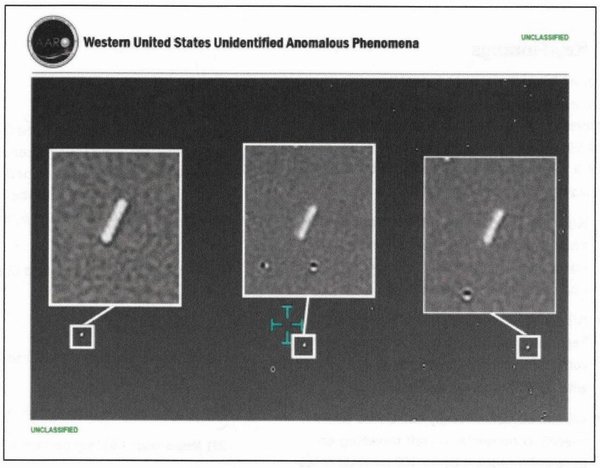
Pentagon Misses Luna's Deadline for 46 UAP Videos
The Department of War missed Representative Anna Paulina Luna's 14 April deadline to deliver 46 classified UAP video files. No public confirmation appeared on the House Oversight website or AARO's public imagery page that the request had been fulfilled. Luna accused the Pentagon of obstruction, stating she was prepared to compel production of the footage if 'institutional resistance continues.' A Pentagon spokesperson said AARO had 'made progress' transferring records to the National Archives and welcomed 'the president's initiative to supercharge these efforts.'
government
Stanford AI Index 2026: Generative AI Reaches 53% Population Adoption
Stanford's Human-Centered AI Institute published the 2026 AI Index Report, revealing that generative AI reached 53% population adoption within three years, faster than the personal computer or the internet. Q1 2026 saw more large corporate AI deals than any quarter on record, with 22 transactions totalling more than $10 billion. The report noted that every frontier model now handles text, images, and increasingly audio and video inputs natively, with context windows reaching one million tokens.
ai
Rep. Burchett States Classified Briefing Included Names, Dates, and Locations of UAP Materials
Representative Tim Burchett stated in an interview that a recent classified UAP briefing included specific names, dates, meeting participants, and the locations of UAP-related materials. He called for the information to be declassified and indicated he had been in communication with the White House regarding disclosure timelines.
congressional
Artemis II Crew Splashes Down off California Coast
NASA astronauts Reid Wiseman, Victor Glover, and Christina Koch, together with Canadian Space Agency astronaut Jeremy Hansen, splashed down in the Pacific Ocean off San Diego on April 10, 2026, completing a nearly ten-day Artemis II mission. NASA stated the crew reached 252,756 miles from Earth during the April 6 lunar flyby, surpassing the previous distance record set by the Apollo 13 crew in 1970. The astronauts were recovered by U.S. Navy and NASA teams and transported to Johnson Space Center on April 11.
space
Kacey Musgraves films three orbs trailing Fort Worth to Nashville flight, pilots corroborate
Grammy-winning country musician Kacey Musgraves filmed three glowing spherical objects from a private aircraft on the night of 10 April 2026 during a flight from Fort Worth, Texas to Nashville, Tennessee. Musgraves first noticed the lights over the Little Rock, Arkansas area and tracked them for approximately 45 minutes until landing in Nashville. Her video shows the orbs holding station and rearranging into triangular formations while changing colour and apparent size at an estimated cruise altitude near 50,000 feet. After landing she shared the footage on Instagram on 10 April. Both flight crew members reportedly told her they had observed similar objects on prior flights, with one pilot stating, 'We've seen these every single night, and all the other pilots are seeing them, too, and nobody knows what they are.' TMZ, Hollywood Reporter, NewsNation, OutKick and Fox News all carried the story between 10 and 12 April. The sighting is logged here as a documented contemporary aerial observation with crew corroboration; no claim is made about the nature of the objects. The pilot remark, if accurate, points to a recurring observation pattern across United States commercial and private flight crews that has not been publicly characterised by the Federal Aviation Administration or the All-domain Anomaly Resolution Office.
sightings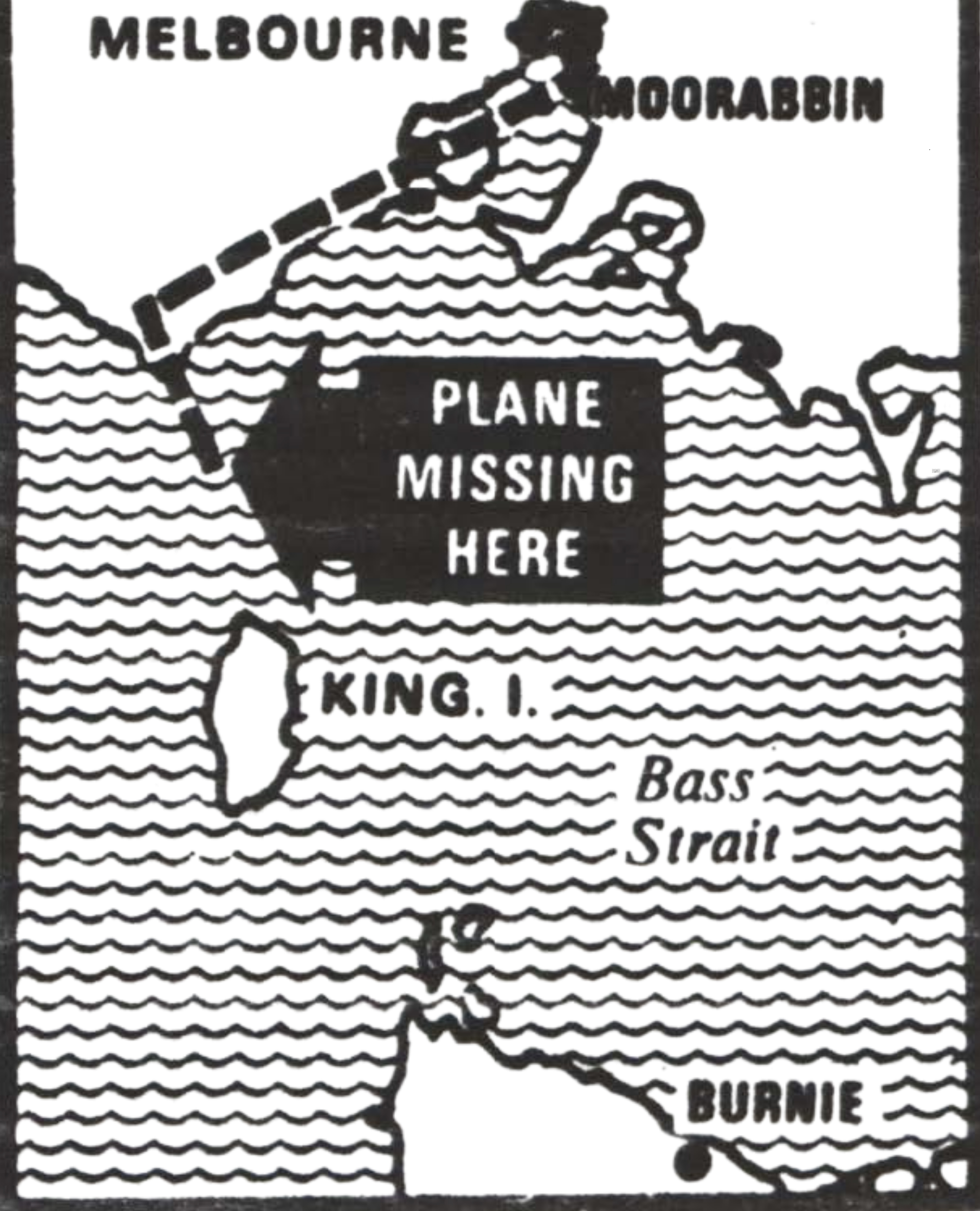
Gallaudet Confronts Former AARO Director Kirkpatrick at Public UAP Event
Retired Rear Admiral Tim Gallaudet, former Acting Administrator of NOAA and former Oceanographer of the Navy, confronted former AARO Director Sean Kirkpatrick during a public question-and-answer session on 9 April 2026. Gallaudet pushed back on Kirkpatrick's attribution of the 2004 USS Nimitz Tic Tac encounter to a calibration sphere, telling him directly that he had no other geophysical explanation for what the Navy pilots reported. Gallaudet has since publicly accused Kirkpatrick of running a disinformation campaign and of lying about their prior interactions, citing a May 2024 email exchange. Kirkpatrick responded by characterising Gallaudet as conspiracy-prone and unsuitable for objective analysis, and asserted that Gallaudet had previously sought a position at AARO. The exchange, covered through late April by IBTimes UK, UFO News and independent UAP researchers including D. Dean Johnson, marks one of the highest-profile public splits between credentialled former defence officials over the credibility of AARO's historical reporting and feeds directly into the broader institutional-trust questions raised by Rep. Burchett's HR 8197 to abolish AARO and Rep. Luna's outstanding 46-video subpoena.
whistleblower
UFO Cluster Spotted Near Wright-Patterson Air Force Base
Civilian witnesses at Rainbow Lakes in Fairborn, Ohio, four miles from Wright-Patterson Air Force Base, recorded a cluster of glowing objects hovering in a triangular formation before splitting apart mid-flight. Observers reported no sound, no standard navigation lights, and movement unlike any known aircraft or drone swarm. The sighting reignited attention on the base where missing retired Major General William Neil McCasland once commanded the Air Force Research Laboratory. Wright-Patterson has not commented on the incident.
sightings
Burchett Introduces Bill to Terminate AARO
Representative Tim Burchett introduced H.R. 8197, the Terminating the All-domain Anomaly Resolution Office Act, proposing to shut down AARO within 60 days and redistribute its functions across existing military branches. The bill prohibits the Secretary of Defence or Director of National Intelligence from creating any centralised replacement office, making a simple rebrand legally impossible. Burchett cited AARO's failure to produce credible findings and its pattern of dismissing military witness testimony.
congressional
Artemis II Breaks Apollo 13 Distance Record and Completes Lunar Flyby
NASA's Artemis II crew reached 252,756 miles from Earth, surpassing Apollo 13's 1970 record by over 4,000 miles. The spacecraft completed a seven-hour lunar flyby at approximately 4,067 miles above the surface. Astronauts Reid Wiseman, Victor Glover, Christina Koch, and Jeremy Hansen became the first humans to observe the Moon's far side with the naked eye and witnessed a solar eclipse from lunar orbit.
space
Australian Researcher Lodges Parliamentary Petition for Independent Westall Inquiry on 60th Anniversary
Australian researcher Grant Lavac lodged a petition to the Australian Parliament requesting an independent inquiry into the 6 April 1966 Westall UFO incident, timed to coincide with the 60th anniversary. The petition followed a fresh ABC Australian Story segment that aired on 2 April 2026 revisiting the case, in which more than 200 students and staff at Westall High School in Clayton South, Melbourne, observed a disc-shaped object descend into a paddock before rising and departing at speed. The Westall incident is one of the largest mass-witness UAP events on record and remains unexplained by the Royal Australian Air Force. No formal government response to the petition has been issued.
international
Burchett Introduces H.R. 8197 to Terminate AARO
Representative Tim Burchett (R-TN) introduced H.R. 8197, legislation to shut down the Pentagon's All-domain Anomaly Resolution Office within 60 days and prohibit any centralized replacement office. The bill followed public calls by Rep. Luna to disband and defund AARO.
congressional
L-shaped UAP over Astana, Kazakhstan goes viral
Multiple witnesses in Astana, Kazakhstan filmed glowing lights arranged in a distinct L-shape over the city on the night of 4 April 2026. Footage spread across social media and accumulated millions of views within days, with parallel uploads to YouTube, Dailymotion, Instagram and X. Kazakhstan civil aviation authorities issued no airspace alert and no emergency notification. Sceptical analysis pointed to architectural lighting and LED reflection on low cloud as a candidate explanation, citing the city's heavy decorative-lighting footprint. The sighting joins a recent run of widely shared international UAP video, and is logged here as an international sighting event without endorsement of any specific interpretation.
sightings
Burchett Warns Classified UAP Briefings Contain Material That Could 'Set the Earth on Fire'
Representative Tim Burchett stated on Newsmax that he has been briefed by 'just about every alphabet agency there is' on UAP and that full release of what he has seen would cause the country to become 'unglued.' Referencing a classified session approximately two weeks earlier, Burchett described the information as something that 'would've set the Earth on fire,' and said upcoming briefings will include 'names, dates, people, and locations.' He stopped short of disclosing classified details.
whistleblower
Burchett Warns Classified UAP Briefings Contain Information That Could 'Set the Earth on Fire'
Representative Tim Burchett warned that classified UAP briefings contain information so profound it would leave Americans 'up at night worrying.' Burchett stated that the people with direct knowledge 'are dying or disappearing,' linking the briefing content to the ongoing cluster of missing and dead scientists connected to classified aerospace programmes. He urged President Trump to 'peel back the layers of that onion' and let the American public decide for themselves.
congressional
Connecticut UAP Study Bill Passes Appropriations Committee
Connecticut's Raised Bill No. 5422, an act directing the University of Connecticut to conduct a statewide study of unidentified aerial phenomena and evaluate whether the state should establish a dedicated UAP research centre, passed the Appropriations Committee in a bipartisan vote. Authored by Rep. Joe Hoxha with bipartisan co-sponsorship from Rep. Aundre Bumgardner (D-Groton), the bill heads to the Connecticut House for further consideration. The contracted research agency would have until 1 July 2027 to report findings to the state legislature.
government
Artemis II: First Crewed Lunar Mission Since 1972
Artemis II launched from Kennedy Space Center carrying astronauts Reid Wiseman, Victor Glover, Christina Koch, and Canadian Space Agency astronaut Jeremy Hansen on a ten-day lunar flyby mission aboard the SLS rocket and Orion spacecraft. The crew completed a close pass of the Moon on April 6, the first humans to fly beyond low Earth orbit since Apollo 17 in December 1972, and the first time a non-American astronaut has travelled to the Moon.
space
UAP Whistleblower Protection Act Introduced in Congress
Representatives Tim Burchett (R-TN) and Anna Paulina Luna (R-FL) introduced H.R. 5060, the UAP Whistleblower Protection Act, in the 119th Congress. The legislation aims to shield individuals who share UAP-related information with Congress from professional and legal retaliation, addressing a long-standing barrier cited by potential whistleblowers as the reason they have not come forward publicly.
congressional
Luna's Task Force Demands 46 Specific UAP Video Files from Pentagon
Representative Anna Paulina Luna, chairwoman of the House Oversight Task Force on the Declassification of Federal Secrets, sent Defense Secretary Pete Hegseth a four-page letter demanding 46 specific UAP video files by 14 April 2026. The letter named individual files by title, date, location and military callsign, making it the most specific UAP disclosure demand in congressional history. Requested footage included spherical, cigar-shaped and Tic Tac-like objects recorded over Iran, the Persian Gulf, the East China Sea, near U.S. airports, and an F-16 shooting down a UAP over Lake Huron in February 2023.
congressional
Luna Demands 46 Specific UAP Videos from Pentagon
Representative Anna Paulina Luna transmitted a four-page letter to Defense Secretary Hegseth identifying 46 specific UAP videos by operational callsign, including F-16C engagement footage over Lake Huron, fifth-generation aircraft encounters, and submarine USO recordings. The letter set an April 14, 2026 deadline for delivery to the House Oversight Committee.
congressional
Japan Parliamentary UAP Study Group Finalises Proposal for Dedicated Government UAP Office
The non-partisan Parliamentary Group for the Study of Unidentified Anomalous Phenomena from a National Security Perspective, chaired by the Hon. Yasukazu Hamada and comprising more than 80 lawmakers, finalised a formal proposal at its 4th General Meeting on 30 March 2026 to create a specialised UAP office sitting directly under the Deputy Chief Cabinet Secretary for Crisis Management. The Genkai Nuclear Power Plant UAP incident, where Kyushu Electric Power Company logs and the Saga Prefectural Police explanation are reported to be irreconcilable, is cited as a driver. This is the most concrete national-level UAP government structure proposed outside the United States. The group announced its intent on 24 March 2026 and finalised the proposal six days later.
international
Burchett Reveals Six UAP-Connected Scientists Dead or Missing, Says Intelligence Agencies Blocking Investigation
Representative Tim Burchett told reporters that intelligence agencies were actively thwarting his attempts to investigate the deaths and disappearances of multiple scientists and researchers connected to classified U.S. aerospace programmes. The cluster stood at six confirmed cases, including General McCasland's disappearance, the shooting death of Caltech astrophysicist Carl Grillmair on his own porch on 16 February 2026, and the 2025 vanishing of aerospace engineer Monica Jacinto Reza, co-inventor of a key U.S. rocket alloy.
whistleblower
White House Releases National Policy Framework for Artificial Intelligence
The White House released a National Policy Framework for Artificial Intelligence, outlining legislative recommendations for a unified federal approach to AI regulation. The framework's most consequential provision recommends federal preemption of state AI laws that 'impose undue burdens,' seeking a single national standard. Senator Marsha Blackburn released an updated discussion draft of the TRUMP AMERICA AI Act building on her December 2025 proposal.
ai
NVIDIA GTC 2026: Physical AI Models and Robot Foundation Platform
NVIDIA unveiled frontier models for physical AI at GTC 2026 in San Jose, including Cosmos 3, Isaac GR00T N1.7 (now available with commercial licensing for production robot deployments), and a preview of GR00T N2, which helps robots succeed at new tasks more than twice as often as leading alternatives. Partners including ABB, FANUC, Figure AI, Universal Robots, and surgical robotics firm PeritasAI announced deployments built on NVIDIA's platform. The open source physics engine Newton 1.0 was released for general availability.
robotics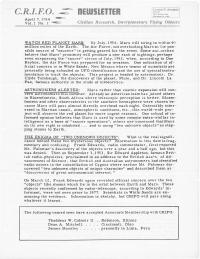
U.S. Government Registers Aliens.gov Domain
The U.S. Cybersecurity and Infrastructure Security Agency registered the alien.gov and aliens.gov web domains, adding both to the official government website registry. The registration followed President Trump's February 2026 executive directive ordering the release of government files related to UFOs and extraterrestrial life.
disclosure
White House Registers Aliens.gov and Alien.gov Domains
The Cybersecurity and Infrastructure Security Agency (CISA), part of the Department of Homeland Security, registered the domains Alien.gov and Aliens.gov. The registration came less than a month after President Trump directed federal agencies to begin releasing government files on UAP and extraterrestrial life. White House Principal Deputy Press Secretary Anna Kelly responded to questions about the domains' purpose with 'Stay tuned!' and an alien emoji.
disclosure
Luis Elizondo Survives Serious Motorcycle Accident on St Patrick's Day
Former Pentagon UAP programme director Luis Elizondo crashed his motorcycle on the evening of 17 March 2026 after swerving to avoid a doe and fawn on the road. Riding without a helmet, Elizondo sustained a shattered rib cage, a punctured and collapsed lung, a severed spleen, a traumatic brain injury, close to 32 facial and cranial fractures, and a dislocated hand and wrist. Trauma staff gave him less than a 50 per cent chance of survival on arrival. Elizondo, former head of the Advanced Aerospace Threat Identification Programme (AATIP) and the most publicly visible UAP whistleblower since the 2017 New York Times story, has since documented his recovery in a continuing series of video diaries on X and YouTube. The accident occurred roughly five weeks before the scheduled 22 April opening of his 20-date 'Persona Non Grata' disclosure tour.
whistleblower
ODNI UAP Inquiry Shut Down Amid Whistleblower Intimidation Allegations
Liberation Times reported that a UAP inquiry conducted by the ODNI's Director's Initiatives Group (established by DNI Tulsi Gabbard) was wound down in February 2026 amid allegations that whistleblowers Matthew Brown and Dylan Borland were subjected to coordinated smear campaigns. Sources told Liberation Times that damaging allegations originated from within a SCIF, and that elements linked to the CIA allegedly worked to compromise the inquiry. No evidence of Gabbard's personal involvement was indicated.
whistleblower
AARO Hosts Invite-Only UAP Research Workshop
AARO convened approximately 40 government, academic, and independent researchers for a private workshop hosted by Associated Universities, Inc. in the D.C. area. The workshop focused on standardizing UAP narrative data collection, integrating datasets across organizations, and applying AI to large-scale UAP data for pattern recognition. Findings were published in a whitepaper.
science
Linux Foundation Takes Anthropic's Model Context Protocol Under Open Governance
The Linux Foundation announced it would take Anthropic's Model Context Protocol (MCP) under open governance, cementing the standard's transition from an experimental protocol to foundational infrastructure for building AI agents. MCP, which allows AI models to connect to external tools and data sources through a unified interface, had crossed 97 million installs by March 2026.
ai
Source Kilo Testifies Before Closed Senate Session on Recovered Non-Human Materials
A former senior intelligence official with 22 years in U.S. government UAP programmes, identified only as 'Source Kilo,' testified before a closed Senate subcommittee session. Source Kilo described direct personal knowledge of recovered craft and biological materials of non-human origin, marking a significant escalation in whistleblower testimony beyond David Grusch's 2023 congressional appearance.
whistleblower
Unauthorized Drone Swarms Breach Barksdale Air Force Base
Between March 9 and 15, 2026, multiple waves of 12 to 15 custom-built drones with non-commercial signal characteristics and jamming resistance breached restricted airspace at Barksdale Air Force Base, Louisiana, which houses nuclear-capable B-52 bombers. Senator Bill Cassidy confirmed five unauthorized flights, two drone recoveries, and four incidents with unidentified operators as of late March 2026. Air Force Global Strike Command confirmed the incidents in an official statement.
military
OpenAI Launches GPT-5.4 with Pro and Thinking Versions
OpenAI released GPT-5.4 across ChatGPT, the API, and Codex. The model's ARC-AGI-2 benchmark score jumped from 52.9% to 73.3%, a test specifically designed to resist surface-level pattern matching. GPT-5.3-Codex had launched earlier as OpenAI's most capable agentic coding model, combining Codex and GPT-5 training stacks. OpenAI's product organisation was renamed 'AGI Deployment,' the first time AGI appeared as a formal category in its org chart.
ai
Galileo Project Achieves Triangulation Milestone Across Three-Observatory Network
Harvard's Galileo Project, led by Professor Avi Loeb, announced that its three-observatory network (Massachusetts, Pennsylvania, Nevada) is now measuring distances to airborne objects to within 10 percent accuracy using triangulation across 10-kilometre baselines. The network operates continuously in infrared, optical, radio, and audio bands, with an AI-assisted data pipeline flagging outlier objects for human review. A fourth observatory is planned for Indiana. The project is recruiting volunteer labellers to classify objects in observatory imagery. The triangulation capability represents a shift from passive sky-watching to active instrumented measurement of anomalous aerial objects, positioning the project as a scientific counterpart to the government's PURSUE declassification effort.
science
General William Neil McCasland Disappears from New Mexico Home
Retired Major General William Neil McCasland, one of the U.S. military's leading experts on UAP and a figure named in the 2016 WikiLeaks emails as an adviser to Tom DeLonge's To the Stars Academy, walked out of his New Mexico home and did not return. He left behind his phone, prescription glasses and wearable devices. His wallet and a firearm were missing. McCasland's disappearance became one of at least six cases of UAP-connected scientists and officials who died or vanished in early 2026.
whistleblower
Retired Air Force Maj. Gen. Neil McCasland Disappears
Retired Air Force Major General Neil McCasland, former commander of the Air Force Research Laboratory at Wright-Patterson Air Force Base and a figure connected to UAP research, left his Albuquerque home on foot and has not been in contact with family or friends since. His phone, prescription glasses, and wearable devices were left behind. The FBI confirmed its involvement alongside the Bernalillo County Sheriff's Office and Kirtland Air Force Base. His disappearance came days after President Trump directed the Pentagon to begin releasing government UAP records.
military
Trump Directs Pentagon to Release UAP Files
President Donald Trump signed a directive ordering Defense Secretary Pete Hegseth and other agency heads to begin identifying and releasing government files related to alien and extraterrestrial life, unidentified aerial phenomena (UAP), and UFOs. The order established a 300-day countdown for agencies to produce declassified records or provide specific, reviewable justifications for continued classification.
disclosure
President Trump Directs Release of Government UFO Files
President Trump announced a directive ordering the Pentagon and federal agencies to identify and release government files related to 'alien and extraterrestrial life, unidentified aerial phenomena, and unidentified flying objects.' Defense Secretary Hegseth confirmed the Pentagon was 'eager' to comply.
disclosure
Tesla Reveals Optimus V3 Humanoid Robot, Targets Summer Production
Tesla publicly revealed the Optimus V3 humanoid robot, with Elon Musk describing it as 'so realistic you need to poke it to confirm it's a real robot.' Low-volume production is targeted to begin summer 2026, scaling to high-volume output in 2027. Musk has stated the robot could cost between $20,000 and $30,000 at full-scale production, positioning it for consumer and industrial markets.
robotics
Pentagon Quietly Clears 2025 UAP Workshop Report 'Narrative Data, Infrastructures, and Analysis' for Public Release
On 11 February 2026 a Department of Defense workshop report titled '2025 UAP Workshop: Narrative Data, Infrastructures, and Analysis' was cleared for public release and posted to a Defense Department website. The report describes the data architecture, narrative-collection pipelines and analytic priorities the Pentagon expects to use as it scales UAP intelligence work, and is the most detailed publicly released document on the operational design of the UAP intelligence stack since AARO's establishment. Coverage by USA Herald in May 2026 framed the report as a procedural roadmap for how disclosure will actually unfold, irrespective of headline-driven release pledges from the White House. The document predates President Trump's 20 February 2026 executive order on UAP records by nine days but is consistent with the order's emphasis on narrative-form witness data, classification consolidation, and AARO-anchored coordination.
government
Anthropic Releases Claude Opus 4.6 with Million-Token Context
Anthropic launched Claude Opus 4.6, introducing a one-million-token context window in beta and effort controls giving developers granular choice over intelligence, speed, and cost tradeoffs across four effort levels. Claude Sonnet 4.6 followed on February 17 with improved coding capabilities. The Model Context Protocol (MCP), Anthropic's open standard for connecting AI to external tools, crossed 97 million installs in March.
ai
Former Bank of England Analyst Warns Governor to Prepare for Alien Disclosure Financial Crisis
Helen McCaw, a former senior analyst in financial security at the Bank of England (2002 to 2012), wrote to Governor Andrew Bailey warning that the United States appeared to be 'partway through a multi-year process to declassify and disclose information on the existence of a technologically advanced non-human intelligence.' McCaw urged the Bank to plan for potential financial market volatility, a collapse in institutional confidence, and a possible flight to digital currencies such as Bitcoin if public trust in government-backed assets eroded following confirmation of non-human intelligence.
international
Boston Dynamics Announces Atlas Mass Production at CES 2026
Boston Dynamics announced the mass-production version of its fully electric Atlas humanoid robot at CES 2026 and began initial commercial shipments. The production Atlas features 56 degrees of freedom and a 50 kg lift capacity. Deployments at Hyundai Motor Group manufacturing facilities and Google DeepMind research labs were confirmed for 2026.
robotics
Expressed Concerns and Societal Responses to AI
Researchers, policymakers, and public figures raise concerns about AI safety, labour displacement, misinformation, surveillance, and concentration of power. International bodies, academic institutions, and civil society organisations work to establish norms and frameworks for responsible AI development.
ai
Persistent Challenges in Robotics
Key challenges remain in manipulation dexterity, long-duration autonomy, safe human-robot interaction, and regulatory frameworks for deploying autonomous physical systems in public and shared spaces.
robotics
FY2026 NDAA Includes UAP Transparency Provisions
The Fiscal Year 2026 National Defense Authorization Act was signed into law with UAP-related provisions requiring the Pentagon to brief Congress on all UAP intercepts by NORAD and NORTHCOM since 2004, and directing AARO to account for classification guides applied to anomalous phenomena records.
congressional
House UAP Caucus Identifies New Whistleblower
The House UAP Caucus announced that a new whistleblower had been identified who was willing to testify in a SCIF (Sensitive Compartmented Information Facility). The development followed months of congressional frustration over limited access to classified UAP information and came as David Grusch continued to serve as a special advisor to congressional staff.
whistleblower
VASCO Papers Published: Pre-Sputnik Transients Linked to Nuclear Tests and UAP
Dr. Beatriz Villarroel's VASCO project published two peer-reviewed papers in Scientific Reports and the Publications of the Astronomical Society of the Pacific. The research identified over 107,000 transient light events on 1950s sky survey plates, finding transients were 45% more likely near nuclear test dates and documenting a 22-sigma deficit of transients in Earth's shadow, consistent with solar reflections from objects in pre-Sputnik orbit.
science
UAP Disclosure Act Excluded from FY2026 NDAA for Third Consecutive Year
The UAP Disclosure Act of 2025 was excluded from both the House and Senate versions of the FY2026 National Defense Authorization Act during the conference process. This marked the third consecutive year that the legislation failed to survive NDAA negotiations. Both the Burlison House amendment and the Schumer-Rounds-Gillibrand Senate amendment (S.Amdt.3111) were dropped. The final NDAA included only three minor UAP provisions: mandatory briefings on UAP intercepts since 2004, a classification review of UAP records, and a UAP reporting mechanism for current and former government personnel.
congressional
Dylan Borland Testifies on USAF UAP Encounters and Reporting Failures
Dylan Borland, United States Air Force veteran, testified before the House Oversight Committee at the September 2025 UAP hearing. Borland described firsthand encounters with unidentified anomalous phenomena during his military service and detailed systemic failures in official reporting channels for UAP incidents. He testified that servicemembers who attempted to report sightings through proper channels faced institutional resistance, stigma, and career repercussions. Borland called for improved protections for military witnesses and standardized reporting procedures across all branches of the armed forces.
whistleblower
George Knapp Testifies on Decades of UAP Investigation and Government Secrecy
George Knapp, veteran investigative journalist, testified before the House Oversight Committee at the September 2025 UAP hearing. Knapp drew on over three decades of reporting on UAP topics, including his 1989 interviews with Bob Lazar about alleged reverse-engineering programs at Area 51. He described what he characterized as government efforts to withhold UAP information from the public and discourage witnesses from coming forward. Knapp emphasized that military and intelligence personnel have reported anomalous encounters only to face institutional resistance, and called for full congressional access to classified UAP programs.
whistleblower
Jeffrey Nuccetelli Testifies on USAF UAP Encounters and Pilot Safety Concerns
Jeffrey Nuccetelli, United States Air Force veteran, testified before the House Oversight Committee at the September 2025 UAP hearing. Nuccetelli described multiple encounters with unidentified anomalous phenomena during his service as a military aviator. He raised serious concerns about aviation safety, noting that UAP incursions into military training airspace posed direct risks to pilots and crew. Nuccetelli testified that existing reporting mechanisms were inadequate and that many servicemembers chose not to report encounters due to fear of professional consequences. He advocated for transparent investigation protocols and stronger whistleblower protections for military personnel.
whistleblower
House Oversight Hearing: Restoring Public Trust Through UAP Transparency
The House Oversight Task Force held a hearing titled 'Restoring Public Trust Through UAP Transparency and Whistleblower Protection.' Investigative journalist George Knapp testified about his decades of UAP reporting. Members raised detailed concerns about factual errors in AARO's Historical Record Report, whistleblower protection gaps, and ongoing classification barriers.
congressional
House Task Force Hearing: Restoring Public Trust Through UAP Transparency
Chaired by Anna Paulina Luna, five witnesses testified before the Task Force on Declassification of Federal Secrets. Jeffrey Nuccetelli described five UAP incidents at Vandenberg AFB (2003 to 2005) including the Red Square event. Alexandro Wiggins, an active-duty Navy Senior Chief, recounted a multi-sensor tic-tac encounter off California aboard USS Jackson. Dylan Borland described witnessing a 100-foot triangle at Langley AFB and sustained career retaliation after filing an ICIG complaint. George Knapp testified about decades of witness interviews and Robert Bigelow's crash retrieval efforts. Serial No. 119-44.
congressional
Alexandro Wiggins Testifies on Navy UAP Encounters and Crew Safety
Alexandro Wiggins, Navy Senior Chief, testified before the House Oversight Committee at the September 2025 UAP hearing. Wiggins described direct encounters with unidentified anomalous phenomena during naval operations and detailed how these incidents posed real safety risks to crew members. He testified about the inadequacy of existing military reporting structures for UAP events and the stigma that discouraged personnel from coming forward. Wiggins called for formal recognition of UAP encounters as a legitimate flight safety concern and urged Congress to ensure that servicemembers can report anomalous incidents without fear of retaliation or career damage.
whistleblower
Burlison Files House Version of UAP Disclosure Act 2025 as NDAA Amendment
Representative Eric Burlison (Republican, Missouri) filed the UAP Disclosure Act of 2025 as an amendment to the House version of the FY2026 National Defense Authorization Act. This marked the first time the Disclosure Act had a companion filing in the House, with Burlison's amendment running in parallel to the Schumer-Rounds-Gillibrand Senate filing (S.Amdt.3111). The dual-chamber approach aimed to increase the legislation's chances during NDAA conference, though both versions were ultimately excluded.
congressional
Schumer, Rounds and Gillibrand File UAP Disclosure Act 2025 as NDAA Amendment
Senate Minority Leader Chuck Schumer (Democrat, New York), Senator Mike Rounds (Republican, South Dakota) and Senator Kirsten Gillibrand (Democrat, New York) filed the 'Unidentified Anomalous Phenomena Disclosure Act of 2025' (UAPDA) as Senate Amendment 3111 to S. 2296, the fiscal year 2026 National Defense Authorization Act. The amendment is modelled on the JFK Assassination Records Collection Act and would create a UAP Records Collection at the National Archives, establish a review board with subpoena power, and require the expeditious public transmission and disclosure of UAP records. Initial analysis noted that S.Amdt.3111 appears nearly identical to the July 2024 UAPDA filing, including the provision granting the review board eminent-domain authority in certain circumstances. The amendment is considered unlikely to receive a floor debate and roll call vote; sponsors are working to have it included in any bloc NDAA package during conference.
congressional
UAP Whistleblower Protection Act Introduced
Representatives Tim Burchett and Anna Paulina Luna introduced H.R.5060, the UAP Whistleblower Protection Act, to shield individuals who disclose information about unidentified anomalous phenomena from retaliation. The bill addressed long-standing concerns that fear of reprisal was preventing witnesses within government and defence programmes from coming forward.
congressional
Canada Publishes Sky Canada Report on UAP Reporting
The Office of the Chief Science Advisor published the Sky Canada report, recommending a dedicated federal UAP reporting office, standardized database, public engagement tools, and international data-sharing partnerships. The report identified systemic fragmentation across federal agencies receiving public UAP reports.
international
Third European UAP Day Held Across EU Parliaments
The Third European UAP Day was organized across EU parliaments on March 20, 2025, alongside formal parliamentary questions on UAP in EU Space Law and aviation safety. The events marked a growing institutionalization of UAP as a policy question within European governance.
international
UAP Transparency Act Introduced in Congress
Representatives introduced H.R.1187, the UAP Transparency Act, requiring the President to declassify all government records related to unidentified anomalous phenomena and publish them on publicly accessible websites. The bill represented the most direct legislative push for mandatory UAP disclosure to date.
congressional
Buga Sphere Recovered in Colombia, Picked Up by Maussan
Residents of Buga, Valle del Cauca, Colombia reported a small spherical object descending silently over the city on 2 March 2025. Witnesses recovered the object and photographed it, describing a seamless metallic shell, an internal structure of micro-spheres, and surface markings that some observers compared to glyphs. The object was passed to Mexican broadcaster Jaime Maussan, who toured it on Tercer Milenio across 2025 and announced a March 2026 Mexico City presentation with proponent scientists. Maussan's team commissioned testing and asserted that resin attached to the sphere had been carbon dated by the University of Georgia Center for Applied Isotope Studies to roughly 12,560 years before present. Neither the University of Georgia CAIS nor UNAM has issued a public confirmation of involvement, and no peer-reviewed paper has been published. Sceptics including Dr Julia Mossbridge and Dr Garry Nolan have characterised the object as most likely a deliberate art piece or hoax, citing modern fabrication techniques such as superplastic forming and magnetic pulse welding that can produce seamless joints. The Buga sphere case re-entered the US news cycle on 29 April 2026 when Steven Greer announced it would feature in his 25th-anniversary Disclosure Project press conference at the National Press Club on 8 May 2026.
sightings
Commercial Deployment of Autonomous Robots Advances
Humanoid and mobile robots enter early commercial deployment in warehouses, factories, and controlled environments. Companies begin pilot programmes integrating embodied AI systems into real-world supply chains and production lines.
robotics
Reasoning Models and Agentic Systems Advance
AI systems begin demonstrating structured reasoning and autonomous task execution. Models capable of multi-step planning, tool use, and extended problem-solving enter commercial deployment, prompting new discussions about oversight, alignment, and the pace of capability growth.
ai
FY2025 NDAA Passes Without UAP Disclosure Act
The Fiscal Year 2025 National Defense Authorization Act was signed into law without any UAP Disclosure Act provisions. The second attempt by Senators Schumer and Rounds (S.Amdt.2610) was excluded during the conference process, continuing the pattern from 2023 where House leadership blocked the legislation. The failure of two consecutive attempts shifted attention toward alternative legislative vehicles and executive action as potential paths to disclosure.
congressional
Luis Elizondo Testifies on UAP Programs and Government Secrecy
Former Department of Defense official Luis Elizondo testified before the House Oversight Subcommittee during the November 2024 UAP hearing. Elizondo, who previously directed the Advanced Aerospace Threat Identification Program (AATIP), provided testimony under oath about the existence of classified UAP retrieval and reverse-engineering programs within the U.S. government. He described a pattern of institutional resistance to congressional oversight and confirmed details about multi-decade programs operating outside normal channels of accountability. Elizondo stated he had firsthand knowledge of these programs from his time in government service.
whistleblower
RADM Tim Gallaudet Testifies on UAP Encounters and Institutional Secrecy
Retired Rear Admiral Tim Gallaudet, former acting administrator of the National Oceanic and Atmospheric Administration (NOAA), testified before the House Oversight Subcommittee at the November 2024 UAP hearing. Gallaudet described how during his Navy career he became aware of UAP encounters involving naval assets and expressed concern about a culture of secrecy preventing proper investigation. He advocated for expanded ocean-based UAP research, noting that transmedium objects, those observed transitioning between air and water, represent a significant gap in current monitoring capabilities.
whistleblower
Michael Gold Testifies on NASA UAP Engagement and Interagency Coordination
Michael Gold, former NASA Associate Administrator for Space Policy and Partnerships, testified before the House Oversight Subcommittee at the November 2024 UAP hearing. Gold described his efforts to establish interagency coordination on UAP research during his time at NASA and advocated for the space agency to take a more active role in UAP investigation. He emphasized the importance of removing stigma from scientific study of anomalous phenomena and called for standardized data collection protocols across government agencies. Gold supported greater transparency and congressional oversight of UAP-related programs.
whistleblower
House Oversight Hearing on 'Immaculate Constellation' Allegations
The House Oversight Subcommittee held a hearing addressing allegations of a classified UAP program referred to as 'Immaculate Constellation.' The Pentagon denied the existence of such a program. The hearing broadened to address ongoing UAP transparency concerns and government accountability.
congressional
Michael Shellenberger Presents Immaculate Constellation Report
Journalist and author Michael Shellenberger testified before the House Oversight Subcommittee, presenting a 12-page report on a purported classified UAP program referred to as Immaculate Constellation. The report, compiled from information provided by a whistleblower with knowledge of the program, alleged that the executive branch has been managing UAP data collection without congressional knowledge or authorization for decades. Shellenberger described accounts of military encounters including an incident where an F-22 was reportedly intercepted by multiple UAPs. The Pentagon denied the existence of the program.
whistleblower
House Oversight UAP Hearing: Elizondo, Gallaudet, Shellenberger, Gold Testify
Luis Elizondo, the former AATIP director, testified publicly before Congress for the first time. Investigative journalist Michael Shellenberger presented allegations of a classified UAP imagery collection programme called Immaculate Constellation, which the Pentagon denied. Rear Admiral Tim Gallaudet testified about transmedium UAP observations, and former NASA official Michael Gold called for structured scientific involvement.
congressional
Europa Clipper Launches Toward Jupiter
NASA launched Europa Clipper, the largest spacecraft the agency has ever built for a planetary mission. The probe will conduct nearly 50 flybys of Jupiter's moon Europa to investigate its subsurface ocean and assess the moon's potential for harbouring life. Arrival at Jupiter is expected in April 2030.
space
UAP Disclosure Act 2024 Filed as NDAA Amendment
Senators Schumer (Democrat, New York) and Rounds (Republican, South Dakota) filed the UAP Disclosure Act of 2024 as Senate Amendment 2610 to the FY2025 National Defense Authorization Act. The second attempt restored the provisions stripped from the 2023 version, including the independent review board with subpoena power and eminent domain authority over UAP-related materials held by private contractors. The amendment faced the same opposition from House leadership that had gutted the first attempt.
congressional
Japan Forms Parliamentary League for UAP from Security Perspective
More than 80 Japanese lawmakers formed a bipartisan Parliamentary Group for the Study of UAP from a Security Perspective, chaired by former Defence Minister Yasukazu Hamada. The group framed UAP as a national security issue and began developing proposals for a dedicated government research office.
international
Colonel Karl Nell States 'Non-Human Intelligence Exists, Zero Doubt'
Retired Army Colonel Karl Nell, who had served as the Army's liaison to the UAP Task Force, stated publicly at the SALT iConnections conference in New York that 'non-human intelligence exists, non-human intelligence has been interacting with humanity. This is not a matter of faith. This is not speculation. This is a fact.' Nell referenced corroboration from Canadian and Israeli government officials. His statement was notable for its unequivocal language and his credentials as a career military intelligence officer who had held formal roles in the U.S. government's UAP investigation infrastructure.
whistleblower
AARO Publishes Historical Record Report, Volume 1
The All-domain Anomaly Resolution Office released Volume 1 of its Historical Record Report, reviewing U.S. government involvement with UAP from 1945 to present. The report concluded no verifiable evidence was found linking any UAP sighting to extraterrestrial technology. The report subsequently faced documented criticism from former Deputy Assistant Secretary of Defense Christopher Mellon and members of Congress for factual errors and methodological concerns.
government
First Private Company Lands on the Moon
Intuitive Machines' IM-1 mission landed the Nova-C lander near the lunar south pole, achieving the first successful Moon landing by a private company. Although the lander tipped on its side during touchdown, it completed several days of science operations and demonstrated the viability of commercial lunar access.
space
UAP Disclosure Act Provisions Signed into Law
Modified provisions of the UAP Disclosure Act were included in the FY2024 National Defense Authorization Act. The law created a UAP Records Collection with a presumption of disclosure, though the most aggressive provisions -- eminent domain over private UAP materials and a review board with subpoena power -- were removed in conference.
congressional
Schumer and Rounds Take to Senate Floor Over Gutted Disclosure Act
Senate Majority Leader Chuck Schumer (Democrat, New York) and Senator Mike Rounds (Republican, South Dakota) delivered a joint floor statement denouncing the removal of key provisions from their UAP Disclosure Act during the FY2024 NDAA conference. Schumer called the opposition 'an outrage' and named House Armed Services Committee Chair Mike Rogers and House Intelligence Committee Chair Mike Turner as responsible for stripping the eminent domain clause and independent review board. Rounds confirmed bipartisan intent to reintroduce the full legislation.
congressional
NASA Releases UAP Independent Study Report
NASA published the findings of its independent UAP study team, concluding that limited high-quality data hampers scientific assessment of UAP. NASA appointed Mark McInerney as its first Director of UAP Research to coordinate the agency's role in UAP data collection and analysis using existing Earth observation assets.
government
Cmdr. David Fravor Testifies on 2004 Nimitz Encounter
Retired Navy Commander David Fravor testified before the House Oversight Committee about his November 2004 encounter with a Tic Tac-shaped object off the coast of San Diego during the USS Nimitz carrier group exercises. Fravor described the object as approximately 40 feet long, white, with no wings, rotors, or visible propulsion, performing maneuvers beyond known aerospace capabilities. He stated it dropped from 80,000 feet to sea level in less than a second on radar. Fravor emphasized that as an experienced fighter pilot with over 18 years of service, the object he witnessed was not any known technology.
whistleblower
Lt. Ryan Graves Testifies on Recurring UAP Encounters
Former Navy F/A-18F pilot Lt. Ryan Graves testified before the House Oversight Committee about recurring UAP encounters experienced by his squadron operating off the East Coast between 2014 and 2015. Graves described objects with dark grey or black cubes inside clear spheres holding a fixed position in the airspace, visible on radar and infrared sensors. He stated the encounters were so frequent that pilots would brief their presence during mission planning. Graves, who founded Americans for Safe Aerospace, emphasized that military aviators are routinely encountering these objects but face significant stigma in reporting them.
whistleblower
David Grusch Testifies Before Congress
Former intelligence officer David Grusch testified under oath before the House Oversight Committee that the U.S. government possesses materials and 'non-human biologics' from UAP crash retrievals, and operates a multi-decade reverse-engineering program. Navy pilots David Fravor and Ryan Graves also testified about their firsthand encounters.
whistleblower
House Oversight UAP Hearing: Grusch, Graves, Fravor Testify Under Oath
David Grusch testified under oath that the U.S. government maintains a multi-decade crash retrieval and reverse-engineering programme and that he experienced retaliation after filing his whistleblower complaint. Ryan Graves described daily UAP encounters during Navy training. David Fravor recounted his 2004 Tic Tac encounter. The hearing drew over 5.4 million C-SPAN views and led directly to the Schumer-Rounds UAP Disclosure Act.
congressional
UAP Disclosure Act Introduced in Senate
Senate Majority Leader Chuck Schumer and Senator Mike Rounds introduced the 64-page UAP Disclosure Act, modeled on the JFK Assassination Records Collection Act. The legislation proposed a UAP Records Review Board with authority to compel the release of government UAP records within 25 years.
congressional
Galileo Project Pacific Ocean Expedition Recovers IM1 Spherules
In June 2023 the Galileo Project mounted a fourteen-day expedition aboard the M/V Silver Star to the Pacific Ocean north of Manus Island, Papua New Guinea, recovering roughly 700 metallic spherules from the seafloor at the impact site of CNEOS 2014-01-08 (IM1), a bolide the United States Space Command had certified as interstellar in origin. A subset of the spherules showed a beryllium, lanthanum and uranium composition the team designated BeLaU, published in Chemical Geology in September 2024.
scientific historical
David Grusch Goes Public With UAP Allegations
Former intelligence official David Grusch's allegations about a covert UAP crash retrieval and reverse-engineering program were published through The Debrief and NewsNation, following his filing of a whistleblower complaint with the Intelligence Community Inspector General that had been deemed 'credible and urgent' in 2022.
whistleblower
Multimodal Models and First Regulatory Frameworks
AI systems expand beyond text to process images, audio, and video. GPT-4, Gemini, and Claude demonstrate multimodal capabilities. The European Union passes the AI Act, the first comprehensive AI regulation by a major government. Executive orders and voluntary commitments begin shaping AI governance in the United States and other nations.
ai
ODNI Publishes First Annual UAP Report to Congress
The Office of the Director of National Intelligence published its first annual report on unidentified aerial phenomena, as mandated by the 2022 National Defense Authorization Act. The report covered 510 UAP reports received since the preliminary assessment of June 2021, with 171 remaining unexplained after initial analysis. The annual reporting requirement established routine Congressional oversight of the UAP issue for the first time, moving it from ad hoc briefings to a formalised intelligence reporting cycle.
government disclosure
ChatGPT Brings Generative AI to the Public
OpenAI launches ChatGPT publicly in November, bringing generative AI to a broad audience. The conversational interface reaches an estimated 100 million users within two months of launch, accelerating public awareness and debate around AI capabilities and risks.
ai
Artemis I -- NASA's Space Launch System Sends Orion Beyond the Moon
NASA launched Artemis I, the first integrated flight test of the Space Launch System rocket and Orion spacecraft, from Launch Complex 39B at Kennedy Space Center. The uncrewed mission sent the Orion capsule on a 25.5-day journey beyond the Moon and back, traveling 1.4 million miles and reaching a maximum distance of 268,563 miles from Earth. Orion performed two lunar flybys, entered a distant retrograde orbit around the Moon, and splashed down in the Pacific Ocean on December 11, 2022. The mission validated the SLS and Orion systems ahead of crewed Artemis flights, marking NASA's return to deep-space exploration after the Apollo program.
space
All-domain Anomaly Resolution Office (AARO) Created
The Pentagon established AARO, expanding the scope of UAP investigation beyond aerial phenomena to include submerged and transmedium objects. AARO was mandated by the FY2022 National Defense Authorization Act and given authority to investigate current and historical UAP reports.
government
First Congressional UAP Hearing in Over 50 Years
The House Intelligence Subcommittee held the first public congressional hearing on UAP since the 1960s. Pentagon officials testified about approximately 400 UAP incidents and confirmed 11 near-misses with military aircraft. The hearing signaled Congress was treating UAP as a serious national security issue.
congressional
Humanoid Platforms Emerge
Companies including Tesla (Optimus), Figure AI (Figure 01/02), Agility Robotics (Digit), and others unveil humanoid robot prototypes designed for general-purpose tasks. These platforms target warehouse logistics, manufacturing assistance, and domestic applications.
robotics
James Webb Space Telescope Launches
The James Webb Space Telescope launched aboard an Ariane 5 rocket from Kourou, French Guiana. After a month-long journey to the Sun-Earth L2 point and a complex deployment sequence, JWST began science operations in July 2022. Its 6.5-metre gold-coated primary mirror observes in infrared, revealing the earliest galaxies formed after the Big Bang and analysing exoplanet atmospheres.
space
The Galileo Project Founded at Harvard
On 26 July 2021 astrophysicist Avi Loeb and chemist Frank Laukien announced the founding of the Galileo Project, the first academic research programme to apply calibrated, multi-modal scientific instrumentation to the search for physical evidence of extraterrestrial technological artefacts. The founders cited the anomalous interstellar object 'Oumuamua and the June 2021 ODNI preliminary assessment on unidentified aerial phenomena as catalysts. Initial private funding was approximately 1.75 million US dollars.
scientific historical
First Official UAP Assessment Released to Congress
The Office of the Director of National Intelligence published its 'Preliminary Assessment: Unidentified Aerial Phenomena,' examining 144 UAP observations from 2004-2021. Only one was identified with high confidence (a deflating balloon). The report stated UAP 'clearly pose a safety of flight issue and may pose a challenge to U.S. national security.'
congressional
Perseverance Rover Lands on Mars
NASA's Perseverance rover landed in Jezero Crater on Mars, a site selected for its ancient river delta that may preserve signs of past microbial life. The rover carried the Ingenuity helicopter, which completed the first powered flight on another planet on April 19, 2021. By late 2025, Perseverance identified rock samples described as the best candidate yet for evidence of ancient Martian biology.
space
UAP Task Force Established
The Deputy Secretary of Defense approved the establishment of the Unidentified Aerial Phenomena Task Force within the Office of Naval Intelligence to improve understanding of UAP and detect potential national security threats.
government
GPT-3 Released via API
OpenAI releases GPT-3 via API. With 175 billion parameters, it demonstrates capabilities in text generation, translation, summarisation, and code writing that exceed previous systems by a significant margin.
ai
SpaceX Crew Dragon Carries First Astronauts to ISS
SpaceX's Crew Dragon capsule carried NASA astronauts Doug Hurley and Bob Behnken to the International Space Station on the Demo-2 mission, ending a nine-year gap in American crewed launch capability following the Space Shuttle's retirement. The flight marked the first time a commercial spacecraft carried humans to orbit.
space
Pentagon Officially Releases Three UAP Videos
The Department of Defense officially released three Navy UAP videos -- FLIR1 (Tic Tac), Gimbal, and GoFast -- confirming their authenticity. The Pentagon stated the release was to 'clear up any misconceptions' about whether the footage was real and whether more existed. It was the first official acknowledgment that these encounters remained unexplained.
disclosure
Foundation Models Meet Robotics
Integration of large language models and multimodal AI improves instruction handling and visual processing in robots. Pairing foundation models with robotic systems allows robots to interpret natural language commands and adapt to unstructured environments with greater flexibility.
robotics

The 16 December 2017 New York Times disclosure brought the Pentagon UAP programme into open view. The Nimitz Tic Tac, GIMBAL, and GOFAST videos were officially released. Senator Reid's role surfaced. Christopher Mellon, Luis Elizondo, and Hal Puthoff became public faces of the new disclosure cycle.
U.S. Navy Confirms UAP Videos Are Authentic
The U.S. Navy officially confirmed that three leaked infrared videos -- FLIR1, Gimbal, and GoFast -- depicted genuine unidentified aerial phenomena encountered by Navy aviators. The Navy characterized the objects as 'unidentified aerial phenomena,' marking a shift from the Air Force-era terminology of 'unidentified flying objects.'
military
USS Russell Films Transmedium UAP, 'Pyramid' Footage Captured
Crew members aboard the guided-missile destroyer USS Russell filmed unidentified aerial objects using night vision equipment during operations off the coast of San Diego. The footage, which showed triangular or pyramid-shaped objects manoeuvring above the ship, was later confirmed as genuine by the Department of Defense. The USS Russell incident was part of a broader cluster of Navy UAP encounters in 2019 that contributed to revised reporting protocols across the fleet and featured in subsequent Congressional briefings.
military
U.S. Navy Issues UAP Reporting Guidelines
The U.S. Navy established formal procedures for pilots and other personnel to report encounters with unidentified aerial phenomena, acknowledging that UAP incursions into military training ranges were occurring with sufficient frequency to warrant a standardized reporting process.
military
Luis Elizondo Resigns from Pentagon, Reveals AATIP Programme
Former Pentagon intelligence official Luis Elizondo resigned from the Department of Defense and went public about the Advanced Aerospace Threat Identification Program, a classified Pentagon programme that had investigated military UAP encounters since 2007. His resignation letter, addressed to Defense Secretary James Mattis, protested what he described as 'excessive secrecy and internal opposition' to the programme's findings. The same day, the New York Times published a front-page article revealing AATIP's existence, accompanied by declassified Navy videos of the 2004 Nimitz encounter. The story marked a turning point in mainstream media treatment of the UAP subject.
whistleblower disclosure
New York Times Reveals Pentagon's Secret UFO Program
The New York Times published an investigation revealing the existence of AATIP, the Pentagon's secret UFO program. The story, accompanied by the declassified 'FLIR1' video from the Nimitz encounter, prompted widespread media coverage of the UAP topic.
disclosure
'Oumuamua, the First Confirmed Interstellar Object
On 19 October 2017 the Pan-STARRS1 telescope in Hawaii detected 1I/2017 U1, named 'Oumuamua, the first object confirmed to have entered the solar system from interstellar space. Its extreme elongation and a non-gravitational acceleration with no detectable cometary outgassing produced four competing published explanations and became one of the named catalysts for the founding of the Galileo Project at Harvard.
scientific historical
Transformer Architecture Introduced
Researchers at Google publish 'Attention Is All You Need,' introducing the Transformer architecture. The paper proposes an approach based entirely on attention mechanisms, dispensing with recurrence and convolutions. The Transformer becomes the foundation for subsequent language models including BERT, GPT, and their successors.
ai
SpaceX Lands First Orbital-Class Rocket Booster
SpaceX successfully landed the first stage of a Falcon 9 rocket at Cape Canaveral after an orbital mission, demonstrating orbital-class rocket reusability for the first time. Routine booster recovery and reuse followed, fundamentally reducing launch costs and increasing global launch cadence.
space
New Horizons Completes First Pluto Flyby
NASA's New Horizons spacecraft completed the first flyby of Pluto after a nine-year journey, revealing a geologically complex world with nitrogen glaciers, mountain ranges of water ice, and a thin atmosphere. The encounter transformed understanding of the outer solar system.
space
Navy Records 'Gimbal' and 'GoFast' UAP Videos
F/A-18 infrared targeting cameras aboard the USS Theodore Roosevelt recorded two now-famous UAP videos off the East Coast. 'Gimbal' shows an object rotating without aerodynamic surfaces. 'GoFast' shows radar lock on a high-speed object near the ocean surface. Both were officially released by the Pentagon in April 2020.
military sightings
Boston Dynamics: Atlas and Spot
Boston Dynamics develops dynamic platforms such as Atlas and Spot, advancing legged locomotion. Atlas demonstrates bipedal walking, jumping, and backflips, while Spot demonstrates stable navigation over uneven terrain, stairs, and construction sites. These platforms showcase advances in dynamic balance, sensor fusion, and real-time motion planning.
robotics
CIA Officially Acknowledges Area 51
Following a FOIA request by George Washington University's National Security Archive, the CIA released declassified documents that officially acknowledged the existence of Area 51 for the first time. The documents described the site as a testing facility for the U-2 spy plane program during the Cold War. While the release did not address UAP-related claims, it ended decades of official silence about the installation's existence.
disclosure
Citizen Hearing on Disclosure
Over five days at the National Press Club in Washington, D.C., more than forty researchers, military personnel, and former government officials testified before six former members of the United States Congress. The hearing was organized by Stephen Bassett and covered decades of UFO evidence, government secrecy, and calls for formal congressional hearings. It was one of the largest organized efforts to bring the topic before elected officials.
disclosure
Aguadilla, Puerto Rico Infrared Footage
U.S. Customs and Border Protection thermal imaging cameras recorded an unknown object moving at high speed over Aguadilla, Puerto Rico. The object appeared to enter and exit the ocean without loss of velocity. The footage was later analysed by the Scientific Coalition for UAP Studies, which concluded the object's behaviour could not be explained by known aircraft or natural phenomena.
historical sightings
AlexNet Launches the Deep Learning Era
AlexNet, developed by Alex Krizhevsky, Ilya Sutskever, and Geoffrey Hinton, achieves a decisive victory in the ImageNet Large Scale Visual Recognition Challenge. The result demonstrates the effectiveness of deep convolutional neural networks and GPU-accelerated training.
ai
Robert Salas and ICBM Officers Testify at National Press Club
Captain Robert Salas and six other former U.S. Air Force officers held a press conference at the National Press Club in Washington, D.C. to describe their experiences with UFOs near nuclear weapons facilities. The officers testified that unidentified objects had interfered with nuclear missile systems at multiple bases, including Malmstrom AFB in 1967. The event was organised by researcher Robert Hastings, who had spent decades interviewing military personnel about UFO incursions at nuclear sites. The press conference received international media coverage and brought the nuclear-UFO connection into mainstream discourse.
whistleblower
The AAWSAP programme launched at DIA (2008). Mexican Air Force infrared captures and the Stephenville Texas sightings produced media moments. CONDIGN reports were completed (2000) and released under FOIA (2006). The 2007 Phoenix Lights follow-up cemented its place in the modern catalogue.
Morristown, New Jersey UFO Hoax Highlights Reporting Failures
Two men launched flares attached to helium balloons over Morristown, New Jersey, generating widespread UFO reports and local news coverage. They later revealed the hoax, stating their intent was to demonstrate how easily the media and public could be deceived. The incident was covered by major outlets including the Today Show and became a frequently cited example in debates about UFO report reliability. It also underscored the lack of any systematic government mechanism for evaluating civilian UFO reports in the post-Blue Book era.
historical
UK Ministry of Defence Begins Releasing UFO Files
The UK Ministry of Defence began a five-year programme of releasing declassified UFO files through the National Archives, ultimately publishing over 250,000 pages across ten tranches between 2008 and 2013. The files covered approximately 11,000 UFO sighting reports collected between 1950 and 2009. The MoD's UFO desk, which had operated since 1950 and was headed by Nick Pope from 1991 to 1994, was formally closed in 2009 after the final tranche was prepared. The release represented the largest single UFO declassification by volume undertaken by any government.
international disclosure
Stephenville, Texas Mass Sighting
Dozens of residents in Stephenville, Texas reported a large, silent object with bright lights moving at low altitude. Witnesses included a pilot, a county constable, and several business owners. The US Air Force initially denied having aircraft in the area, then reversed course and acknowledged F-16s from the 457th Fighter Squadron were conducting training flights that evening. MUFON investigators obtained FAA radar data through FOIA that showed an object on an intercept course with President George W. Bush's Crawford Ranch. The case attracted international media coverage and was reported by CNN, ABC, and the Associated Press.
sightings military
Channel Islands UAP Observed by Commercial Pilots
Captain Ray Bowyer, piloting a commercial Aurigny Air Services flight from Southampton to Alderney, observed a bright yellow object estimated to be a mile wide near the Channel Islands. A second identical object was visible behind the first. Passengers confirmed the sighting, and the pilot of a Blue Islands aircraft independently reported the same objects from a different position. Jersey Air Traffic Control received multiple reports. The UK Civil Aviation Authority and the Ministry of Defence both declined to investigate. Researcher David Clarke obtained the official files through FOIA, and NARCAP published a detailed technical analysis.
sightings
France Opens GEIPAN UFO Archive to the Public
France's national space agency CNES made the GEIPAN archive publicly accessible online, releasing over 1,600 UFO case files spanning five decades. The database included witness testimonies, photographs, radar data, and investigation reports. The release made France the first country in the world to make a comprehensive government UFO archive freely available to the public. The website received so many visitors on launch day that the servers crashed. GEIPAN continues to investigate new reports and classifies cases by their degree of unexplainedness.
international disclosure
Pentagon Launches AAWSAP/AATIP Programs
The Defense Intelligence Agency established the Advanced Aerospace Weapons Systems Application Program (AAWSAP), funded with $22 million at the initiative of Senator Harry Reid. The program -- later known publicly as AATIP -- investigated UAP encounters and funded 38 studies on advanced aerospace topics. It operated until 2012 under Luis Elizondo.
government
O'Hare International Airport Sighting
United Airlines employees and pilots at Chicago's O'Hare International Airport observed a dark grey, disc-shaped object hovering silently over Gate C17. The object reportedly shot upward through the overcast cloud layer, leaving a visible hole in the clouds. At least 12 United employees reported the sighting. The FAA initially denied receiving reports, then acknowledged an employee had called it in. The FAA declined to investigate, attributing the sighting to a 'weather phenomenon.' The case was investigated by the National Aviation Reporting Center on Anomalous Phenomena (NARCAP) and remains one of the most well-documented airport UAP incidents.
sightings military
USS Nimitz 'Tic Tac' Encounter
During exercises off the coast of California, USS Princeton radar operators detected anomalous objects descending 80,000 feet in seconds. Commander David Fravor and Lt. Commander Alex Dietrich intercepted a white, elongated 'Tic Tac' shaped object with no visible propulsion that outmaneuvered their F/A-18F Super Hornets and reappeared 60 miles away moments later.
military sightings
USS Nimitz Tic Tac Encounter
Fighter pilots from the USS Nimitz carrier strike group encountered a white, oblong object (later described as 'Tic Tac' shaped) off the coast of San Diego during training exercises. Commander David Fravor and Lt. Commander Alex Dietrich observed the object hovering over a disturbance in the ocean, then accelerating away at speeds their F/A-18F Super Hornets could not match. The Princeton's SPY-1 radar had been tracking anomalous returns for two weeks. The encounter would remain classified until 2017 when the New York Times published details alongside the revelation of the AATIP programme.
military sightings
Brazil Air Force Opens UFO Files to Civilian Researchers
The Brazilian Air Force officially received civilian UFO researchers and committed to releasing classified documents related to UFO investigations, including materials from the 1977 Operation Saucer in the state of Para. Over 1,400 pages of military records were initially released, with further tranches following over subsequent years. In 2009, Ordinance 551/GC3 formalised a protocol requiring the military to transfer UFO-related records to the National Archives annually, making Brazil the only country with a mandatory annual disclosure policy.
international disclosure
iRobot Roomba
iRobot releases the Roomba, bringing autonomous navigation to consumer vacuum cleaners. The device uses infrared sensors, bump sensors, and algorithmic cleaning patterns to navigate domestic spaces, becoming one of the first commercially successful autonomous consumer robots.
robotics

Phoenix Lights (March 1997) entered the modern record. France's COMETA report assembled the institutional civilian-defence position. CONDIGN study begins in the UK. The X-Files cultural moment overlapped with the gradual MoD decision to end its UFO desk operations.
French COMETA Report Concludes UFOs Are 'Almost Certainly' Physical Objects
A group of retired French defence officials and scientists, chaired by retired Air Force General Denis Letty, published a 90-page report titled 'UFOs and Defence: What Should We Prepare For?' The COMETA report reviewed sixty years of cases and concluded that the extraterrestrial hypothesis was 'the most probable' explanation for a subset of well-documented sightings. The report was presented to the French President and Prime Minister. While unofficial, its authors held senior positions in the French military, intelligence, and aerospace establishments, giving it unusual institutional weight. It influenced later government transparency initiatives in France and other countries.
international disclosure
International Space Station -- Zarya Control Module Launched into Orbit
The Zarya Functional Cargo Block, the first component of the International Space Station, launched aboard a Russian Proton-K rocket from Baikonur Cosmodrome. The 19,323-kilogram module provided the station's initial propulsion and power during early assembly. Two weeks later, on December 4, 1998, the Space Shuttle Endeavour delivered the Unity connecting node, which was mated to Zarya during three spacewalks. The ISS became a partnership of five space agencies representing 15 countries, and continuous human habitation began on November 2, 2000, when the Expedition 1 crew arrived. The station has been continuously occupied ever since.
space
Chile Establishes CEFAA, Official Government UAP Investigation Programme
The Chilean government established the Committee for Study of Anomalous Aerial Phenomena under the Directorate General of Civil Aviation. CEFAA operates as an official state programme staffed by military officers and civilian scientists, investigating UAP reports from commercial and military aviation. Chile was among the first countries to maintain a permanent, publicly acknowledged government body dedicated to UAP research. CEFAA has released declassified investigation reports and video footage, and maintains formal cooperation agreements with France's GEIPAN.
international government
Colonel Philip Corso Publishes 'The Day After Roswell'
Retired U.S. Army Colonel Philip J. Corso published a book claiming he had overseen a Pentagon programme to seed technology recovered from the 1947 Roswell crash into American industry, including fibre optics, integrated circuits, and night vision. Corso served on the National Security Council under President Eisenhower and headed the Foreign Technology desk at Army R&D. His claims have never been independently verified and remain highly contested among researchers. The book reached the New York Times bestseller list and brought the concept of reverse-engineering programmes to mainstream attention.
whistleblower
Deep Blue Defeats Kasparov
IBM's Deep Blue defeats world chess champion Garry Kasparov in a six-game match, becoming the first computer system to defeat a reigning world champion under standard tournament conditions.
ai
Phoenix Lights Mass Sighting
Thousands of people across Arizona reported seeing a massive V-shaped formation of lights moving silently over the state, from the Nevada border south to Tucson. Governor Fife Symington initially mocked the event at a press conference but later acknowledged he had witnessed the object himself and described it as otherworldly. The case remains one of the largest mass UFO sightings on record.
historical sightings
Varginha Incident, Brazilian Military Responds to Reports of Non-Human Beings
Residents of Varginha, Minas Gerais, Brazil reported encountering strange beings on the outskirts of the city, prompting a large-scale Brazilian military response. The Army's Escola de Sargentos das Armas conducted a formal inquiry (IPM No. 18/97), and multiple witnesses, including three young women who described a close encounter, maintained consistent accounts. The Brazilian military declassified investigation documents, which confirmed military activity in the area but offered no conventional explanation for all witness reports. The case generated sustained national media coverage and is sometimes referred to as 'Brazil's Roswell.'
sightings international
Ariel School Encounter in Zimbabwe
Sixty-two children at Ariel School in Ruwa, Zimbabwe reported that one or more craft landed near their playground during morning break, and that they saw small beings near the objects. The children were interviewed separately by Harvard psychiatrist Dr. John Mack and BBC journalist Tim Leach. Their accounts were remarkably consistent and many of the witnesses have maintained their testimony into adulthood.
international sightings
Spain Declassifies Air Force UFO Files
The Spanish Ministry of Defence began declassifying its Air Force UFO investigation files, ultimately releasing approximately 1,900 pages covering 80 cases investigated between 1962 and 1995. Spain was among the earliest European nations to undertake systematic declassification of military UFO records, joining France as a pioneer of government transparency on the subject. The files documented radar returns, pilot reports, and Air Force investigation conclusions.
international disclosure
Mexico City Eclipse Sighting, Thousands Witness Object During Total Solar Eclipse
During a total solar eclipse visible across Mexico, thousands of people in and around Mexico City observed a bright, metallic object in the sky. More than one hundred amateur videographers recorded the object from scattered locations across the metropolitan area and surrounding states, creating one of the largest collections of independent UFO video documentation to that date. Mexican broadcaster Jaime Maussan compiled the footage and broadcast it nationally, generating widespread public interest. The event is considered one of the most widely documented mass UFO sightings of the twentieth century.
sightings international
Hubble Space Telescope Deployed
The Hubble Space Telescope was deployed from the Space Shuttle Discovery into low Earth orbit. After corrective optics were installed during a 1993 servicing mission, Hubble became one of the most productive scientific instruments in history, transforming understanding of the age of the universe, dark energy, and galaxy formation.
space

Rendlesham Forest (December 1980) became the most-documented military UAP encounter in NATO history. Cash-Landrum (December 1980), Belgian Triangle (1989), JAL 1628 (1986), and Strieber's *Communion* (1987) defined the decade. MoD desk activity surged on civilian reports.
Belgian UFO Wave Begins
A wave of sightings of large, silent, triangular craft began over eastern Belgium, continuing through 1990. On one night alone, approximately 13,500 people reported witnessing the objects. The Belgian Air Force scrambled F-16 fighters, which obtained multiple radar locks on unidentified targets. The Belgian military cooperated openly with civilian researchers, releasing radar data and pilot reports.
international sightings
Bob Lazar Goes Public with Area 51 Reverse-Engineering Claims
Physicist Bob Lazar appeared on Las Vegas television station KLAS in an interview with journalist George Knapp, initially in silhouette and later unmasked, claiming he had worked at a facility called S-4 near Area 51 in Nevada. Lazar stated that he was hired to help reverse-engineer the propulsion system of one of nine extraterrestrial craft held at the site, describing a reactor powered by element 115, which was not synthesised until 2003. His educational and employment records could not be independently verified, and his claims remain deeply contested. Regardless, the interview placed Area 51 at the centre of public UFO discourse and shaped the modern reverse-engineering narrative.
whistleblower
Japan Air Lines Flight 1628 Encounter Over Alaska
Captain Kenju Terauchi and the crew of JAL Flight 1628, a cargo flight over Alaska, reported a prolonged encounter with a massive unidentified object. FAA radar data appeared to corroborate the sighting. FAA Division Chief John Callender later stated that he was ordered by the CIA to hand over all evidence and that the agency told staff involved to forget the incident.
international sightings
Height 611 Incident, Object Crashes Into Mountain in Soviet Far East
Over twenty witnesses in Dalnegorsk, Primorsky Krai, observed a reddish, spherical object descend silently and strike the summit of Izvestkovaya Mountain, known as Height 611. Recovery teams found metallic droplets, mesh-like fragments, and carbonised rock at the impact site. Laboratory analysis revealed unusual material compositions, including elevated concentrations of gold and compounds resistant to strong acids. Soviet military authorities investigated the site. The case is sometimes called the 'Soviet Roswell' and represents one of the few Eastern Bloc incidents with recovered physical material subjected to institutional scientific analysis.
sightings international
Early Autonomous Vehicle Demonstration
Ernst Dickmanns and his team at Bundeswehr University Munich demonstrate autonomous driving on public roads using computer vision and real-time sensor processing, laying early groundwork for self-driving systems.
ai
Hudson Valley UFO Wave Begins in New York
A wave of sightings of large, silent, boomerang or V-shaped craft began in the Hudson Valley region of New York and Connecticut, continuing through 1986. An estimated 5,000 or more witnesses reported the objects, including law enforcement officers, pilots, and scientists. On the evening of 24 March 1983, the Yorktown Heights police switchboard was overwhelmed with calls. The objects were described as larger than a football field, moving slowly and silently at low altitude. Investigators J. Allen Hynek and Philip Imbrogno documented hundreds of reports. No conventional explanation accounted for the full scope of the sightings.
sightings
Hessdalen Lights, Unexplained Recurring Phenomena in Norway
Residents of the Hessdalen valley in central Norway began reporting recurring unexplained lights, a phenomenon documented since the 1930s but intensifying in the early 1980s. Researchers from several European universities established Project Hessdalen and, in 1998, installed an automated measurement station that continues to operate. The station has captured hundreds of photographic and spectrographic recordings. Despite decades of scientific study involving Norwegian and Italian institutions, no consensus explanation has been reached. Hessdalen remains the only continuously monitored unexplained aerial phenomenon site in the world.
sightings international
Cash-Landrum Incident, Witnesses Suffer Radiation Injuries After Encounter
Betty Cash, Vickie Landrum, and Vickie's grandson Colby encountered a diamond-shaped object emitting intense heat while driving near Huffman, Texas. All three suffered symptoms consistent with radiation exposure, including burns, nausea, hair loss, and eye swelling. Betty Cash was hospitalised multiple times in the weeks that followed. The witnesses also reported seeing military helicopters, later identified as CH-47 Chinooks, surrounding the object. Cash and Landrum filed a lawsuit against the U.S. government, which was dismissed when the government denied any involvement. The case remains one of the few UFO encounters with documented medical evidence of physical harm.
sightings
Rendlesham Forest Incident -- Britain's Roswell
Over three nights near RAF Woodbridge in Suffolk, England, U.S. Air Force personnel reported encounters with a luminous, triangular craft in Rendlesham Forest. Deputy base commander Lt. Col. Charles Halt documented the events in an official memorandum. The incident remains a widely documented military UFO case outside the United States.
international sightings
Expert Systems and First AI Winters
Expert systems see practical use in commercial and industrial settings, encoding domain-specific knowledge into rule-based programmes. During this same period, funding cycles contract as optimistic predictions fail to materialise, leading to periods known as AI winters.
ai
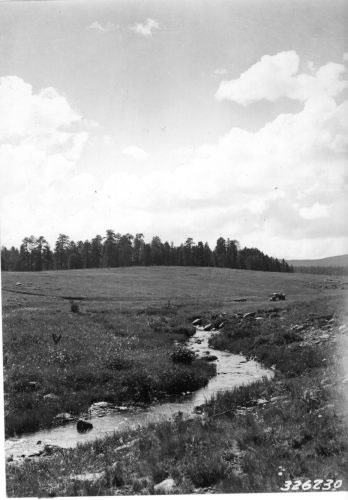
The APRO-MUFON-CUFOS triumvirate replaced NICAP. Pascagoula (1973), Travis Walton (1975), and Tehran (1976) entered the documentary record. The Iranian government and the Brazilian Air Force began maintaining institutional files. The decade produced the bulk of the abduction-research literature.
Kaikoura Lights, Pilots and Radar Track Objects Over New Zealand
Over several nights in late December 1978, commercial airline crews flying near Kaikoura, New Zealand observed large, luminous objects that were simultaneously tracked by Wellington Air Traffic Control radar. On 31 December, a television crew aboard a cargo flight filmed the objects while radar confirmed their presence. The Royal New Zealand Air Force investigated and could not identify the source. The incident generated international media coverage and the New Zealand government later released its investigation files, which confirmed the radar returns were genuine and unexplained.
sightings international
Marincic Edition of Tesla's Colorado Springs Notes Published in Belgrade
The Nikola Tesla Museum in Belgrade publishes 'Colorado Springs Notes, 1899-1900' as a complete edition of Tesla's laboratory diary, with extensive scientific commentaries by Aleksandar Marincic, D.Sc., Associate Professor of Electrical Engineering at Belgrade University and the museum's scientific adviser. Publisher: Nolit, Belgrade. The edition is supported by the Yugoslav Federal Administration for International Scientific, Educational, Cultural and Technical Cooperation. It is the first authoritative complete publication of Tesla's day-by-day Colorado Springs diary covering 1 June 1899 to 7 January 1900, including the famous July 4, 1899 entry on stationary-wave observations during a Colorado thunderstorm. Marincic's commentaries situate Tesla's work in modern electrical engineering and note that 'many of Tesla's early experiments have an intriguing similarity with later developments in ELF communications.'
science
Operation Prato -- Brazilian Air Force UFO Investigation
The Brazilian Air Force launched Operation Prato to investigate a wave of UFO sightings in the state of Para. Over four months, military teams documented and photographed luminous objects that reportedly caused injuries to dozens of residents in Colares. The operation produced hundreds of photographs and detailed technical reports, declassified in 2004.
international sightings
Petrozavodsk Phenomenon, Massive Sighting Across the Soviet Union
A large, jellyfish-shaped glowing object was observed over the city of Petrozavodsk in northwest Russia, with sightings reported across a vast area from Scandinavia to the Russian Far East. Police, naval personnel, and a TASS correspondent filed reports. The Soviet government responded by establishing the Setka programme, a network of military and academic institutions tasked with systematically collecting and analysing UFO reports. Setka gathered over 3,000 testimonies on more than 300 incidents. The event prompted the most comprehensive Soviet-era institutional response to the UFO phenomenon.
sightings international
Tehran UFO Incident
Two Imperial Iranian Air Force F-4 Phantom jets were scrambled to intercept an unknown object over Tehran after multiple civilian reports. Both aircraft experienced instrumentation and weapons-system failures during their approach. The event was documented in a U.S. Defense Intelligence Agency report that described the case as meeting criteria for a valid study of the UFO phenomenon.
international sightings
Travis Walton Abduction
Logger Travis Walton went missing for five days after his crew reported seeing him struck by a beam of light from a hovering object near Snowflake, Arizona. Six co-workers passed polygraph tests about the encounter. Walton reappeared disoriented and described being aboard a craft. The case was investigated by the Aerial Phenomena Research Organization and later became the subject of the 1993 film 'Fire in the Sky.'
sightings
Church Committee Investigates Intelligence Classification Practices
The U.S. Senate established the Church Committee, chaired by Senator Frank Church, to investigate abuses by the CIA, FBI, and NSA. While the committee focused on domestic surveillance and covert operations rather than UFOs specifically, its findings exposed the extent to which intelligence agencies could classify and compartmentalise information without meaningful oversight. The committee's work led to the creation of permanent intelligence oversight committees in Congress and informed later arguments that UFO programmes may have operated outside proper Congressional authority.
government congressional
Coyne Helicopter Incident, Army Crew Encounters Object Over Ohio
A U.S. Army UH-1H helicopter commanded by Captain Lawrence Coyne was flying near Mansfield, Ohio when the crew spotted a grey, cigar-shaped object with a bright green light closing on them at high speed. Coyne initiated a steep descent to avoid collision, but the helicopter was pulled upward from 1,700 feet to 3,500 feet with the collective still in the full-down position. The object then accelerated away. All four crew members filed consistent reports, and ground witnesses independently corroborated the encounter. The case was investigated by the Center for UFO Studies and remains one of the best-documented multi-witness military encounters.
military sightings
Pascagoula Abduction Case
Charles Hickson and Calvin Parker reported being taken aboard a craft by unknown beings while fishing on the Pascagoula River in Mississippi. Their account was recorded by the Jackson County Sheriff's Office, and a secretly taped conversation between the two men appeared to show genuine distress. The case became one of the most investigated abduction reports in U.S. history.
historical sightings
Apollo 17 -- Final Crewed Mission to the Moon
Apollo 17, the sixth and final crewed Moon landing, launched on December 7, 1972, with Commander Eugene A. Cernan, Lunar Module Pilot Harrison H. Schmitt, and Command Module Pilot Ronald E. Evans. Schmitt, a geologist, was the first scientist-astronaut to reach the lunar surface. The crew landed in the Taurus-Littrow valley and conducted three extravehicular activities totaling over 22 hours, collecting 110.5 kilograms of lunar samples. Cernan became the last person to walk on the Moon when he re-entered the Lunar Module on December 14, 1972. The mission set records for longest lunar landing flight, longest total lunar surface extravehicular activities, and largest lunar sample return.
space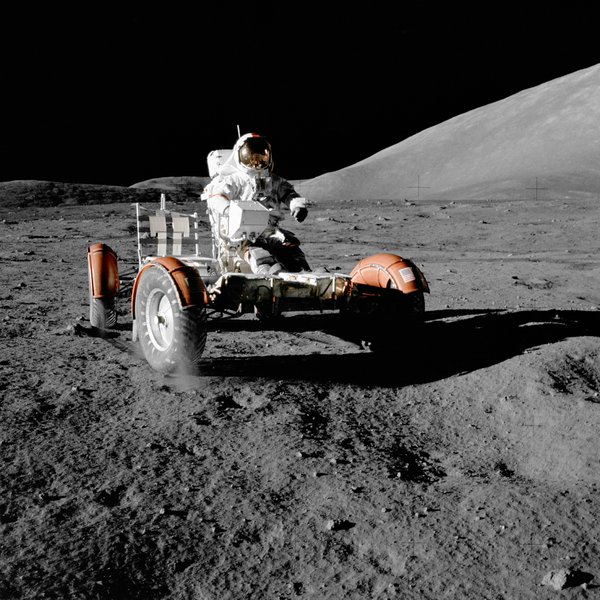
The Hill case (1961) introduced abduction phenomenology. Vallée's *Anatomy of a Phenomenon* and Hynek's defection from sceptic to investigator reshaped the civilian field. Socorro (1964) became the only Blue Book case officially classified as unidentified. The 1968 Congressional symposium produced the first sworn hearings.
Project Blue Book Officially Closed
Following the University of Colorado's Condon Report, the Air Force terminated Project Blue Book, concluding that no UFO reported, investigated, or evaluated posed a threat to national security, and that no evidence existed of extraterrestrial vehicles. For 38 years, no official U.S. investigation would follow.
government
Apollo 11 -- First Humans Land on the Moon
NASA astronauts Neil A. Armstrong and Edwin E. "Buzz" Aldrin Jr. became the first humans to walk on the Moon after the Apollo 11 Lunar Module Eagle landed in the Sea of Tranquility at 20:17 UTC. Armstrong stepped onto the lunar surface at 02:56 UTC on July 21, followed by Aldrin 19 minutes later. The pair spent approximately two and a quarter hours outside the spacecraft, collecting 21.5 kilograms of lunar material. Command Module Pilot Michael Collins orbited above in Columbia. The crew splashed down in the Pacific Ocean on July 24, fulfilling President Kennedy's 1961 goal.
space
Shakey the Robot
Shakey the Robot at the Stanford Research Institute demonstrates early mobile perception and navigation. Shakey integrates a television camera, range finder, and bump sensors with a reasoning programme, becoming one of the first mobile robots to interpret instructions, plan actions, and navigate through a real-world environment.
robotics
Condon Report Published
The University of Colorado published the Condon Committee's final report, concluding that further study of UFOs was unlikely to advance science. However, approximately 30% of cases studied remained unexplained, and several participating scientists publicly disagreed with Condon's summary conclusions. The report provided the justification for closing Project Blue Book the following year.
government
Shag Harbour Incident, Canadian Military Investigates Object Entering Water
Multiple witnesses, including an RCMP constable, observed a large, illuminated object descend and enter the waters off Shag Harbour, Nova Scotia. Canadian Coast Guard and Navy divers conducted a search operation and recovered a thick, yellow foam on the surface but found no aircraft wreckage or conventional debris. The Canadian Department of National Defence classified the event as a UFO sighting in official records, making it one of the few incidents where a national government formally acknowledged an unresolved case in its military documentation.
military sightings international
Malmstrom AFB Nuclear Missile Incident
At Malmstrom Air Force Base in Montana, ten Minuteman intercontinental ballistic missiles in the Echo Flight launch complex went into a 'no-go' condition simultaneously, a failure mode that had no precedent. Security personnel at the launch facilities reported a glowing red oval object hovering above the front gate. Deputy missile combat crew commander Captain Robert Salas received the security reports and watched the missiles go offline in sequence. The Air Force investigated and found no conventional explanation for the system failures. Salas later testified publicly about the incident, including before AARO in 2023.
military
Westall School Sighting, Melbourne
Over 200 students and staff at Westall High School in Clayton South, Melbourne, observed a silvery-grey disc descend into a nearby paddock before rising and departing at speed. Some witnesses reported seeing the object land briefly. The event was covered by local media at the time, and many witnesses maintained consistent accounts decades later. It remains one of Australia's largest mass-witness UFO cases.
sightings international
ELIZA: One of the First Chatbots
Joseph Weizenbaum creates ELIZA at MIT, one of the first chatbots. ELIZA simulates a Rogerian psychotherapist by using pattern matching and substitution to process natural language input.
ai
Kecksburg Incident
Residents of Kecksburg, Pennsylvania reported a fireball streaking across the sky, followed by the recovery of an acorn-shaped object from a wooded area. Witnesses described military personnel quickly cordoning off the site and removing the object on a flatbed truck. The U.S. Army stated nothing was found, but FOIA requests decades later revealed that related records had been removed from Air Force files.
sightings
Socorro, New Mexico Sighting
Police officer Lonnie Zamora reported seeing a shiny, egg-shaped object on the ground south of Socorro, New Mexico, with two small figures beside it. The craft departed with a roar and flame before he could approach. Physical trace evidence, including landing marks and burned vegetation, was documented by investigators from the Air Force's Project Blue Book. J. Allen Hynek classified it as one of the strongest unexplained cases in the Blue Book files.
sightings
Valentina Tereshkova Becomes First Woman in Space Aboard Vostok 6
Soviet cosmonaut Valentina Vladimirovna Tereshkova became the first woman to fly in space when she launched aboard Vostok 6 from Baikonur Cosmodrome. Over the course of nearly three days, she completed 48 orbits of Earth, logging more flight time than all American astronauts combined at that point. Tereshkova was selected from over 400 applicants and underwent 18 months of training for the mission. It would be 19 years before another woman, Svetlana Savitskaya, flew in space, and 20 years before the first American woman, Sally Ride, reached orbit.
space
Betty and Barney Hill Abduction
Betty and Barney Hill reported a close encounter with a craft and non-human beings while driving through the White Mountains of New Hampshire. Under separate hypnosis sessions with psychiatrist Dr. Benjamin Simon, both described consistent details of being taken aboard the object. The case became the first widely publicised abduction report in the United States and was the subject of John Fuller's 1966 book 'The Interrupted Journey.'
sightings
Nikola Tesla Electro-Technical Institute Reorganised in Belgrade
The Nikola Tesla Electro-Technical Institute formally begins operations in Belgrade on 1 July 1961, inheriting the older Institute for Survey of Electrical Phenomena Nikola Tesla under Regulation No. 148 issued 25 March 1961 by the People's Republic of Serbia. The reorganised institute is sponsored by the Federal Executive Board of the Republic of Serbia, the School of Electrical Engineering in Belgrade, Belgrade's Elektrosrbija Enterprise, and the Mosa Pijade Cable Factory in Svetozarevo. Founding researchers include B. Mitrakovic, J. Despotovic, V. Knezevic and D. Skenderdzic. The institute's work is documented in the Croatian-language periodical Casopis za elektroprivredu i elektroindustriju, then translated into English by the United States Joint Publications Research Service as JPRS report 16,375 on 27 November 1962 — evidence of continued American intelligence interest in Tesla-related research nearly two decades after Tesla's death.
science
Yuri Gagarin Becomes First Human in Space Aboard Vostok 1
Soviet cosmonaut Yuri Alekseyevich Gagarin became the first human to travel into outer space when he completed a single orbit of Earth aboard the Vostok 1 spacecraft. The flight lasted 108 minutes, reaching an altitude of 327 kilometers. Gagarin launched from Baikonur Cosmodrome at 09:07 Moscow Time and landed by parachute near the city of Engels in Saratov Oblast. The mission was a landmark achievement in the Space Race and prompted President John F. Kennedy to announce the goal of landing an American on the Moon before the end of the decade.
space
APRO founded (1952). Project Blue Book opened (1952). The Washington National radar incident (July 1952), the Robertson Panel (January 1953), and the establishment of the civilian-research tradition through NICAP, CSI, and Saucers magazine made the 1950s the documentary foundation decade.
NASA Established -- National Aeronautics and Space Act Signed into Law
President Dwight D. Eisenhower signed the National Aeronautics and Space Act into law, establishing the National Aeronautics and Space Administration (NASA) as a civilian agency responsible for the nation's space program. NASA began operations on October 1, 1958, absorbing the former National Advisory Committee for Aeronautics (NACA) and its 8,000 employees, three major research laboratories, and annual budget of $100 million. The agency was created in direct response to the Soviet Union's launch of Sputnik and the perceived need for a coordinated U.S. space effort.
space
Levelland, Texas, Vehicle Electromagnetic Interference Wave
Over two nights in early November 1957, at least fifteen motorists near Levelland, Texas reported their vehicles' engines stalling and headlights failing in the presence of a large, luminous, egg-shaped object. Levelland police officers and the sheriff investigated and documented the reports. Project Blue Book sent a single investigator who spent one day on site and attributed the sightings to ball lightning and wet electrical systems, though several researchers noted there was no rain that evening. The concentration of independent electromagnetic interference reports from unrelated witnesses made it one of the most significant physical-effect cases of the 1950s.
sightings
Soviet Union Launches Sputnik 1 -- First Artificial Satellite
The Soviet Union launched Sputnik 1, the first artificial satellite, into low Earth orbit aboard an R-7 rocket from the Baikonur Cosmodrome. The 83.6-kilogram sphere transmitted radio pulses for 21 days and orbited Earth for three months before reentering the atmosphere. The launch marked the beginning of the Space Age and triggered the U.S.-Soviet space competition.
space
RB-47 Reconnaissance Aircraft Tracked by Unidentified Object for 90 Minutes
A U.S. Air Force RB-47H electronic reconnaissance aircraft with a crew of six was tracked by an unidentified object across four states over a period of approximately ninety minutes. The crew visually observed an intensely luminous object while their electronic countermeasures equipment simultaneously detected a strong electromagnetic signal from its direction. Ground radar stations independently confirmed an unknown return in the same position. The object reportedly hovered, paced the aircraft at varying distances, and executed abrupt speed changes before disappearing. Atmospheric physicist James McDonald later called it one of the most scientifically significant radar-visual cases on record.
military sightings
Rosenblatt Develops the Perceptron
Frank Rosenblatt develops the Perceptron, an early neural network capable of learning to classify inputs. It represents the first implementation of a connectionist learning algorithm.
ai
Dartmouth Conference Establishes AI as a Field
The Dartmouth Conference formally establishes artificial intelligence as a field of study. Organised by John McCarthy, Marvin Minsky, Nathaniel Rochester, and Claude Shannon, the gathering proposes that every aspect of learning can in principle be described precisely enough for a machine to simulate it.
ai
Florence Stadium Mass Sighting, 10,000 Spectators Witness Objects Over Italy
During a football match between Fiorentina and Pistoiese at the Stadio Artemi Franchi in Florence, an estimated 10,000 spectators observed multiple egg-shaped objects hovering over the city for approximately ninety minutes. The match was halted as players and fans watched the objects manoeuvre overhead. A silvery, fibrous substance described as 'angel hair' fell from the sky during the event and was collected for laboratory analysis. Professor Giovanni Canneri of the University of Florence conducted spectrographic analysis and identified boron, silicon, calcium, and magnesium in the samples. The sighting occurred during a wave of reports across Italy in late 1954.
sightings international
Unimate: First Programmable Industrial Robot
George Devol and Joseph Engelberger develop Unimate. Devol files the original patent in 1954 for a 'Programmed Article Transfer' device. In 1961, the first unit begins operation on a General Motors assembly line at the Inland Fisher Guide plant in Ewing Township, New Jersey, performing die-casting handling and spot welding.
robotics
Kinross Incident, Air Force Interceptor Vanishes Over Lake Superior
An F-89C Scorpion interceptor piloted by First Lieutenant Felix Moncla, with radar operator Second Lieutenant Robert Wilson, was scrambled from Kinross AFB to investigate an unidentified radar return over Lake Superior. Ground radar operators watched the aircraft's blip merge with the unknown target, after which both disappeared from the screen. No wreckage, crew remains, or debris were ever recovered despite extensive searches. The Air Force attributed the loss to the aircraft running out of fuel while chasing a Royal Canadian Air Force aircraft, but Canadian authorities denied any of their planes were in the area.
military
CIA Convenes the Robertson Panel on UFOs
The CIA assembled a panel of scientists chaired by physicist H.P. Robertson to assess whether UFOs posed a threat to national security. Over four days, the panel reviewed Blue Book cases and concluded that UFOs were not a direct physical threat but that public interest in sightings could overload military communication channels and be exploited by hostile nations. The panel recommended a public education campaign to strip UFOs of their 'special status' and that civilian UFO groups be monitored. These recommendations shaped U.S. government UFO policy for decades.
government
Flatwoods Monster Incident
Residents of Flatwoods, West Virginia reported seeing a bright object cross the sky and land on a hillside. A group that went to investigate described encountering a large, dark figure with a glowing face emitting a pungent mist that caused nausea. The case drew immediate national attention, with investigators noting scorched ground and a lingering chemical odour at the site. It remains one of the most widely discussed early encounter reports.
sightings
Tesla's Seized Papers Released to Sava Kosanović and Shipped to Belgrade
The United States Office of Alien Property releases the Nikola Tesla papers it had seized in January 1943 to Sava Kosanović, Tesla's nephew and the Yugoslav ambassador to the United States. The two truckloads of material taken from the Hotel New Yorker and from the existing Manhattan Storage and Warehouse Co. holdings, plus the abstract filed by Dr. John G. Trump's evaluation team, are shipped to Belgrade. Kosanović becomes the founding figure of what later becomes the Nikola Tesla Museum. According to subsequent Tesla scholarship a sealed box of materials present in Tesla's room on the day of his death is not catalogued in the Belgrade accession; its contents remain unaccounted for in the documentary record.
government
Washington D.C. UFO Incidents
Over two weekends in July 1952, radar operators at Washington National Airport and Andrews Air Force Base tracked multiple unidentified objects over the nation's capital. F-94 interceptors were scrambled. The incidents generated front-page headlines nationwide and prompted the CIA to convene the Robertson Panel.
military sightings
Project Blue Book Begins
The Air Force created Project Blue Book as its official UFO investigation program. Over 17 years, it investigated 12,618 reported sightings, ultimately classifying 701 as 'unidentified.' The program was shuttered in 1969 following the Condon Report.
government
Lubbock Lights, Mass Sightings Over West Texas
Over several weeks in August and September 1951, thousands of residents across Lubbock, Texas observed V-shaped formations of lights passing overhead at high speed. Three Texas Tech professors observed the objects on multiple evenings, and a college student photographed the formations. Air Force investigators from Project Blue Book examined the case extensively. Blue Book director Edward Ruppelt later called it one of the most puzzling cases in the files, and the photographs were never conclusively explained.
sightings
Turing Proposes Machine Intelligence Test
Alan Turing publishes 'Computing Machinery and Intelligence,' introducing the Turing Test as a proposed measure of machine intelligence.
ai
The modern UAP era begins. Kenneth Arnold's 24 June 1947 sighting introduced "flying saucer" into English. Roswell followed within weeks. Project Sign opened in January 1948. The Mantell incident, the Estimate of the Situation, and the reorganisation as Project Grudge in 1949 set the institutional template.
Project Grudge Replaces Project Sign
The Air Force replaced Project Sign with Project Grudge, shifting the official approach from open investigation toward systematic debunking of UFO reports. Grudge reviewed 244 sighting reports, classified 23 percent as unexplained, then recommended that the project be reduced in scope. Critics, including former Sign investigators, argued the programme had been deliberately structured to dismiss credible reports rather than investigate them.
government
Gorman Dogfight, Air National Guard Pilot Engages Unidentified Light Over Fargo
Second Lieutenant George Gorman of the North Dakota Air National Guard engaged a bright, manoeuvring light over Fargo in his P-51 Mustang for 27 minutes. The object repeatedly outperformed his aircraft in speed and climbing ability. Ground witnesses, including the airport traffic controller and a Piper Cub pilot, independently confirmed the light. Project Sign investigators documented the case extensively, and it remained one of the strongest unexplained military encounters of the late 1940s.
military sightings
Mantell Incident, Air National Guard Pilot Dies Pursuing Unidentified Object
Captain Thomas Mantell of the Kentucky Air National Guard died when his P-51 Mustang crashed while pursuing a large, bright object reported by multiple witnesses over Fort Knox. Mantell radioed that the object was 'metallic and tremendous in size' before his aircraft broke apart at high altitude. The Air Force initially attributed the sighting to Venus, later revising the explanation to a classified Skyhook balloon. Mantell became the first documented military fatality directly linked to a UFO pursuit.
military sightings
Project Sign -- First Official U.S. Government UFO Investigation
The U.S. Air Force established Project Sign at Wright-Patterson AFB to investigate UFO reports following the Arnold sighting and Roswell incident. An early classified estimate concluded some UFOs were likely extraterrestrial -- it was rejected by Air Force leadership.
government
Twining Memo, Air Force General Declares 'The Phenomenon Is Something Real'
Lt. General Nathan Twining, commanding officer of Air Materiel Command at Wright-Patterson AFB, sent a classified memo to Brigadier General George Schulgen stating that 'the phenomenon reported is something real and not visionary or fictitious.' Twining described disc-shaped objects with extreme manoeuvrability, no visible means of propulsion, and possible remote control, and recommended the establishment of a formal investigation. The memo led directly to the creation of Project Sign.
government military
National Security Act Signed, Creating the CIA and Modern Classification Framework
President Truman signed the National Security Act into law, establishing the Central Intelligence Agency, the National Security Council, and the Department of Defense. The Act created the institutional classification framework that would govern how the U.S. government handled UFO investigations for decades, giving intelligence agencies broad authority over what information could be withheld from the public on national security grounds.
government
Roswell Incident -- Army Air Field Issues 'Flying Disc' Press Release
Roswell Army Air Field public information officer issued press release about recovery of a 'flying disc' near Roswell, New Mexico. The Army retracted the statement the next day, attributing the debris to a weather balloon. Decades later, the Air Force acknowledged it was Project Mogul -- a classified nuclear test detection program.
government sightings
Kenneth Arnold Sighting -- First Modern UFO Report
Private pilot Kenneth Arnold observed nine unidentified objects flying past Mount Rainier at estimated speeds exceeding 1,200 mph. His description of objects skipping 'like a saucer across water' coined the term 'flying saucer' and launched the modern UFO era.
military sightings
Foo Fighters, Allied Pilots Report Unidentified Aerial Phenomena Over Europe and Pacific
Allied pilots in both European and Pacific theatres reported glowing orbs and unexplained aerial objects that paced their aircraft during combat missions. The phenomena were nicknamed 'foo fighters' by the 415th Night Fighter Squadron. Intelligence officers investigated whether the objects were secret Axis weapons, but no conventional explanation was confirmed. After the war, captured German and Japanese records showed their pilots had reported the same phenomena, ruling out enemy technology.
military sightings historical
Office of Alien Property Seizes Tesla's Papers
On Saturday 9 January 1943, two days after Tesla's death, Walter Gorsuch of the New York office of the Alien Property Custodian, accompanied by an officer named Fitzgerald, seized the entire contents of Tesla's room and storage holdings. The FBI's own summary of the action records 'about two truckloads of material, sealed all articles and transferred them to the Manhattan Storage and Warehouse Co.' A further 30 barrels and bundles belonging to Tesla were already in the same warehouse from earlier. Dr. John G. Trump of MIT and the Office of Scientific Research and Development would arrive shortly afterwards, accompanied by Naval Intelligence officers, to begin the technical review.
government
Death of Nikola Tesla, Hotel New Yorker
Nikola Tesla dies alone in room 3327 of the Hotel New Yorker, aged 86. He had been working through the night on what his correspondence described as a directed energy beam, the teleforce weapon also called the death ray. Within hours of his death the United States Office of Alien Property would begin the chain of actions that ended with the seizure of two truckloads of his papers and a sealed contents that still draws questions eight decades later.
people
Battle of Los Angeles
US Army anti-aircraft batteries fired over 1,400 rounds of ammunition at unidentified objects over Los Angeles, less than three months after the Pearl Harbor attack. Searchlights converged on objects reported by multiple military observers. Secretary of the Navy Frank Knox initially dismissed the event as a 'false alarm,' but Secretary of War Henry Stimson contradicted him, confirming 'unidentified planes' were present. A famous photograph published in the Los Angeles Times showed searchlight beams converging on an object above the city. The incident caused five civilian deaths and significant property damage from falling shell fragments.
sightings military historical
Citizen Letter Forwards Tesla Teleforce Specification to J. Edgar Hoover
Two days after the New York Times publishes its article on Tesla's teleforce weapon, a citizen letter dated 24 September 1940 lands on J. Edgar Hoover's desk at the Department of Justice in Washington. The writer encloses the article and urges the War Department to ensure 'constant guarding' against Tesla's possible seizure by foreign agents, noting the technology 'should be of vital importance to our War Department as well as to that of other nations now controlled by insane dictators.' The letter is preserved in FBI file 100-2237 and is one of the earliest documents in the Bureau's Tesla holdings.
government
New York Times Publishes Tesla's Teleforce Death Ray Claim
The New York Times of Sunday 22 September 1940 publishes an article on Nikola Tesla's teleforce weapon, also called the death ray. Tesla is then 84. The article describes a four-part mechanism: eliminating the necessity for a high vacuum; a method for producing 'very great electrical force'; amplification of that force; and a projector for producing 'a tremendous electrical repelling force.' Beam voltage cited as 50,000,000 volts. The piece prompts citizen correspondence to J. Edgar Hoover urging the War Department to take the claims seriously, beginning the FBI's Nikola Tesla file (number 100-2237) that would eventually run to 160 released pages.
science
Charles Fort published his final book on anomalous phenomena. The Fortean Society organised civilian collection of aerial reports. Scandinavian ghost rocket sightings during 1946 marked the immediate prelude to the Arnold encounter that opened the modern era.
Alleged UFO Crash Near Magenta, Italy
According to documents that surfaced in the late 1990s, an unidentified cylindrical craft reportedly crashed near Magenta, Italy. The Mussolini government allegedly established a secret committee (Gabinetto RS/33) under Guglielmo Marconi to study the wreckage. Italian researcher Roberto Pinotti published the documents, which included telegrams and memos. The case gained renewed attention when David Grusch named it in his 2023 congressional testimony, claiming the US obtained the recovered material from Italy after World War II. The Italian government has neither confirmed nor denied the documents' authenticity.
sightings historical military
Tesla's 75th Birthday Interview in Time Magazine
Time Magazine publishes its feature on Nikola Tesla at 75, based on his annual birthday interview from his rooms at the Hotel Governor Clinton in Manhattan. Tesla uses the occasion to announce a critique of Einstein's theory, to deny the practicality of atomic energy ('I have split atoms — but no energy was released'), and to renew the interplanetary-communication claim from his 1900 Century essay: 'I think that nothing can be more important than interplanetary communication. It will certainly come some day, and the certitude that there are other human beings in the universe, working, suffering, struggling, like ourselves, will produce a magic effect on mankind and will form the foundation of a universal brotherhood that will last as long as humanity itself.' The piece records birthday greetings from Sir Oliver Lodge, Lee De Forest, Robert Millikan, Ernst Alexanderson, John Hays Hammond Jr., U.S. Secretary of Commerce Robert Patterson Lamont, and Henry Herman Westinghouse.
science
The 1917 Fátima sun phenomenon entered the secular record as a mass-witness event independent of its theological interpretation. Continued Australian and European newspaper reports of unexplained airship sightings appeared through to the First World War. Tesla published his autobiography essays in 1919.
Tesla Begins 'My Inventions' Autobiographical Series in Electrical Experimenter
Hugo Gernsback's Electrical Experimenter magazine begins serialising Nikola Tesla's autobiographical series 'My Inventions' in its January 1919 issue. The multi-part series, written by Tesla himself, becomes the single most-cited Tesla autobiography source and includes the famous passage on his childhood eidetic visions: 'The theory I have formulated is that the images were the result of a reflex action from the brain on the retina under great excitation. They certainly were not hallucinations.' Gernsback would go on to coin the term 'science fiction' and edit Amazing Stories from 1926; the editorial sensibility that hosted Tesla's late writing was the same that would seed American pulp science fiction and, through that, the postwar UFO and contactee culture.
science
Fatima, Portugal: The Miracle of the Sun
An estimated 30,000 to 70,000 people gathered in Fatima, Portugal witnessed what became known as the Miracle of the Sun. Observers reported a silver disc-shaped object spinning, diving toward the crowd, and emitting coloured light that dried rain-soaked clothing and ground. The event was covered by secular Portuguese newspapers including O Seculo, whose reporter Avelino de Almeida published a firsthand account. While the Catholic Church attributed the event to divine intervention, researchers have noted the descriptions align closely with reported UAP characteristics.
sightings historical
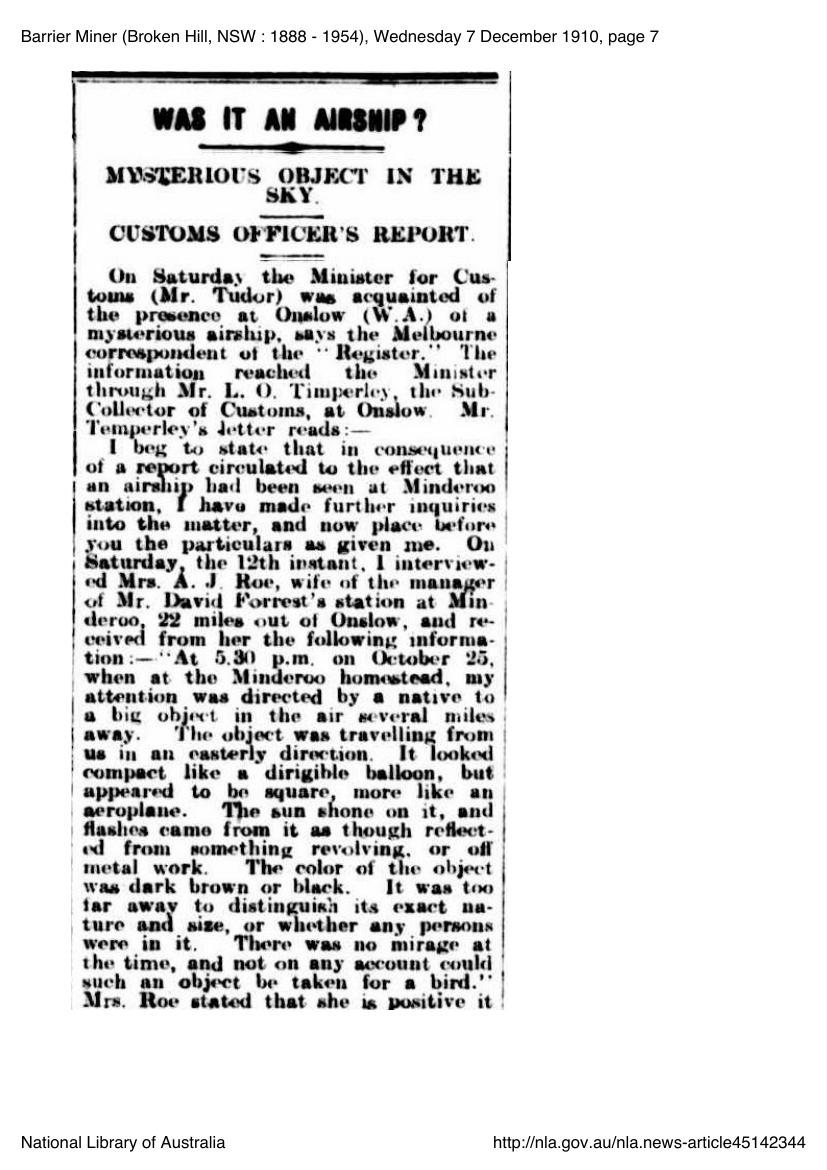
The opening years of powered flight produced sporadic aerial-phenomenon reports alongside Tesla's interplanetary essays. The aerial-phenomenon record entered a sustained accumulation phase that would not see its first institutional response for another four decades.
Tesla Publishes 'Talking with the Planets' in Collier's Weekly
Nikola Tesla's article 'Talking with the Planets' appears in Collier's Weekly. Drawing on his 1899 Colorado Springs observations, Tesla writes that 'the feeling is constantly growing on me that I had been the first to hear the greeting of one planet to another.' The article is the most-cited mainstream-press statement Tesla ever made on interplanetary communication and is the primary upstream source for the half-century of contactee-era literature that would later claim him as a forerunner.
science
Tesla Publishes 'The Problem of Increasing Human Energy' in Century Magazine
Nikola Tesla's essay 'The Problem of Increasing Human Energy, With Special Reference to the Harnessing of the Sun's Energy' appears in Century Magazine, Volume 60, June 1900. The essay introduces a mainstream American readership to his world-wireless concept and contains the canonical passage on interplanetary communication: 'It is highly probable that if there are intelligent beings on Mars they have long ago realized this very idea, which would explain the changes on its surface noted by astronomers.' The piece is the single most-quoted source for Tesla's published speculation on signals between planets and a foundational upstream document for the postwar contactee tradition.
science
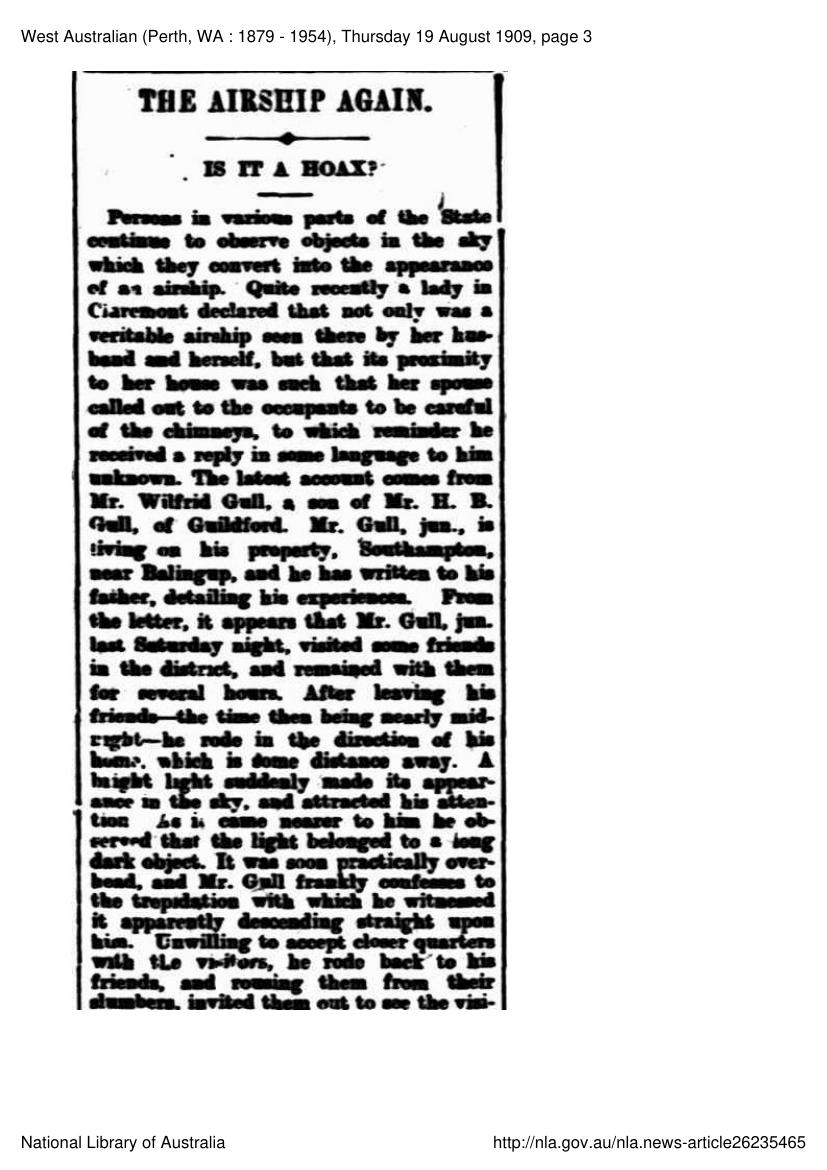
The pre-aviation era closes with the Great Airship Wave of 1896 to 1897. Newspapers across the American Midwest and West printed witness reports of cigar-shaped craft with humanoid occupants. The Aurora Texas crash report (April 1897) became the first widely-printed account of a recovered occupant.
Tesla Observes Stationary Waves at Colorado Springs
On the night of 3 to 4 July 1899, during a thunderstorm with 10,000 to 12,000 lightning discharges in two hours, Nikola Tesla observed periodic impulses on his rotating-coherer receiver at his Colorado Springs laboratory. The instrument continued to register impulses at near half-hour intervals even after the storm receded beyond 200 miles. Tesla concluded the observation proved 'the existence of stationary waves' in the earth — a conclusion he later reframed publicly in his June 1900 Century essay and his February 1901 Collier's article as the possible reception of interplanetary signals.
science
Aurora, Texas Airship Crash
The Dallas Morning News reported that an airship struck a windmill on Judge J.S. Proctor's property in Aurora, Texas, and crashed. The article claimed the pilot's remains were 'not of this world' and were buried in the local cemetery. The incident occurred during the Great Airship Wave of 1896 to 1897, when hundreds of sightings were reported across the central United States. The Aurora case remains contested, with investigators finding both supporting and contradicting evidence over the following century.
sightings historical
Great Airship Wave Begins in California
Hundreds of residents of Sacramento, California reported a bright light moving slowly over the city, apparently attached to a dark cigar-shaped craft. The sighting was reported on the front page of the Sacramento Bee. Over the following months, similar reports spread across the western and central United States, with sightings documented by newspapers in at least 19 states. The wave is the first large-scale UFO flap in American history, occurring seven years before the Wright Brothers' first powered flight.
sightings historical
The earliest documented aerial phenomena entered the European record in the broadsheets of the Reformation period. Mass-witness celestial displays at Nuremberg 1561 and Basel 1566 were printed as woodcuts with witness accounts. The accounts pre-date all aviation and represent the earliest entries in the archive.
Basel Celestial Phenomenon, Black Spheres Over Switzerland
Residents of Basel, Switzerland reported large black spheres appearing in the sky and moving at speed toward the sun, along with a large red sphere. The event was documented in a woodcut by Samuel Coccius and published in the Basel municipal gazette. Coming five years after the Nuremberg event, it represents the second major documented mass aerial phenomenon of the 16th century. Both the Basel and Nuremberg events were recorded by civic authorities, not just individual observers.
sightings historical
Nuremberg Celestial Phenomenon, Mass Sighting Over Germany
Citizens of Nuremberg witnessed what they described as hundreds of spheres, cylinders, and crosses appearing in the sky at dawn. The broadsheet illustration by Hans Glaser, published in the Nuremberg Gazette, depicted objects of various shapes engaged in apparent aerial manoeuvres before some fell to earth trailing smoke. The event is one of the earliest documented mass sightings in European history, recorded in detail by a contemporary artist within weeks of the incident.
sightings historical