The Space Race was a period of intense competition between the United States and the Soviet Union spanning roughly 1957 to 1972. The rivalry drove rapid advances in rocketry, orbital mechanics, and human spaceflight, producing a series of firsts that remain among the most significant achievements in exploration history.
Origins
The roots of the Space Race lie in post-World War II ballistic missile development. Both superpowers recruited German rocket engineers and pursued intercontinental ballistic missile (ICBM) technology through the early 1950s. The International Geophysical Year (1957, 1958) provided the scientific framework for early satellite proposals from both nations.
Soviet Firsts
The Soviet space programme, operating under chief designer Sergei Korolev, achieved a series of firsts that defined the early Space Race:
- October 4, 1957: Sputnik 1, the first artificial satellite, reached orbit aboard an R-7 rocket.
- November 3, 1957: Sputnik 2 carried Laika, the first animal in orbit.
- April 12, 1961: Yuri Gagarin became the first human in space aboard Vostok 1, completing one orbit of Earth.
- June 16, 1963: Valentina Tereshkova became the first woman in space aboard Vostok 6.
- March 18, 1965: Alexei Leonov performed the first extravehicular activity (spacewalk) during Voskhod 2.
The American Response
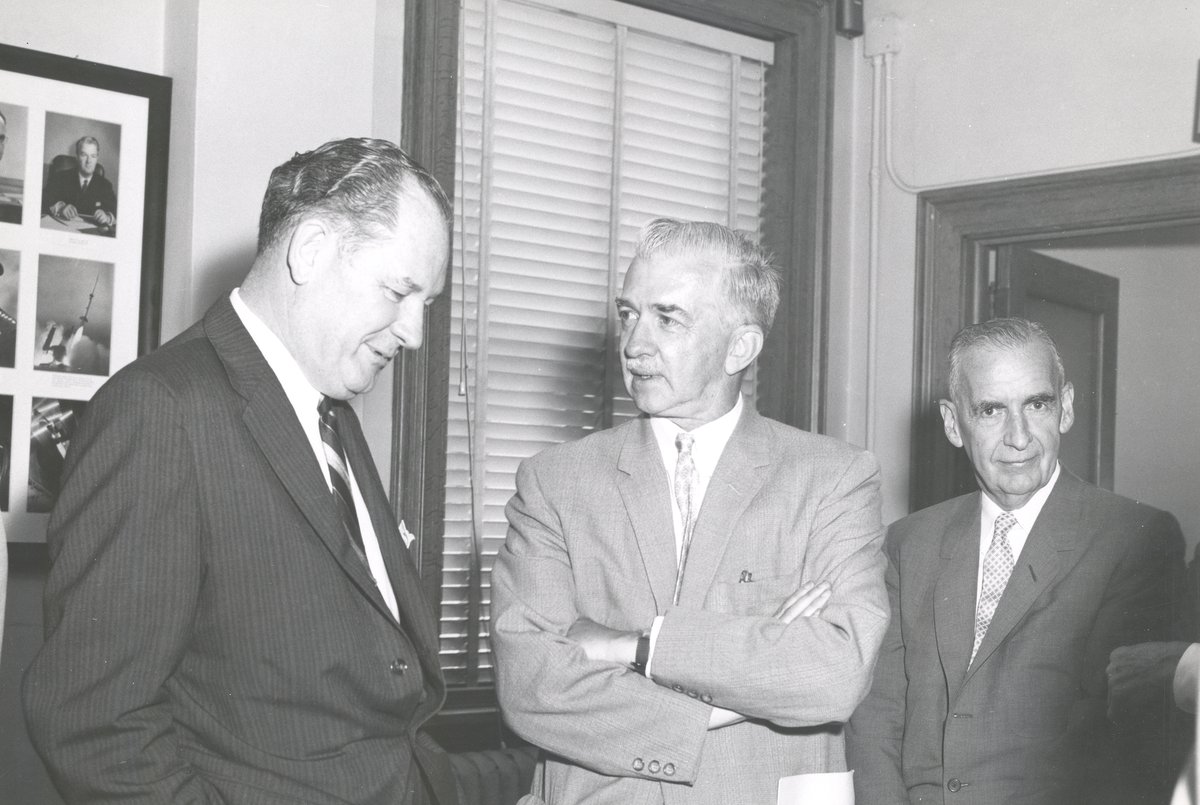
The United States established NASA on July 29, 1958, consolidating civilian space efforts under one agency. Key milestones included:
- May 5, 1961: Alan Shepard became the first American in space aboard Mercury-Redstone 3 (Freedom 7), a suborbital flight.
- February 20, 1962: John Glenn became the first American to orbit Earth aboard Mercury-Atlas 6 (Friendship 7).
- June 3, 1965: Ed White performed the first American spacewalk during Gemini 4.
- December 21, 1968: Apollo 8 became the first crewed mission to orbit the Moon.
On May 25, 1961, President John F. Kennedy addressed a joint session of Congress and committed the United States to landing a man on the Moon before the end of the decade.
Apollo and the Moon Landings
The Apollo programme achieved six crewed lunar landings between 1969 and 1972:
- Apollo 11 (July 20, 1969): Neil Armstrong and Buzz Aldrin became the first humans to walk on the Moon. Michael Collins remained in lunar orbit.
- Apollo 12 (November 1969): Precision landing near Surveyor 3 in the Ocean of Storms.
- Apollo 14 (February 1971): Alan Shepard commanded the mission to Fra Mauro.
- Apollo 15 (July 1971): First use of the Lunar Roving Vehicle.
- Apollo 16 (April 1972): Exploration of the Descartes Highlands.
- Apollo 17 (December 1972): Final Apollo lunar mission. Harrison Schmitt was the last of twelve humans to walk on the Moon.
Apollo 13 (April 1970) was aborted after an oxygen tank explosion; the crew returned safely without landing.
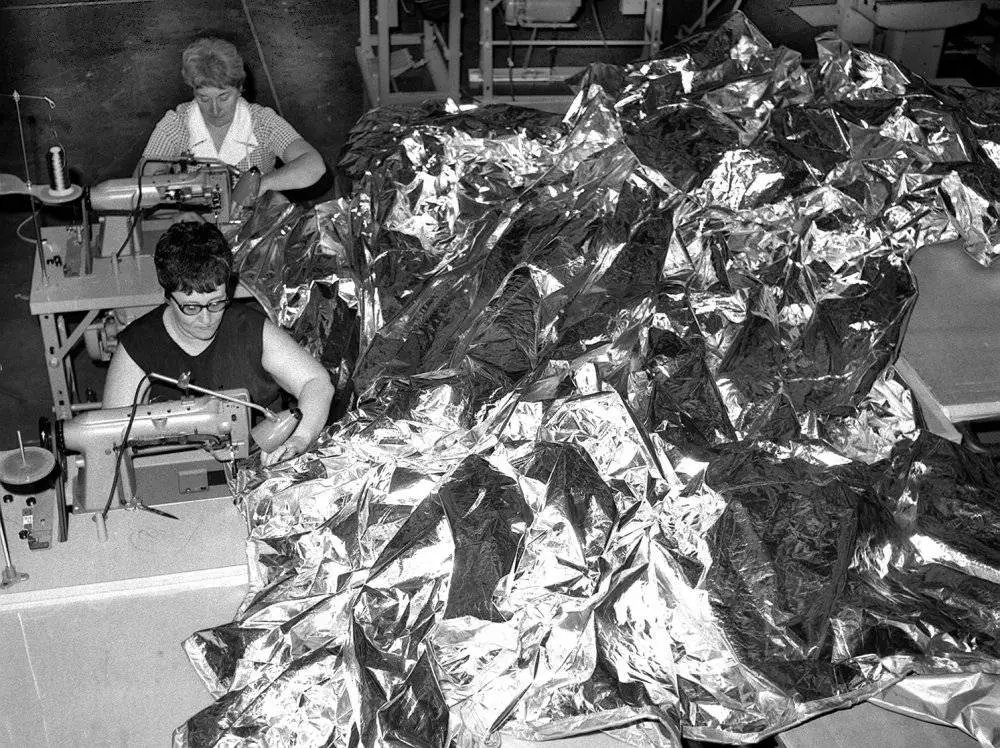
The Apollo programme also relied on a less-visible workforce of mathematicians, engineers, and skilled trades. Among them were the JPL “human computers”, the women who performed manual orbital trajectory calculations before electronic computers were trusted with mission-critical work.

Legacy
The Space Race produced foundational technologies in satellite communications, materials science, computing, and life support systems. The competition ended with the Apollo-Soyuz Test Project in July 1975, the first joint U.S.-Soviet crewed spaceflight.