The Contact Record
The archive holds 140 documented cases of claimed direct contact between humans and non-human intelligences. They span the desert meetings George Adamski described in 1952, the bedroom visitations Whitley Strieber recounted in 1987, and the school encounter 62 children reported in Zimbabwe in 1994. This page traces the full arc: who claimed what, who investigated the claims, and what the newsletter record preserved.
1950-1965 The Contactee Era
The Space Brothers and those who claimed to meet them.
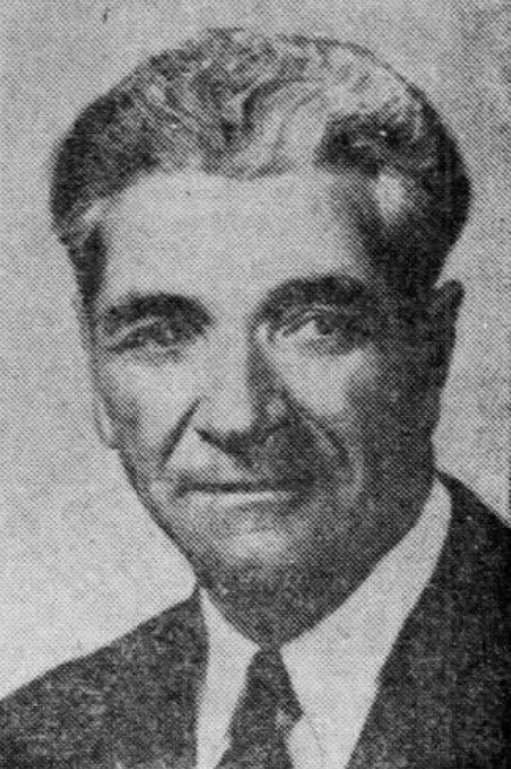
It started in the California desert. On 20 November 1952, George Adamski claimed he walked out to Desert Centre with six witnesses and met a man from Venus. The being was tall, blond, and concerned about nuclear testing. Adamski photographed the craft. The witnesses signed affidavits. Flying Saucers Have Landed, co-written with Desmond Leslie, sold hundreds of thousands of copies.
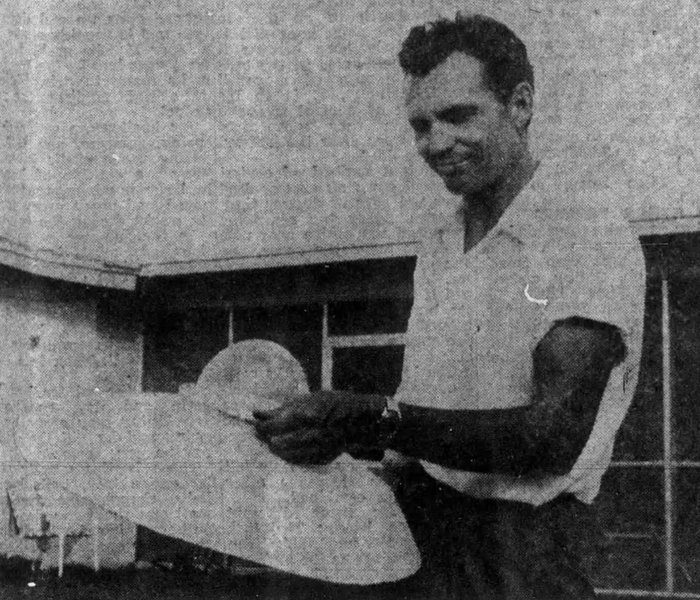
Within two years, a pattern had formed. Daniel Fry said he boarded a craft at White Sands in 1950 and was given a physics lecture. Truman Bethurum described meetings with the captain of a spacecraft from the planet Clarion. Orfeo Angelucci spoke of cosmic consciousness transmitted by luminous beings near a Lockheed plant in Burbank. Howard Menger, a sign painter in New Jersey, said the visitors had been visiting him since childhood.
These men gave lectures. They published books. They held conventions. George Van Tassel hosted the Giant Rock Spacecraft Convention in the Mojave from 1953, drawing thousands. The contactees had their own newsletters (Max B. Miller's Saucers in Los Angeles, the Little Listening Post in Washington) and their own circuit. They were the first public face of the contact claim.
Mainstream ufology rejected them. NICAP, under Donald Keyhoe, kept its distance. APRO investigated but remained sceptical. The contactees embarrassed the organisations trying to get the military to take sightings seriously. The visitors in contactee accounts were too human, too philosophical, too convenient. But the movement persisted through the 1950s and into the early 1960s, and its influence on public perception of what "contact" might look like was enormous.
1961-1975 The Transition
From friendly meetings to abductions against the will.
On the night of 19 September 1961, Betty and Barney Hill were driving home through the White Mountains of New Hampshire when they saw a light following their car. Two hours went missing. Under hypnosis with Dr. Benjamin Simon, both described being taken aboard a craft and subjected to medical examinations by short, grey-skinned beings with large eyes. Betty described a star map. Barney, a Black postal worker and civil rights activist, had no interest in flying saucers before that night.
The Hill case changed everything. The beings were not benevolent space brothers offering philosophy. They were clinical. The experience was traumatic. The witnesses were credible, reluctant, and consistent under independent hypnosis sessions. John Fuller's The Interrupted Journey (1966) introduced the case to the public and, with it, a new template for what contact looked like.
Through the late 1960s and 1970s, cases fitting this new template accumulated. Herb Schirmer, a police patrolman in Ashland, Nebraska, described being taken aboard a craft in 1967. APRO investigated Betty Andreasson's 1967 abduction, a case Raymond Fowler would document across four books. In 1973, two fishermen in Pascagoula, Mississippi, reported being paralysed and floated aboard a craft by beings with no eyes and crab-like claws. Charles Hickson passed a polygraph. Calvin Parker was so shaken he was briefly hospitalised.
Then came Travis Walton. On 5 November 1975, a logging crew of six men in the Apache-Sitgreaves National Forest saw a bright disc hovering above the trees. Walton approached it. A beam of light knocked him unconscious. He vanished for five days. The crew, terrified, drove away and reported him missing. All six passed polygraph examinations. Walton's account of what happened aboard the craft remains one of the best-witnessed abduction cases in the archive.
1975-1999 The Abduction Era
When systematic research became a field.
Budd Hopkins was a New York abstract expressionist painter. He got interested in UFOs after witnessing a daylight disc over Cape Cod in 1964. By the late 1970s, he was interviewing abductees, using hypnotic regression to recover suppressed memories. His 1981 book Missing Time documented a pattern: ordinary people with unexplained scars, missing hours, and fragmented memories of medical procedures performed by non-human beings. He developed a questionnaire that identified hundreds of potential abductees. He founded the Intruders Foundation to support them.
David Jacobs was a history professor at Temple University, one of the few academics to study the phenomenon openly. His 1973 dissertation became The UFO Controversy in America. By the late 1980s he had shifted to abduction research, publishing Secret Life (1992) and The Threat (1998). Jacobs developed a structured interview methodology and documented what he described as a systematic programme of reproductive interference.
Then Harvard weighed in. John Mack was a Pulitzer Prize-winning psychiatrist, full professor at Harvard Medical School, founding director of the Center for Psychology and Social Change. In the early 1990s he began interviewing abductees. His 1994 book Abduction: Human Encounters with Aliens concluded that these people were not psychotic, not fantasising, and not lying, and that the phenomenon could not be explained by known psychiatric categories. Harvard investigated him. A committee spent 15 months reviewing his work before concluding he had the right to study what he chose. Mack was killed by a drunk driver in London in 2004.
The 1992 MIT Abduction Study Conference, organised by Mack and physicist David Pritchard, brought abduction researchers together with psychologists, folklorists, and sceptics for the first formal academic examination of the phenomenon. Eddie Bullard, a folklorist, had already published a comprehensive comparative study showing that abduction narratives shared consistent features across cultures and decades in ways that resisted simple cultural contamination explanations.
I would never say, yes, there are aliens taking people. But I would say there is a compelling powerful phenomenon here that I can't account for in any other way.John Mack, BBC interview, 1994
Entity Types Reported
The beings described across seven decades of contact accounts.
The contactees of the 1950s described human-looking visitors, often tall and fair-haired, who spoke in philosophical terms about cosmic brotherhood. By the 1960s, the reported beings had changed. The Hills described short, grey-skinned figures with oversized heads and wrap-around eyes. That description became dominant in abduction reports from the 1970s onward. But it was never the only one. Witnesses have described insectoid beings, reptilian figures, tall luminous entities, and small mechanical automatons, sometimes in the same encounter.
Timeline
Key milestones in the contact and abduction record.
The Newsletter Record
What the archive's periodical collections preserve about contact phenomena.
The grassroots UFO newsletter community documented contact and abduction cases in real time, often years before book-length treatments appeared. APRO was investigating Villas-Boas and the Hill case while mainstream media dismissed them. MUFON published Hopkins, Jacobs, and Fowler throughout the 1980s and 1990s. The contactee movement had its own publications: Max B. Miller's Saucers in Los Angeles, the Cosmic Awareness newsletters, and the Little Listening Post in Washington. These are primary sources for a movement that left almost no other paper trail.
Attempts at Systematic Study
Academic and scientific approaches to the contact question.
R. Leo Sprinkle, a psychologist at the University of Wyoming, began studying contactees in the 1960s and hosted annual conferences through the 1980s. He was among the first credentialed academics to take the phenomenon seriously, at real professional cost.
Eddie Bullard's comparative study, commissioned by the Fund for UFO Research, catalogued hundreds of abduction accounts and found structural consistency across cultures, decades, and individual cases that could not be easily explained by media contamination or shared cultural knowledge. The abduction narrative had internal features (the order of events, specific procedural details, the types of beings described) that recurred in cases with no evident contact between witnesses.
Mack established the Program for Extraordinary Experience Research (PEER) at Harvard. Kenneth Ring, a psychologist known for his near-death experience research, published The Omega Project (1992), finding psychological parallels between near-death experiencers and abductees. Susan Clancy at Harvard published the sceptical counterpoint, Abducted (2005), arguing that false memories and sleep paralysis could account for the reports.
The scientific question remains open. No physical evidence has been independently verified to the satisfaction of mainstream science. But no psychiatric or psychological model has fully accounted for the consistency and detail of the reports either.
The 1992 MIT conference was co-organised by John Mack and physicist David Pritchard. Papers were presented by psychologists, folklorists, sociologists, and UFO researchers. The proceedings were published by North Cambridge Press but never received wide distribution. The archive holds newsletter coverage of the conference from multiple publications.