APRO Bulletin
Aerial Phenomena Research Organization
History
The Aerial Phenomena Research Organization was founded in January 1952 by Jim and Coral Lorenzen in Sturgeon Bay, Wisconsin. It was one of the first civilian UFO research organisations in the world, predating both NICAP (1956) and MUFON (1969) by years. For three decades it operated alongside NICAP as one of the two major American UFO research groups, though the two organisations took markedly different approaches to the phenomenon.
Where NICAP lobbied Washington and cultivated military contacts, APRO built an international field investigation network. Coral Lorenzen, who grew up in the American Southwest and had a personal sighting as a nine-year-old child in 1934, recognised early that the phenomenon was global. She built a network of correspondents and field investigators across South America, particularly in Brazil and Argentina, where some of the most dramatic close encounter cases of the 1950s and 1960s were being reported. No other American organisation had this reach.
The Founding Period, 1953 to 1954
The earliest issue of the Bulletin held in the archive is Volume 1 Number 4, dated 25 January 1953, exactly one week after the Robertson Panel concluded its proceedings on 18 January. Coral Lorenzen wrote and edited the Bulletin throughout this founding period. The first issues set out her methodological frame in unusually direct language. "To date we know just about this about saucers: they have been around for centuries. They seem to be around in the greatest numbers following the Explosion of An Atomic bomb. They seem to have no set shape, color, limitation of speed or maneuverability." Three editorial commitments are visible from Volume 1 Number 4 onwards: an explicit correlation between atomic-weapons activity and sighting frequency, methodological scepticism of fraud and credulity in equal measure, and a willingness to engage public-domain literature without dismissing it.
The 1953 to 1954 Vol 1 to 3 sequence documents the cases that shaped the Lorenzens' editorial line: the Lloyd C. Booth saucer-shooting in Conway, South Carolina on 29 January 1953 (v1 n5), the Korean War sighting at Panmunjom during the prisoner exchange of April 1953 (v1 n6), the West Haven, Connecticut sign blast of 20 August 1953 where a 12-inch hole was cut through a 20-gauge steel billboard (v2 n2, recorded by Coral as "the first material evidence of the solidity and reality of flying saucers"), and the Brush Creek, California "Men With Buckets" case of May and June 1953 (v2 n1). The November 1953 issue ran the first English-language civilian-research coverage of Canada's Project Magnet at Shirley's Bay, Ontario, crediting Wilbert B. Smith of the Department of Transport for "intestinal fortitude to voice his convictions regardless of the opinions of others." The July 1954 issue led with the Garson, Ontario occupant encounter of Ennio LaSarze, who reported three thirteen-foot beings with hypnotic eyes descending from a craft on 2 July 1954.
The Bulletin ran continuously from 1952 until the organisation's dissolution in 1988, following Jim Lorenzen's death in 1986 and Coral's in 1988. It published field investigation reports, case analyses, scientific commentary, and editorial analysis across its 36-year run. Its tone was scientific but not rigid: the Lorenzens were willing to investigate cases involving occupant encounters and physiological effects that more conservative organisations dismissed.
The Lorenzens were prolific authors, publishing several books that drew on APRO's case files. Their work on the Antonio Villas-Boas abduction case (Brazil, 1957) and the extensive Brazilian flap of 1957 to 1958 introduced English-speaking readers to cases that remain significant in the research literature. APRO's Tucson, Arizona headquarters became a clearinghouse for international case data that no other organisation was collecting.
1959: The Brazilian Pivot
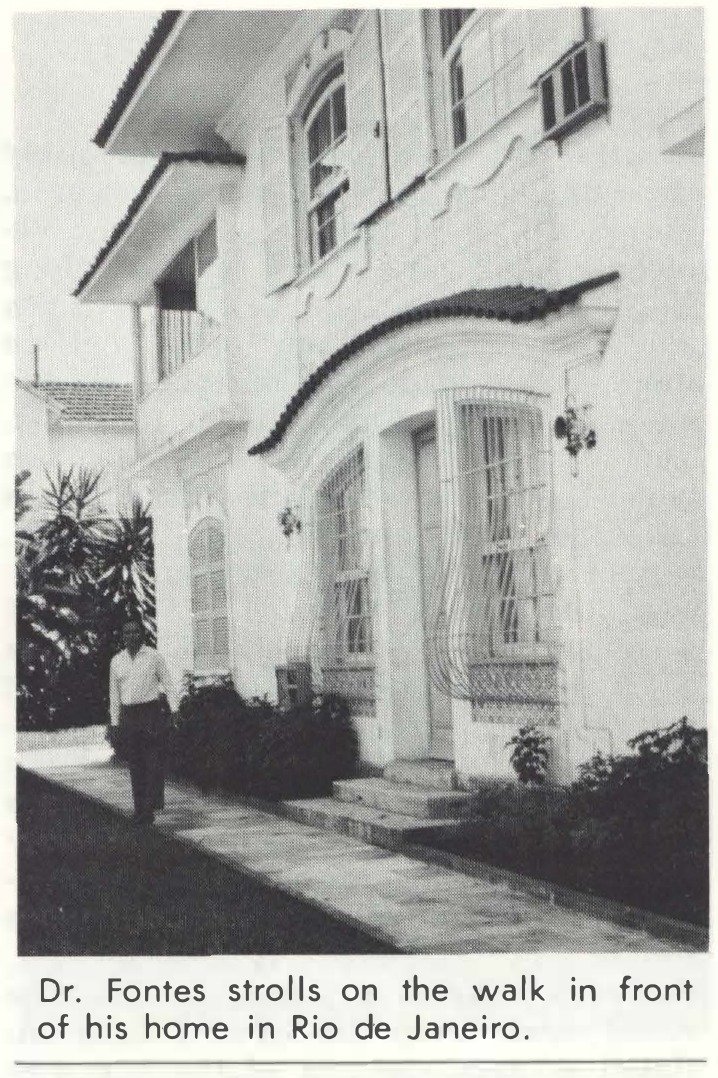
1959 is the year APRO commits, on the record, to two propositions that shape the rest of its existence: that the phenomenon is intelligently controlled craft of probable extraterrestrial origin, and that some encounters are openly hostile. The bulletin moves from mimeograph to printed format, the masthead expands to seven country representatives (Brazil, Sweden, Argentina, Eastern Canada, France, Venezuela, Australia), and Coral Lorenzen builds a new editorial office adjacent to her own house. Dr. Olavo T. Fontes, APRO's Brazilian representative, serialises his three-part Shadow of the Unknown across the March, May, and September issues, investigating the Ponta Poran (Mato Grosso) car-chase sequence of late 1957 to early 1958. The September Part III, titled "Friends or Foes?", publishes the previously top-secret Itaipu Fortress sentry-burn incident of 4 November 1957 for the first time in English-language UFO literature. Coral Lorenzen's September editorial frames the issue directly: "You are not going to like this report." The contactee tradition is covered with open methodological contempt across the year: Adamski's failed European tour (Zurich tomatoes, Buckingham Palace refusal, Juliana of Holland disavowal), Otis T. Carr's SEC prosecution alongside Wayne S. Aho, James Moseley's Saucer News attack on Donald Keyhoe. 1959 is the year APRO draws the line.
Connections
Every named figure, named case, and sister publication on these pages has its own home in the archive. The Lorenzens' three-decade editorial line ran through a constellation of investigators and witnesses; this section is the map for following any thread out of the Bulletin into its proper context.
People in this collection
APRO's editors and the investigators, scientists, and witnesses whose work shaped the Bulletin's record.
- Coral Lorenzen, co-founder and editorial voice from 1952; built the international correspondent network
- L.J. (Jim) Lorenzen, co-founder, technical editor, and the organisational backbone alongside Coral
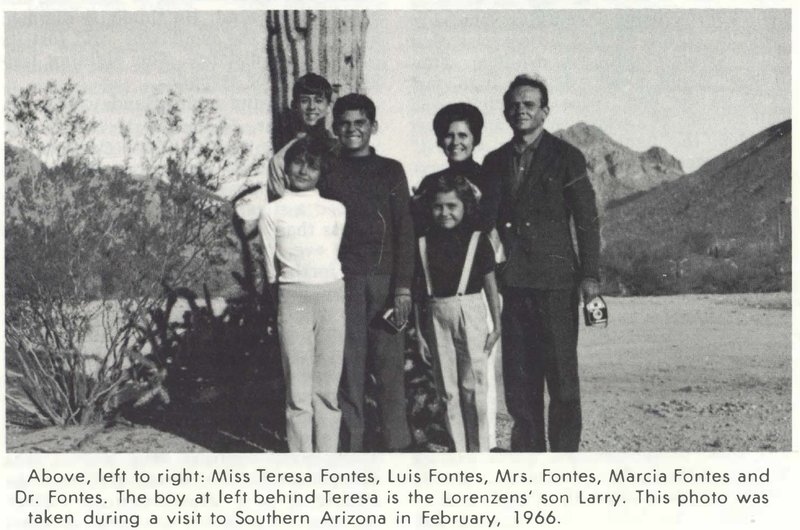
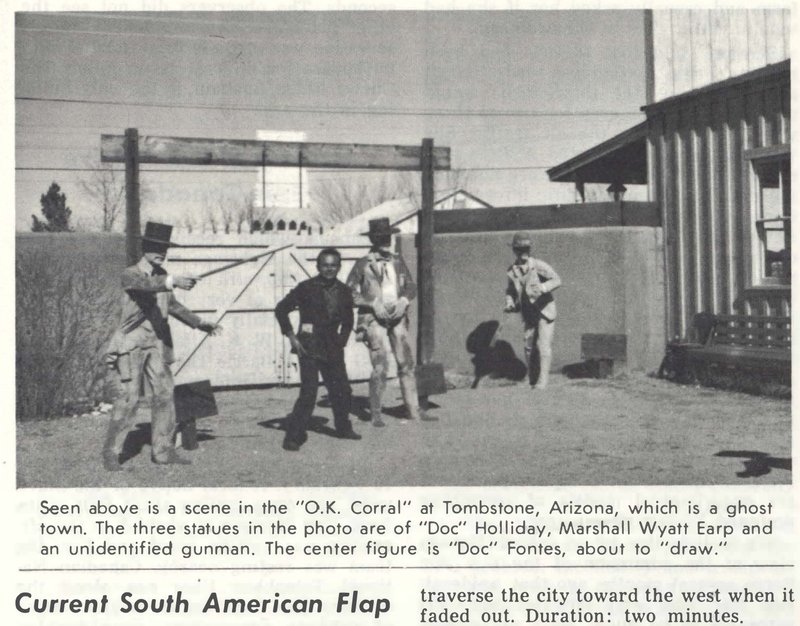
- Dr. Olavo T. Fontes, APRO's Brazilian representative, who delivered the Antônio Villas Boas case to the international research community
- J. Allen Hynek, Project Blue Book consultant whose appearances in the Bulletin documented the institutional shift from dismissal to cautious engagement
- Dr. James E. McDonald, the University of Arizona atmospheric physicist whose 1966 to 1971 research APRO covered extensively
- Major Donald E. Keyhoe, NICAP's director and APRO's institutional counterpart in the civilian-research field
- Wilbert B. Smith, the Department of Transport engineer whose Project Magnet work APRO carried in November 1953
- Stanton T. Friedman, nuclear physicist and APRO contributor, later the principal Roswell investigator
- Travis Walton, whose 1975 Arizona disappearance APRO investigated and championed
- Betty Hill and Barney Hill, the New Hampshire witnesses whose 1961 abduction account APRO ran in the September 1965 issue alongside the John Fuller serialisation
Cases APRO investigated
The named cases that anchor APRO's documentary record. Each has a full exhibition page in the archive.
- The Socorro Incident, Lonnie Zamora's 24 April 1964 police-officer sighting of a landed craft and humanoid figures, an APRO-investigated landmark
- The Pascagoula Abduction, the 11 October 1973 Hickson and Parker case, polygraph-tested and printed by APRO
- The Travis Walton Case, the five-day Arizona disappearance of November 1975
- The Betty and Barney Hill Case, the 1961 New Hampshire encounter that APRO carried as the founding abduction account in the American record
Related publications
The civilian-research network of which APRO was one of three or four central nodes, and the publications its editors corresponded with through the Bulletin's thirty-six-year run.
- Saucers (Max B. Miller), the Los Angeles contemporary whose editorial arc from contactee to investigative establishment paralleled APRO's institutional consolidation
- Flying Saucer Review, the London journal that translated and republished APRO material throughout the 1960s and 1970s
- Australian UFO Bulletin, the VUFORS publication that drew on APRO field methods and credited the Lorenzens repeatedly
Cross-cutting themes and surfaces
- Abductions, the theme APRO helped establish through the Pascagoula, Hill, Walton, and Villas Boas cases
- United States, the country exhibition APRO's editorial record sits inside
- Brazil, where Fontes' work made APRO the principal American outlet for South American case reporting
- Disclosure Network: United States, where the institutional history APRO documented is reconstructed
- Newsletter Archive, the catalogue surface for all 246 newsletter collections
Browse the Collection
Two ways to explore: by issue (covers, decade-grouped) or by article (search across the run).
1,101 articles catalogued, grouped by issue