Nikola Tesla
Nikola Tesla holds three positions in this archive that he does not hold in the engineering literature. He is the first named scientist to publicly suggest he had received signals from another world; he is the subject of one of the longest-running unresolved questions about the United States' Office of Alien Property, namely what happened to the papers his hotel room contained on the morning he died; and he is the figure around whom an entire postwar contactee tradition assembled itself, beginning with Margaret Storm's 1959 claim that Tesla had been born on a ship from Venus.
A Life
Tesla was born on the night of 10 July 1856 in the village of Smiljan in what is now Croatia, then a part of the Austrian Empire. His father Milutin was a Serbian Orthodox priest; his mother Djuka could recite long passages of Serbian epic poetry from memory and was, by Tesla's own account, the source of his visual imagination. He trained at the Realschule in Karlovac and the Technical University in Graz, did not finish a degree, and worked his way through the European telegraph offices before arriving in New York in 1884 with four cents in his pocket and a letter of introduction to Thomas Edison.
The Edison years were short and the parting bitter. Tesla left in 1885 and spent the next decade building the alternating-current system that defeated Edison's direct-current network at the World's Fair of 1893. By 1888 his polyphase induction motor and AC transmission patents had been bought by George Westinghouse. The Niagara Falls hydroelectric project, completed in 1896, ran on Tesla's system. He was, by the end of the 1890s, the most photographed electrical engineer in the United States and one of the most quoted.
His later career was the wireless-power years. He believed, with reasoning that has never been fully refuted and has never been fully validated, that the Earth could be used as a resonant cavity for transmitting electrical power across continents without wires. He set up his laboratory in Colorado Springs in May 1899 and ran it for nine months. He built the Wardenclyffe Tower on Long Island between 1901 and 1906. He died, alone except for a hotel maid, in room 3327 of the Hotel New Yorker on the morning of 7 January 1943. He was eighty-six.
The scientists from Franklin to Morse were clever artisans, experimenters with often only a very imperfect knowledge of the principles upon which they were working. Mr Tesla, on the other hand, stands among the foremost living theoreticians.The New York Times, obituary, 9 January 1943
Photographs
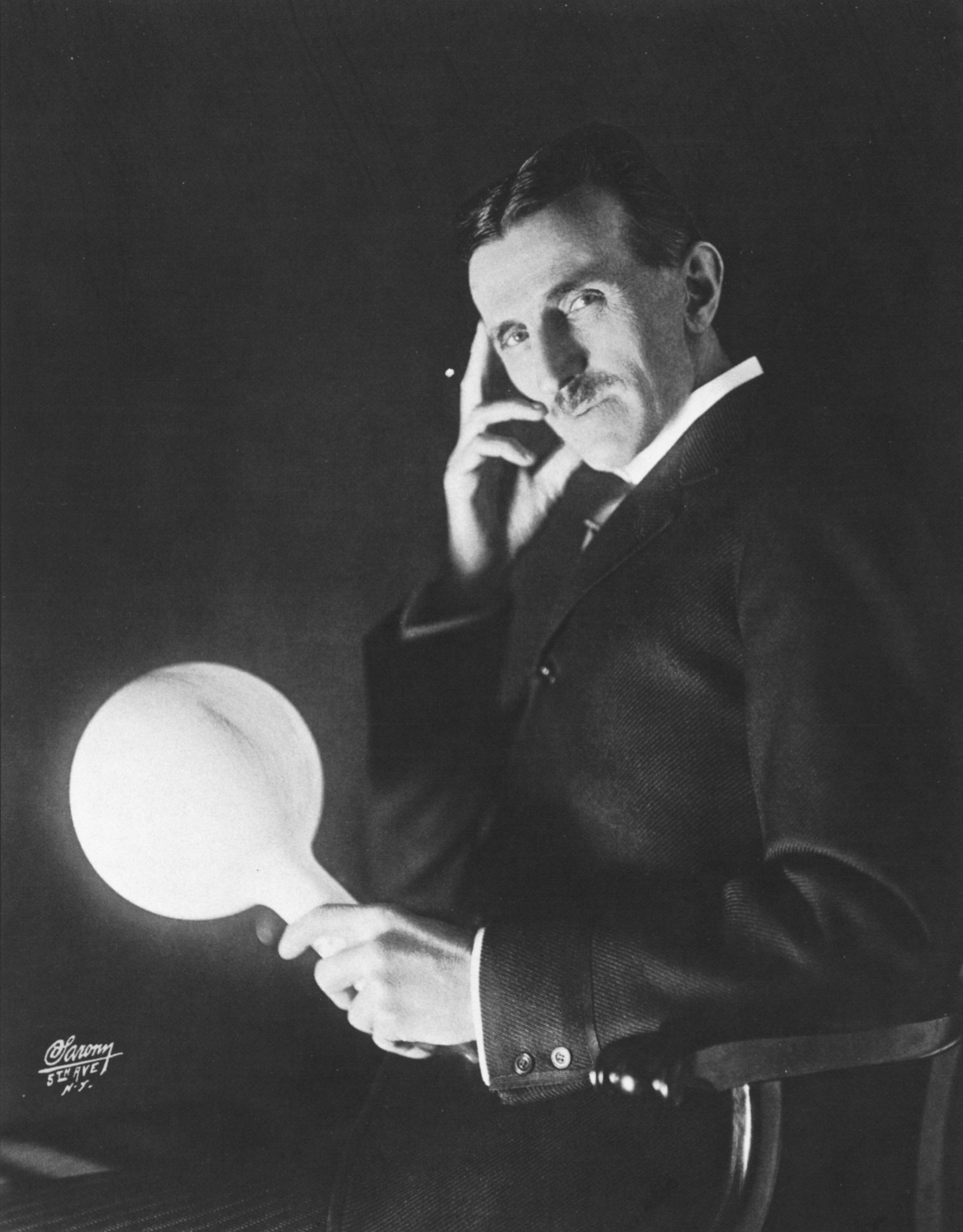
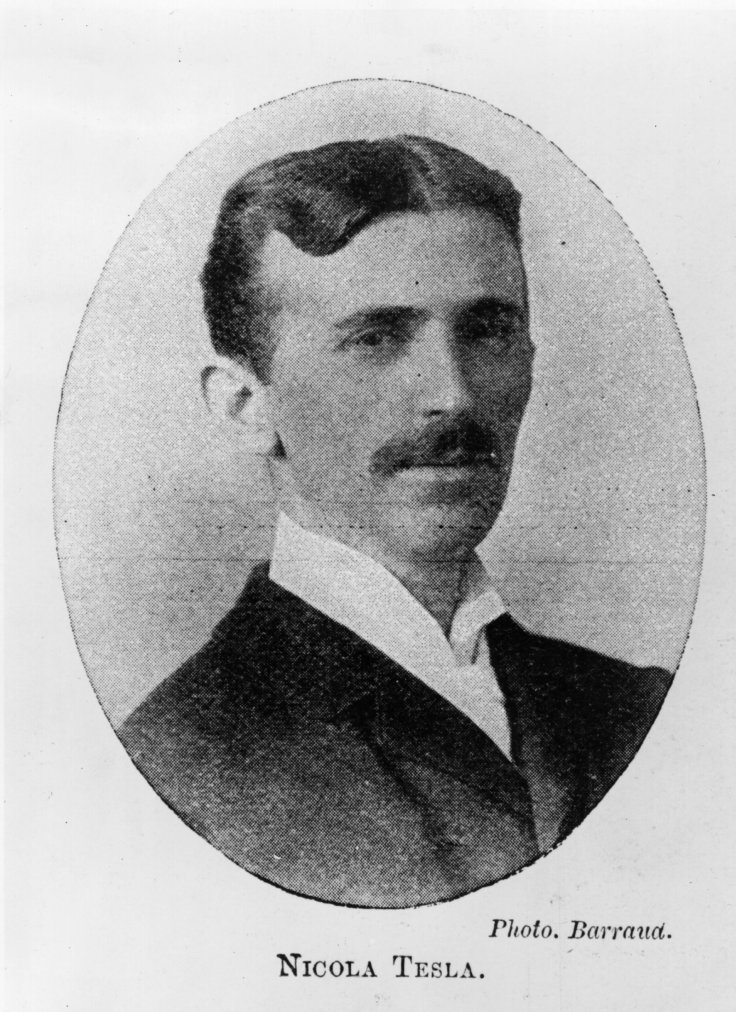
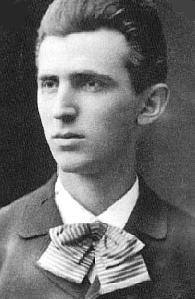
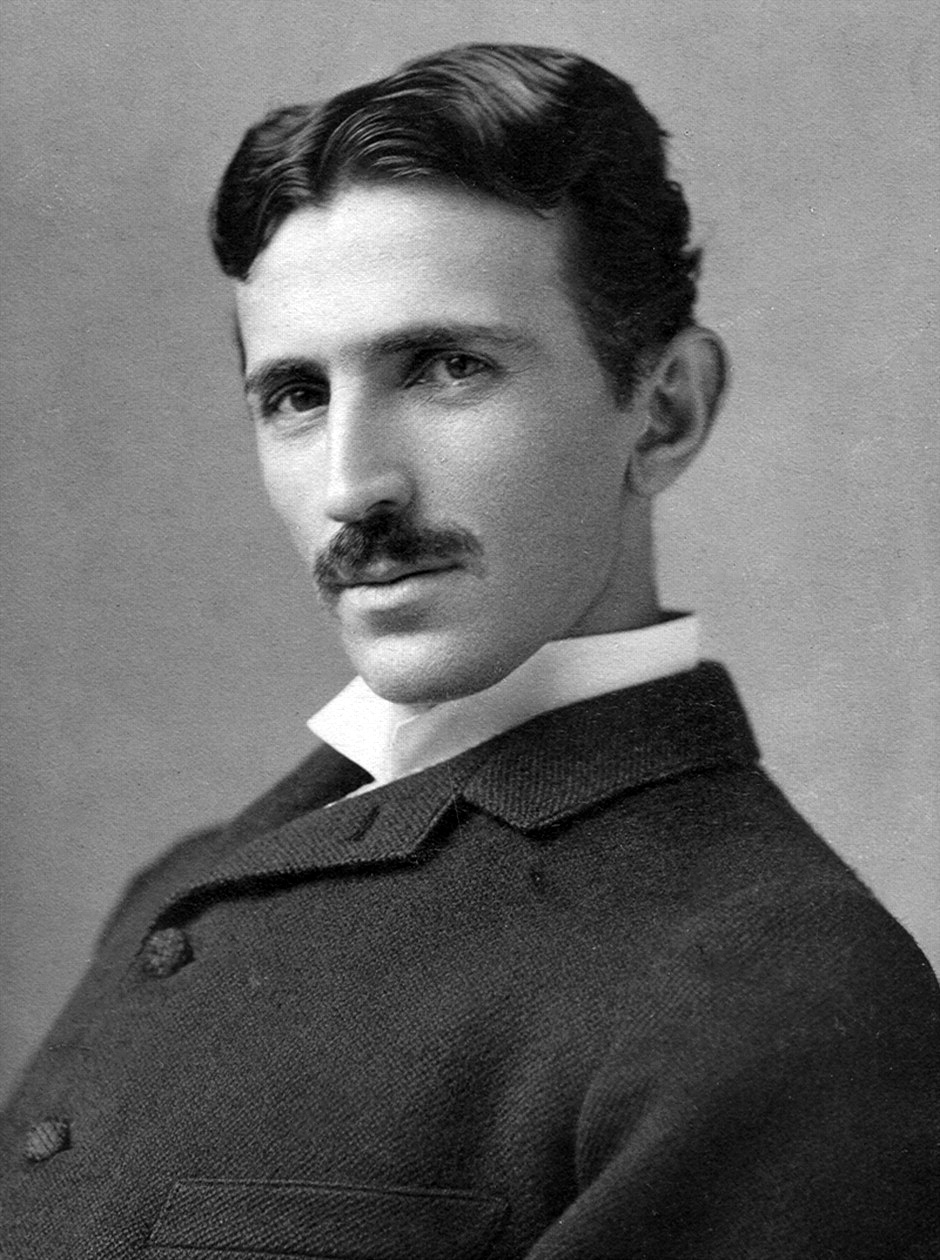
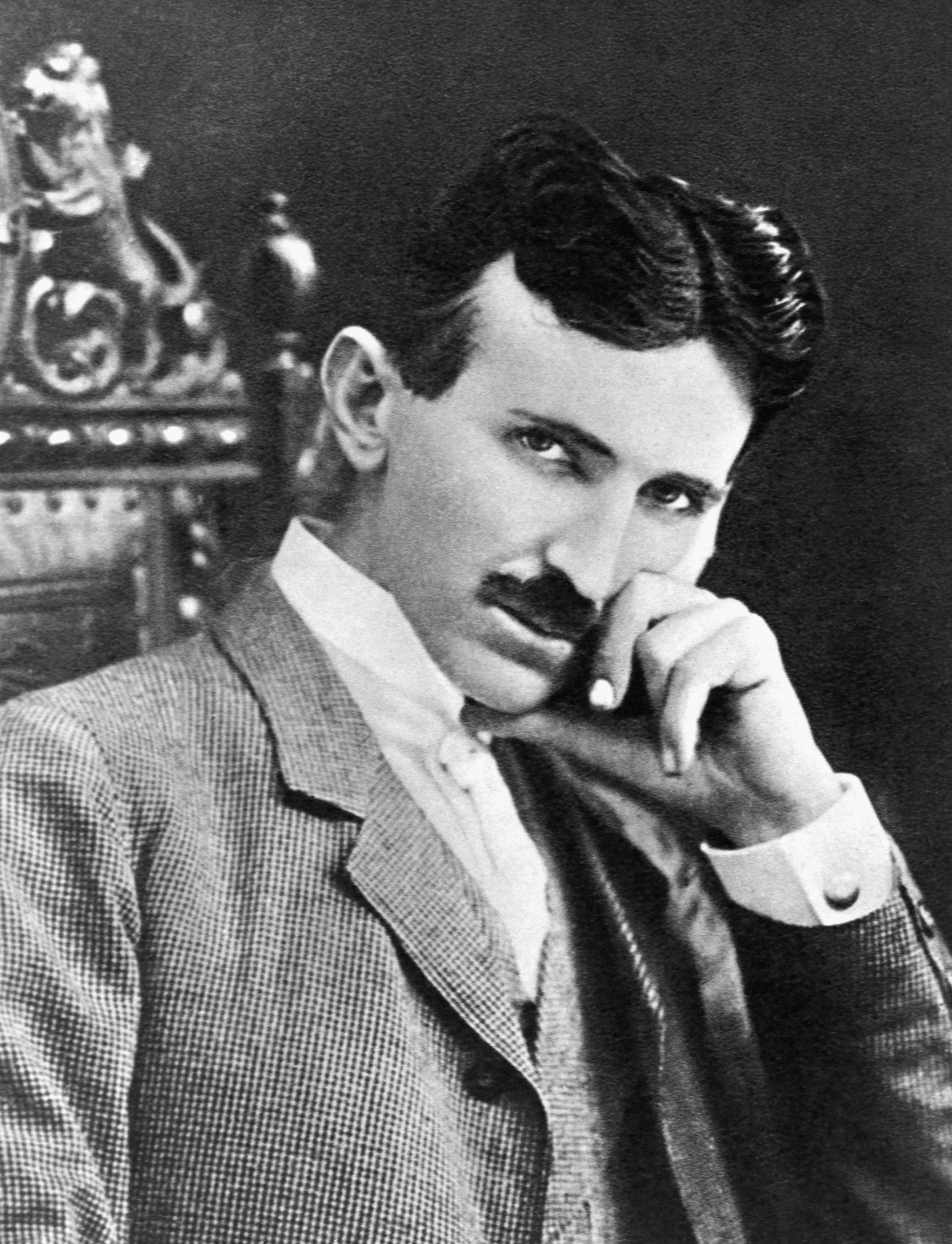
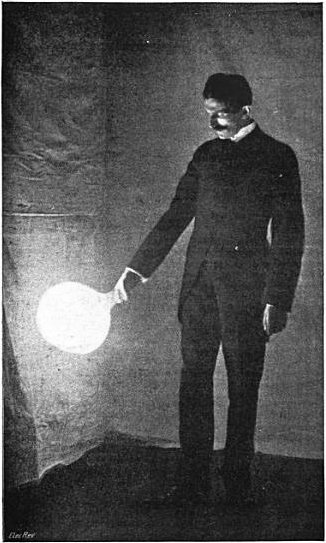
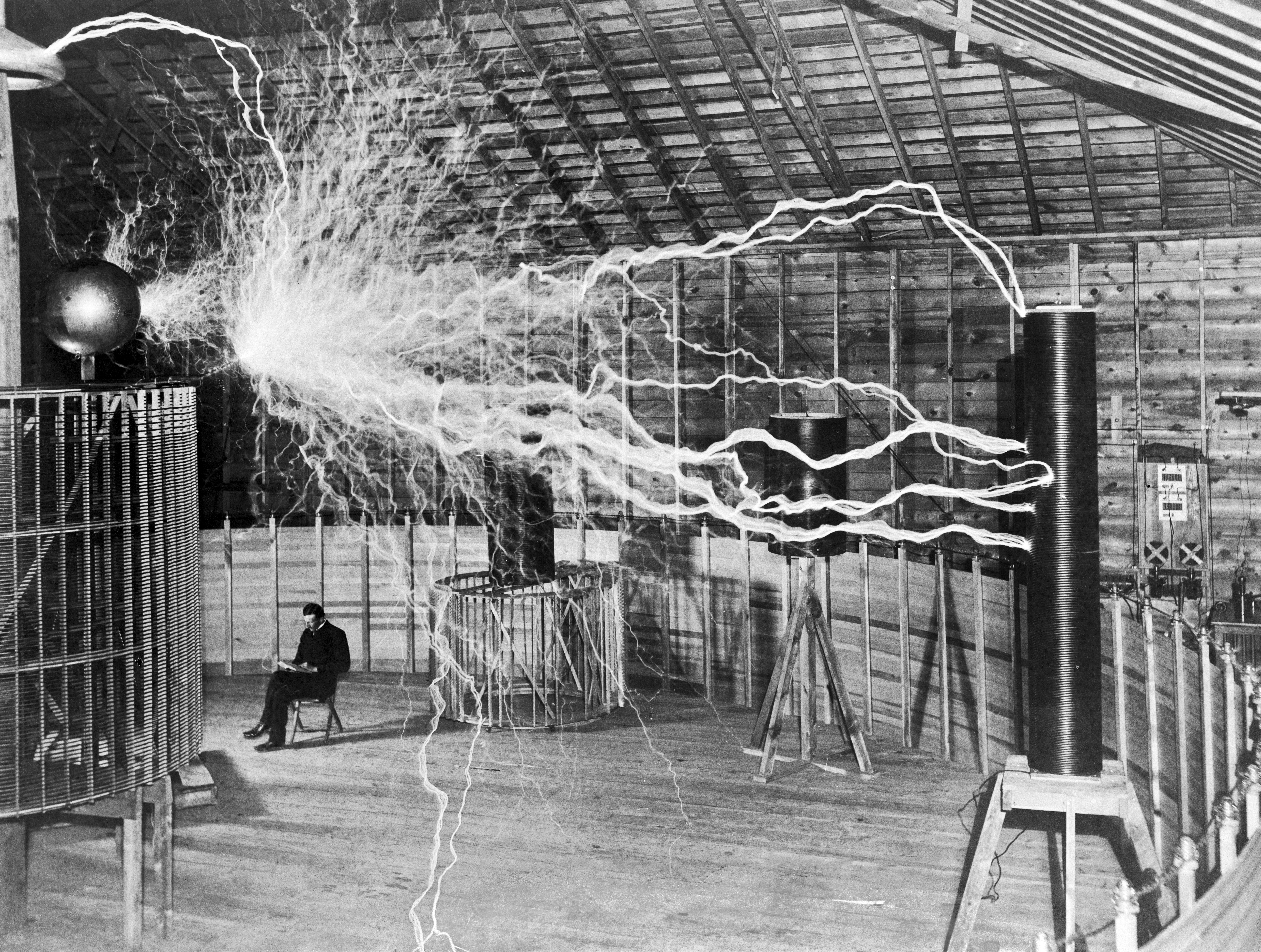
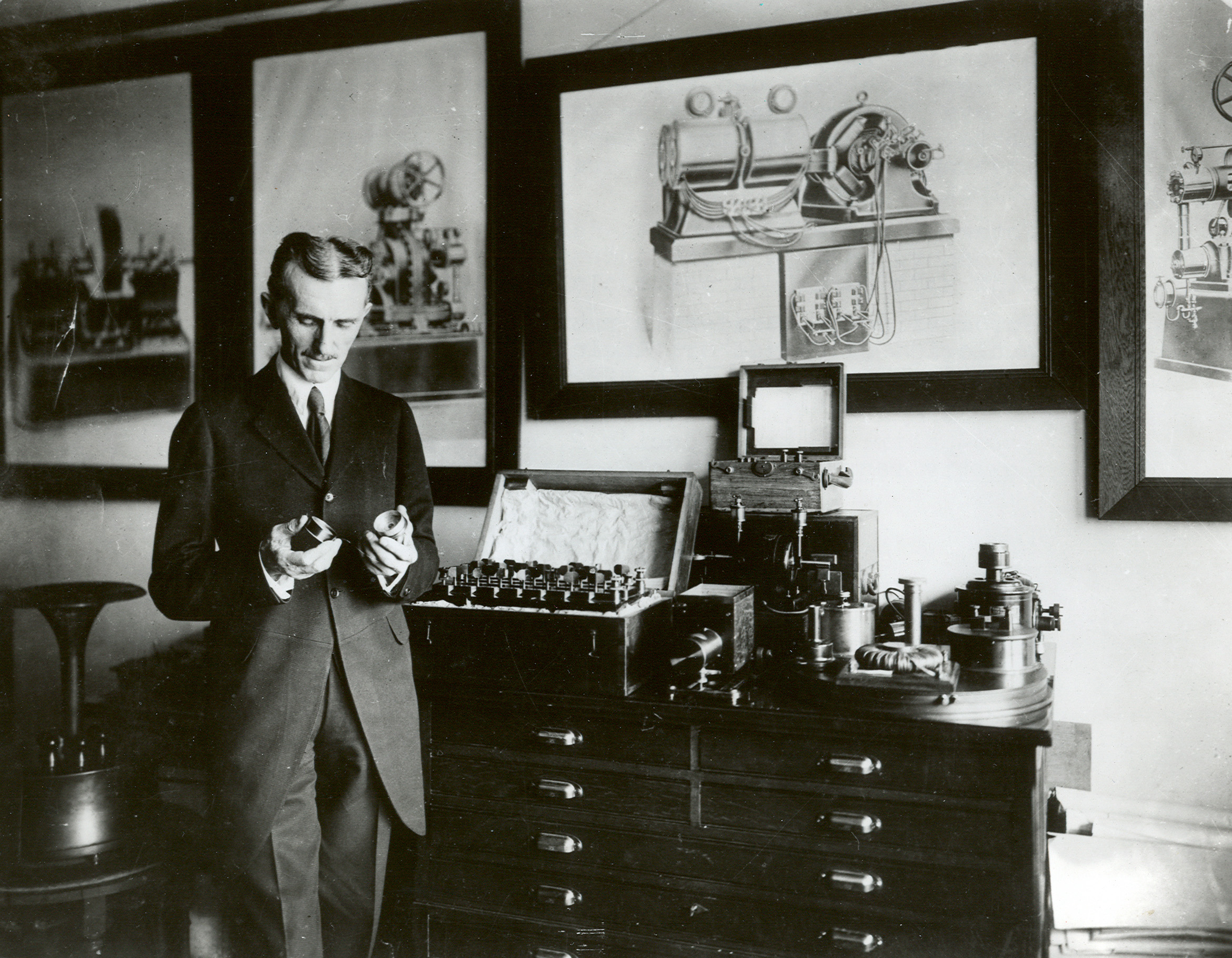
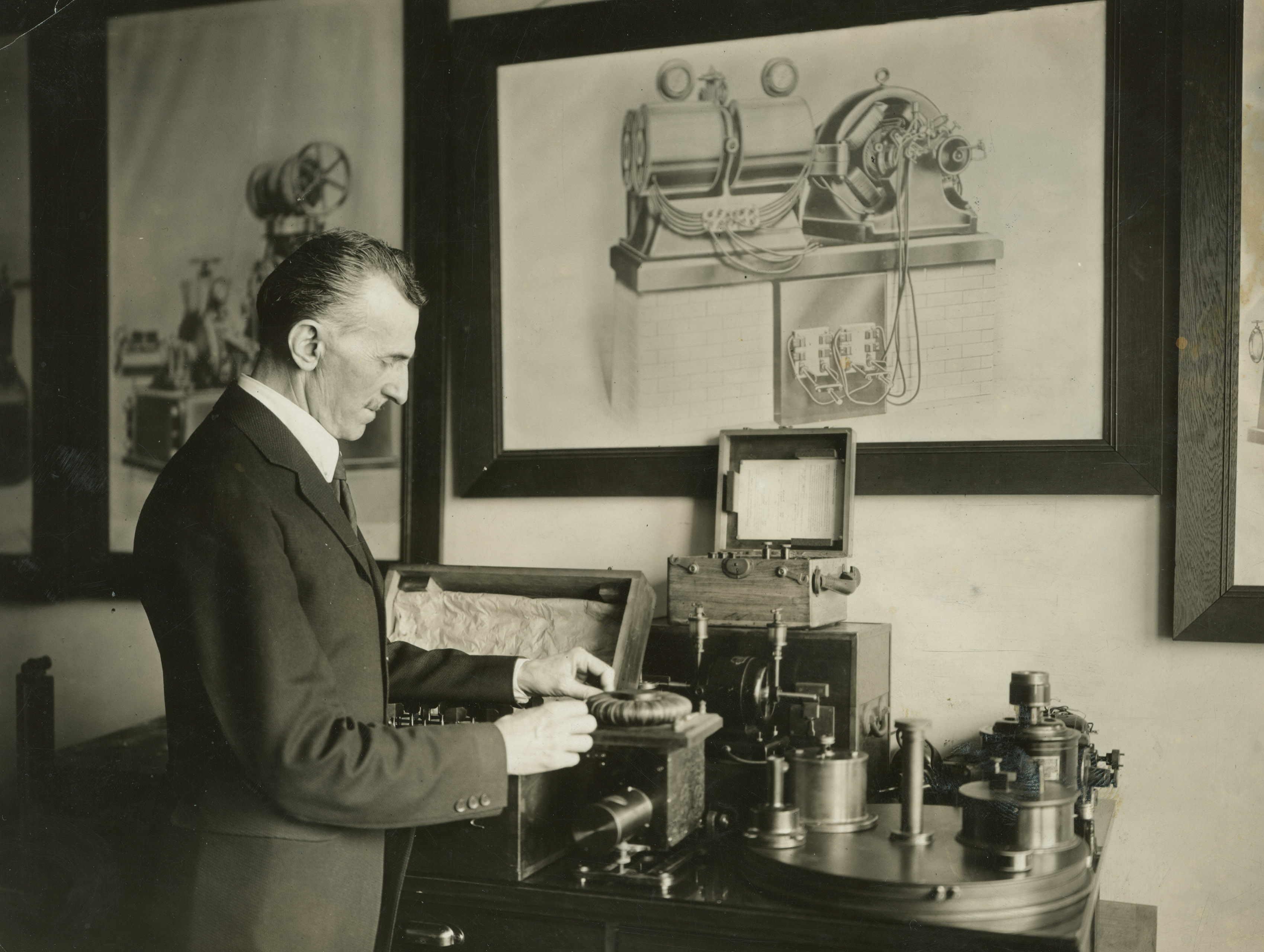
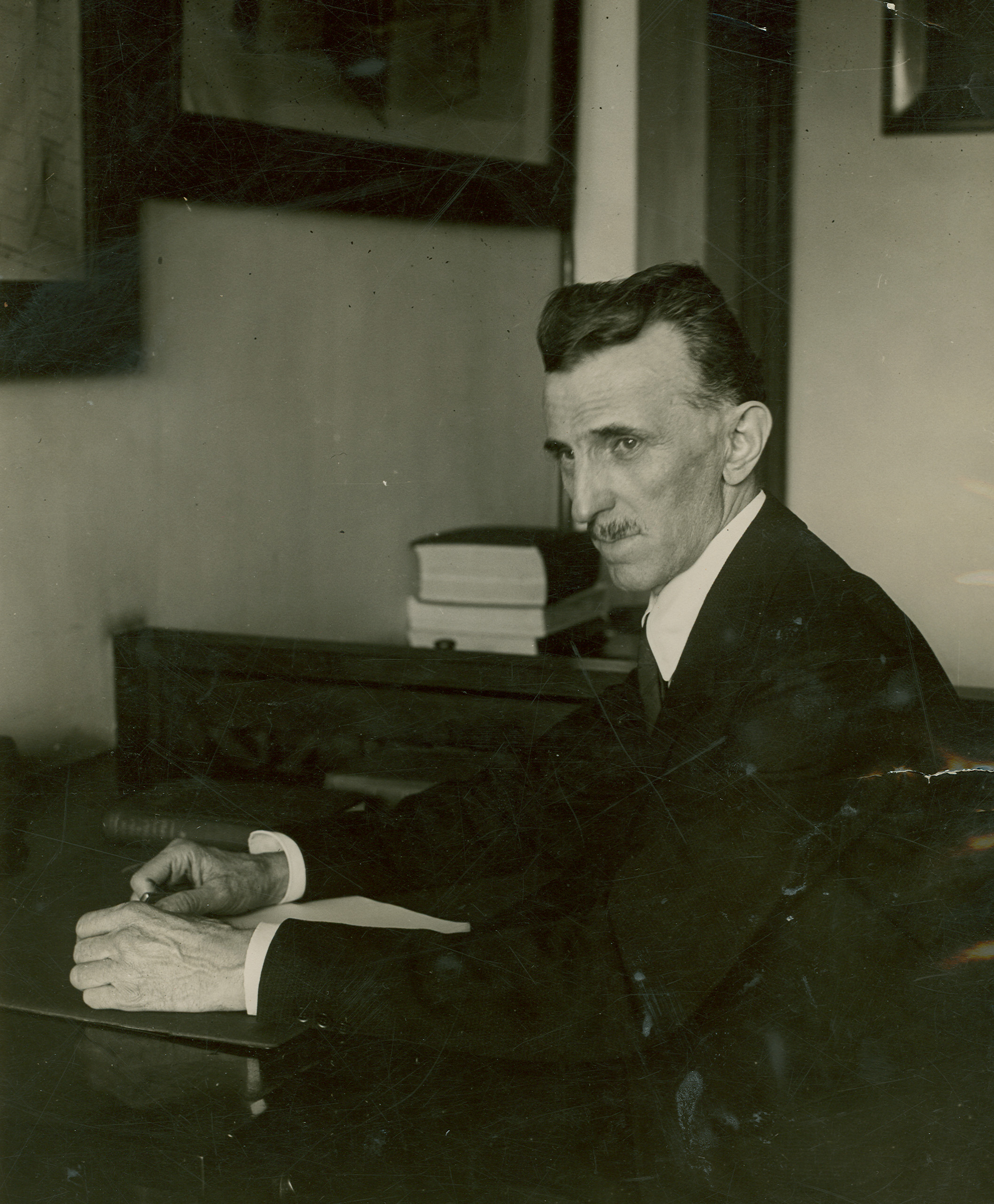
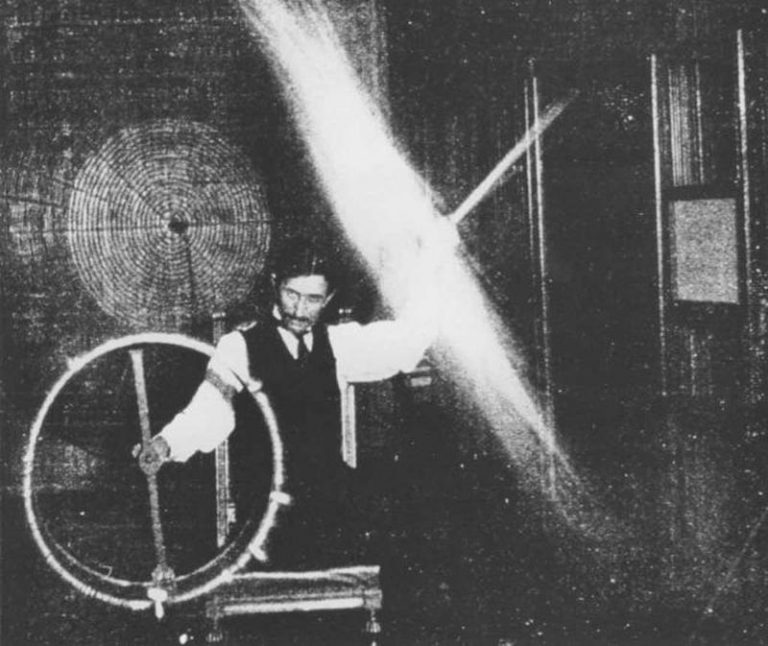
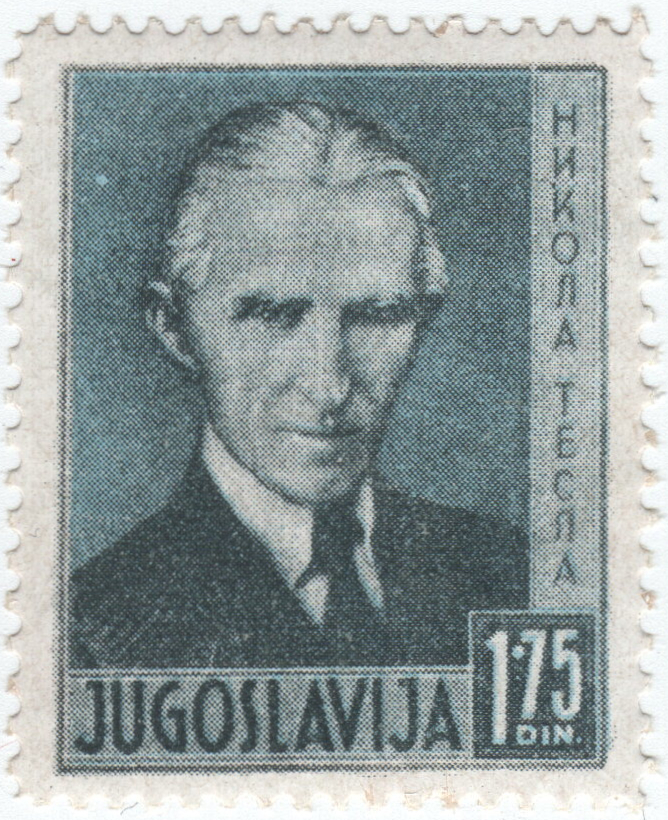
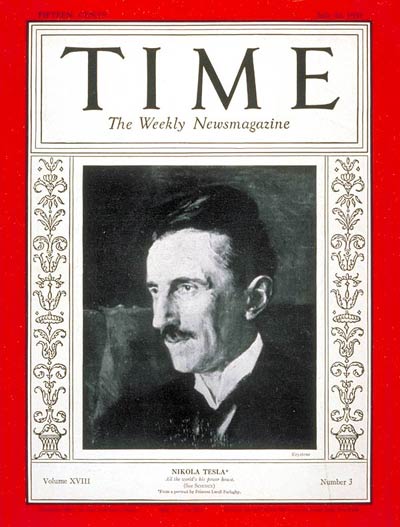
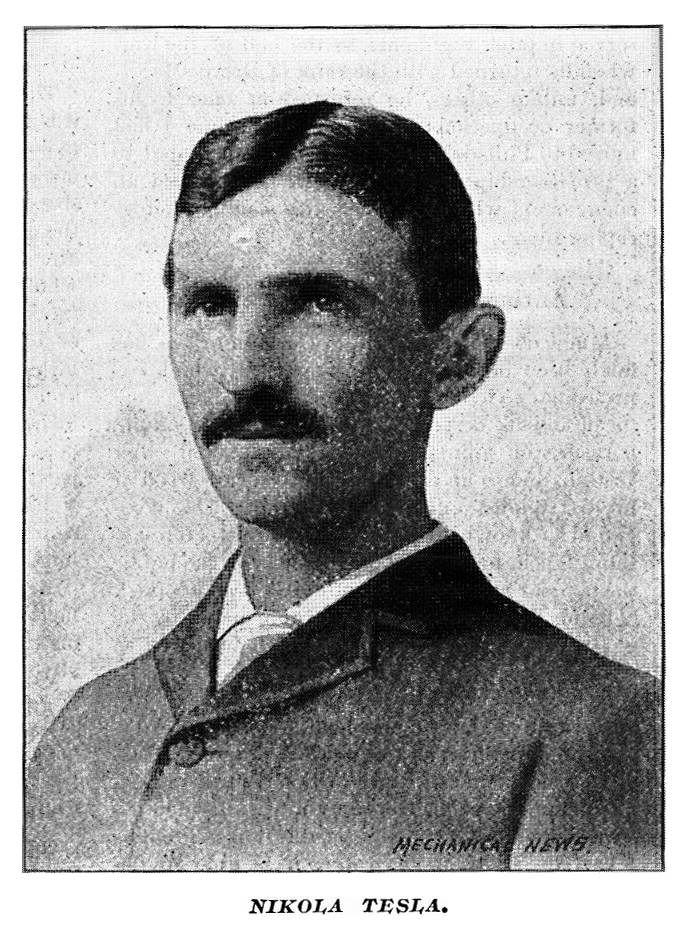
Tesla cooperated with photographers more than any contemporary inventor. Two long-exposure self-portraits taken with multiple-second discharges from his Colorado Springs coil have become the iconic images. Most of what survives are studio portraits from Napoleon Sarony and the Barraud company in the 1890s, plus a steady run of press photography from 1900 to 1936.
Colorado Springs and Wardenclyffe
The Colorado Springs experimental station opened in May 1899 with a single ambition. Tesla wanted to know how the Earth itself behaved as an electrical conductor at the frequencies his coils could reach. He built a magnifying transmitter on the prairie above the town and ran arcs strong enough to throw discharges thirty metres into the air. The local power station could not match his demand. He paid for the electricity himself.
His Colorado Springs notebooks, published by the Tesla Museum in Belgrade in 1978 but quoted in scattered American press from 1900 onwards, record an observation he could not explain. On the night of 22 September 1899, while listening to his sensitive receiver in the laboratory, he heard what he described as a regular sequence of clicks at intervals he could not match to any known electrical or atmospheric source. He returned to the apparatus the following nights and recorded the pattern again. In his Colliers Weekly article of 9 February 1901 he wrote that he had been the first man to hear a greeting from one planet to another.
The feeling is constantly growing on me that I had been the first to hear the greeting of one planet to another.Tesla, Collier's Weekly, 9 February 1901
The public version of the claim had been seeded earlier, in Tesla's June 1900 essay for Century Magazine, "The Problem of Increasing Human Energy." Writing for a national readership, Tesla speculated openly about the implications of his Colorado Springs work for interplanetary signalling.
It is highly probable that if there are intelligent beings on Mars they have long ago realized this very idea, which would explain the changes on its surface noted by astronomers. The atmosphere on that planet, being of considerably smaller density than that of the earth, would make the task much more easy.Tesla, Century Magazine, June 1900
Modern radio engineers, examining the equipment list, consider the most likely explanation to be the rotation of Jupiter's magnetosphere generating natural decametric emissions that Tesla's receiver could pick up. Tesla himself, asked in 1937 to retract the Mars claim, did not retract it. He restated it, more cautiously, as "the unmistakable indications of intelligent control."
The Colorado Springs diary also records something else the engineering literature still does not fully agree on. Tesla repeatedly produced what he called fireballs, what later researchers call ball lightning. He wrote that "to my greatest astonishment, I have frequently observed in experiments with this apparatus" the formation of luminous spheres around his discharges, and proposed a mechanism involving the sudden heating of rarefied air pockets. Ball lightning research a century later still cites his observations.
Wardenclyffe followed in 1901. Tesla bought 200 acres of pine forest at Shoreham on Long Island and contracted the architect Stanford White (who would be murdered five years later on the roof garden of his own Madison Square Garden) to design the tower. Construction began in autumn 1901. The finished tower stood 187 feet above the ground on a wooden lattice frame, with a 55-ton steel-and-copper terminal cap. Beneath the tower Tesla sank iron pipes more than 300 feet into the bedrock to make electrical contact with the deep Earth. The brick power-house at the base, with the Stanford White portico, still stands.
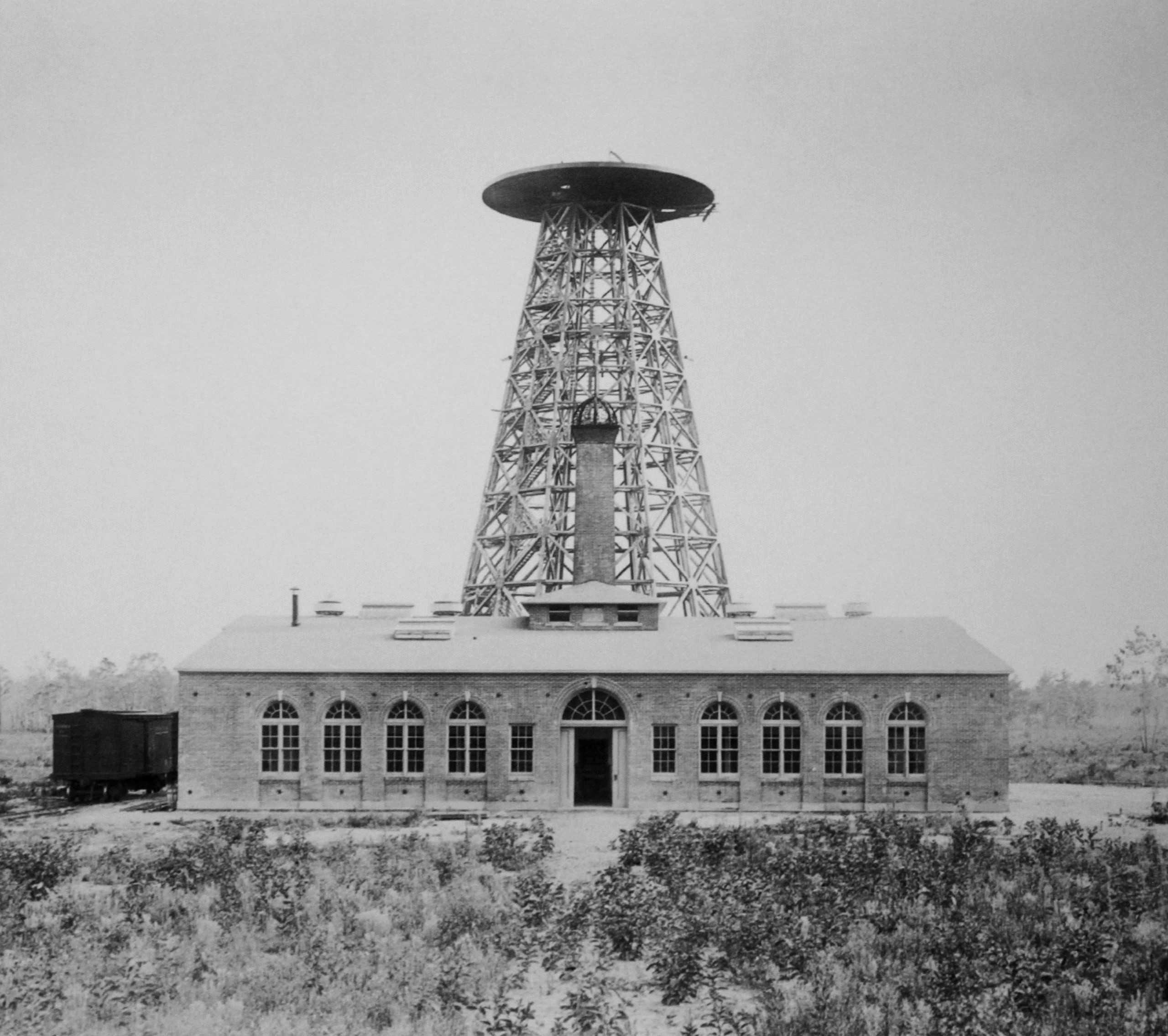
The funding was a partnership with J. P. Morgan. Tesla took an initial 150,000 dollars in March 1901 in exchange for 51 per cent of the patents. The agreement covered a transatlantic wireless telegraphy system the equal of Marconi's. What Tesla had in mind, and what he did not tell Morgan, was wireless power: a tower at Shoreham would transmit electrical energy through the Earth itself to receiving stations anywhere on the planet, no wires, no meters, no tariff. On 12 December 1901 Marconi sent the letter S from Poldhu in Cornwall to St John's in Newfoundland on a kite-supported aerial and a coherer detector built for a few hundred pounds. The commercial wireless-telegraphy case Tesla was supposed to be building Morgan ended that afternoon. Morgan kept paying small instalments through 1903 and stopped writing cheques in early 1904.
Tesla worked on at Shoreham for two more years on his own credit. He mortgaged the property to the Waldorf-Astoria in 1908 against his hotel bill, defaulted in 1915, and the bank took the tower. On the morning of 4 July 1917 a demolition crew brought the lattice down for scrap and split the proceeds with the creditors. The contemporary press reported (and the Pulitzer-era Sun and the World ran the story) that the US Navy had ordered the demolition under the wartime suspicion that German spies were using the tower for transatlantic signalling. Court records and the surviving Waldorf-Astoria correspondence show the demolition was straightforwardly commercial. The brick power-house, lower than the scrap value of its bricks, survived.
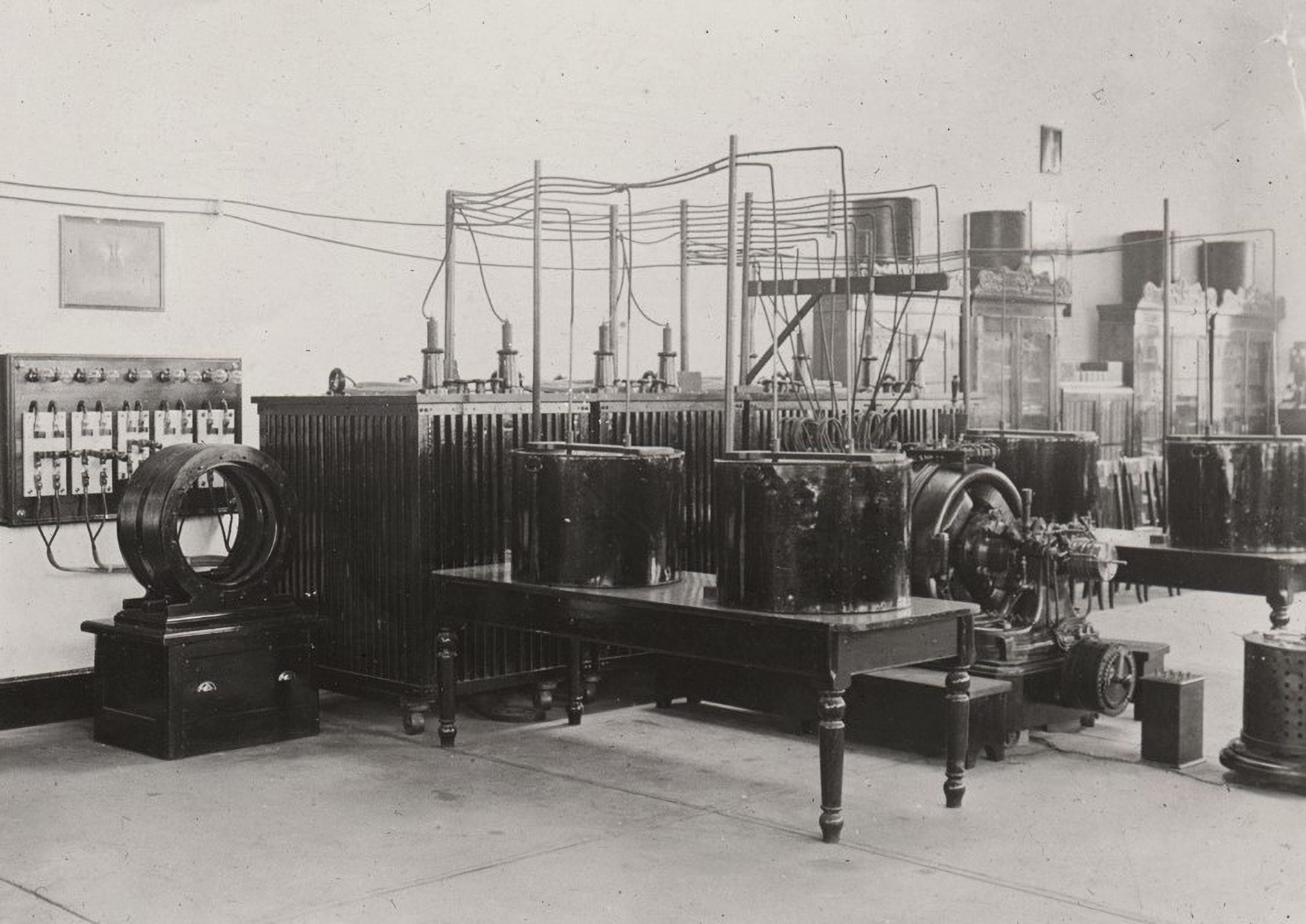
The site went to the photographic-film firm AGFA in 1939 and was used for film-processing manufacture until 1987. Local children grew up next to a chain-link fence on the Wardenclyffe Road. The Tesla Science Center at Wardenclyffe, a non-profit organisation formed by the Long Island engineer Jane Alcorn and the cartoonist Matthew Inman of The Oatmeal, bought the 16-acre core of the site from AGFA for 1.65 million dollars in May 2013 after Inman raised 1.37 million in a six-day crowdfunding campaign. Restoration of the Stanford White power-house and the surviving laboratory infrastructure is continuing.
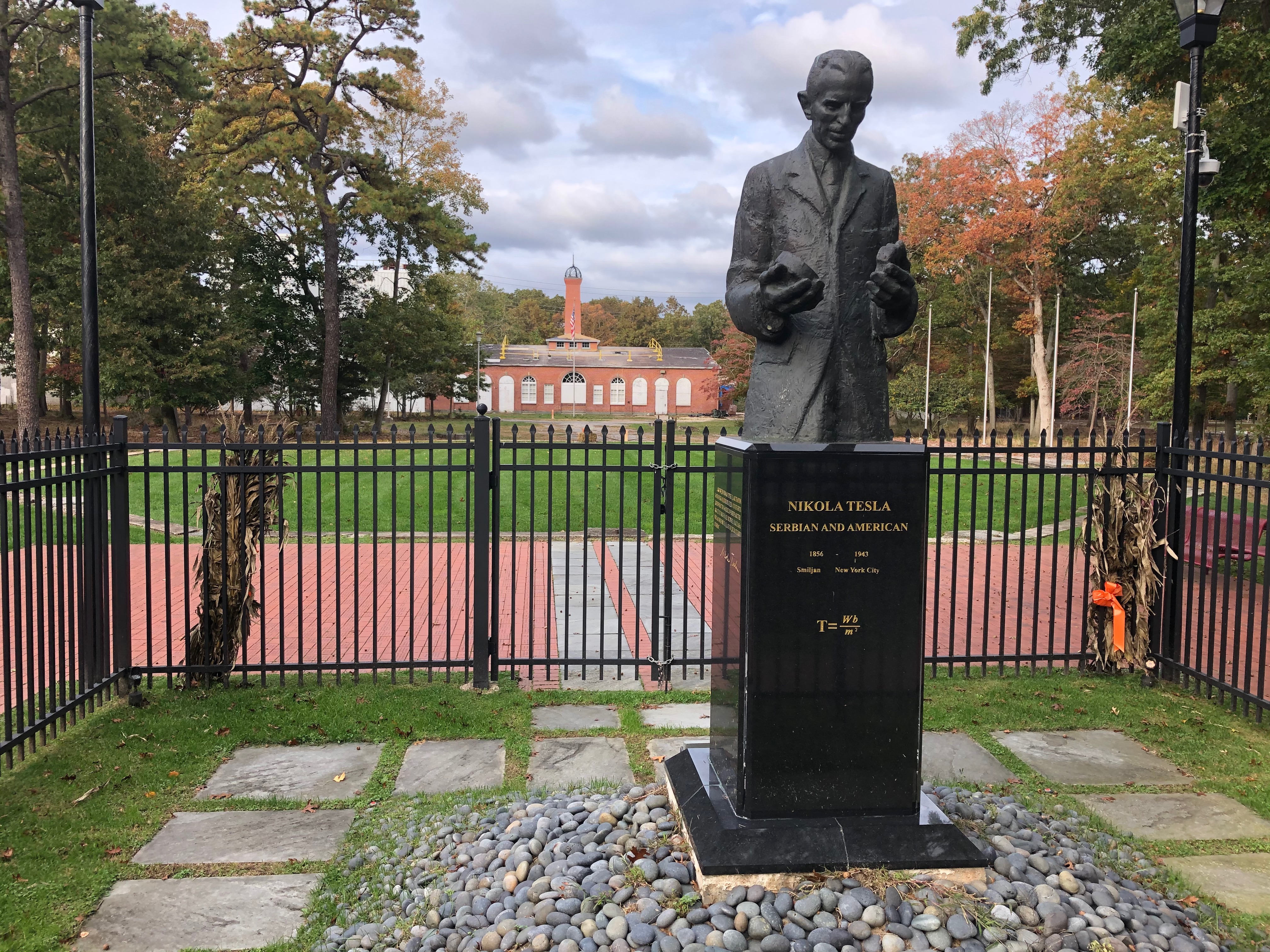
The Smithsonian Institution holds the surviving Colorado Springs notebooks as facsimile only; the originals are in the Nikola Tesla Museum, Belgrade, accession TM-NT-1899. The Collier's article has been digitised by the Tesla Universe project. The Wardenclyffe site is now the Tesla Science Center, open to visitors at 5 Randall Road, Shoreham, NY 11786.
The Seized Papers
Tesla died alone on the morning of 7 January 1943. The maid found him in his bed in room 3327 of the Hotel New Yorker. He had been working through the night on a project he had described in correspondence as a directed energy beam, sometimes called the teleforce weapon, sometimes the death ray. The September 1940 letter that landed it on J. Edgar Hoover's desk specified a four-part mechanism.
The teleforce as described to the FBI: a method "eliminating the necessity for a high vacuum"; a method for producing "very great electrical force"; a method for amplifying that force; and a method for "producing a tremendous electrical repelling force" (the projector, or gun, of the system). Voltage for the beam: "50,000,000 volts." Mechanism: "microscopic electrical particles of matter will be catapulted." From a citizen's letter to Hoover forwarded in the FBI's Tesla file, file number 100-2237.
Within hours of Tesla's death, agents from the United States Office of Alien Property seized everything in the hotel room. Tesla had been a citizen since 1891 but the wartime Office of Alien Property had jurisdiction over the holdings of all naturalised citizens of enemy-state origin. The seizure was formally executed on Saturday 9 January 1943 by Walter Gorsuch of the New York office and an officer named Fitzgerald. The FBI's own summary records the volume: "about two truckloads of material, sealed all articles and transferred them to the Manhattan Storage and Warehouse Co." A further thirty barrels and bundles belonging to Tesla were already in that warehouse from earlier.
The papers were reviewed by Dr. John G. Trump, an MIT electrical engineer attached to the Office of Scientific Research and Development, who would later be described as the brother of Fred Trump and the uncle of Donald Trump. Trump worked with Naval Intelligence officers Willis George, Edward Palmer and John J. Corbett. He filed a written report concluding that Tesla's last decades had been "primarily of a speculative, philosophical and somewhat promotional character" and that there was nothing of military value. The papers were released in 1952 to Sava Kosanović, Tesla's nephew and the Yugoslav ambassador to the United States, and shipped to Belgrade.
Trump's 1943 assessment did not, however, hold. Decades later, the FBI's own file appends a commentary noting that Tesla's particle-beam ideas had "received updated concurrence" from U.S. Space Command, "whose primary arsenal will consist of laser and particle-beam weapons fired from space battleships." The 1940 letter to Hoover, classified as crank correspondence in its day, was being read forty years later as a coherent specification for the directed-energy programmes of the Strategic Defense Initiative.
What is missing, according to Kosanović and to subsequent Tesla scholarship, is a sealed box of materials that was in the room on the day of Tesla's death and is not catalogued in the Belgrade accession. The contents are not known. The FBI's Tesla file, declassified in 2016, contains correspondence between the bureau and the Office of Alien Property about the inventory but does not describe the disputed material.
The "Tesla papers were suppressed" narrative is older than any of the documentary evidence supporting it. Trump's evaluation report exists. The shipment to Belgrade exists. The disputed sealed box is asserted in Kosanović's correspondence and is not documented in the OAP inventories. Anyone citing the suppression should cite Marc Seifer's biography Wizard or the Federal Bureau of Investigation file 9-12716 Nikola Tesla, not the Margaret Storm tradition.
The Contactee Inheritance
Tesla's reputation in the postwar United States was peculiar. The engineers who had known him personally were dead, retired or unwilling to discuss him in public. The patents were public domain. The Mars-signals story, the FBI seizure and the death-ray correspondence were all matters of record. Into this gap stepped Margaret Storm.
Storm was a magazine editor turned spiritualist. Her 1959 book Return of the Dove asserted that Tesla had been born aboard a ship from Venus en route to the Earth in 1856, that he had been delivered to the Tesla family in Smiljan as a foundling, and that his work on Earth had been a covert mission to seed human civilisation with the technological preconditions for interplanetary contact. Return of the Dove was printed on green paper to indicate, Storm said, that it had been dictated by Tesla from the etheric plane.
The Storm tradition seeded an entire branch of postwar contactee writing. By 1962 Otis T. Carr was demonstrating what he called the OTC-X1, a saucer-shaped craft he claimed had been designed using Tesla's principles and powered by a free-energy device. Carr was indicted in 1961 for fraudulent solicitation of investors and served a year. The OTC-X1 was found by federal investigators to be a wooden mock-up. Carr continued lecturing on Tesla until his death in 1982.
From Carr onwards, every wave of free-energy claims has cited Tesla. The 1970s catalogue of "suppressed Tesla technology" essentially is the Margaret Storm catalogue with engineering vocabulary added. The archive separates the documented Tesla from the inherited Tesla because the difference matters: the documented Tesla wrote a Colliers article about clicks in his receiver, and the inherited Tesla flies wooden saucers through Oklahoma in 1959.
A bureaucratic seam in the FBI's own file collection shows how early this cross-pollination began. The Tesla file (number 100-2237) contains a letter purporting to relay messages from George King of the Aetherius Society in London, dated to the mid-1950s, with claims of transmissions from "Mars Sector 8" and warnings about humanity's nuclear experiments. That this contactee-era material was cross-filed by the Bureau alongside legitimate intelligence correspondence about Tesla's papers is itself a primary source for the archive: the federal record-keepers, in their own day, treated interest in Tesla and interest in space-people contact as belonging in the same file.
The archive's contactee-era material contains substantial Tesla-derived strands. Storm's Return of the Dove is held in the periodicals collection. Otis Carr's 1958 prospectus for OTC Enterprises is in the United States FBI file collection as exhibit material from the 1961 fraud case.
Connected People
Bought the polyphase patents in 1888, took on Edison in the current wars, and gave Tesla the technical platform that built modern electrical distribution. Released Tesla from his royalty obligations in 1897 at Tesla's request, a decision that left Tesla wealthy enough to fund Colorado Springs and poor enough to die in a hotel room.
Funded the first phase of Wardenclyffe in 1901 in exchange for 51 per cent of the patents. Withdrew funding in 1903 when Marconi achieved transatlantic wireless transmission. Tesla never recovered the project after Morgan walked away.
United States National Defense Research Committee electrical engineer who reviewed the seized Tesla papers in late January 1943 and filed the inventory report that became the basis for the 1952 release to Belgrade. His evaluation report is the most-cited document in any Tesla-papers conspiracy claim.
Yugoslav diplomat. Inherited Tesla's estate in 1943 and pressed the United States for return of the seized papers throughout the 1940s. Took possession of the released materials in 1952 and shipped them to Belgrade. Founded the Nikola Tesla Museum.
American magazine editor who in 1959 published the first book-length claim that Tesla had been an extraterrestrial. Return of the Dove was self-published on green paper and circulated through Theosophical and contactee networks for the next decade.
American businessman who claimed to have inherited Tesla's blueprints and to have built a flying saucer powered by free energy. Convicted in 1961 of fraudulent solicitation. The Carr tradition launched the modern "suppressed Tesla technology" industry.
In the Archive
Tesla appears across three quite different parts of the archive. The engineering and patent literature treats him as a major historical figure of nineteenth-century electrification. The Federal Bureau of Investigation file collection contains the 1943 OAP correspondence and the John G. Trump evaluation. The American contactee newsletters of the 1950s and 1960s, particularly those associated with the Storm and Carr traditions, treat him as a returned interplanetary visitor. The archive holds all three.
Marc Seifer's Wizard: The Life and Times of Nikola Tesla (1996, 2016) is the standard scholarly biography. The Nikola Tesla Museum in Belgrade is the primary archival repository. The Tesla Universe project has digitised most of the contemporary press coverage.
Sources
Seifer, Marc J. Wizard: The Life and Times of Nikola Tesla. Biograph of a Genius. Citadel Press, 1996; revised edition 2016. Tesla, Nikola. Colorado Springs Notes, 1899-1900. Tesla Museum, Belgrade, 1978. Tesla, Nikola. "Talking with the Planets." Collier's Weekly, 9 February 1901. Federal Bureau of Investigation file 9-12716 Nikola Tesla, declassified 2016. United States Office of Alien Property inventory and disposition records, National Archives Record Group 131. Storm, Margaret. Return of the Dove. Author publication, 1959. New York Times obituary, 9 January 1943.