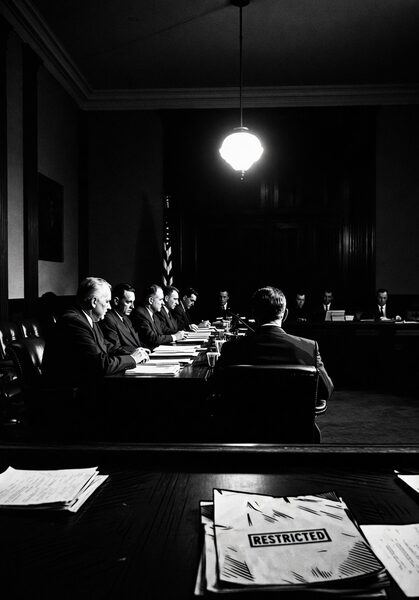
Congress has emerged as the primary institutional driver of UAP transparency since 2017. This article documents the key hearings, legislative actions, and congressional figures shaping UAP oversight through the public record.
The Legislative Foundation
Congressional involvement in UAP accelerated when provisions in successive National Defense Authorization Acts created official investigation mandates. The FY2022 NDAA required the establishment of what became AARO, mandated regular reporting to congressional intelligence and armed services committees, and required a historical review of U.S. government UAP involvement.
The Schumer-Rounds UAP Disclosure Act, introduced in July 2023 by Senate Majority Leader Chuck Schumer and Senator Mike Rounds, proposed a JFK Records Act-style framework for UAP materials, including eminent domain authority over private holdings and an independent review board with subpoena power. The most aggressive provisions were removed during House-Senate conference negotiations.
The FY2024 NDAA (signed December 22, 2023) retained a UAP Records Collection with a presumption of disclosure but removed the eminent domain and independent review board provisions. It maintained requirements for AARO reporting and whistleblower protections for individuals disclosing UAP-related information to Congress.
Key Congressional Hearings
July 26, 2023: House Oversight Committee
This was the most significant public UAP hearing in modern congressional history. David Grusch (former intelligence official) testified that he had been informed of a multi-decade UAP crash retrieval and reverse-engineering programme, that the U.S. government possesses “non-human biologics,” and that he experienced retaliation after filing his whistleblower complaint. David Fravor (retired Navy Commander) described his November 2004 “Tic Tac” encounter during USS Nimitz operations. Ryan Graves (former Navy pilot, Americans for Safe Aerospace founder) testified about repeated UAP encounters and systemic reporting failures.
November 2024: House Oversight Subcommittee
This hearing addressed emerging allegations regarding a programme referred to as “Immaculate Constellation” and broader transparency concerns. The Pentagon denied the existence of such a programme.
September 2025: House Oversight Task Force
Titled “Restoring Public Trust Through UAP Transparency and Whistleblower Protection,” this hearing focused on perceived shortcomings in AARO’s Historical Record Report, gaps in whistleblower protections, and ongoing classification barriers. Investigative journalist George Knapp testified regarding his decades of reporting and interactions with government sources.
Key Congressional Figures
The following members of Congress have been publicly active in UAP oversight through hearings, legislation, public statements, or official correspondence with the Department of Defense:
Representatives: Anna Paulina Luna (FL), chair of the House UAP Task Force; Tim Burchett (TN), outspoken advocate for UAP transparency and participant in the July 2023 hearing; Eric Burlison (MO), member of the UAP Caucus; Matt Gaetz (FL), has publicly described being shown UAP imagery by military officials.
Senators: Chuck Schumer (NY), co-author of the UAP Disclosure Act; Mike Rounds (SD), co-author of the UAP Disclosure Act; Kirsten Gillibrand (NY), has championed AARO oversight provisions; Marco Rubio (FL), vice chair of the Senate Intelligence Committee, has spoken publicly about UAP whistleblower claims.
The UAP Caucus
The bipartisan UAP Caucus had grown to include over 40 members by 2026. Representative Luna’s April 2026 demand for 46 specific UAP videos from the Pentagon, with an April 14 compliance deadline, represents the most specific congressional demand for UAP materials to date.
Where Congressional Oversight Stands Now
As of early April 2026, active threads include: the April 14 deadline for Pentagon compliance with Luna’s video demand, ongoing implementation of the Trump administration’s February 2026 disclosure directive, continued pressure for strengthened whistleblower protections, and proposals for new UAP legislation.