George Van Tassel
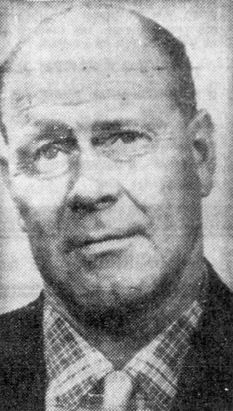
George Van Tassel was an aircraft engineer and test pilot who left the Southern California aviation industry in 1947 to live beneath a freestanding boulder in the Mojave Desert, and who became, through the 1950s and 1960s, one of the central organising figures of the American contactee movement. From Giant Rock near Landers he ran an annual spacecraft convention that drew crowds in the thousands, founded the Ministry of Universal Wisdom to publish the messages he said he received from beings he called the Council of Seven Lights, and spent the last eighteen years of his life building the Integratron, a domed timber structure he described as a machine for rejuvenation, anti-gravity, and time travel. The archive treats this material as documentary record of the contactee publishing tradition rather than as adjudicated historical record.
A Life
George Washington Van Tassel was born in Jefferson, Ohio, on 12 March 1910. He worked in aviation from the late 1920s, first as an aircraft mechanic and then across the Southern California aerospace industry that was taking shape around Los Angeles. He held positions with Lockheed and Douglas Aircraft, and worked for Howard Hughes at Hughes Aircraft, where his duties included flight test work. By the mid 1940s he had two decades of hands-on aviation experience behind him.
In 1947 Van Tassel left that career. He moved his family to Giant Rock, a seven-storey freestanding boulder in the Mojave Desert near Landers, California, on land leased from the federal government. The site already had a history: a prospector named Frank Critzer had excavated living quarters in the rock during the 1930s and died there in 1942 during a confrontation with sheriff's deputies. Van Tassel took over the site, reopened the airstrip as Giant Rock Airport, and over the following years added a home, a cafe, and a small dude ranch. He began holding weekly meditation sessions in the excavated chamber beneath the rock.
The Council of Seven Lights
Van Tassel said that the meditation sessions beneath Giant Rock produced channelled communications, and that from 1952 he began receiving messages from non-human intelligences he identified as the Council of Seven Lights. He published the first account of this in I Rode a Flying Saucer (1952), a short book presenting the messages as received transmissions, and developed the framework further in The Council of Seven Lights (1958). The communications combined warnings about nuclear weapons and looming catastrophe with a theology of universal law and human spiritual potential.
To organise and publish this material Van Tassel founded the Ministry of Universal Wisdom, with an associated College of Universal Wisdom, registered as a religious and research body. The framework places him within the contactee tradition of the 1950s alongside George Adamski, Truman Bethurum, Daniel Fry, and Orfeo Angelucci: figures who reported personal contact with benevolent space beings and built publishing and lecturing operations around the messages. The archive holds these publications as primary documents of that tradition. It does not adjudicate the truth of the contact claims, which have not been independently substantiated and stand as documentary record only of the literature Van Tassel and his organisation produced.
The Giant Rock Spacecraft Convention
From 1953 Van Tassel hosted an annual gathering at Giant Rock, the Interplanetary Spacecraft Convention, held in the open desert beside the airstrip. The conventions ran through to the 1970s and at their height drew crowds reported in the thousands, with one widely cited estimate of around eleven thousand attendees at the peak. Speakers included the other prominent contactees of the period, and the events combined lectures, saucer-sighting vigils, and the sale of books and periodicals.
The conventions were the largest regular public gathering of the contactee movement and a significant node in the mid-century American UFO subculture. Contemporary newspaper coverage treated them as a desert curiosity; within the movement they functioned as its principal annual meeting. The Giant Rock conventions are the reason Van Tassel's name recurs across the period's newsletters and press, and the archive's interest in him is primarily as the organiser who gave the movement a physical centre.
The Integratron
From the mid 1950s Van Tassel directed his attention to building the Integratron, a domed two-storey structure of wood and concrete a short distance from Giant Rock. He described it as a machine for cellular rejuvenation, anti-gravity research, and time travel, built to instructions he said he had received through the channelled communications and informed by his reading of Nikola Tesla and of electrostatics. The building was constructed without ferrous metal and organised around a rotating dome.
Van Tassel worked on the Integratron for roughly two decades, funding it through donations and convention proceeds. It was never completed. He died of a heart attack on 9 February 1978, weeks before a planned opening, and the machine never operated in the way he described. The structure still stands at Landers and is preserved as an acoustic and architectural curiosity. As with the contact claims, the archive records the Integratron as documentary fact, Van Tassel built it and described its intended function in his own published statements, without endorsing the claims made for what it could do.
Sources
The primary sources for this biography are Van Tassel's own published works, I Rode a Flying Saucer (1952) and The Council of Seven Lights (1958), together with the records of the Ministry of Universal Wisdom, contemporary newspaper coverage of the Giant Rock conventions, and the documented history of the Integratron structure at Landers. Full bibliographic detail is in the accompanying sources document.