Jon Kosloski
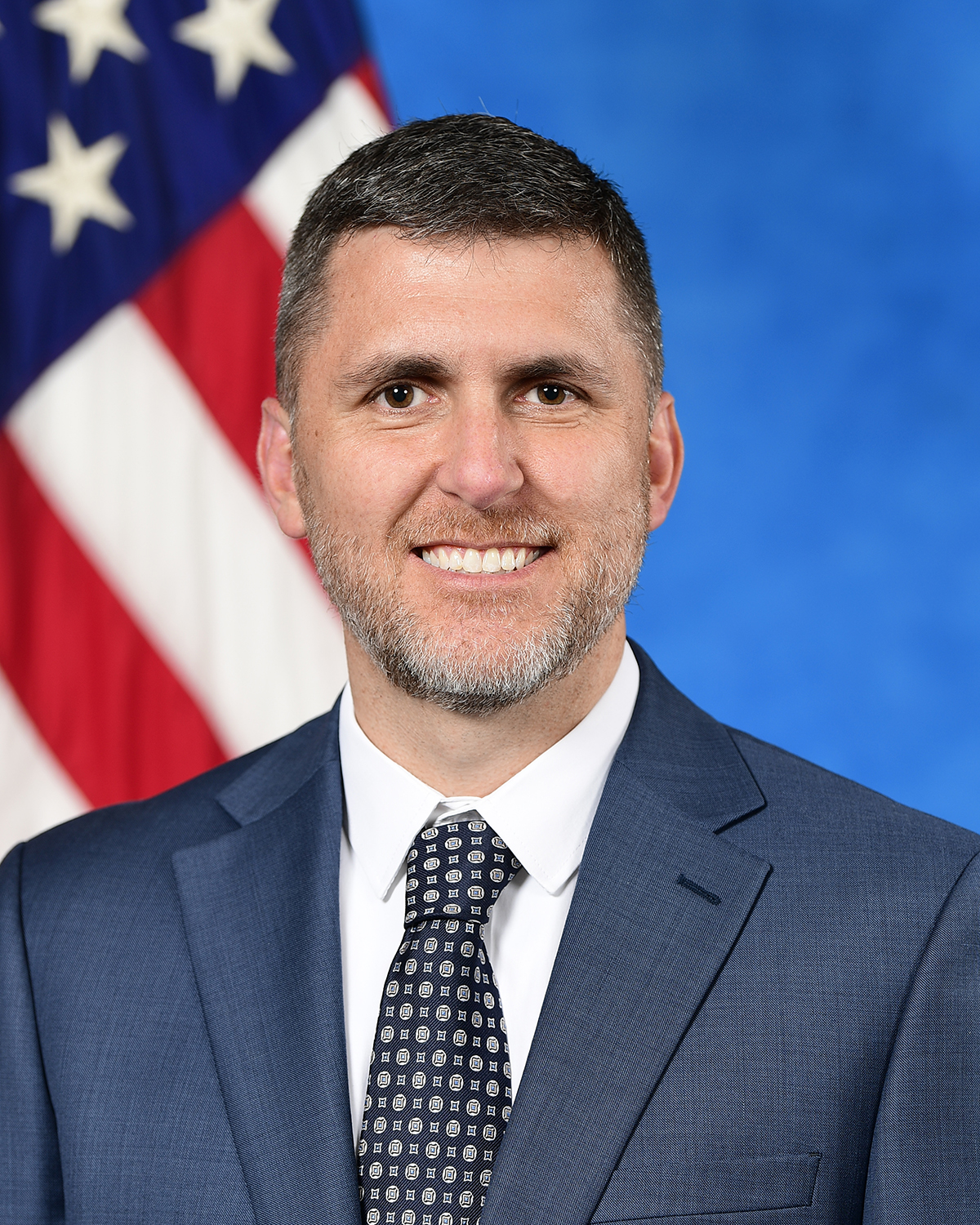
Jon T. Kosloski is the director of the Pentagon's All-domain Anomaly Resolution Office, appointed in August 2024 on detail from the National Security Agency. A physicist with a doctorate in electrical engineering from Johns Hopkins University and a background in quantum optics and free-space optical communications, he led advanced research within the NSA's Research Directorate before taking the AARO role. He delivered Senate Armed Services Committee testimony on 19 November 2024 and brought a scientific and technical framework to the office's investigation of unidentified anomalous phenomena.
A Life
Education
Dr Jon T. Kosloski holds a Bachelor of Science in Mathematics and a Bachelor of Science in Physics from California State University, San Bernardino, and a Doctor of Philosophy in Electrical Engineering from Johns Hopkins University. The dates of these degrees are not recorded in the public documentation. The dual undergraduate degrees in mathematics and physics from a California State University campus, followed by a doctorate at a major research university, trace an academic trajectory from the public university system into the upper tier of American research institutions.
His doctoral research, conducted at Johns Hopkins, focused on the invention of novel devices that leverage principles from quantum optics to receive very weak phase-encoded signals. The research involved the theoretical analysis of two new optical receiver designs. After completing the theoretical work, Kosloski collaborated with scientists at the National Institute of Standards and Technology (NIST) to demonstrate experimentally that his designs could achieve record sensitivities. The research sits at the intersection of quantum physics, optical engineering, and signals intelligence, a disciplinary combination that would define his subsequent career.
Kosloski is also a graduate of the National Security Agency's Cryptanalysis Development Program, one of the agency's selective internal training programmes for specialists in the mathematics of code-breaking and signals analysis. The programme trains analysts in the mathematical techniques used to exploit encrypted communications, a discipline that requires fluency in abstract algebra, number theory, and computational complexity.
The cumulative academic profile (mathematics, physics, electrical engineering, quantum optics, and cryptanalysis) represents an unusual breadth. Most intelligence community technical specialists are trained in a single discipline. Kosloski's credentials span the theoretical (quantum optics), the applied (optical receiver design and demonstration), and the operational (cryptanalysis and signals intelligence). This range would prove directly relevant to the AARO role, which demands the ability to assess reports involving radar signatures, optical phenomena, sensor data, and signals that cross disciplinary boundaries.
National Security Agency
Kosloski spent the majority of his career at the National Security Agency, the United States signals intelligence and information assurance agency headquartered at Fort Meade, Maryland. He held technical and leadership positions within the NSA's Research Directorate, the agency's internal research arm responsible for advancing the scientific and technical foundations of the intelligence mission.
Within the Research Directorate, Kosloski led advanced mission-oriented research in the fields of networking and computing. He served as a subject matter expert in the area of Free Space Optics, advising various Department of Defense agencies on the technology. Free space optical communication uses laser beams propagated through the atmosphere or space to transmit data, a technology with applications in secure communications, satellite links, and tactical military networks. Kosloski's expertise in quantum optics and free space optical systems placed him at the boundary between fundamental physics research and applied intelligence technology.
He also conducted research in crypto-mathematics, the mathematical discipline underlying the NSA's core mission of signals intelligence and code-breaking. He invented an advanced language-agnostic search engine, a tool designed to retrieve information across documents in multiple languages without requiring translation, a capability with applications in intelligence analysis of foreign-language communications.
Kosloski served at the Department of Defense Special Communications Enterprise Office, an organisation responsible for ensuring assured, secure communications for the President and senior national leadership. The assignment indicates a career that touched both the research and operational dimensions of national security communications.
The specific dates, projects, and operational contexts of Kosloski's NSA career remain classified. The details above are drawn from the official AARO biography published on the aaro.mil website and from the Department of Defense press release of 26 August 2024 announcing his appointment. As with all intelligence community personnel, the public documentation describes institutional affiliations and areas of expertise without revealing the substance of the classified work. The biography accordingly presents what the official record establishes and identifies the boundary beyond which the public documentation does not extend.
What is documented suggests a career that moved between the research laboratory and operational application. The Research Directorate, the Cryptanalysis Development Program, and the Special Communications Enterprise Office represent three different facets of the NSA's mission: the scientific foundation, the analytical tradecraft, and the operational communications infrastructure. Kosloski's service across all three indicates a career trajectory that valued breadth and cross-functional competence.
"I'm a researcher at my core, with an academic background in mathematics, physics, and engineering," Kosloski stated in his 19 November 2024 Statement for the Record to the Senate Armed Services Committee. "I have spent most of my career at the National Security Agency leading advanced research in the areas of optics, computing, and crypto mathematics."
The institutional inheritance
The All-domain Anomaly Resolution Office that Kosloski was appointed to lead in August 2024 was an organisation with a short but contested institutional history.
AARO was established by Deputy Secretary of Defense Kathleen Hicks in July 2022, in response to Section 1683 of the National Defense Authorization Act for Fiscal Year 2022. The legislation directed the Department of Defense to establish an office to coordinate the detection, reporting, and analysis of unidentified anomalous phenomena across all domains: air, sea, space, and transmedium. The "all-domain" mandate was broader than its predecessor, the Unidentified Aerial Phenomena Task Force (UAPTF), which had operated within the Department of the Navy and focused primarily on airborne phenomena. AARO was charged with examining phenomena in all physical environments, including underwater ("transmedium" being the term used for objects reported to transition between air and water).
The office was placed under the authority of the Under Secretary of Defense for Intelligence and Security, with a reporting line to the Director of National Intelligence. Congress gave AARO specific authorities that the UAPTF had lacked, including the power to compel cooperation from other government agencies, access to classified programmes, and a statutory requirement to produce annual public reports on its caseload and findings.
Dr Sean Kirkpatrick, a physicist and intelligence officer, was appointed as AARO's first permanent director and served from mid-2022 until his departure in late 2023. Under Kirkpatrick's leadership, AARO published its Volume I "Report on the Historical Record of U.S. Government Involvement with Unidentified Anomalous Phenomena" in March 2024. The report examined the government's historical engagement with UAP dating back to 1945, and concluded that AARO had found "no verifiable evidence that any UAP sighting has represented extraterrestrial activity" and "no empirical evidence for claims that the U.S. government and private companies have been reverse-engineering extraterrestrial technology."
The report's conclusions generated sharp disagreement from members of Congress who had received classified briefings on UAP and from former government officials who had testified publicly about their knowledge of classified UAP programmes. The July 2023 House Oversight hearing, at which David Grusch, Commander David Fravor, and Lieutenant Commander Ryan Graves testified about their experiences, had placed a competing set of claims on the congressional record. The institutional environment into which Kosloski would arrive was shaped by this tension between AARO's formal analytical conclusions and the testimony that members of Congress had received from other government sources.
The tension was structural, not personal. AARO's statutory mandate required it to investigate UAP reports using the evidence available to it. Witnesses before Congress described programmes and evidence that, they testified, had been withheld from AARO or its predecessors. The question of whether AARO had been given access to all relevant information was itself a contested matter in the congressional and public record.
Following Kirkpatrick's departure in late 2023, Timothy A. Phillips served as AARO's acting director from December 2023 until Kosloski's appointment in August 2024. The acting directorship bridged the gap during the hiring process for a permanent successor. Phillips maintained the office's operational continuity during a period of heightened congressional interest and public attention.
Appointment
On 26 August 2024, the Department of Defense announced that Kosloski had arrived on detail from the National Security Agency to serve as the director of the All-domain Anomaly Resolution Office. The announcement was published as a press release on the Department of Defense website and briefed to reporters by Pentagon Press Secretary Major General Pat Ryder.
"Jon possesses the unique set of scientific and technical skills, policy knowledge, and proven leadership experience required to enhance AARO's efforts to research and explain unidentified anomalous phenomena to the Department, Congress, and the American people," Deputy Secretary Hicks stated in the release.
Ryder told reporters that Kosloski would "head DoD's efforts, in coordination with the Intelligence Community, to minimize technical and intelligence surprise by synchronizing scientific, intelligence, and operational detection, identification, attribution, and mitigation of unidentified anomalous phenomena in the vicinity of national security areas."
The appointment was reported on the same day by DefenseScoop, MeriTalk, and NewsNation. DefenseScoop's Brandi Vincent noted that Kosloski's background in quantum optics and crypto-mathematics represented a different disciplinary profile from his predecessors: Kirkpatrick had been a physicist and intelligence officer with a career in missile defence and space surveillance, while Phillips had served in a management and oversight capacity. Kosloski's profile was that of a research scientist with operational intelligence experience, a combination that suggested the Department intended AARO's next phase to prioritise scientific rigour in case analysis and sensor development.
The "detail" arrangement, under which Kosloski remained an NSA employee while serving at AARO, is a standard federal personnel mechanism that allows agencies to temporarily loan staff to other organisations. It preserves the individual's home agency affiliation and career progression while providing the receiving organisation with specialised expertise. The arrangement also reflects the inter-agency character of the UAP mission: AARO's work draws on capabilities and data from across the intelligence community, and a director with a home agency outside the Department of Defense may be better positioned to coordinate with the multiple agencies involved.
The caseload
On 14 November 2024, Kosloski conducted an off-camera press briefing at the Pentagon, his first open engagement with reporters since assuming the role. The briefing coincided with the delivery of AARO's congressionally mandated Fiscal Year 2024 Consolidated Annual Report on UAP to congressional staff.
Kosloski confirmed that AARO had received over 1,600 UAP reports to date. The FY2024 report covered 757 new reports submitted between 1 May 2023 and 1 June 2024.
"AARO has successfully resolved hundreds of cases in its holdings to commonplace objects such as balloons, birds, drones, satellites and aircraft," Kosloski told reporters. "Meanwhile, over 900 reports lack sufficient scientific data for analysis and are retained in our active archive. These cases may be reopened and resolved should additional information emerge to support analysis."
He described the office's analytical process: once a case was resolved as a drone or other human-made object, AARO passed it to the relevant military installation for further investigation. "Those investigations are conducted by somebody else," Kosloski explained. "And we're focusing on the truly anomalous where we don't understand the activity."
He cited the example of cases near Langley Air Force Base that had been correlated with SpaceX's Starlink satellite constellation. "We had several folks over the period, I think it was multiple months, who were seeing interesting activity in the sky. And we found that, because we're continuously looking back at that active archive and looking for correlations across those incidents, we were able to assess that they were, all in those cases, looking at Starlink flares."
The briefing underscored a pattern that defined Kosloski's public posture: a systematic, data-driven approach that emphasised resolution of explicable cases in order to focus analytical resources on the residual category of cases that could not be attributed to known technologies or natural phenomena.
He stated, as he would again in his Senate testimony five days later, that AARO had "discovered no evidence of extraterrestrial beings, activity or technology." He also noted that no UAP activities had been confirmed as attributable to foreign adversaries, an assessment that addressed the national security dimension of the UAP question separately from the question of non-human origin.
The briefing revealed the scale of the analytical challenge. Of the 1,600-plus reports, hundreds had been resolved to known objects. Over 900 lacked sufficient data for analysis. The residual category of cases that were both data-rich and unexplained remained small but, in Kosloski's framing, required focused scientific inquiry and dedicated resources.
Senate testimony
On 19 November 2024, Kosloski testified before the Senate Armed Services Subcommittee on Emerging Threats and Capabilities, chaired by Senator Kirsten Gillibrand of New York, with Senator Joni Ernst of Iowa as ranking member. The hearing was titled "To receive testimony on the activities of the All-domain Anomaly Resolution Office."
Kosloski's Statement for the Record, published on the AARO website, provided the most comprehensive account of the office's operations and priorities under his leadership.
"Unidentified objects in any domain may pose a threat to U.S. safety and security," Kosloski stated. "Reports of UAP activity, particularly near national security sites, must be treated seriously and investigated with scientific rigor by the U.S. Government."
He outlined three priorities for the office under his leadership. The first was building partnerships across government, academia, industry, and the public: "AARO cannot do its work alone. Building partnerships across government, academia, industry, and with the public, is essential to the success of the office." He emphasised the importance of cooperation with the military services to implement reporting guidance and to reinforce "zero stigma associated with UAP reporting."
The second priority was transparency, an issue that had generated sustained congressional frustration throughout AARO's existence. Members of Congress, journalists, and public advocates had repeatedly criticised the pace and scope of UAP-related declassification. Kosloski addressed the structural reasons for the pace directly: "In some cases, it may be unclear to the public why DoD classified a piece of information in the first place. Why are photos of seemingly benign objects, such as balloons, classified? It is often the case that an object or phenomenon itself is not a security concern, but the location, source, or method used to capture it is still sensitive."
The distinction Kosloski drew was precise: the UAP itself might be unremarkable, but the sensor that captured it, the location where it was observed, or the method used to collect the data might reveal classified intelligence capabilities. Releasing the image would compromise the source, not the subject. This structural constraint applied across the caseload and explained why many cases that AARO had resolved remained classified even after resolution.
He noted that AARO did not unilaterally declassify information but worked "with the originator of a classified record to ensure that declassifying that record does not inadvertently harm national security." He acknowledged that the process was slow but stated that "the Department is committed to declassifying and publicly sharing more information on UAP."
The third priority was scaling up the work of the office. Kosloski described AARO's collaboration with the National Laboratories, the Office of the Director of National Intelligence, the FBI, the Department of Homeland Security, and NASA as part of a "whole-of-government effort to address UAP."
He also stated his intention to "explore new ways to partner with the academic and scientific communities to investigate its most complex UAP cases." The statement signalled an openness to external scientific input. The question of whether AARO should engage more broadly with academic researchers, and whether classified UAP data could be shared in forms that permitted independent scientific analysis, had been a point of discussion in the congressional and scientific communities since AARO's establishment.
Kosloski's testimony also addressed the reporting pipeline, a structural issue that had constrained UAP investigation for decades. He noted that AARO had worked with the DoD Joint Staff to issue guidance to defence personnel worldwide on how to report UAP observations, and was working with the military services to ensure implementation of that guidance. "We rely on their support to implement our reporting guidance and to amplify the message that there should be zero stigma associated with UAP reporting," he stated.
The reporting mechanism represented a structural achievement with direct implications for data quality. Prior to the UAPTF and AARO, no standardised system existed for military personnel to report UAP encounters without professional stigma or career risk. Pilots, intelligence analysts, and sensor operators who observed unexplained phenomena had no formal channel through which to report them, and informal reporting carried the risk of professional ridicule or career consequences. The zero-stigma policy that Kosloski emphasised was designed to address this systemic underreporting.
Kosloski also described a reporting mechanism for the public and former government personnel. Congress had directed AARO to establish a secure process through which current and former government employees, military members, and contractors could report UAP-related information directly to the office, with protections against retaliation. The AARO website included this reporting mechanism alongside the public-facing imagery and case resolution data.
The hearing also touched on the question of whether AARO had been granted access to all relevant classified programmes. Congress had waived non-disclosure agreements for individuals disclosing information to AARO and had given the office authority to investigate any relevant programme. Whether those authorities had been fully exercised, and whether all relevant information had been provided to AARO, remained an open question in the congressional discussion. Kosloski stated that AARO was "committed to working within the authorities Congress has provided" but did not address specific allegations about programmes withheld from the office's review.
Ongoing public engagement
In August 2025, Kosloski appeared on StarTalk Radio, the science communication programme hosted by astrophysicist Neil deGrasse Tyson. The episode, titled "The Truth About UAPs with Jon Kosloski," addressed the shift in government terminology from "UFO" to "UAP," AARO's data collection methodology, and the application of artificial intelligence and advanced sensors to triage and investigate UAP reports. The appearance represented a public-facing engagement with a mainstream scientific audience, distinct from the congressional and defence-press contexts that had characterised his earlier public statements. It also represented an effort to bring AARO's work to the attention of the scientific community that Kosloski had identified as a priority partnership.
AARO under Kosloski's directorship also hosted an invite-only research workshop in the Washington, D.C. area in 2025, bringing together approximately forty participants from government, academia, and independent research to discuss the future of UAP investigation methodology. The workshop, reported by DefenseScoop's Brandi Vincent in March 2026, was sponsored by AARO and hosted by Associated Universities, Inc., a nonprofit organisation that manages major research facilities on behalf of the scientific community. The workshop's focus on methodology, and its inclusion of academic and independent researchers alongside government personnel, represented a practical expression of the partnership priority Kosloski had articulated in his Senate testimony. It also represented an institutional step that previous AARO and UAPTF leadership had not taken: bringing external scientists into a structured dialogue about how to improve the analytical tools available for UAP investigation.
The AARO website at aaro.mil, which launched prior to Kosloski's appointment, has been expanded under his leadership to feature UAP imagery, case resolutions, material analysis results, archival records, and a public reporting mechanism for civilian and former government witnesses. The website represents an experiment in institutional transparency: a classified intelligence office maintaining a public-facing digital presence with imagery and analytical results that have been cleared for release. No previous Pentagon UAP investigation effort had operated a comparable public resource.
The period since Kosloski's appointment has also coincided with the early months of the second Trump administration, which has signalled interest in UAP disclosure as a public policy matter. The intersection of AARO's institutional work with the administration's disclosure posture remains an evolving area of the public record.
As of June 2026, Kosloski continues to serve as Director of the All-domain Anomaly Resolution Office. His tenure represents the third leadership phase in AARO's short institutional history: Kirkpatrick's establishment phase, Phillips's interim continuity, and Kosloski's scientific reorientation. The office he directs holds over 1,600 UAP reports, a public-facing website, a congressional reporting mandate, and a network of inter-agency and academic partnerships. Whether the scientific framework Kosloski has brought to the office will prove sufficient to resolve the contested questions in the congressional and public record remains a matter for the documentary record to establish over time.
Career Record
| Date | Event |
|---|---|
| Date unknown | BSc Mathematics and BSc Physics, California State University, San Bernardino |
| Date unknown | PhD Electrical Engineering, Johns Hopkins University |
| Date unknown | Graduate, NSA Cryptanalysis Development Program |
| Career span unknown | Technical and leadership positions, NSA Research Directorate |
| Career span unknown | Subject matter expert, Free Space Optics, advising DoD agencies |
| Career span unknown | Inventor, advanced language-agnostic search engine |
| Career span unknown | Served at DoD Special Communications Enterprise Office |
| July 2022 | AARO established by Deputy Secretary Hicks (Section 1683, FY2022 NDAA) |
| Mid-2022 to late 2023 | Dr Sean Kirkpatrick served as first permanent AARO director |
| March 2024 | AARO Volume I Historical Record report published |
| December 2023 to August 2024 | Timothy A. Phillips served as acting AARO director |
| 26 August 2024 | Kosloski arrived on detail from NSA; appointed AARO Director |
| 14 November 2024 | First Pentagon press briefing as AARO Director |
| 19 November 2024 | Testified before Senate Armed Services Subcommittee on Emerging Threats and Capabilities |
| August 2025 | Appeared on StarTalk Radio |
| 2025 | AARO hosted invite-only research workshop |
Notable Public Statements
On his background (Statement for the Record, 19 November 2024):
"I am Jon Kosloski. I'm a researcher at my core, with an academic background in mathematics, physics, and engineering. I have spent most of my career at the National Security Agency leading advanced research in the areas of optics, computing, and crypto mathematics. I am drawn to tough scientific problems, which is what brought me to AARO and the UAP mission."
On the national security imperative (Statement for the Record, 19 November 2024):
"Unidentified objects in any domain may pose a threat to U.S. safety and security. Reports of UAP activity, particularly near national security sites, must be treated seriously and investigated with scientific rigor by the U.S. Government."
Source: AARO, Statement for the Record, 19 November 2024
On the analytical focus (Pentagon press briefing, 14 November 2024):
"We're focusing on the truly anomalous where we don't understand the activity."
On classification and transparency (Statement for the Record, 19 November 2024):
"In some cases, it may be unclear to the public why DoD classified a piece of information in the first place. Why are photos of seemingly benign objects, such as balloons, classified? It is often the case that an object or phenomenon itself is not a security concern, but the location, source, or method used to capture it is still sensitive."
Source: AARO, Statement for the Record, 19 November 2024
On partnerships (Statement for the Record, 19 November 2024):
"AARO cannot do its work alone. Building partnerships across government, academia, industry, and with the public, is essential to the success of the office."
Document Trail
The primary sources consulted for this biography are listed in the accompanying sources.md document, with full bibliographic detail for each entry. The bibliography distinguishes between primary government sources, named press coverage, and research gaps.