Admiral of the Fleet The Lord Hill-Norton
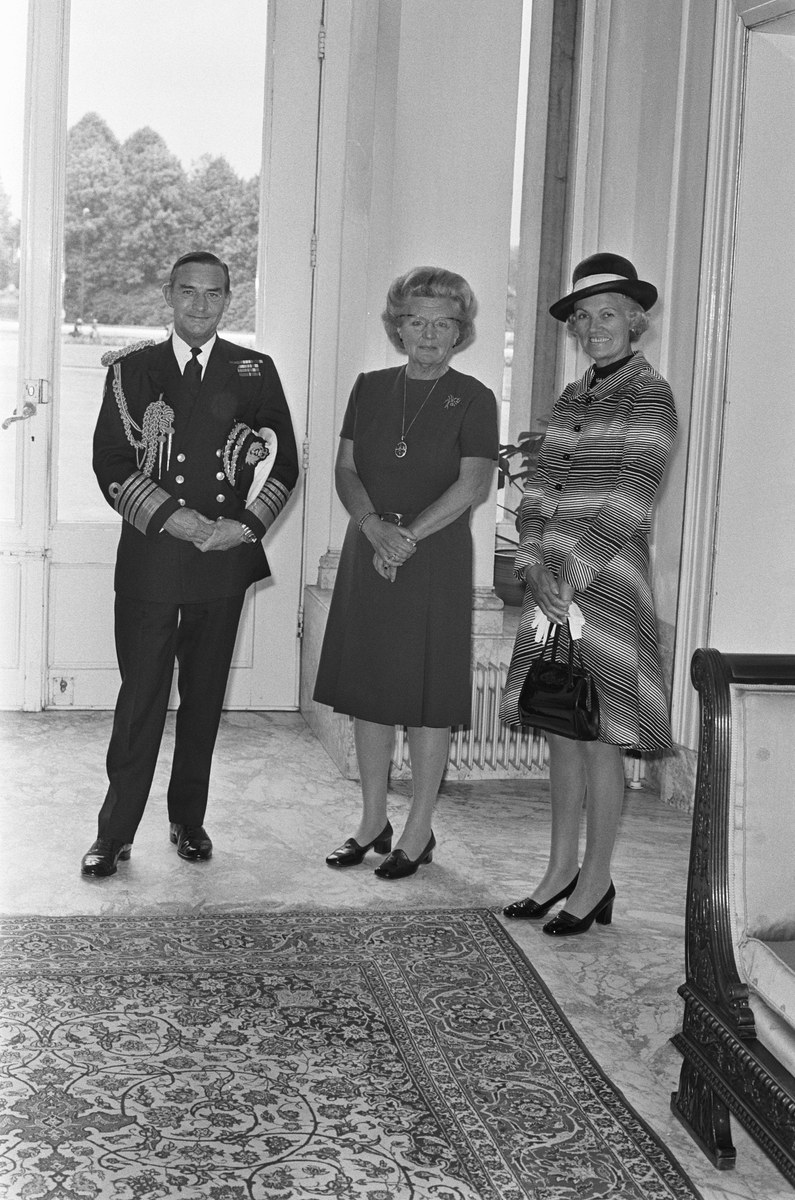
Peter John Hill-Norton, Baron Hill-Norton of South Nutfield, known throughout his Royal Navy career as Peter and through his peerage years as Lord Hill-Norton, was First Sea Lord from 1970 to 1971, Chief of the Defence Staff from 1971 to 1973, and Chairman of the NATO Military Committee from 1974 to 1977. He sat in the House of Lords from his 1979 elevation as a life peer until his death in May 2004. The final two decades of his life were marked by the most senior public campaign for United Kingdom UFO disclosure ever conducted by a serving or former British military officer. He co-founded UFO Concern in 1996 with Lord Kennet, pressed the Ministry of Defence for the release of the Rendlesham Forest files across multiple House of Lords debates, wrote forewords for the principal civilian-research books on the 1980 Rendlesham incident, and lived just long enough to see the first substantial DEFE-24 file release in 2001 but not long enough to see the full 2008 to 2013 release that finally placed the British UFO file collection in the public record.
A Life
Peter John Hill-Norton was born on 8 February 1915 in the Hampshire village of Sopley, the son of Captain Martin John Hill-Norton of the Royal Field Artillery. He entered the Royal Naval College at Dartmouth in 1928 at the age of thirteen, took his commission as a sub-lieutenant in 1932, and served through the rest of the inter-war period at sea in the Mediterranean and Atlantic fleets. The Second World War found him as a lieutenant aboard the submarine HMS Triumph, then in destroyer and cruiser commands across the Mediterranean. He commanded HMS Mauritius through the closing year of the war.
The postwar career was the steady upward arc of a Royal Navy general officer through the senior staff and command appointments. He was Director of Plans at the Admiralty in the early 1960s, commanded the Far East Fleet from 1969 to 1970, and was promoted to Admiral and First Sea Lord on 4 July 1970. He held the First Sea Lord post for nine months only, until 9 April 1971, when he was promoted to Admiral of the Fleet and appointed Chief of the Defence Staff, the United Kingdom's senior military officer. He served as CDS until 6 October 1973, then handed over to Marshal of the Royal Air Force Sir Andrew Humphrey. He was Chairman of the NATO Military Committee in Brussels from 1974 to 1977, retiring from active service on his sixty-second birthday in February 1977.
He was created Baron Hill-Norton of South Nutfield, of South Nutfield in the County of Surrey, on 19 June 1979, taking his seat in the House of Lords on the Labour benches before moving to the cross-benches in the 1980s. The Lords speeches across the 1980s engaged a range of defence and foreign-policy questions; the UFO debates that became his late-career signature campaign began in the early 1990s and accelerated through to his death. He was a director of the Royal Navy of Canada (an honorary appointment) and a long-standing patron of British UFO research organisations. He died on 16 May 2004 at his home in Petersfield, Hampshire, at the age of eighty-nine. He was survived by his widow Maureen and by two children.
Either large numbers of normally reliable people are suffering from some sort of inexplicable hallucination, or the events they report are taking place. Either explanation is of considerable interest, and either way the situation seems to me to merit much more serious official attention than it appears to be receiving.Hill-Norton, House of Lords speech, Hansard, 18 January 1996
Photographs
Hill-Norton was photographed institutionally throughout his Royal Navy career. The Imperial War Museum and the National Portrait Gallery hold the formal portraits. The Ministry of Defence photographic archive holds the official portraits from his First Sea Lord and Chief of the Defence Staff years. The Parliamentary Archives hold the photography from his House of Lords appearances and the late-career disclosure-campaign press events. Most photographs of Hill-Norton in the archive's possession remain at the sourcing-verification stage and are not yet EXIF-confirmed for display.
The Royal Navy Career
Hill-Norton's career path through the Royal Navy was conventional in its institutional shape and unusually fast in its progression. From Dartmouth in 1928 to First Sea Lord in 1970 was forty-two years, comparable to the senior cohort of the postwar Royal Navy. The promotion to Admiral of the Fleet (the highest rank in the Royal Navy and a position usually held in retirement rather than active duty) on his elevation to Chief of the Defence Staff in 1971 was a substantial mark of regard from the Heath government. He was appointed Knight Commander of the Order of the Bath (KCB) in 1968 and Knight Grand Cross of the same Order (GCB) in 1972.
The CDS years (1971 to 1973) coincided with the United Kingdom's accession to the European Economic Community, the early Northern Ireland deployment of British forces under Operation Banner, the Yom Kippur War period in the Middle East, and the strategic-deterrent transition from the Polaris to the Chevaline programmes. Hill-Norton's CDS file (held at the National Archives Record Group DEFE 23) is the principal documentary source for the operational decisions of the period. The NATO Military Committee chairmanship (1974 to 1977) placed him at the Brussels headquarters through the post-Helsinki Accord period.
The UFO question was, on the available record, not a substantial element of his active-duty service. He stated repeatedly in his later-career speeches and writings that he had not been formally briefed on UFO matters as CDS or as First Sea Lord. The frame from which he subsequently engaged the question was the frame of a retired senior military officer drawing on his lifelong access to the British defence establishment, not the frame of an insider drawing on classified service knowledge. The distinction is the substantive one for the legal-evidentiary status of his subsequent statements.
UFO Concern, 1996
UFO Concern was launched in 1996 by Hill-Norton and Lord Kennet (the Hon Wayland Young) at a House of Lords briefing on 18 January 1996. The organisation's stated purpose was to press the United Kingdom Ministry of Defence for the disclosure of files relating to military encounters with anomalous aerial phenomena and to lobby for a parliamentary inquiry into the wider question. The founding cohort included Hill-Norton as Chairman, Lord Kennet as Vice-Chairman, the academic researcher David Clarke, the former Royal Air Force radar operator Edwin Beswick, the civilian researcher Timothy Good, and the former Ministry of Defence UFO desk officer Nick Pope.
The organisation's principal vehicle for the campaign was the House of Lords itself. Hill-Norton tabled written and oral parliamentary questions across 1996 and 1997 pressing the Ministry of Defence on UFO file retention, on the Rendlesham Forest incident, and on the question of whether the United Kingdom maintained any active UFO-investigation capability. The replies, given by Lord Henley and subsequently by other Lords spokesmen for the Ministry, were consistently brief and consistently denied substantive engagement. The Hansard record of the 1996 to 1997 exchanges is the principal documentary source for the formal British government position on UFO disclosure in the period.
UFO Concern continued in operation through Hill-Norton's death and into the period of the 2008 to 2013 DEFE-24 file releases, which the organisation had campaigned for. The releases delivered substantial holdings to the British public record. The campaign that Hill-Norton had run for the preceding eight years was, in the substantive material terms, successful. He had not lived to see it completed.
The principal House of Lords debate on UFO disclosure of the Hill-Norton campaign is in Hansard House of Lords, 18 January 1996, columns 769 to 781. The debate was opened by Lord Kennet and included substantial contributions from Hill-Norton, Lord Kennet, Lord Hailsham of Saint Marylebone and Lord Henley (replying for the government). The Hill-Norton speech of that day is the most widely quoted of his Lords interventions on the UFO question and the source of the "either large numbers of normally reliable people..." passage cited above. The full debate is available through the Hansard website at api.parliament.uk.
The Rendlesham Campaign
The Rendlesham Forest incident of December 1980, at the joint United States Air Force / Royal Air Force bases of Bentwaters and Woodbridge in Suffolk, became the central case Hill-Norton pressed across the late 1980s and 1990s. The incident, which involved multiple sightings by United States Air Force personnel across the nights of 26 to 28 December 1980 of an unidentified luminous object in the forest and at the base perimeter, had been documented in the famous memorandum by Deputy Base Commander Lt Col Charles I. Halt dated 13 January 1981. Hill-Norton's public position from the late 1980s onwards was that the Halt memorandum and the wider incident either demonstrated that a substantial breach of British air defence had taken place on Royal Air Force soil and had not been properly investigated, or that the Ministry of Defence had information about the incident that it had not disclosed. Either reading, he argued, warranted a full parliamentary inquiry.
Hill-Norton's foreword to Larry Warren and Peter Robbins' Left at East Gate (1997), the principal Warren-tradition account of the incident, set out the case for full disclosure at length. He wrote subsequent forewords for further Rendlesham books across the late 1990s and early 2000s. The Rendlesham case is documented in the archive through the dedicated Rendlesham Forest case file and through the related material in the UK government-records holdings. The Halt memorandum itself is the central document of the case and is included in the archive's DEFE-24 government-records material.
Hill-Norton's frame on Rendlesham was the institutional-disclosure frame: the case was, in his reading, either a significant breach of British air defence that had not been adequately investigated, or an instance of withheld information that warranted parliamentary inquiry. The frame did not require him to commit to any specific reading of what the witnesses had seen. The wider Rendlesham literature contains a much wider range of readings of the incident itself, from natural-phenomenon explanations through misidentification accounts through the various extraterrestrial-craft interpretations. Hill-Norton's institutional-disclosure frame is held in the archive separately from the witness-testimony and incident-interpretation literature, and the two should be cited separately.
Connected People
British peer, journalist and former defence minister (1923 to 2009), co-founder with Hill-Norton of UFO Concern in 1996. Author of the principal House of Lords introductions to the 1996 debate. The peerage colleague with whom Hill-Norton's late-career campaign was most closely associated. Took on the Chairmanship of UFO Concern after Hill-Norton's death.
British former civil servant who ran the Ministry of Defence's UFO desk in Secretariat (Air Staff) 2a from 1991 to 1994 and has been the principal public-facing former MoD official on the United Kingdom UFO question since. Worked with Hill-Norton in the UFO Concern years from 1996 onwards. Author of Open Skies, Closed Minds (1996) and Encounter in Rendlesham Forest (2014).
United States Air Force officer (retired Colonel), Deputy Base Commander at the joint RAF Bentwaters / Woodbridge installation in December 1980 and author of the 13 January 1981 memorandum on the incident that became the central document of the Rendlesham case. Hill-Norton corresponded with Halt across the late 1990s and cited the Halt memorandum repeatedly in his disclosure campaign.
United States Air Force airman stationed at RAF Bentwaters in December 1980 and co-author with Peter Robbins of Left at East Gate (1997), the principal first-person Warren-tradition account of the Rendlesham incident. Hill-Norton wrote the foreword to the 1997 book. Warren's account has been subject to extensive subsequent debate within the wider Rendlesham research community.
British author and researcher whose Above Top Secret: The Worldwide UFO Cover-up (1987) brought the British UFO question into substantial international circulation and was one of the books Hill-Norton cited as having shifted his own engagement with the question. Founding member of UFO Concern. Hill-Norton wrote forewords for subsequent Good titles across the late 1990s.
British academic, author and journalist (Sheffield Hallam University) who served as the National Archives consultant for the 2008 to 2013 DEFE-24 / DEFE-31 file release programme that delivered the disclosure outcome Hill-Norton had campaigned for. Founding member of UFO Concern in 1996. Author of The UFO Files: The Inside Story of Real-Life Sightings (2009, second edition 2012).
Lord Chancellor 1970-1974 and 1979-1987, Quintin Hogg (1907 to 2001). Contributed to the 18 January 1996 House of Lords debate on the UFO question, raising the constitutional-precedent issues around a parliamentary inquiry into a defence matter. The Hailsham contribution was the most significant intervention by a senior law officer in the Hill-Norton campaign.
Royal Air Force radar operator (retired) whose service-period radar observations of unidentified aerial objects formed part of the technical evidence Hill-Norton and UFO Concern cited in the 1996 House of Lords debates. Founding member of UFO Concern and one of the principal radar-technical voices inside the campaign.
In the Archive
Hill-Norton appears across four sections of the archive. The Royal Navy operational and command record runs through the Ministry of Defence and National Archives holdings of his First Sea Lord and Chief of the Defence Staff years. The House of Lords disclosure campaign runs through the Hansard record of his interventions from 1996 to 2003. The Rendlesham Forest case file is held in the archive's case-file collection. The wider United Kingdom UFO disclosure question is documented through the archive's UK government records hub, with the DEFE-24 file collection that the Hill-Norton campaign had pressed for representing the substantial documentary outcome of the period.
The Rendlesham Forest case file is held in the archive's case-file collection. The DEFE-24 and DEFE-31 UK Ministry of Defence file releases that delivered the disclosure outcome Hill-Norton had campaigned for are held in the archive's UK government records collection. The archive's United Kingdom country page holds the regional context for the British civilian-research and government-disclosure traditions.
Sources
Hansard House of Lords debates and parliamentary questions, particularly the debates of 18 January 1996 (columns 769 to 781), 28 October 1997, and the various written-answer exchanges across 1996 to 2003. Hill-Norton, Peter (foreword). Warren, Larry and Peter Robbins. Left at East Gate, Marlowe and Company, 1997. Pope, Nick. Open Skies, Closed Minds, Simon and Schuster, 1996. Good, Timothy. Above Top Secret: The Worldwide UFO Cover-up, Sidgwick and Jackson, 1987. Clarke, David. The UFO Files: The Inside Story of Real-Life Sightings, Bloomsbury, 2009 (second edition 2012). UK Ministry of Defence DEFE-24 and DEFE-31 file release programme, National Archives, 2008 to 2013. Halt, Lt Col Charles I. Memorandum on "Unexplained Lights," RAF Bentwaters, 13 January 1981 (the Halt memorandum, central document of the Rendlesham case). Hill-Norton obituaries: The Times (London), 17 May 2004; The Daily Telegraph, 17 May 2004; The Independent, 18 May 2004; The Guardian, 18 May 2004.