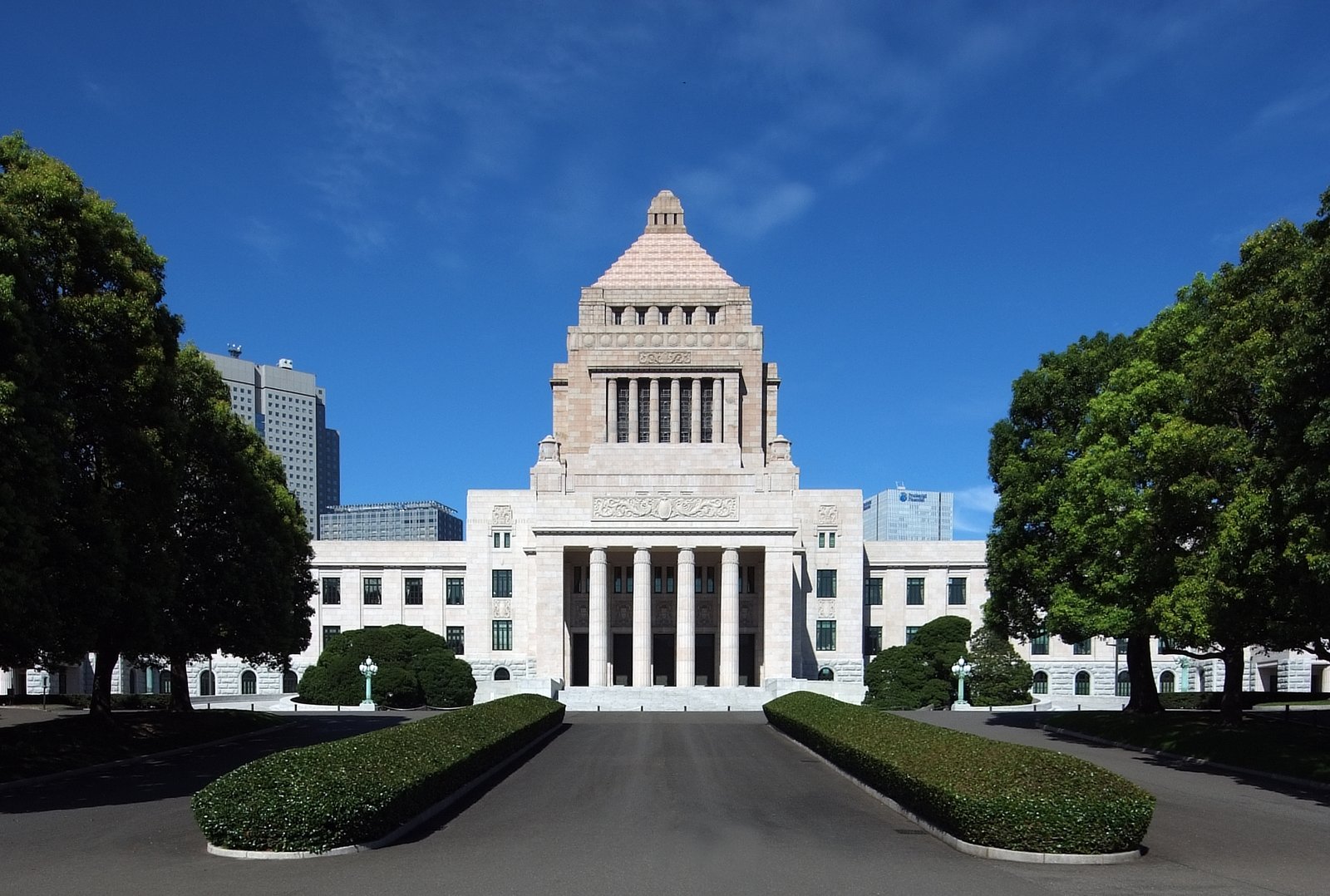
For decades, official Japan’s posture on Unidentified Anomalous Phenomena has been to defer to the Ministry of Defence and otherwise say very little in public. That posture shifted on 11 May 2026, when Chief Cabinet Secretary Minoru Kihara used his regular press briefing to confirm two things on the record. First, that Japan possesses its own UAP video footage. Second, that Tokyo is analysing the United States Department of War’s Presidential Unsealing and Reporting System for UAP Encounters (PURSUE) corpus alongside allied partners. It is a small statement on its face. It is also the first time a serving cabinet minister has formally placed Japanese UAP imagery into the public record.
What Kihara Actually Said
Kihara’s confirmation came in response to a press question about the 8 May 2026 PURSUE release. The 162-file tranche posted to war.gov/UFO includes at least two videos shot near or over Japanese-relevant airspace: a USINDOPACOM clip from 2023 running close to two minutes, and a nine-second 2024 clip filmed over the East China Sea showing what the Pentagon describes as a football-shaped body with three radial projections. Asked whether Japan would release its own files, Kihara confirmed possession of separate Japanese-origin footage and described an ongoing technical analysis with allies. He did not commit to a public release timeline.
The Japan Times carried the statement first. IBTimes UK followed with framing that placed Kihara’s confirmation alongside the broader question of allied UAP coordination. As of 18 May 2026 no Japanese files have been released to the public. The policy door, though, is now formally open.
The Two PURSUE Clips Over Japanese Airspace
The PURSUE clips that drew Kihara’s response sit inside the larger 28-video corpus released on 8 May 2026. The first is a USINDOPACOM tracking video from 2023, near the eastern edge of Japan’s air defence identification zone. The second is the East China Sea 2024 clip, brief and tightly cropped, showing the radial-projection geometry the Department of War flagged as anomalous. Neither clip carries the full sensor metadata that researchers including the Galileo Project’s Avi Loeb have called for. Both, however, place American military encounters with UAP inside Japanese-relevant airspace at the level of public record.
Twelve Months of Policy Acceleration
Kihara’s statement is not a one-off. It sits at the end of a sequence of Japanese policy moves over the past twelve months that have shifted Japan from a deferential posture to one of active institutional preparation:
In June 2024, more than 80 Japanese legislators formed the Parliamentary League for Unravelling Unidentified Anomalous Phenomena from a National Security Perspective, chaired by LDP parliamentary affairs head Yasukazu Hamada, with then Environment Minister Shinjiro Koizumi as Secretary General. Two members of the founding caucus, Kei Endo and Yoshiharu Asakawa, stated at the inaugural press conference that they had personally witnessed UAP.
In May 2025, the league delivered a formal proposal to the Defence Ministry for a dedicated UAP research division.
On 24 March 2026, the cross-party caucus formally proposed that UAP response sit under the Deputy Chief Cabinet Secretary for Crisis Management. That structure would place UAP analysis inside the Prime Minister’s Office rather than purely inside Defence, a cross-domain national security arrangement rather than a purely military intelligence one.
The caucus has proposed the structural framework. The cabinet, via Kihara’s briefing, has now publicly confirmed the footage.
Why the Statement Matters
Three reasons.
First, Kihara’s statement formally placed Japanese UAP sensor data into the public record. Prior to 11 May 2026, no cabinet minister had confirmed on the record that Japan holds operational UAP imagery. Kihara’s confirmation aligns with what researchers and the parliamentary caucus had long argued: that Japan Air Self-Defence Force pilots, JMSDF surface platforms, and ground radar networks have generated their own UAP encounters over decades, and that some of that material exists in video form.
Second, the statement frames Japan-United States UAP coordination as joint allied analysis. Kihara described Japan as analysing PURSUE material alongside allies, rather than as a recipient of American intelligence. That framing matters for any future bilateral or trilateral data-sharing arrangements with the United States, the United Kingdom and Australia.
Third, the cabinet-level acknowledgement puts Japan in the same group of governments now publicly engaged with UAP as a security issue: the United States via PURSUE and AARO, France via GEPAN and CNES, Brazil via Operacao Prato and ongoing FAB engagement, and Canada via its Department of National Defence FOIA disclosures. The UK Ministry of Defence has not yet issued a comparable acknowledgement among major Five Eyes partners, with its December 2024 line that UAP pose no military threat unchanged as of mid-May 2026.
What to Watch Next
Kihara did not commit to a Japanese release. The cross-party caucus has signalled, however, that it intends to keep pressing for a structured framework under the Deputy Chief Cabinet Secretary for Crisis Management. Three near-term markers will tell us whether the 11 May 2026 statement translates into action.
The first is whether the next PURSUE tranche, expected on a rolling thirty-day cadence, includes additional Japan-relevant clips.
The second is the Defence Ministry’s response to the caucus proposal to move UAP analysis out of Defence and under crisis-management coordination in the Cabinet Office. A formal acknowledgement of the proposal, or a counter-proposal from Defence, would mark the shift from policy advocacy to institutional design.
The third is whether Japan releases any of its own footage. Kihara’s confirmation of possession is the first step. Public release is a different decision. The historical pattern across allied UAP disclosure suggests that confirmation precedes release by months or years, not days. The Australian National Archives RAAF series A703 material became available through the standard NAA public-access pipeline after ministerial acknowledgement of the holdings, with a substantial gap between the two.
Whatever happens next, the 11 May 2026 briefing placed Japanese UAP imagery into the public record for the first time. The Japanese government now publicly holds UAP footage, the analysis is being conducted jointly with allied partners, and the institutional framework is under construction.