Organised Scepticism
The institutional sceptical movement in the UFO and paranormal research field, from the Committee for the Scientific Investigation of Claims of the Paranormal in 1976 through the long run of Philip J. Klass's Skeptic UFO Newsletter to the present continuation under Tim Printy's SUNlite. The archive holds fourteen sceptic publications across fifty years of organised debunking, methodological dissent, and counter-investigation.
The Founding Era, 1976
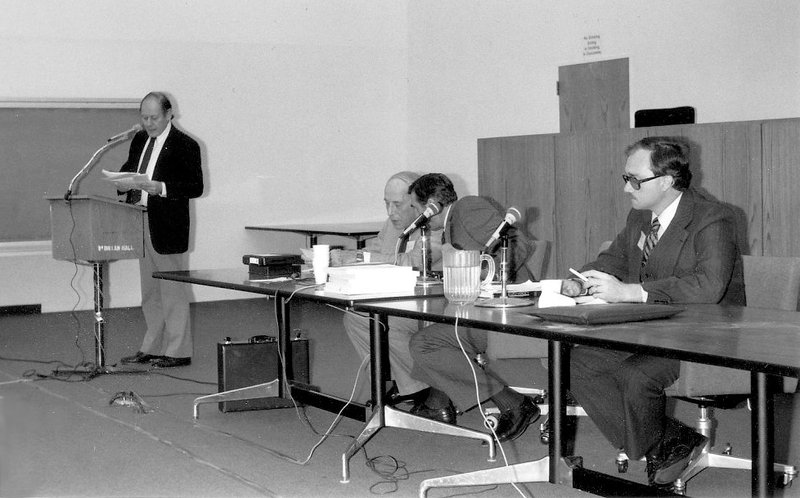
The Committee for the Scientific Investigation of Claims of the Paranormal was founded in Buffalo, New York in April 1976, at a meeting convened by the philosopher Paul Kurtz under the auspices of the American Humanist Association. The founding membership read like a roll call of the period's most prominent scientific and philosophical sceptics: Carl Sagan, Isaac Asimov, James Randi, Martin Gardner, Ray Hyman, Marcello Truzzi, and Philip J. Klass among them. The committee's mission was the application of scientific method to claims of the paranormal, with an explicit institutional prior that such claims would not survive rigorous testing.
From the founding meeting onwards the committee published The Zetetic, soon renamed The Skeptical Inquirer. The publication established the institutional voice that the broader movement would inherit. The archive does not hold a complete run of the Inquirer; the institutional flagship is well-archived elsewhere. The newsletters the archive does hold are the smaller publications that grew up around the central organisation: local society newsletters, focused publications devoted to single topics, and the specialist UFO-sceptic press that Klass would build.
The Klass Era, 1987 to 2005
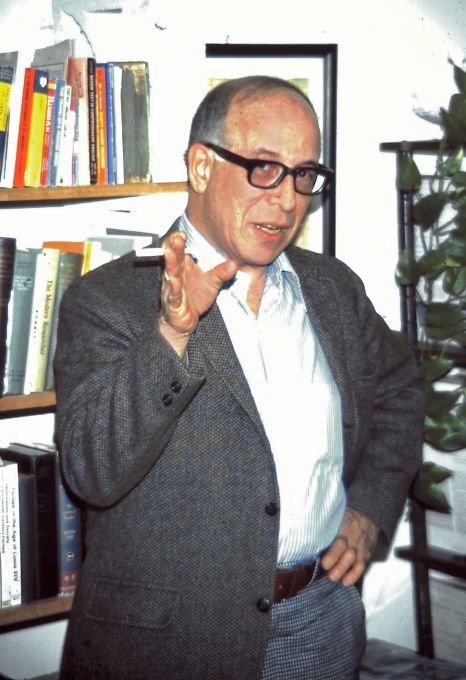
Philip J. Klass spent his career as an aviation journalist, including thirty-four years as senior avionics editor at Aviation Week and Space Technology. He came to UFO writing through that professional lens. His first book, UFOs Identified, appeared in 1968 with a plasma-physics explanation for many sightings. UFOs Explained (1974) extended the technical approach. UFOs: The Public Deceived (1983) turned the methodology on the civilian research organisations themselves. UFO Abductions: A Dangerous Game (1988) opened his late-career focus on the abduction-research methodology emerging from Budd Hopkins and David Jacobs.
.jpg)
The Skeptic UFO Newsletter, abbreviated SUN, began publication in January 1990 and ran bimonthly until Klass's death in August 2005. Across that fifteen-year span it produced 95 issues. Klass wrote and edited the publication himself from his Washington DC home, in the same style of investigative journalism he had applied at Aviation Week. The methodology was distinctive: identify a specific high-profile case, work through the available evidence, apply a sceptical prior at each evidential junction, and reach a conclusion that the case did not survive scrutiny. The format made SUN the flagship UFO-sceptic publication of its era.
The archive's holdings of SUN cover 76 issues. Klass's writing through these issues addresses the cases the broader civilian research community was working on in real time: the Gulf Breeze photographs, the cattle mutilation investigations, the Linda Cortile case, the Roswell witness reinterviews, the Phoenix Lights, the Ramey memorandum. The pro-UFO and sceptic positions on each are documented in the archive, the former in the civilian research newsletters and the latter in SUN. Both treatments sit alongside one another for any single case the archive covers in depth.
The Truzzi Counter-Tradition, 1978 to 1987
Marcello Truzzi was a founding member of CSICOP and its first editor of The Zetetic. He left the committee within two years, dissatisfied with what he came to characterise as a tendency to dismiss rather than investigate. In 1978 he founded the Zetetic Scholar, an independent journal that ran irregularly through 1987. Truzzi's methodological position was that genuine scepticism required suspension of judgement in both directions, and that "pseudo-scepticism" (his coinage) was the application of certainty to negative conclusions in the absence of evidence for them. The phrase "extraordinary claims require extraordinary evidence", widely attributed to Sagan, Truzzi argued had been adopted in a form that begged the question of what constituted extraordinary in each direction.
The eleven issues of the Zetetic Scholar the archive holds preserve a methodologically serious counter-tradition within the broader sceptical movement. Truzzi's editorial method was to invite responses to each lead article from both sceptical and pro-paranormal researchers, publish them alongside one another, and let the methodological disagreement run on the page. The format is closer to academic debate than to the advocacy press on either side. The methodological-scepticism position has its canonical articulation in the Scholar, and the debunker-investigator distinction the field continues to draw traces to Truzzi's editorial line.
The Local Society Network, 1980s to 1990s
The committee's Buffalo founding seeded a network of city, state, and regional sceptical societies across the United States and internationally. These groups produced newsletters that documented their meeting talks, member investigations, and local press engagement. The archive holds substantial runs from several of them: 127 issues of REALL News (Rational Examination Association of Lincoln Land, Illinois), 95 issues of the Tampa Bay Skeptics Report, 90 issues of Phactum (Philadelphia Association for Critical Thinking), 40 issues of Skeptical Eye (National Capital Area Skeptics, Washington DC), and shorter runs from Phoenix Skeptics, the South Shore Skeptics (Massachusetts), and others.
The Australian Skeptics' Bent Spoon represents the parallel international development of the movement. The archive holds 14 issues. Bent Spoon's editorial register sits closer to public-engagement satire than to investigative debunking, and the Australian Skeptics' annual award of the same name (presented for "the perpetrator of the most preposterous piece of paranormal or pseudoscientific piffle") remains the movement's most widely-cited Australian institution.
The Post-Klass Landscape, 2005 onwards
Klass's death in August 2005 ended the era of the single-author UFO-sceptic flagship publication. The continuation of his methodology fell to Tim Printy, a retired US Navy senior chief electronics technician who began publishing SUNlite in January 2009. The publication is a bimonthly PDF distributed free from Printy's website, and the archive holds 86 issues. SUNlite follows the case-by-case investigative format Klass established, with Printy's technical background producing detailed reconstructions of military sighting cases and analyses of physical-evidence claims. The Trinity Site (San Antonio, New Mexico, 1945) case, the USS Nimitz Tic-Tac analyses, and the Aguadilla 2013 video investigations have all been worked through across multiple issues.
The False Memory Syndrome Foundation occupies a different methodological territory, but one with substantial UFO-research overlap. Founded in March 1992 by Pamela and Peter Freyd in response to the recovered-memory movement in clinical psychology, the foundation ran a newsletter from 15 March 1992 through Fall 2011 that the archive holds in full (142 issues). The foundation's methodological focus on the construction of false memories under suggestive interview conditions intersected directly with abduction-research methodology, particularly the hypnosis-based interview techniques employed by Hopkins, Jacobs, and John Mack. The FMSF newsletter's clinical-psychology critique of recovered-memory interview methodology forms a sustained body of work on Hill-era and post-Hill abduction-case interview conditions, distinct in register from the UFO-sceptic press but addressing the same case material.
Held Publications
Skeptic UFO Newsletter (SUN)
Philip J. Klass's bimonthly flagship UFO-sceptic publication, written and edited from his Washington DC home across fifteen years.
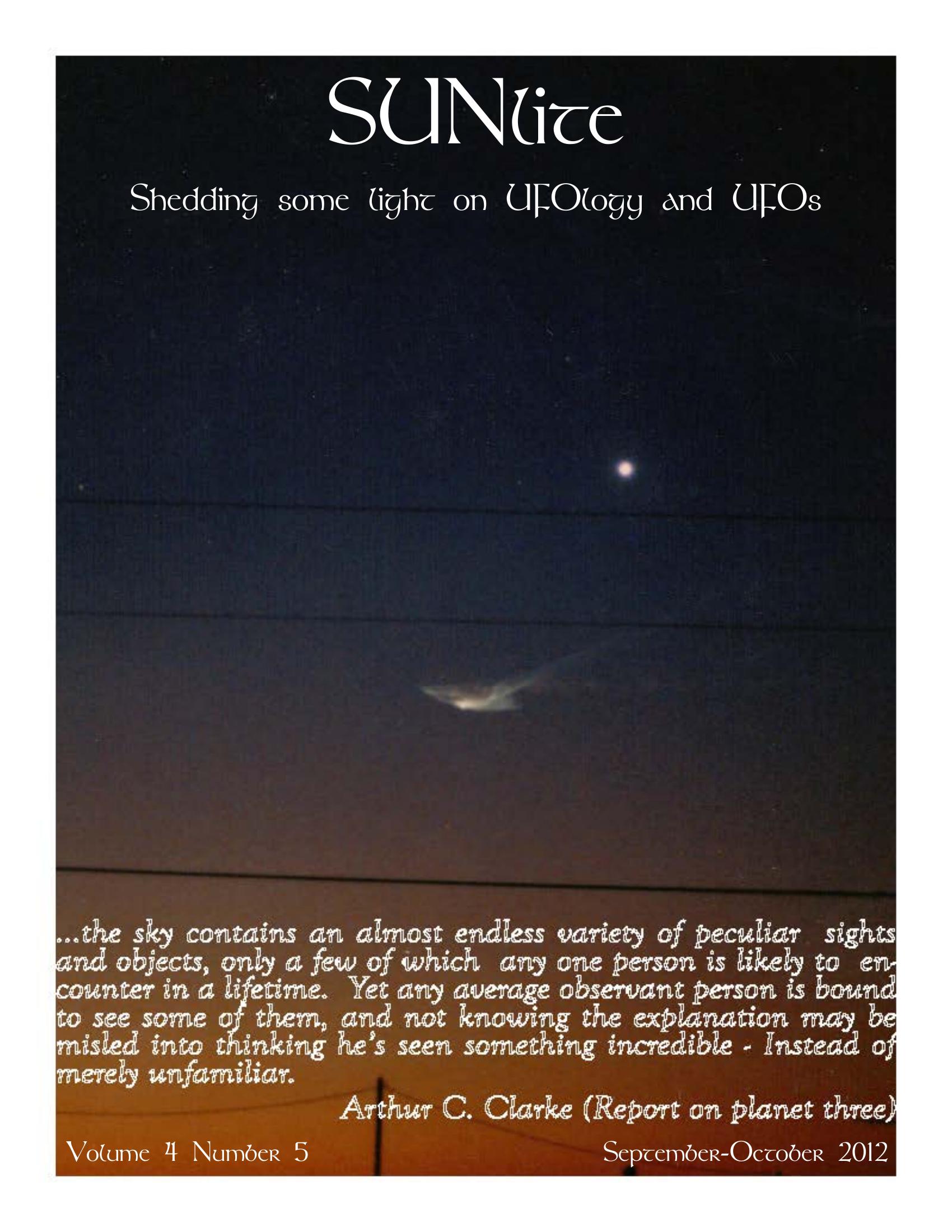
SUNlite
Tim Printy's continuation of the Klass methodology. Free bimonthly PDF, with detailed military-case and physical-evidence reconstructions.
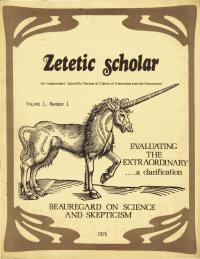
Zetetic Scholar
Marcello Truzzi's independent journal of methodological scepticism, founded after his departure from CSICOP.
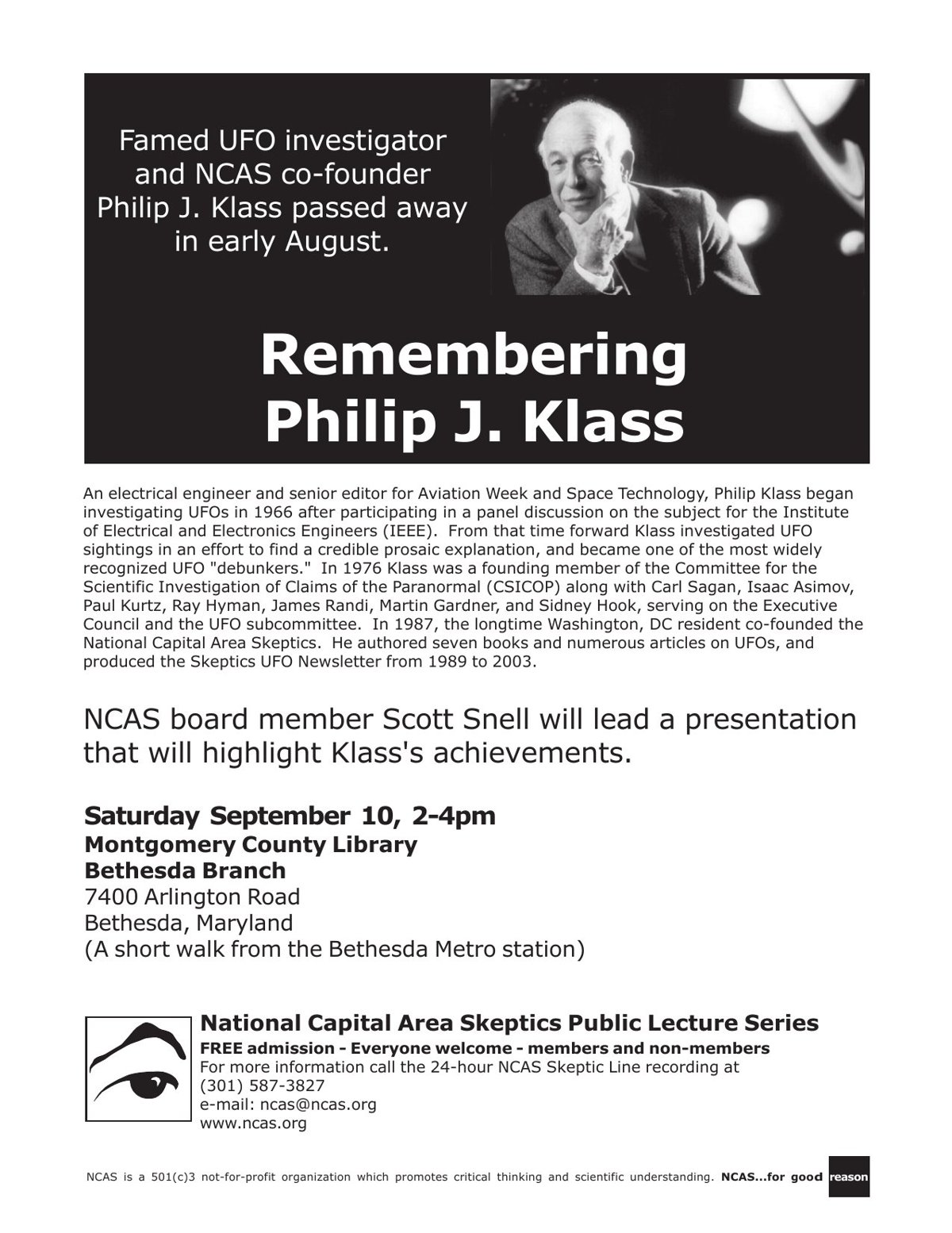
Shadow of a Doubt
NCAS monthly calendar of speakers and meetings at the Bethesda Library, distributed by email from a University of Maryland account across twelve years.
REALL News
Rational Examination Association of Lincoln Land. Substantial Illinois sceptic-society newsletter.
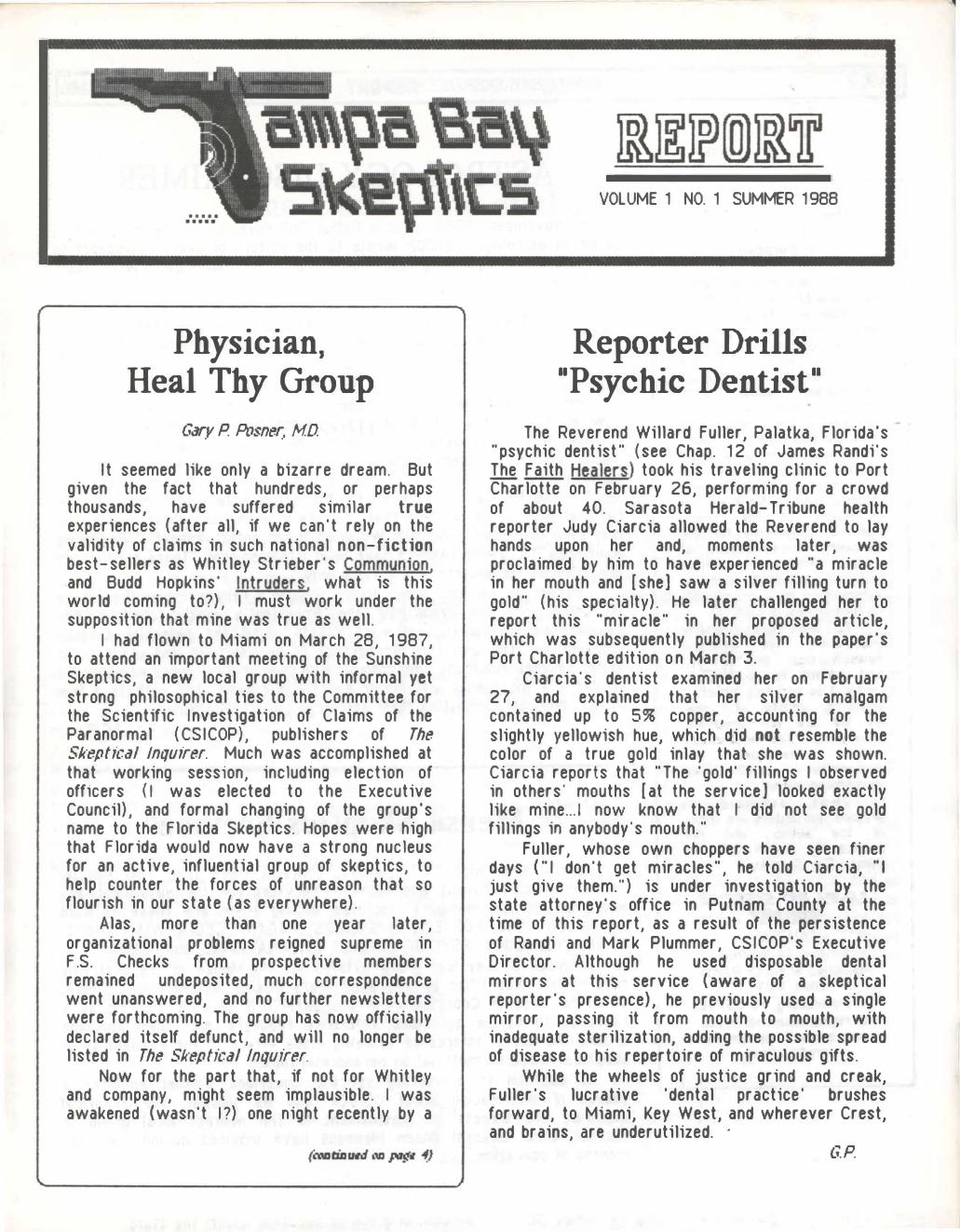
Tampa Bay Skeptics Report
Gary P. Posner, M.D.'s Tampa Bay Skeptics regional newsletter. Florida psychic, faith-healing, and UFO claims across twenty-five years of local case work.
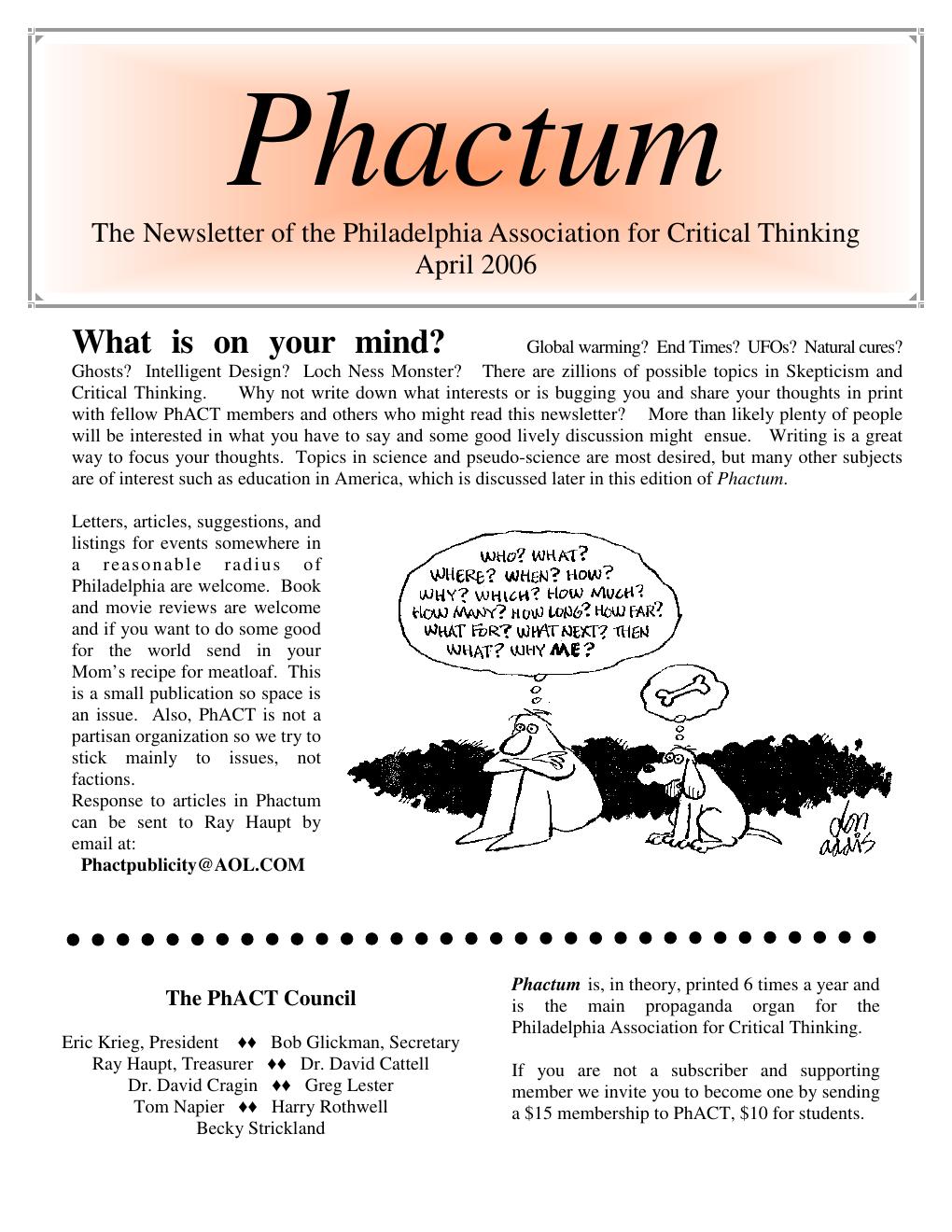
Phactum
Philadelphia Association for Critical Thinking. Regional sceptic-society newsletter through the disclosure-era pivot.
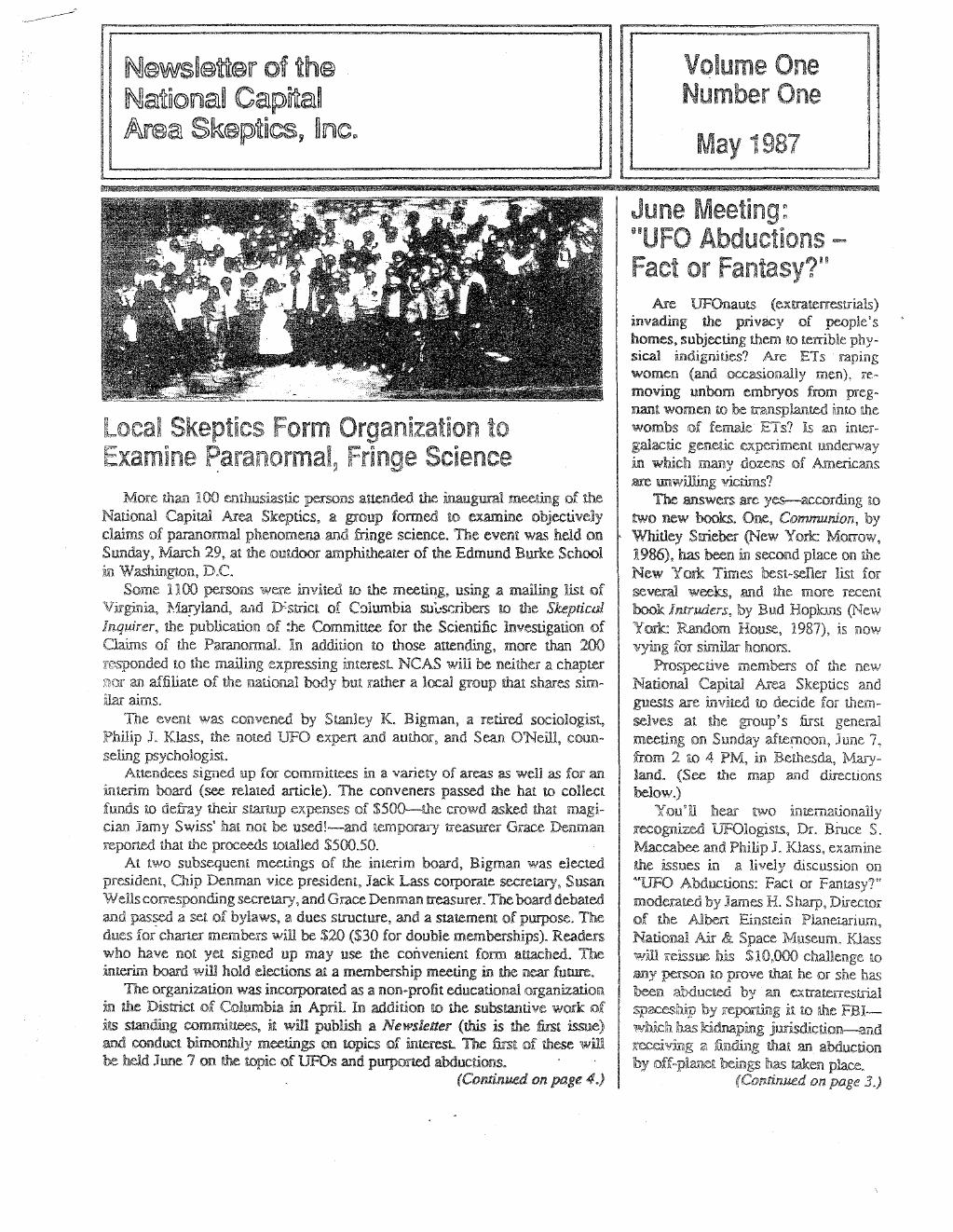
Skeptical Eye
National Capital Area Skeptics print quarterly. Twenty-two-year run founded with a UFO-abductions inaugural meeting topic.
The Bent Spoon
Nicholas Callis and Bobby Nelson's "sceptical magazine for the true believer". Put sceptical and paranormal-research voices into direct page-level conversation rather than parallel monologue.
Cowflop Quarterly
Robert G. Todd's combative FOIA-driven newsletter. The Roswell-mythology debunking organ of the mid-1990s, renamed The Spot Report from issue 6.
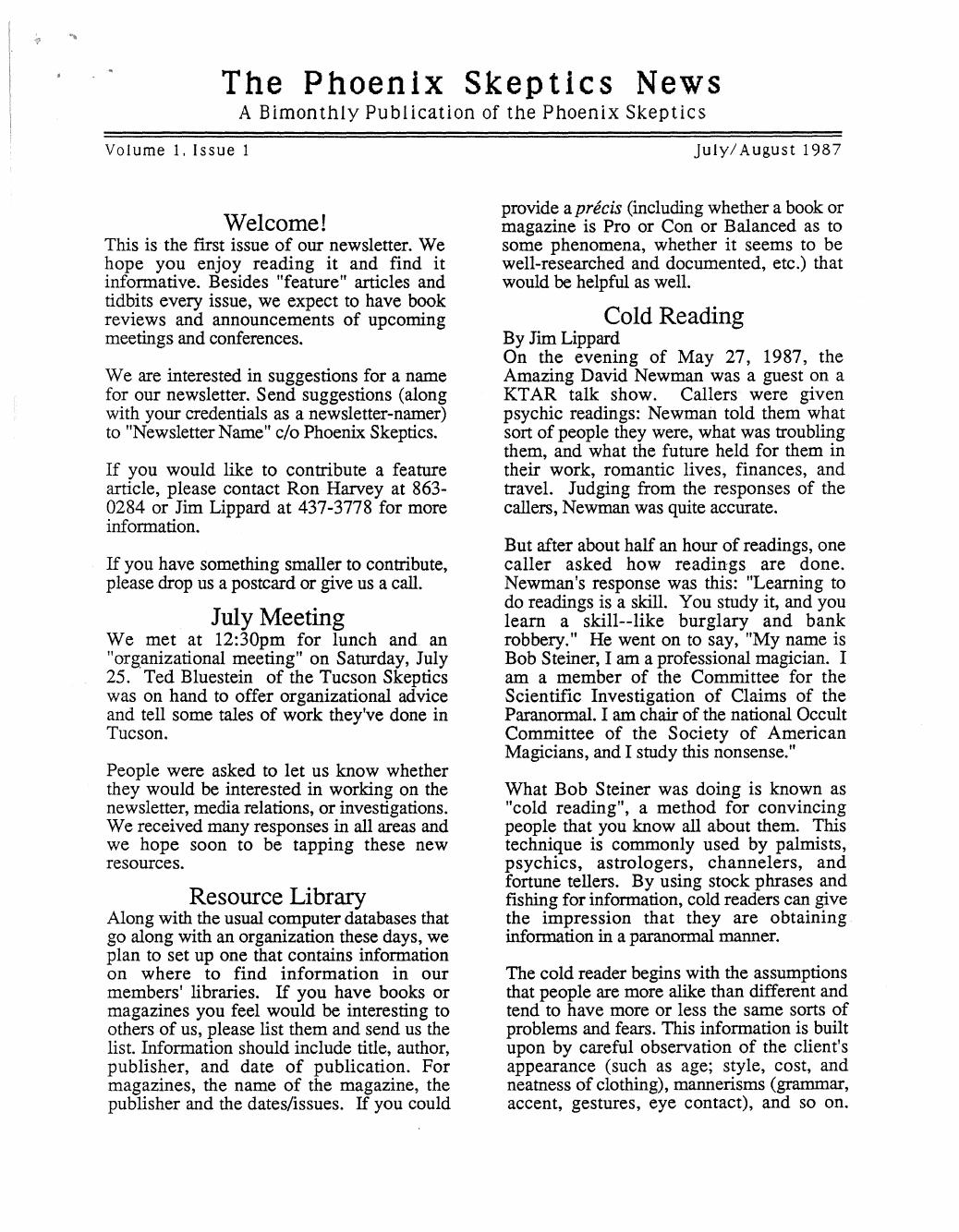
Phoenix Skeptics News
Phoenix Skeptics regional newsletter. Founding-era Arizona society activity captured across Volume 1.
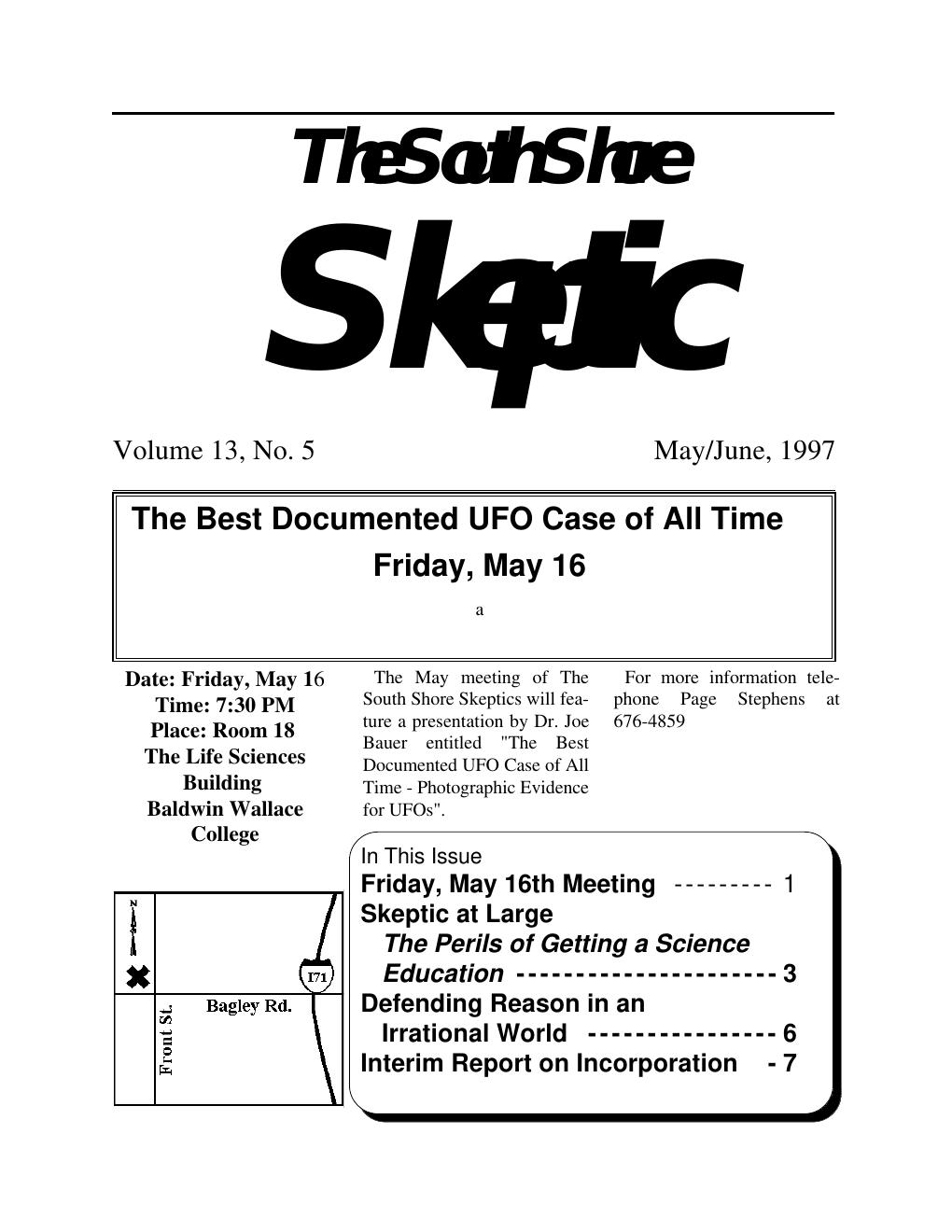
The South Shore Skeptic
South Shore Skeptics regional society convening at Baldwin Wallace College, Berea, Ohio. Three 1997 issues from a thirteen-year run.
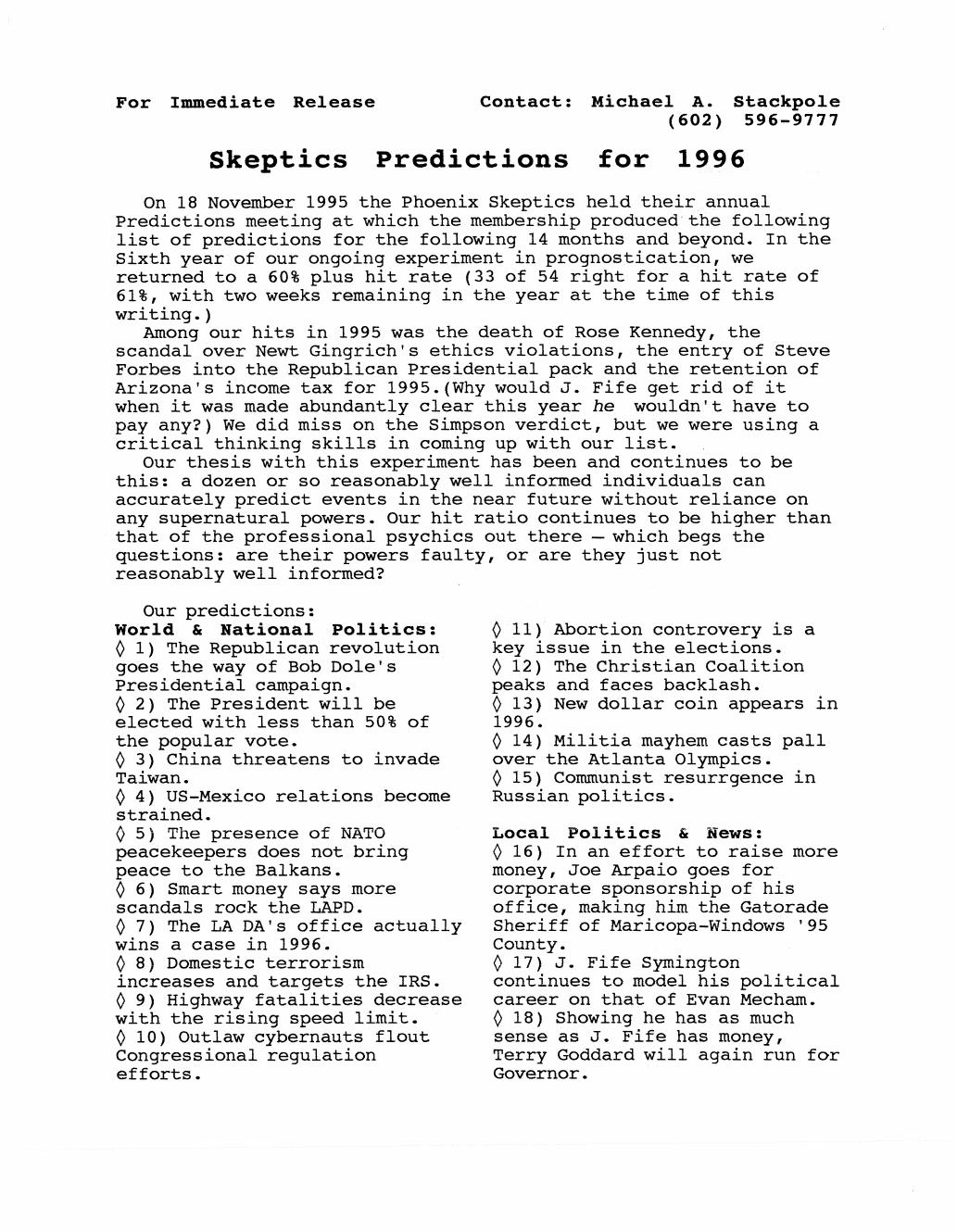
Skeptics Predictions
Phoenix Skeptics' annual press-release prediction list. Hit rates from 61 percent (1995) rising to 88 percent (2006), benchmarked against the professional-psychic prediction industry.
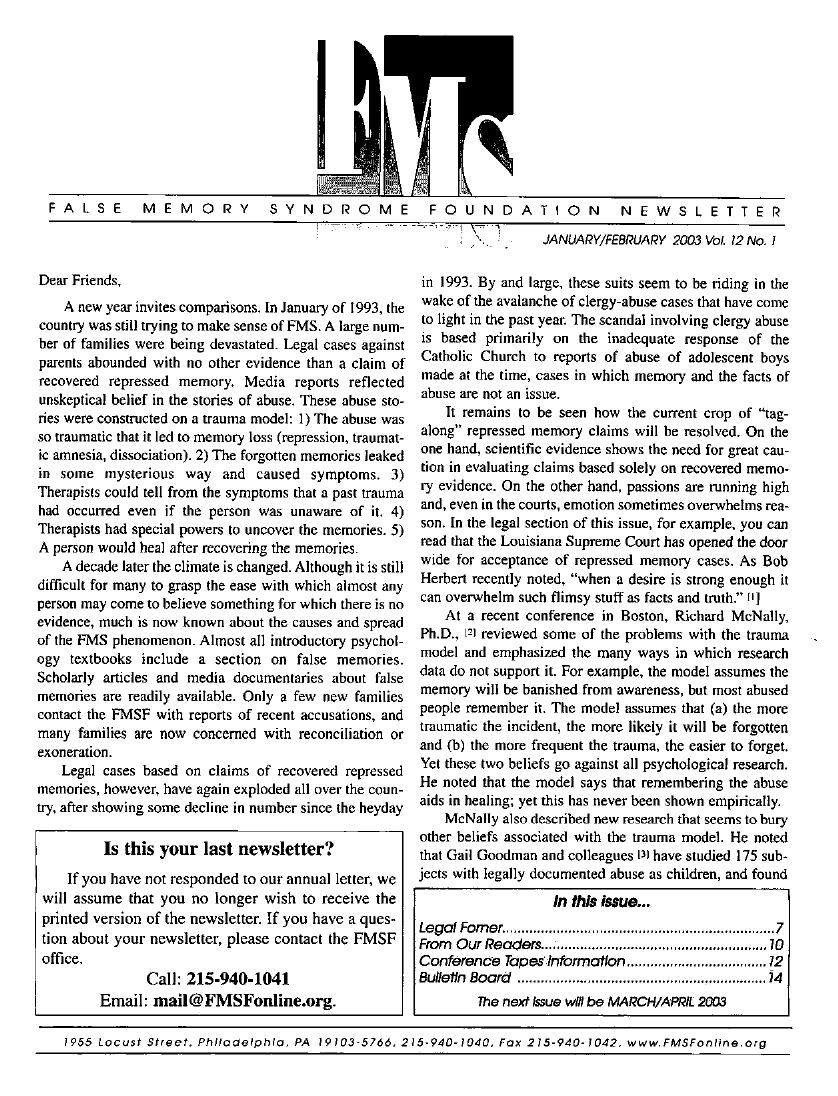
FMSF Newsletter
False Memory Syndrome Foundation. Clinical-psychology critique of recovered-memory methodology with substantial abduction-research overlap.