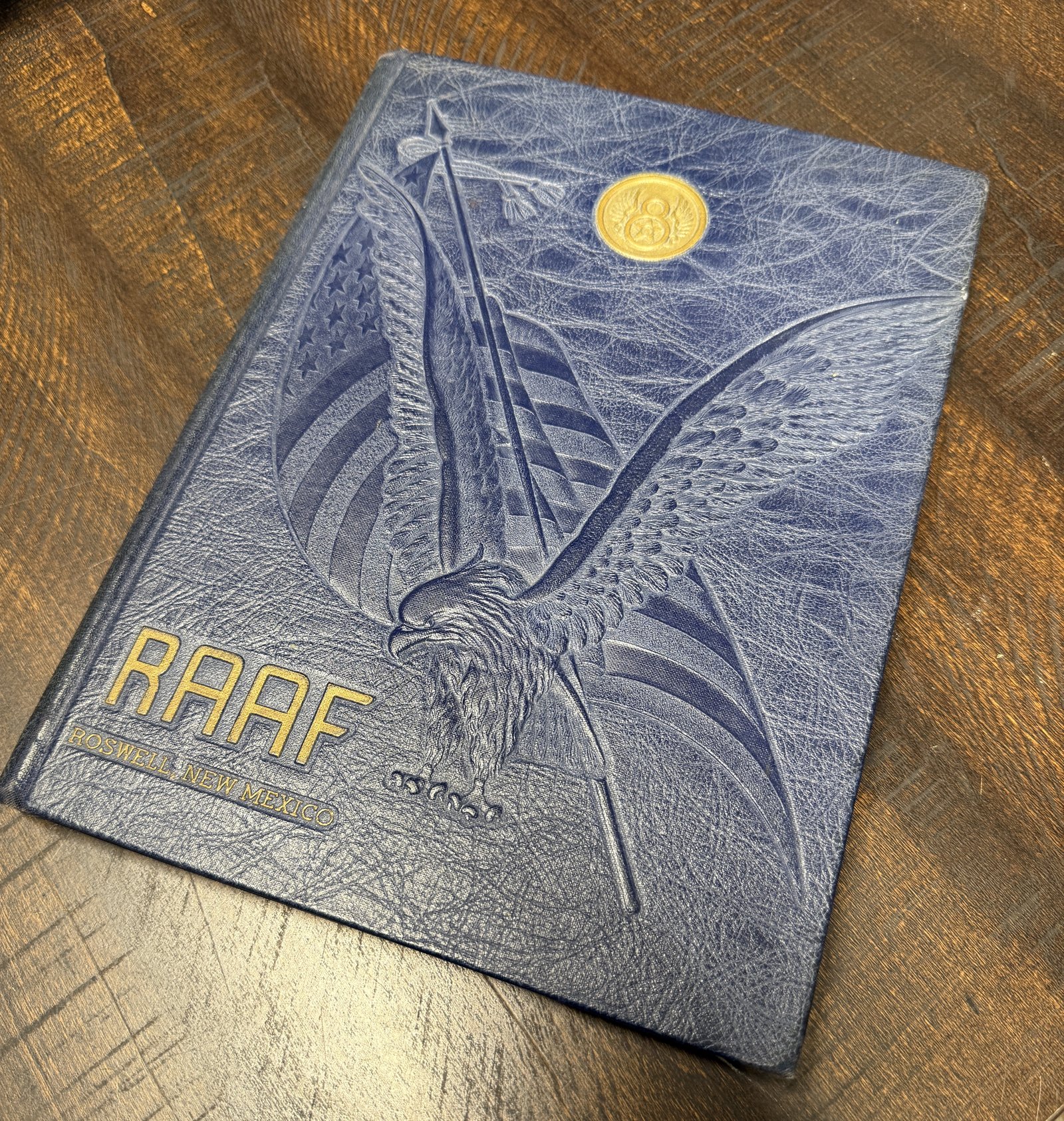
The Roswell Incident
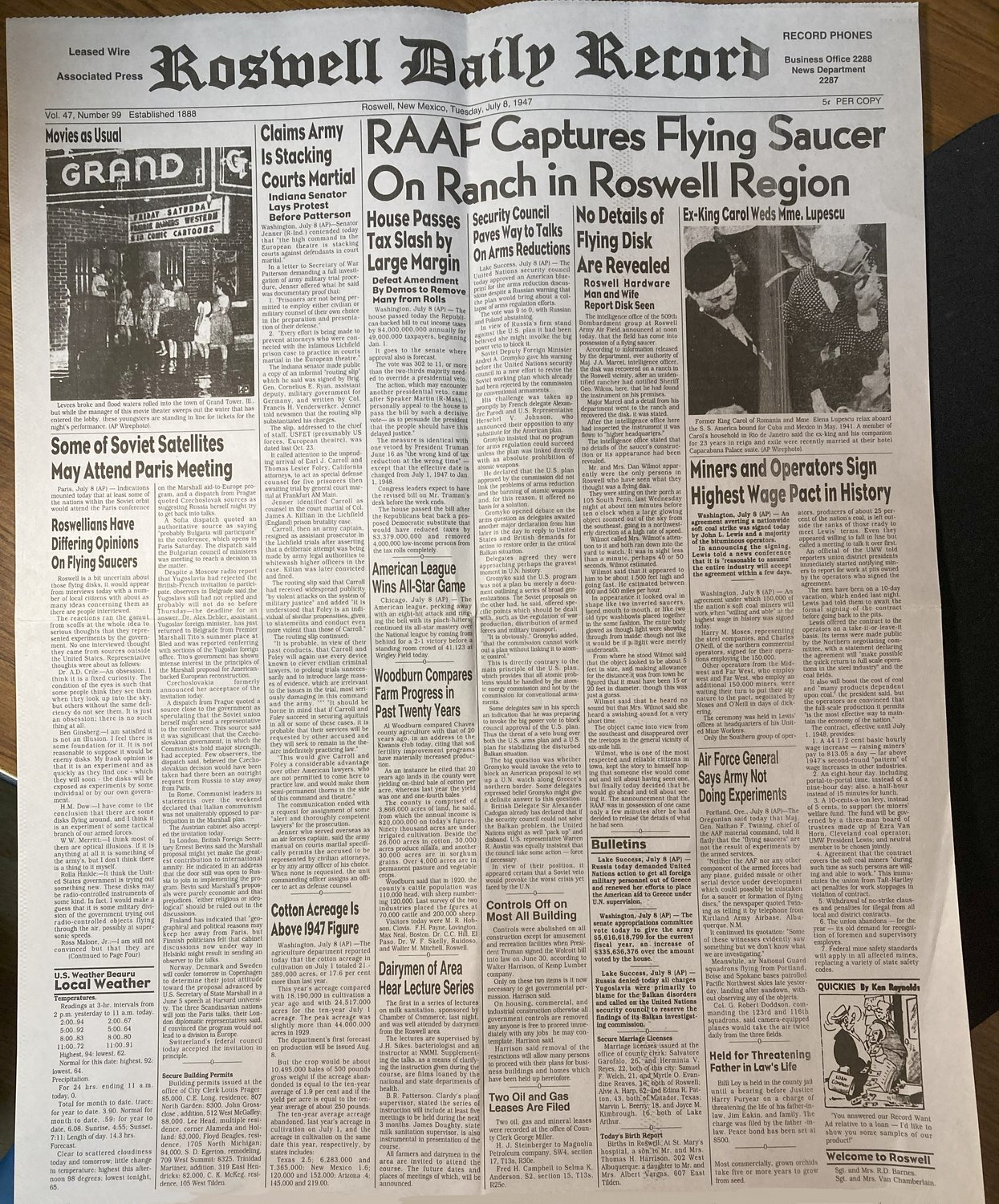
On or around 14 June 1947, rancher W.W. "Mac" Brazel found a field of strange debris scattered across his pastureland on the J.B. Foster Ranch, 75 miles northwest of Roswell, New Mexico. The material included metallic foil that could not be creased, lightweight beams inscribed with symbols, and a tough, parchment-like substance. On 7 July, Brazel brought samples to the Roswell Army Air Field. The next morning, the base public information officer issued a press release announcing the recovery of a "flying disc." Within hours, Eighth Air Force headquarters in Fort Worth retracted the story. The debris, they said, was a weather balloon.
The many rumours regarding the flying disc became a reality yesterday when the intelligence office of the 509th Bomb Group of the Eighth Air Force, Roswell Army Air Field, was fortunate enough to gain possession of a disc.Lt. Walter Haut, RAAF press release, 8 July 1947
The Recovery
What Brazel found, and what the military took away.
Brazel heard a loud explosion during a thunderstorm on the night of 2 July 1947. Two weeks later, riding out with the young son of his nearest neighbours, he came across a field of debris stretching three-quarters of a mile. The material was unlike anything he had seen in twenty years of ranching. Thin metallic foil that returned to its original shape after crumpling. I-beams the weight of balsa wood, covered in pink and purple symbols that no one could read. Thread-like filaments. He gathered some and stored it in a shed.
Brazel drove into Roswell on 7 July and reported the find to Sheriff George Wilcox, who called the base. Major Jesse Marcel, the intelligence officer of the 509th Bomb Group (the only nuclear-armed unit in the world at the time), drove out to the ranch that afternoon. He collected the debris and, according to his later testimony, brought some home to show his wife and son before delivering it to the base. Marcel told investigators decades later that the material was "not of this earth."
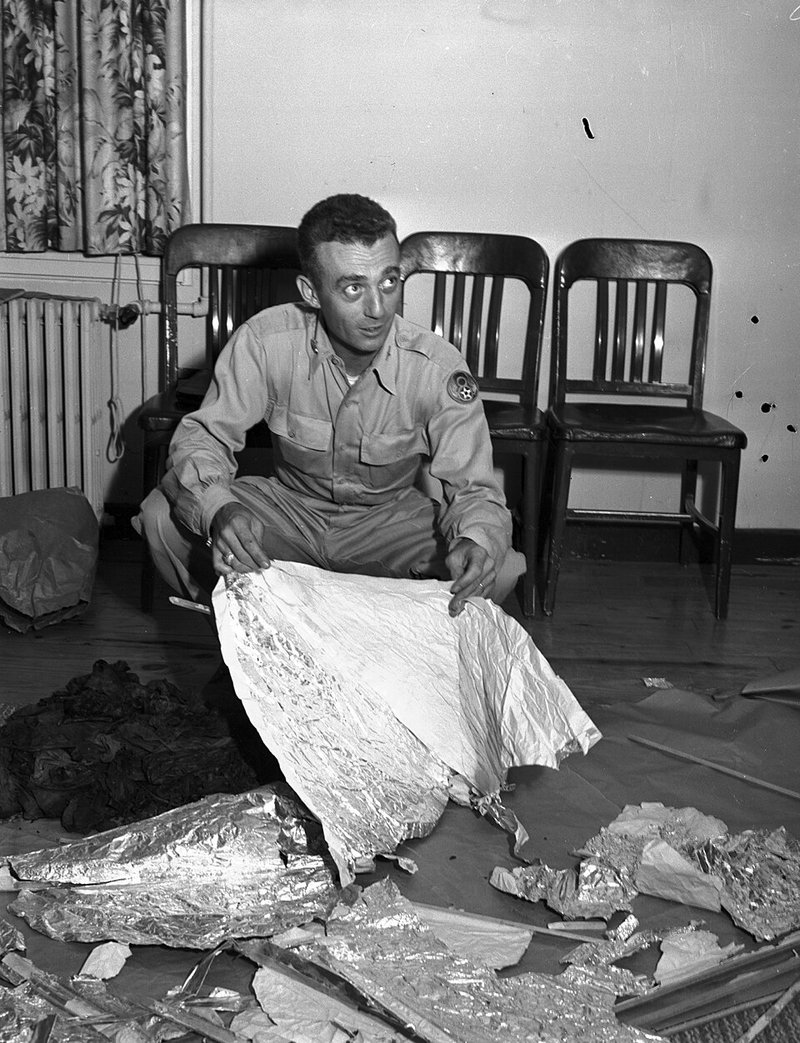
Within 24 hours, the base issued and retracted the flying disc press release. Brigadier General Roger Ramey staged a photo opportunity in Fort Worth showing Marcel posing with the remains of a weather balloon. The actual debris was shipped to Wright-Patterson Air Force Base in Ohio. Brazel was held by the military for three days and emerged telling a different, sanitised story. He never spoke publicly about the incident again.
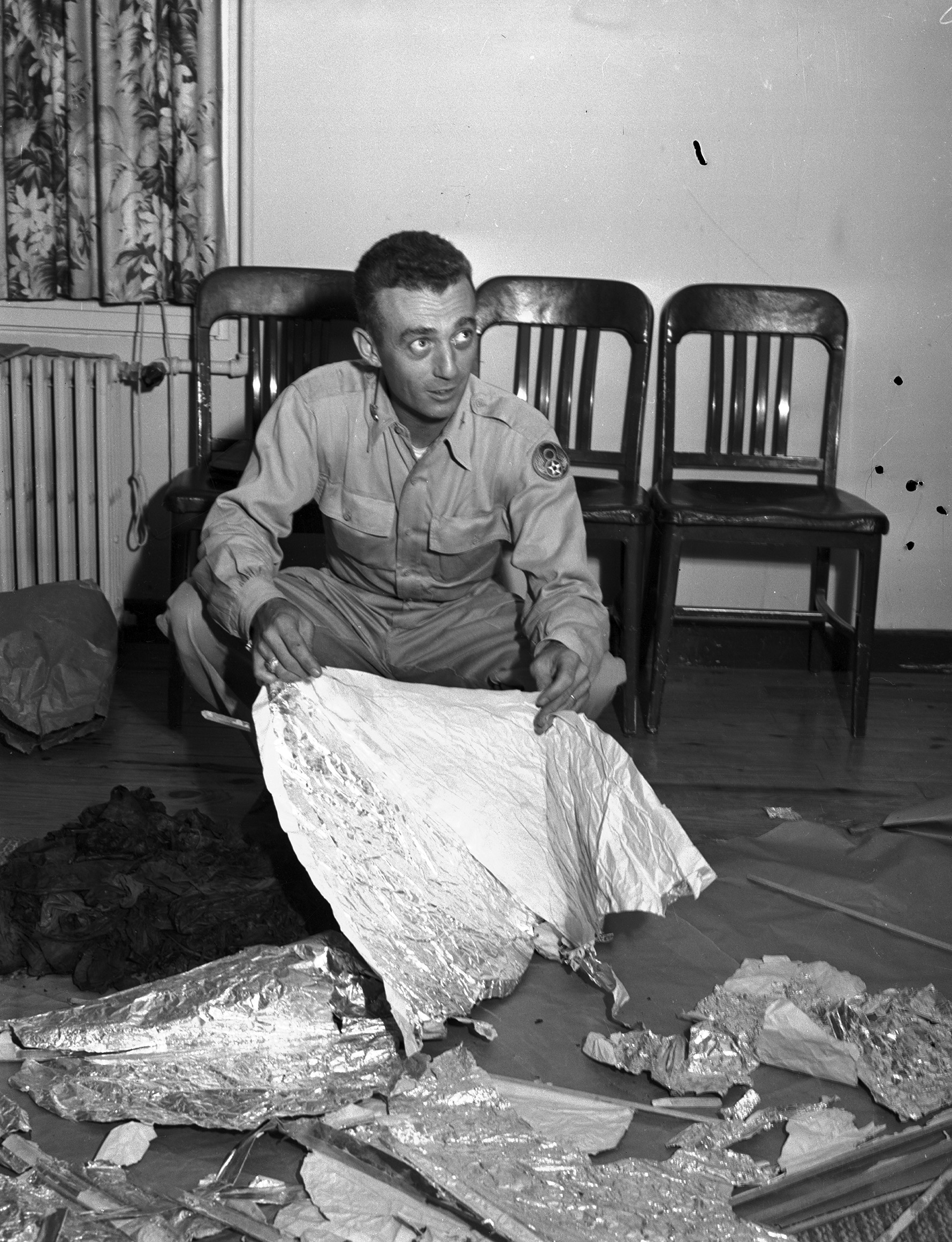
I don't know what it was, but it wasn't a balloon. I've seen weather balloons. This was something entirely different.Major Jesse Marcel, RAAF Intelligence Officer, interviewed 1978
The Witnesses
Three decades of silence, then a cascade of testimony.
The Official Response
Two Air Force reports, forty-seven years apart.
In 1994, under pressure from Congressman Steven Schiff of New Mexico, the Air Force released a report attributing the Roswell debris to Project Mogul, a classified programme that used high-altitude balloons to monitor Soviet nuclear tests. The Mogul explanation rested on a specific launch, Flight #4, from Alamogordo on 4 June 1947. The problem: the launch records for Flight #4 are incomplete, and the project's own logs suggest it may have been cancelled due to cloud cover. Charles Moore, who worked on Mogul, reconstructed a plausible trajectory. Critics noted that Moore's reconstruction required assumptions not supported by the surviving data.
A second Air Force report in 1997 addressed the persistent body accounts. The explanation offered was that witnesses had confused crash test dummies dropped from high altitudes in the 1950s with events in 1947. The dummies were six feet tall. The time frames did not overlap. Congressman Schiff called the report "the Air Force's effort to close the case, not to solve it."
No classified document has ever surfaced confirming an extraterrestrial recovery at Roswell. No classified document has surfaced definitively ruling one out. The Mogul explanation, which remains the official position, accounts for some of the debris descriptions but not for the witness testimony about military behaviour, the speed of the coverup, or the intimidation of civilians.
Roswell is the most investigated, debated, and mythologised case in UFO history. Separating witness testimony from cultural overlay requires careful attention to when each claim first appeared and whether it can be corroborated independently. Some later accounts (the alien autopsy footage, certain crash body descriptions) have been discredited. The core debris recovery and military response remain unexplained by the official Mogul account.
The 509th Bomb Group was the only nuclear-capable unit in the world in July 1947, having dropped both atomic bombs on Japan two years earlier. The base's intelligence officer, Major Marcel, was responsible for monitoring nuclear security. The idea that he could not identify a weather balloon has never been satisfactorily addressed.
The archive holds 165 newsletter articles on Roswell spanning APRO, MUFON, CUFOS, Just Cause, and dozens of other publications. For the full case data, see the Roswell case file. Related reading: Roswell: What the Record Shows and the United States sightings page.
Key People
The witnesses, investigators, and officials connected to this case.
Explore Further
Where the Roswell incident threads into the rest of the archive.