Harry Reid
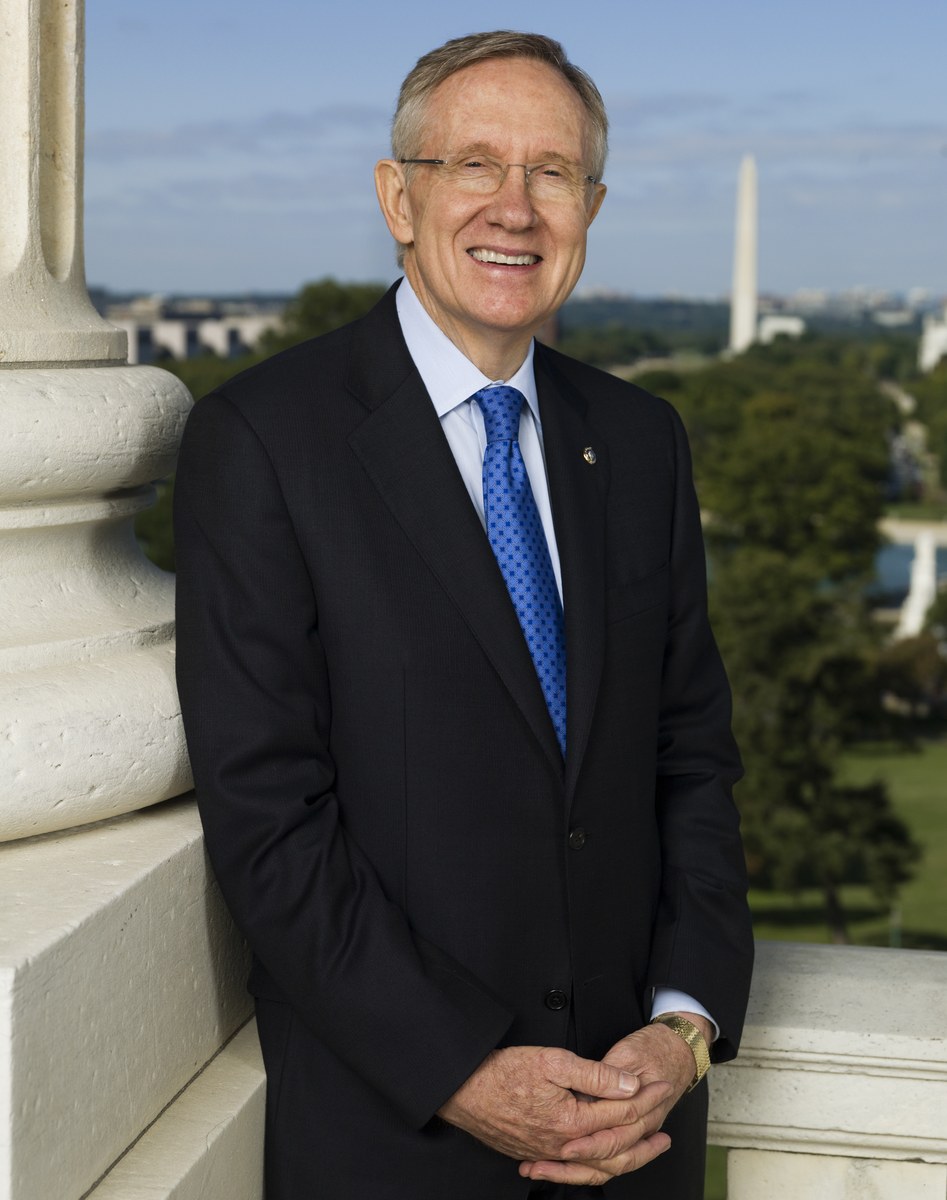
Harry Mason Reid was raised in a brothel town in the high desert of southern Nevada, took the bar at twenty-four, chased the Las Vegas mob off the gaming commission in the late 1970s, and spent thirty years in the United States Senate, the last decade as the chamber's Democratic leader. In 2007 he used his position to insert into the defence budget a programme that did not exist on paper and was not publicly named for ten years. That programme, the Advanced Aerospace Threat Identification Program, is the political event from which most of the post-2017 disclosure cycle takes its starting point. Reid spoke about it on record across the last four years of his life, gave the New York Times the framing for the December 2017 story that took the question into mainstream American journalism, wrote op-eds for the same paper during the 2021 disclosure debate, and died of pancreatic cancer in Henderson, Nevada, on 28 December 2021.
A Life
Harry Mason Reid was born on 2 December 1939 in Searchlight, Nevada, a mining settlement about fifty miles south of Las Vegas. The town's population was around two hundred. His father Harry was a hard-rock miner who would later kill himself. His mother Inez took in laundry from the local brothels, which were the town's principal cash-flow industry. Reid wrote in his memoir The Good Fight that the family had no telephone, no hot water, no indoor toilet, and that the house's interior walls were lined with newspaper. He commuted forty miles by hitchhiking to attend high school in Henderson because Searchlight had none.
He worked his way through Southern Utah University and Utah State, met Landra Gould at Utah State, and converted to The Church of Jesus Christ of Latter-day Saints on her account. He took the law degree at George Washington University in Washington, DC, in 1964, paying his way as a Capitol Police officer. He returned to Nevada, served in the state assembly from 1969, ran for Lieutenant Governor in 1970 at the age of thirty and won, served a term to 1975, and lost two close elections (1974 Senate, 1975 Las Vegas mayor) before being appointed in 1977 to chair the Nevada Gaming Commission, the state's regulatory authority over the Las Vegas casino industry.
The Gaming Commission years are the ones that produced the political reputation. Reid took on organised-crime infiltration of the casinos through the late 1970s, in a state where the mob had been the casinos' founding capital. A man named Jack Gordon was caught attempting to bribe him in 1978 with a hundred-thousand-dollar offer; Reid had the FBI in his office with a wire when Gordon arrived to make the payment. Reid testified at Gordon's trial. He left the Gaming Commission in 1981, ran successfully for the United States House of Representatives in 1982, and took the Nevada Senate seat in 1986 on Paul Laxalt's retirement. He held the seat for five terms, from January 1987 to January 2017.
He rose through the Senate Democratic caucus by careful committee work and an unshowy floor manner. He was Assistant Democratic Leader from 1999, Minority Leader from 2005, and Majority Leader from January 2007 when the Democrats took back the chamber. He served as Majority Leader through to January 2015, the longest continuous service in that role by a Democrat. He retired from the Senate after the 2016 election. He was diagnosed with pancreatic cancer in 2018, lived four further years, and died at his home in Henderson, Nevada, on 28 December 2021, at the age of eighty-two.
The Advanced Aerospace Threat Identification Program is one of three legacies the obituaries named at length. The other two were the Affordable Care Act, which he shepherded through the Senate in 2010, and the Iraq War vote, which he came to regret publicly and at length.
I have an open mind. I'm not saying there is or isn't extraterrestrial life. But I am saying that the world is a better place because we're looking.Reid, interview with George Knapp, KLAS-TV Las Vegas, 2019
Photographs
Reid was photographed institutionally throughout his Senate career. The United States Senate Historical Office holds the official portraits; the Reid press office archive at the University of Nevada, Las Vegas, holds the working photography from the campaigns and the Majority Leader years. Most photographs of Reid in the archive's possession remain at the sourcing-verification stage and are not yet EXIF-confirmed for display.
The 2007 AATIP Authorisation
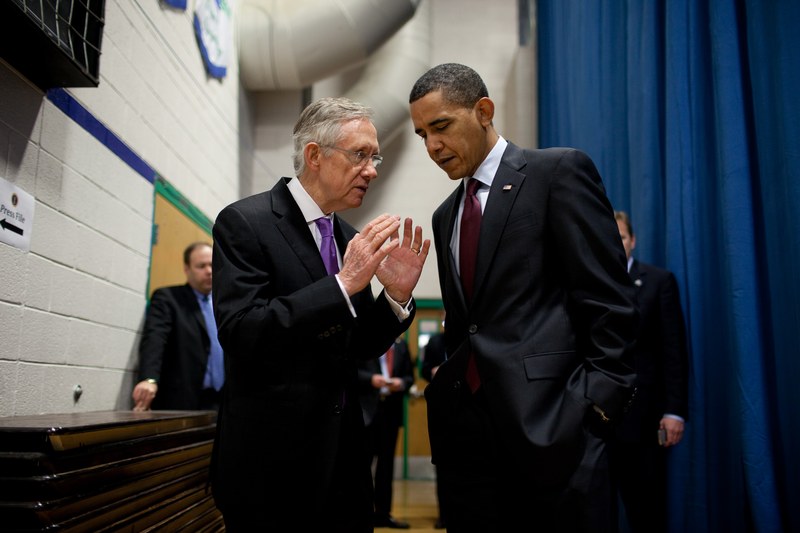
The Advanced Aerospace Threat Identification Program was authorised through the Fiscal Year 2008 defence appropriations bill at an initial level of USD 22 million annually. The funding line was inserted at Reid's request, with the support of Senate Appropriations chair Daniel Inouye of Hawaii and ranking member Ted Stevens of Alaska. The legislative language did not name the programme or its subject matter; the appropriation was for "advanced aerospace weapon system applications" with the operational control assigned to the Defense Intelligence Agency. The actual recipient of the contract was Bigelow Aerospace Advanced Space Studies, the research subsidiary of the Nevada-based aerospace company Bigelow Aerospace, whose founder Robert Bigelow had been a long-standing constituent of Reid's.
Reid has stated on record, across multiple interviews from 2017 onwards, that the motivation for the authorisation was a series of briefings he had received on military aviator encounters with aerial phenomena that exhibited capabilities outside the publicly understood envelope of aircraft performance. He has also stated that he was personally briefed on incidents involving United States Navy aircraft and that he came to the view that the question was a serious one that the United States government was not investigating systematically. The Inouye-Stevens-Reid arrangement, with one Democrat and two Republicans across the appropriations leadership, was structured to be politically resilient. The arrangement survived the deaths of both Inouye (2012) and Stevens (2010) and the funding continued until the contract ran out around 2012.
The AATIP authorisation appeared in the FY2008 Department of Defense Appropriations Act under the Operations and Maintenance, Defense-Wide account, with operational direction to the Defense Intelligence Agency. The contract was let to Bigelow Aerospace Advanced Space Studies through a sole-source justification. The total disbursement across the programme's funded life was approximately USD 22 million. The programme reporting requirements were classified at the Top Secret/Sensitive Compartmented Information level. Public statements about the programme's existence began with the 16 December 2017 New York Times disclosure.
The BAASS Contract
Bigelow Aerospace Advanced Space Studies (BAASS) was the principal contractor under the AATIP / Advanced Aerospace Weapon System Applications Program (AAWSAP) authorisation. The programmes ran in parallel and the names have been used interchangeably in the public record, though the internal programmatic distinction matters: AAWSAP was the formal contracting vehicle administered by the Defense Intelligence Agency; AATIP was the narrower research direction inside it. The BAASS contract ran from 2008 to roughly 2012. Reid's office worked with the DIA contracting office on the initial scope; the substantive research work was directed by BAASS principal investigators including James Lacatski and Colm Kelleher, both of whom have published memoirs covering the period.
The BAASS research scope included aerial-encounter case investigation, materials analysis on objects reported as recovered from anomalous events, and biomedical work on individuals reporting effects from encounters. The Skinwalker Ranch site in northeastern Utah, owned by Bigelow Aerospace from 1996 to 2016, was a principal field-research location across the BAASS years. The Defense Intelligence Reference Documents (DIRDs) produced by BAASS investigators and outside contractors are the principal published technical output from the contract; thirty-eight DIRDs were produced, of which a partial set has since been released through Freedom of Information Act litigation.
The 16 December 2017 New York Times Story
The New York Times published "Glowing Auras and 'Black Money': The Pentagon's Mysterious U.F.O. Program" on the front page of its Sunday print edition of 17 December 2017, with the online version posted on 16 December. The story was reported by Helene Cooper, Ralph Blumenthal and Leslie Kean. It identified Reid as the principal political mover behind the AATIP authorisation, identified AATIP as a Pentagon programme that had been running from 2007, and named Luis Elizondo as the programme's claimed director from 2010 to 2017. The story also published two videos of US Navy F/A-18F encounters with aerial objects, supplied through the To The Stars Academy, which Elizondo had joined on leaving the Department of Defense in October 2017.
Reid spoke on the record for the story. He provided the framing that AATIP had been authorised because aviator briefings had convinced him of the seriousness of the phenomena. The story's reception was the beginning of what is now usually called the "post-2017 disclosure cycle." It was followed in the immediate term by the public release of the videos as "official" Navy material in 2020, the Senate Intelligence Committee report direction in the FY2021 Intelligence Authorization Act, the establishment of the Unidentified Aerial Phenomena Task Force, and the subsequent legislative work on the All-domain Anomaly Resolution Office.
Reid continued to speak on the record about the programme through the following four years. He gave an extended interview to Gideon Lewis-Kraus for a New Yorker piece published in May 2021. He wrote an op-ed for the New York Times the same month, "What We Believe about U.F.O.s," supporting the disclosure-legislation effort then being assembled by Senators Marco Rubio, Mark Warner and Kirsten Gillibrand. He testified privately to multiple Senate committees during the 2020 to 2021 legislative cycle. His public statements grew steadily more direct across the four years between the NYT story and his death.
Reid's on-record statements on UAP, across the 2017 to 2021 period, are consistent on two points. First, that he had been briefed on incidents involving aerial phenomena that he came to believe were not adequately explained by the publicly understood aerospace inventory. Second, that he had not personally inspected recovered materials and that he was relying on briefings from people who claimed to have done so. The widely circulated claim that Reid said he had seen "non-human craft" or "alien bodies" overstates the public record. Reid said the question deserved to be investigated, that he was satisfied the phenomena were not adequately explained, and that he did not know what they were. The archive holds the on-record statements as documentary record of what Reid said, not as adjudicated proof of what the phenomena are.
Connected People
Hawaii Democrat who chaired the Senate Appropriations Committee at the time of the FY2008 AATIP authorisation. Co-sponsored the funding arrangement at Reid's request. Medal of Honor recipient for service in the 442nd Regimental Combat Team in the Italian campaign. Died in office in December 2012.
Alaska Republican who held the appropriations ranking position at the time of the FY2008 AATIP authorisation and co-sponsored the funding arrangement. Former chairman of the Senate Appropriations Committee. Defeated for re-election in 2008 following a federal corruption prosecution that was later vacated. Died in an aircraft accident in Alaska in August 2010.
Nevada businessman and aerospace entrepreneur whose company Bigelow Aerospace founded Bigelow Aerospace Advanced Space Studies in 2008 as the principal AAWSAP contractor. Owner of the Skinwalker Ranch in Utah from 1996 to 2016. Long-standing Reid constituent and donor. Continues to make public statements about anomalous phenomena.
Defense Intelligence Agency programme manager who administered the AAWSAP contract through its funded period. Co-author with Colm Kelleher of Skinwalkers at the Pentagon (2021), the principal published memoir of the programme. Profiled on the archive's Disclosure Network page.
Former Department of Defense intelligence officer who has stated publicly that he directed AATIP from approximately 2010 to his resignation in October 2017. Co-founder of the To The Stars Academy. Author of Imminent (2024). Profiled on the archive's Disclosure Network page.
Former senior Pentagon intelligence official, longtime advocate for federal UAP disclosure. Worked with Reid's office during the AATIP authorisation period. Profiled on the archive's Disclosure Network page.
New York Democrat, principal Senate sponsor of UAP legislation in the 2021 to 2024 Senate cycles. Authored the Unidentified Aerial Phenomena Task Force provisions in the FY2022 National Defense Authorization Act. Cites Reid as the senatorial mentor who first walked her through the AATIP background.
Virginia Democrat who chaired the Senate Intelligence Committee through the 2021 to 2025 UAP legislative cycle. Worked with Reid in the post-Senate period on the disclosure legislative effort. Co-sponsor of the Schumer-Rounds UAP Disclosure Act of 2023.
In the Archive
Reid appears across four sections of the archive. The political-history record of the Nevada Senate seat and the Majority Leader years is the documentary baseline. The AATIP / AAWSAP authorisation record runs through the FY2008 defence appropriations material and the subsequent Defense Intelligence Reference Documents. The 16 December 2017 New York Times story is the journalistic primary source on the programme. Reid's own on-record statements across 2017 to 2021, including the May 2021 New York Times op-ed and the Gideon Lewis-Kraus New Yorker interview, are held with the secondary press material from the post-2017 disclosure cycle. The archive's Disclosure Network hub holds connected profiles for the contemporary figures who have continued Reid's congressional disclosure thread.
The post-2017 disclosure cycle is documented through the archive's Disclosure Network hub and the connected profile pages for James Lacatski, Luis Elizondo, Christopher Mellon, Colm Kelleher, and David Grusch. The wider United States government record is held through the government records hub. The legislative arc from AATIP to the All-domain Anomaly Resolution Office is documented through the archive's timeline.
Sources
Reid, Harry. The Good Fight: Hard Lessons from Searchlight to Washington, Putnam, 2008. Reid, Harry. "What We Believe about U.F.O.s," New York Times, 21 May 2021. Cooper, Helene; Blumenthal, Ralph; Kean, Leslie. "Glowing Auras and 'Black Money': The Pentagon's Mysterious U.F.O. Program," New York Times, 16 December 2017. Lewis-Kraus, Gideon. "How the Pentagon Started Taking U.F.O.s Seriously," The New Yorker, 30 April 2021. Lacatski, James T.; Kelleher, Colm A.; Knapp, George. Skinwalkers at the Pentagon, RTMA, 2021. Kean, Leslie. UFOs: Generals, Pilots and Government Officials Go On the Record, Harmony, 2010. Office of the Director of National Intelligence. Preliminary Assessment: Unidentified Aerial Phenomena, 25 June 2021. FY2008 Department of Defense Appropriations Act, Public Law 110-116. Reid obituaries: New York Times, 28 December 2021; Washington Post, 28 December 2021; Las Vegas Review-Journal, 28 December 2021.