James R. Clapper
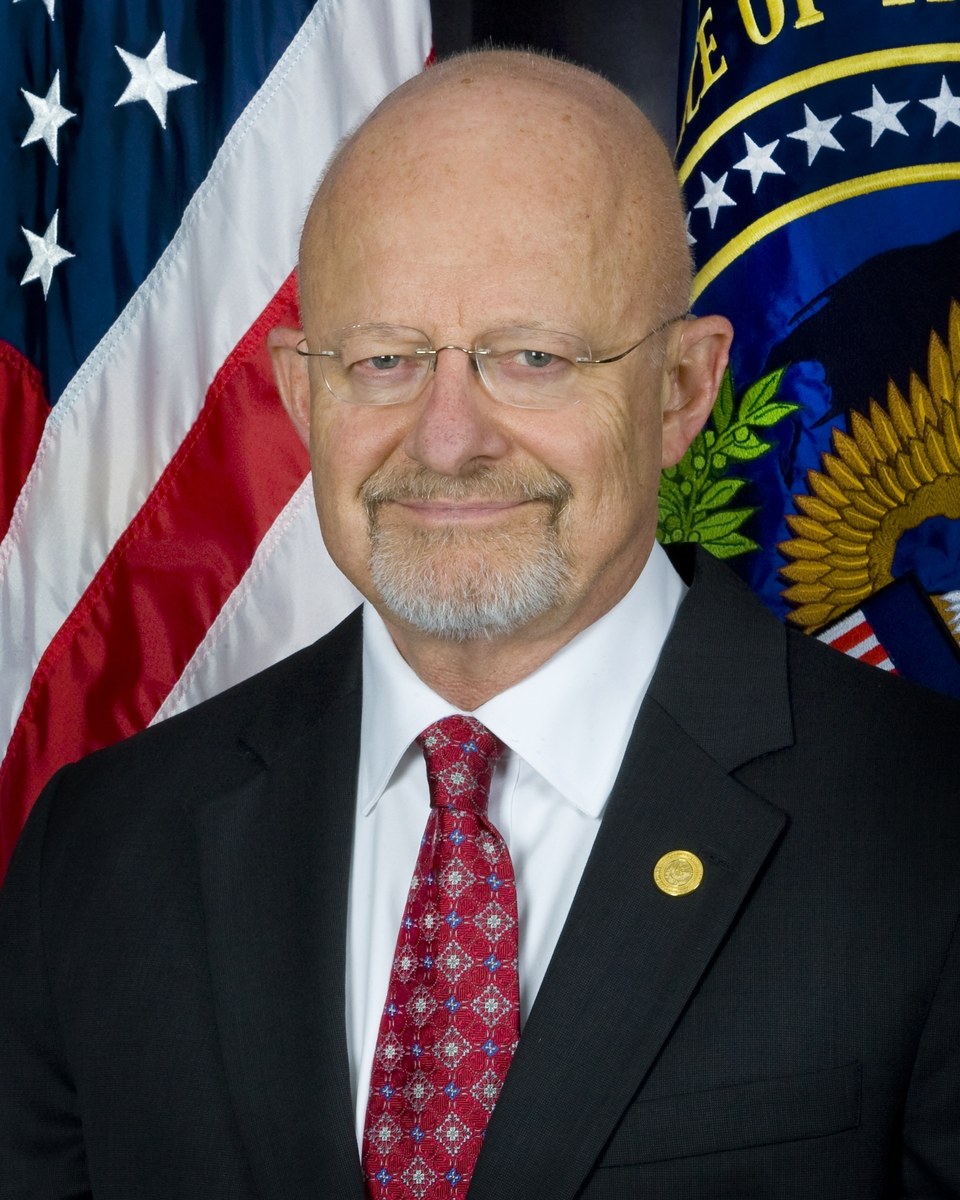
James Robert Clapper Jr., known throughout his fifty-year intelligence career as Jim and through his cabinet years as Director Clapper, served in the United States Air Force from 1963 to 1995 (retiring as Lieutenant General after thirty-two years), directed the National Imagery and Mapping Agency and its successor the National Geospatial-Intelligence Agency from 2001 to 2006, served as Under Secretary of Defense for Intelligence from 2007 to 2010 across the Bush and Obama administrations, and held the office of Director of National Intelligence from 5 August 2010 to 20 January 2017. He is the longest continuous-service DNI of the eighteen-year-old office. He left government on the morning of the 2017 presidential inauguration and has been a continuous public commentator on intelligence-community matters since, including substantive on-record engagement with the post-2017 UAP disclosure cycle.
A Life
James Robert Clapper Jr. was born on 14 March 1941 in Fort Wayne, Indiana, into a United States Army signals-intelligence family. His father James R. Clapper Sr. had been an Army Signal Corps officer in the Pacific theatre of the Second World War, conducting signals-intelligence operations against Japanese military communications, and continued in Army intelligence into the postwar period. The Clapper family moved with the postings; Jim Clapper grew up on bases in Germany, Korea and across the United States. He has stated in his memoir that the family's intelligence-community vocation across two generations was the substantive ground from which his own career proceeded.
He took his undergraduate degree at the University of Maryland (Bachelor of Science in government and politics, 1963), commissioned in the United States Air Force, and added a Master of Arts in political science from St Mary's University, San Antonio, in 1970. The thirty-two-year Air Force career covered signals intelligence, electronic intelligence, imagery intelligence and senior staff work through the postings inside the intelligence components of the Air Force and the Department of Defense. He retired from active duty in 1995 with the rank of Lieutenant General and the appointment of Director of the Defense Intelligence Agency, which he had held from 1991 to 1995.
The post-Air Force career was the institutional intelligence-community career. He directed the National Imagery and Mapping Agency from September 2001 (taking office on the eve of the September 11 attacks) and continued through the agency's 2003 renaming as the National Geospatial-Intelligence Agency, leaving the directorship in 2006. He served as Under Secretary of Defense for Intelligence from April 2007 through to August 2010, covering the senior intelligence-policy portfolio across the Bush-to-Obama transition. He was nominated by President Obama for the office of Director of National Intelligence on 4 June 2010, confirmed by the Senate on 5 August 2010 by a vote of 78 to 15, and served continuously until the morning of 20 January 2017.
He has been since leaving office a continuous public commentator on intelligence-community matters as a CNN national security analyst, a recurring witness in Senate Intelligence Committee hearings, an author and a public speaker. He published Facts and Fears: Hard Truths from a Life in Intelligence with Trey Brown in May 2018, a memoir that covers the full fifty-year career and includes his account of the DNI years and the 2016 Russian-interference assessment. He lives in Virginia with his wife Sue.
I do think there is a phenomenon, perhaps phenomena, plural, here that need to be taken seriously and looked at scientifically.Clapper, interview on CNN, 2021
Photographs
Clapper has been photographed institutionally throughout his five-decade intelligence-community career. The Office of the Director of National Intelligence holds the official portraits from the 2010 to 2017 tenure. The Senate Intelligence Committee, the House Intelligence Committee and the various joint sessions of Congress have produced an extensive testimony-photography archive across the DNI years. The CNN production archive from 2017 onwards holds the principal post-DNI working photography.
The DNI Years, 2010 to 2017
The Director of National Intelligence office was established by the Intelligence Reform and Terrorism Prevention Act of 2004 in response to the 11 September 2001 attacks and the institutional failures the subsequent 9/11 Commission report had identified. Clapper was the fourth DNI to hold the office and the first to complete a full presidential term. The role covers the institutional coordination of the seventeen elements of the United States Intelligence Community, the daily intelligence brief to the President, the senior-level testimony to Congress on intelligence matters, and the principal cabinet voice for intelligence-community priorities.
The substantive operational record of the Clapper DNI years spans the closing phase of the Iraq War, the wider counter-terrorism portfolio across the Islamic State emergence, the Snowden disclosures of 2013 (in which Clapper acknowledged at a Senate Intelligence Committee hearing on 12 March 2013 that he had given what he subsequently called "the least untruthful" answer to a question about mass surveillance), the 2014 to 2017 cyber-policy build-out including the public attribution of the North Korean role in the Sony Pictures intrusion, the 2016 Russian-interference assessment which Clapper signed on 6 January 2017 in his last weeks in office, and the routine background work of an intelligence community across the Obama presidency.
The DNI office's institutional position on UAP material during the Clapper years was the position it had inherited. The Advanced Aerospace Threat Identification Program had been authorised in 2007 and the funded contract had run to approximately 2012; the residual research direction continued under various forms across the period. Clapper has stated subsequently that the DNI office had situational awareness of military-aviator UAP reporting through the Defense Intelligence Agency reporting channels during his tenure, but that the UAP material was not a substantial priority of the intelligence community in the period and did not receive the dedicated executive attention it has received since 2017.
The Intelligence Community Assessment ICA-2017-01D, "Assessing Russian Activities and Intentions in Recent US Elections," signed by Clapper as DNI on 6 January 2017 in his last fortnight in office, is the principal cabinet-level documentary product of the Clapper DNI years. The classified version was provided to the President-elect and the President; the unclassified version was published publicly the same day. The assessment is held in the archive's wider documentary record alongside the subsequent congressional testimony and the public-record material on the 2016 election cycle.
Post-DNI Commentary on the UAP Question
Clapper has appeared as a CNN national security analyst across the period since January 2017. The on-record commentary on the UAP question has accumulated across the period in interviews with CNN, MSNBC, NBC News, the Washington Post and various podcast and radio appearances. The framing of the commentary has been consistent: Clapper has stated that there are phenomena reported by United States Navy and United States Air Force pilots that the available intelligence community technical analysis has not adequately explained, that the phenomena warrant scientific investigation and continued institutional attention, and that the contemporary disclosure-cycle architecture of the Schumer-Rounds amendment and the All-domain Anomaly Resolution Office is a reasonable institutional response to the question.
He has distinguished consistently between (a) the operational fact of unexplained military-aviator encounters with aerial phenomena that exhibit capabilities outside the publicly understood aerospace envelope, which he has treated as established documentary record warranting serious attention, and (b) the wider speculative literature about specific extraterrestrial-craft origins and the various legacy-programmes and reverse-engineering claims that have circulated through the contactee-tradition and post-2017 disclosure literature, which he has treated with substantial caution. The distinction is the substantive one for the legal-evidentiary status of his commentary.
He has not endorsed the specific legacy-programmes claims that David Grusch and others have advanced in the post-2023 period. He has acknowledged that he was not specifically briefed on any such programmes during his DNI tenure and that he has no personal knowledge of any such programmes existing. He has nonetheless argued that the question deserves serious congressional and intelligence-community attention. The two positions sit alongside each other in his stated record and the archive holds them as separate elements of his commentary.
Clapper's post-DNI commentary on the UAP question is held as the on-record commentary of a senior former intelligence-community principal speaking from the position of having held the most senior intelligence office in the United States Government from 2010 to 2017. The commentary is documentary record of his stated positions; it is not documentary record of any classified material from his tenure (which he has consistently declined to discuss publicly) and it is not adjudicated documentary record of the underlying questions about specific UAP cases or specific legacy-programmes claims. The archive holds Clapper's commentary as one informed senior voice among several in the post-2017 disclosure cycle; the substantive question of what the phenomena are remains open across the wider documentary record.
Connected People
President of the United States 2009 to 2017. Nominated Clapper for the DNI office in June 2010 and re-appointed him through the 2013 second-term transition. Obama has himself made public statements about UAP in interviews since leaving office (including the 17 May 2021 James Corden interview), framing the question in similar terms to Clapper's subsequent commentary.
Director of the Central Intelligence Agency from March 2013 to January 2017, contemporaneous with Clapper's last four years as DNI. Brennan has himself made public statements about UAP since leaving office, including substantive engagement with the question on the Tyler Cowen podcast and other long-form interview platforms. The Brennan and Clapper post-government commentary together constitute the principal senior-former-intelligence-community public engagement with the post-2017 disclosure cycle.
American writer and editor who co-authored Clapper's 2018 memoir Facts and Fears: Hard Truths from a Life in Intelligence. The book is the principal published source for Clapper's account of his career and the substantial reference for any biographical work on his fifty-year intelligence-community career.
American former intelligence-community contractor whose June 2013 disclosure of classified National Security Agency surveillance documents reshaped the institutional position of the intelligence community for the remainder of the Clapper DNI tenure. The 12 March 2013 Clapper testimony to the Senate Intelligence Committee, three months before the Snowden disclosures, became one of the most-cited single moments of the DNI office's history.
Former senior Pentagon intelligence official, longtime advocate for federal UAP disclosure. Worked across the Pentagon and intelligence community during the period of Clapper's USD-I tenure. Profiled on the archive's Disclosure Network page.
United States Senator for Nevada and Senate Majority Leader during the period of Clapper's confirmation and the early DNI years. Authored the 2007 AATIP authorisation, on which Clapper inherited the institutional residual at the DNI office. Profiled at the Harry Reid biography.
Virginia Democrat who chaired the Senate Intelligence Committee through the 2021 to 2025 UAP legislative cycle. Clapper has appeared as a witness before the Warner committee multiple times across his post-DNI period as a senior former intelligence-community principal commenting on UAP and intelligence-community policy matters.
Clapper's father. United States Army Signal Corps officer who served in the Pacific theatre of the Second World War conducting signals-intelligence operations against Japanese military communications. The two-generation Clapper signals-intelligence career is one of the substantial through-lines in Facts and Fears.
In the Archive
Clapper appears across three sections of the archive. The institutional intelligence-community career and the DNI tenure record run through the standard US government public-record holdings including the Office of the Director of National Intelligence published materials and the Senate and House Intelligence Committee testimony archives. The post-DNI UAP commentary across 2017 to the present is documented through the CNN, MSNBC and other broadcast-interview archives the archive holds in its post-2017 disclosure-cycle press collection. The wider post-2017 disclosure-cycle context is documented through the archive's Disclosure Network hub.
The post-2017 disclosure cycle Clapper has commented on is documented through the archive's Disclosure Network hub and the connected biography pages for Harry Reid (the political architect of the 2007 AATIP authorisation) and the various contemporary figures profiled in the Disclosure Network including Christopher Mellon, Luis Elizondo, and David Grusch. The wider United States government record is held through the government records hub.
Sources
Clapper, James R. and Trey Brown. Facts and Fears: Hard Truths from a Life in Intelligence, Viking, 2018. Office of the Director of National Intelligence public-record materials, 2010 to 2017. United States Senate Intelligence Committee hearings, 2010 to 2017 (Clapper testimony as DNI) and 2017 to present (Clapper testimony as former DNI). Intelligence Community Assessment ICA-2017-01D, "Assessing Russian Activities and Intentions in Recent US Elections," 6 January 2017. CNN national security analyst appearances, 2017 to present. The Joe Rogan Experience, multiple Clapper appearances. MSNBC and NBC News interview archive. The Washington Post post-DNI Clapper interview archive. Office of the Director of National Intelligence official portrait, 2010 (deployed to the archive as the principal hero image).