Skip to content
Exhibition Documentary deep-dive: primary sources, witness accounts, government records, cross-collection braiding
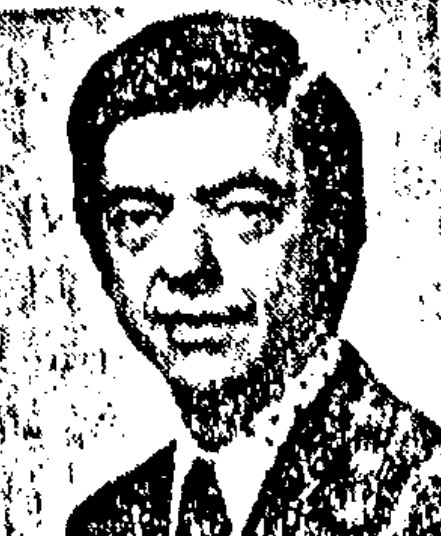
Portrait of Hal Puthoff (Wikimedia Commons)

Profile · United States

Harold E. Puthoff

PhD Electrical Engineering · Stanford 1967 Former SRI International President · EarthTech International Co-founder · To The Stars Academy 🇺🇸 United States

Bio

Harold E. Puthoff is an American physicist and electrical engineer whose career spans six decades across naval intelligence cryptography, mainstream laser physics, classified parapsychology research for the Central Intelligence Agency and the Defense Intelligence Agency, theoretical physics on the structure of vacuum and inertia, and post-2008 work on advanced aerospace concepts at the Defense Intelligence Agency. He earned his PhD in electrical engineering from Stanford University in 1967 with a dissertation on tunable Raman lasers, conducted prior service with the National Security Agency, and joined Stanford Research Institute (now SRI International) in 1972.

At SRI, Puthoff established and led the CIA-funded remote-viewing research programme that ran in various reorganised forms until 1995. The programme operated successively under the names SCANATE (1972 onwards), GRILL FLAME (Army, late 1970s), CENTER LANE, SUN STREAK and eventually STAR GATE before its closure following the 1995 American Institutes for Research evaluation. The named test subjects whose work formed the bulk of the published-after-declassification record include Ingo Swann, Pat Price and Joe McMoneagle. Puthoff served as the scientific director of the SRI side of the programme. The 1995 CIA final report, declassified in 2000 and released in 2017, runs to twelve million pages and remains the largest single-programme declassification in CIA history.

Puthoff left SRI in 1985 and founded the Institute for Advanced Studies at Austin, restructured in subsequent years as EarthTech International. He has served as president of EarthTech since. His theoretical work over the post-SRI period has focused on the polarisable vacuum representation of general relativity, the question of inertia as an electromagnetic phenomenon (the Haisch-Rueda-Puthoff inertia model), and the engineering implications of vacuum-energy extraction. The work sits at the unconventional edge of mainstream theoretical physics; some of it is peer-reviewed, some of it is contested, and some of it has been directly funded by US government interest in propulsion concepts.

Between 2008 and 2010 Puthoff was a senior contractor to the Defense Intelligence Agency's Advanced Aerospace Weapons System Applications Program (AAWSAP) under James Lacatski's programme management. AAWSAP commissioned thirty-eight Defense Intelligence Reference Documents (DIRDs) on advanced aerospace topics. Puthoff and Eric W. Davis, his EarthTech colleague, authored or co-authored several of the DIRDs, including studies on traversable wormholes, the Alcubierre warp metric, anti-gravity field-coupling effects, and high-frequency gravitational wave generation. Twenty-three of the DIRDs have been partially released via FOIA. The titles and abstracts of the remaining DIRDs are public; the full texts remain classified.

In 2017 Puthoff co-founded To The Stars Academy of Arts and Science with Tom DeLonge, Luis Elizondo, Jim Semivan, Christopher Mellon and Steve Justice. TTSA was the private vehicle through which the FLIR1, GIMBAL and GOFAST Navy gun-camera videos reached public release alongside the 16 December 2017 New York Times article. Puthoff served on the TTSA scientific advisory board and as a principal investigator on TTSA's Advanced Aerospace Weapon System Applications Program contract with the Army, 2019 to 2021.

Puthoff has remained publicly active across the post-2017 disclosure cycle. He has lectured at the Society for Scientific Exploration, the Salt iConnections conference, the SOL Foundation symposia, Avi Loeb's Galileo Project meetings, and Tom DeLonge's TTSA events. His March 2018 lecture Engineering the Physics at SSE's annual conference is widely circulated as the most accessible public statement of his AAWSAP-era views.

On UAP

Puthoff's public position is that the United States and several allied governments have material evidence of recovered non-human craft, that the engineering challenge of understanding such craft is the proper domain of physics rather than belief or social-science framing, and that the AAWSAP-era DIRDs represent a deliberate survey of the theoretical physics that would have to be true for the observed UAP phenomenology to be physically realisable.

He has stated in public lectures since 2018 that during his AAWSAP tenure he was briefed on the existence of off-world technology programmes operated by the United States, that some of those programmes were conducted outside the standard congressional oversight system, and that recovered materials have undergone metallurgical analysis at unidentified national-laboratory facilities. The substantive briefings he has referenced align with the broader allegations David Grusch placed under oath in July 2023 and with the AATIP-era account Luis Elizondo subsequently published in Imminent (2024).

The Department of Defense and the All-domain Anomaly Resolution Office have rejected the substantive claims regarding craft retrieval and reverse-engineering. AARO's March 2024 Historical Record Report Volume I addresses the Puthoff lecture-circuit material in its assessment that the broader allegations are the product of misremembered authorised activities, mythology around access-restricted aerospace work, and circular sourcing among the witnesses. Puthoff has not formally responded to the AARO Volume I findings.

The empirical framing distinguishes Puthoff's public posture from much of the surrounding UAP discourse. He treats the question as a measurement problem and emphasises that the engineering literature, not the witness-testimony tradition, is where the central conversation needs to be conducted. The framing has made him a recurring touchstone for physicists who engage with the UAP question publicly, including Avi Loeb at Harvard's Galileo Project, Garry Nolan at Stanford, and Kevin Knuth at SUNY Albany.

Career Record

  • 1960s. Naval intelligence service, National Security Agency-adjacent cryptographic work.
  • 1967. PhD in Electrical Engineering, Stanford University. Tunable Raman laser dissertation.
  • 1972. Joined Stanford Research Institute (SRI International).
  • 1972 to 1985. Scientific director, SRI remote-viewing programme. SCANATE → GRILL FLAME → CENTER LANE → SUN STREAK → STAR GATE.
  • 1985. Left SRI. Founded Institute for Advanced Studies at Austin.
  • 1985 onwards. President, EarthTech International (successor entity).
  • 2008 to 2010. Senior contractor, DIA AAWSAP. DIRD authorship.
  • 2017. Co-founder, To The Stars Academy of Arts and Science.
  • 2019 to 2021. Principal investigator, TTSA-Army AAWSAP successor contract.
  • 2018 onwards. Public lecture circuit. SSE, Salt iConnections, SOL Foundation, Galileo Project, TTSA events.

The STARGATE Lineage

The remote-viewing programme Puthoff established at SRI in 1972 ran for twenty-three years across multiple agency reorganisations. SCANATE was the founding CIA contract. GRILL FLAME was the Army Intelligence Security Command's parallel operational programme from the late 1970s. CENTER LANE and SUN STREAK were the mid-1980s reorganisations. STAR GATE was the consolidated final form under the Defense Intelligence Agency from 1991 until programme termination in 1995. The American Institutes for Research evaluation commissioned by the CIA in 1995 led to the closure decision.

The named test subjects whose work is preserved in the declassified record include Ingo Swann (the principal SRI subject from 1972), Pat Price (the police-detective remote viewer until his death in 1975), Joe McMoneagle (Army warrant officer, NICAP 001 inside the programme), Hella Hammid, Gary Langford, Keith Harary, and approximately twenty additional viewers across the twenty-three-year operational arc. The programme generated more than five thousand documented sessions, of which the highlight cases include the Semipalatinsk Soviet weapons facility (Price, 1974), the SS-N-7 submarine (McMoneagle, 1979), and the post-1986 USSR target work.

The full declassified STARGATE archive is held in the archive's CIA STARGATE viewer at the United States Reading Room.

Selected Publications

Puthoff, H. E. and R. Targ. "A perceptual channel for information transfer over kilometer distances: Historical perspective and recent research." Proceedings of the IEEE, vol. 64 no. 3, 1976, pp. 329 to 354.

The peer-reviewed publication that introduced SRI remote-viewing methodology to the mainstream engineering literature

Targ, Russell and Harold E. Puthoff. Mind-Reach: Scientists Look at Psychic Ability. Hampton Roads Publishing, 1977; reissued 2005.

Foundational popular-press text from the SRI remote-viewing programme

Puthoff, H. E. "Polarisable-Vacuum (PV) Approach to General Relativity." Foundations of Physics, vol. 32, 2002, pp. 927 to 943.

Peer-reviewed theoretical work on the PV representation of GR

Davis, Eric W. and H. E. Puthoff. AAWSAP Defense Intelligence Reference Documents on advanced aerospace propulsion. Defense Intelligence Agency, 2009 to 2010.

Twenty-three DIRDs partially released via FOIA; remaining documents classified

Puthoff, H. E. "Advanced Space Propulsion Based on Vacuum (Spacetime Metric) Engineering." Journal of the British Interplanetary Society, vol. 63, 2010, pp. 82 to 89.

Peer-reviewed publication of AAWSAP-era theoretical work

Notable Public Statements

"There is now a substantial body of evidence to suggest that materials of unknown provenance have been recovered. The proper response to this is not to ask whether it is true, but to ask what the engineering implications would be if it were true."

Society for Scientific Exploration · March 2018

"The DIRDs were not science fiction. They were a survey of the theoretical physics that has to be correct if the engineering we have been briefed on is to make sense. The fact that they exist at all, written under DIA contract, is the data point."

SOL Foundation symposium · 2022

Where to Find Them

In the Archive

Editorial note. This profile is built from publicly available material: Puthoff's peer-reviewed publications in Proceedings of the IEEE, Foundations of Physics, and the Journal of the British Interplanetary Society; his public lecture catalogue at SSE, SOL Foundation, Galileo Project, and TTSA events; the declassified CIA STARGATE programme record; the AAWSAP DIRD authorship established through FOIA-released materials; and the published To The Stars Academy disclosures. The NHI Archive takes no position on the substance of the underlying physics claims, only documents the publication and lecture record and links to the original sources. If anything on this profile needs correcting, please get in touch.
Legend