The 1973 US UFO Wave
For a few weeks in the autumn of 1973, UFO reports crossed the eastern and southern United States in numbers not seen since the 1960s. The wave produced two of the most documented cases in the American record, the Pascagoula abduction and the Coyne helicopter encounter, and it put an unusual class of witness on the front page: serving police officers. In the Deep South, uniformed patrolmen in a string of Alabama and Georgia towns reported the same lights on the same nights, and the national press photographed them standing by their patrol cars.
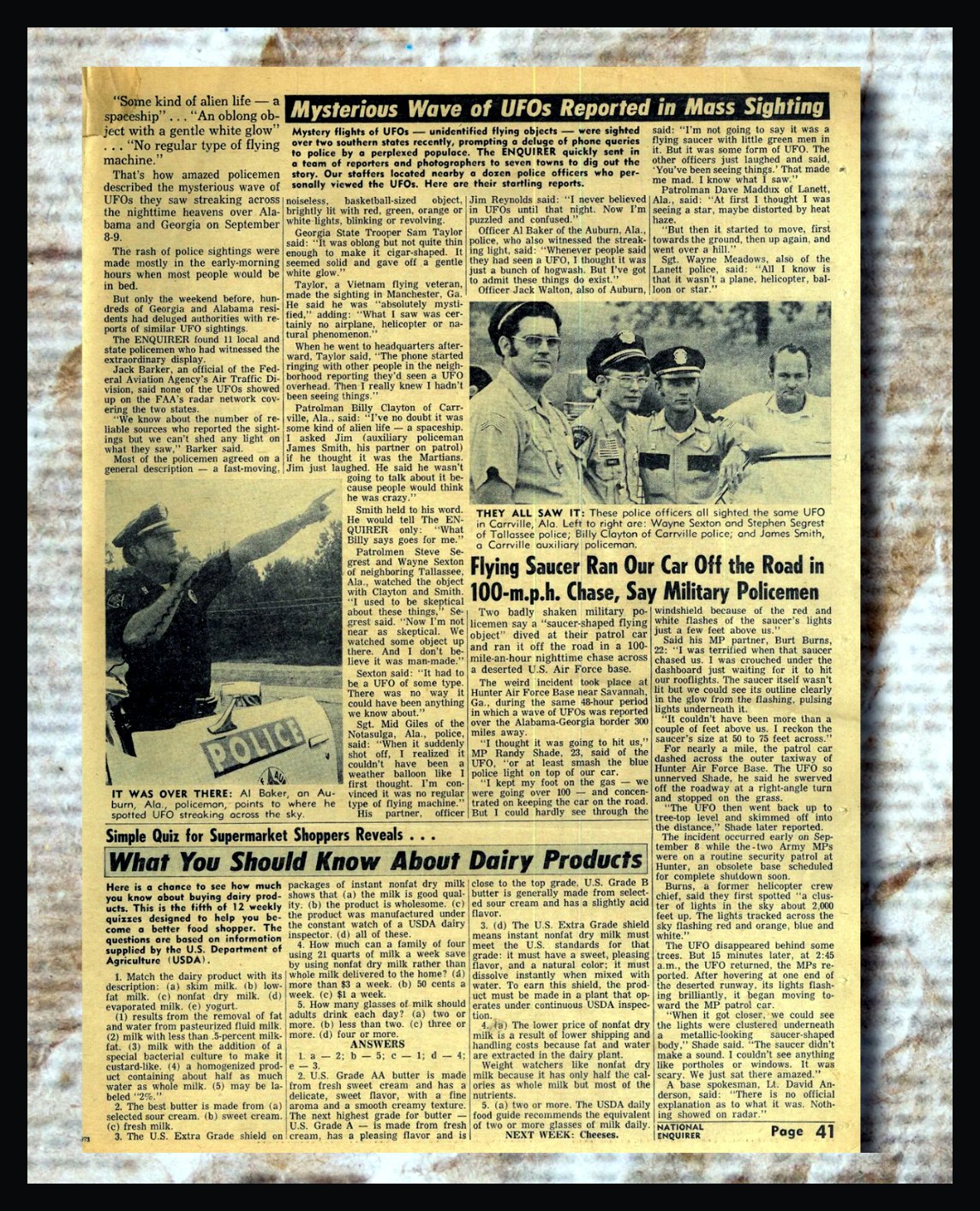
I've no doubt it was some kind of alien life, a spaceship.Patrolman Billy Clayton, Carrville, Alabama, National Enquirer, 4 November 1973
The Autumn the Sightings Returned
October 1973, across the eastern and southern states.
The 1973 wave arrived suddenly and spread fast. Through October, reports came in from Ohio, Missouri, Mississippi, Alabama, Georgia and beyond, and the subject returned to the front pages of mainstream papers that had largely left it alone since the Condon Report closed Project Blue Book in 1969. The archive records the wave as a single connected event under case file CASE-185, with sightings tracked across multiple states and coverage carried in the period's newsletters.
What set 1973 apart was the weight of its witnesses. The wave did not rest on anonymous lights in the distance. It produced two close-encounter cases that have been argued over ever since, and it drew testimony from people whose word the public was inclined to trust: an Army Reserve flight crew, city and county police officers, and a state trooper. The mundane settings, a fishing spot, a highway at night, a patrol-car radio, are part of why the cases held.
Witnesses in Uniform
The Deep South police sightings, October to November 1973.
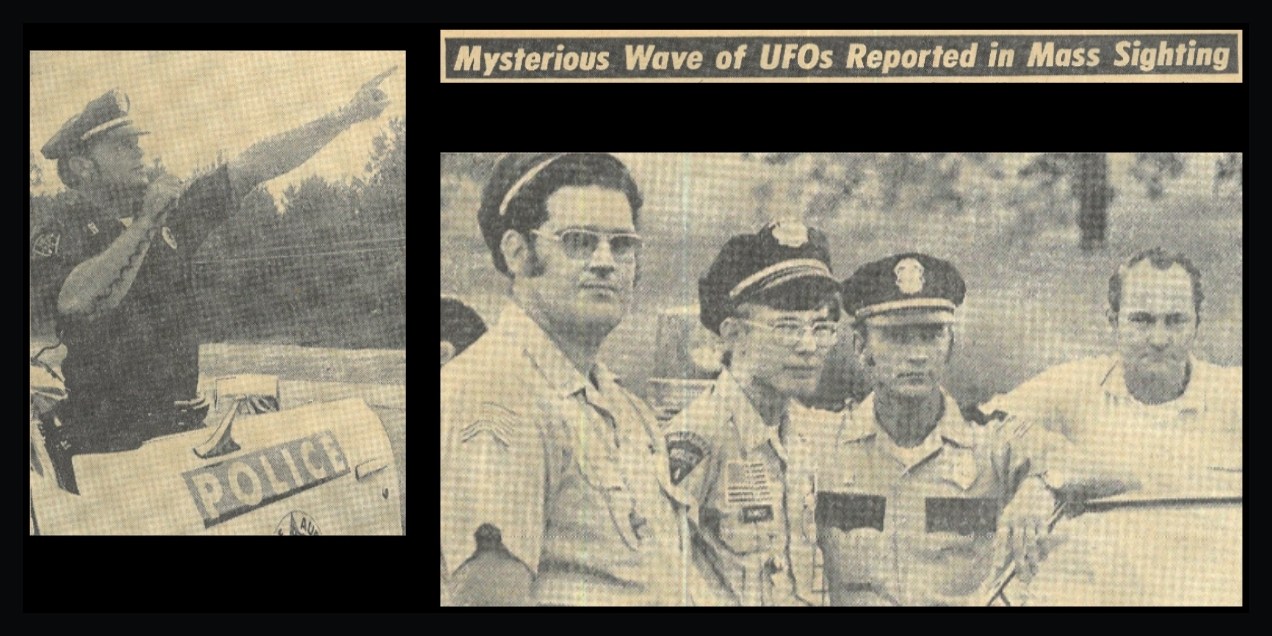
In a cluster of small Alabama and Georgia towns, the people reporting the lights were the people normally called to explain them. The National Enquirer of 4 November 1973 gathered several of these accounts onto a single page under the headline "Mysterious Wave of UFOs Reported in Mass Sighting." Georgia State Trooper Sam Taylor, a Vietnam flying veteran, described an oblong object with a gentle white glow over Manchester, Georgia, and said plainly that it was "certainly no airplane, helicopter or natural phenomenon." In Carrville, Alabama, Patrolman Billy Clayton and auxiliary policeman James Smith watched an object together, joined by patrolmen Steve Segrest and Wayne Sexton from neighbouring Tallassee and Sergeant Mid Giles of Notasulga. In Auburn, policeman Al Baker pointed photographers to where he had seen a light streak across the sky.
The archive holds the underlying sighting records for this cluster, including reports filed from Falkville, Carrville, Tallassee and Notasulga. The value of these accounts is not that police make infallible observers; it is that they are trained, sober, on-record witnesses who had nothing to gain and a reputation to lose by filing a UFO report under their own names. That is the same quality that runs through the wave's landmark cases.
Landmark Cases of the Wave
Four 1973 cases documented in the archive.
The wave's best-known incident came from the Gulf Coast. On 11 October, Charles Hickson and Calvin Parker reported being taken aboard a craft by robotic beings while fishing on the Pascagoula River in Mississippi, an account that survived a secretly recorded conversation between the two men while they believed they were alone. The Pascagoula abduction remains one of the most examined close-encounter cases in the record.
A week later, on the night of 18 October, an Army Reserve UH-1H Huey flying from Columbus to Cleveland reported a near-collision with an object that bathed the cabin in green light over Mansfield, Ohio. The crew of four, with ground witnesses below, made the Coyne helicopter encounter one of the wave's strongest multiple-witness cases. In California, officers of the Los Angeles Police Department reported chasing a light across the night sky, recorded in the archive as the LAPD officers UFO chase. In Missouri, the James G. Richards encounter at Columbia adds a close-range sighting to the same season.
From the Press
How the wave reached the newsstand.
The 4 November 1973 National Enquirer page carried two UFO stories side by side: the Deep South police accounts, and a second report, "Flying Saucer Ran Our Car Off the Road in 100-mph Chase," in which two military policemen near Hunter Army Airfield in Georgia described an object that dived at their vehicle. The tabloid framing is part of the record too: in 1973 the supermarket press, not the science pages, was where a serving officer's UFO report was most likely to appear.
The 1973 wave is recorded under case file CASE-185, with sightings indexed across several states and contemporary coverage held in the newsletter collections. The Deep South police cluster is preserved in the sighting records for Falkville, Carrville, Tallassee and Notasulga, Alabama. Related waves of the same period in the archive include the Piedmont, Missouri flap and the 1973 Mississippi wave.