Aleister Crowley
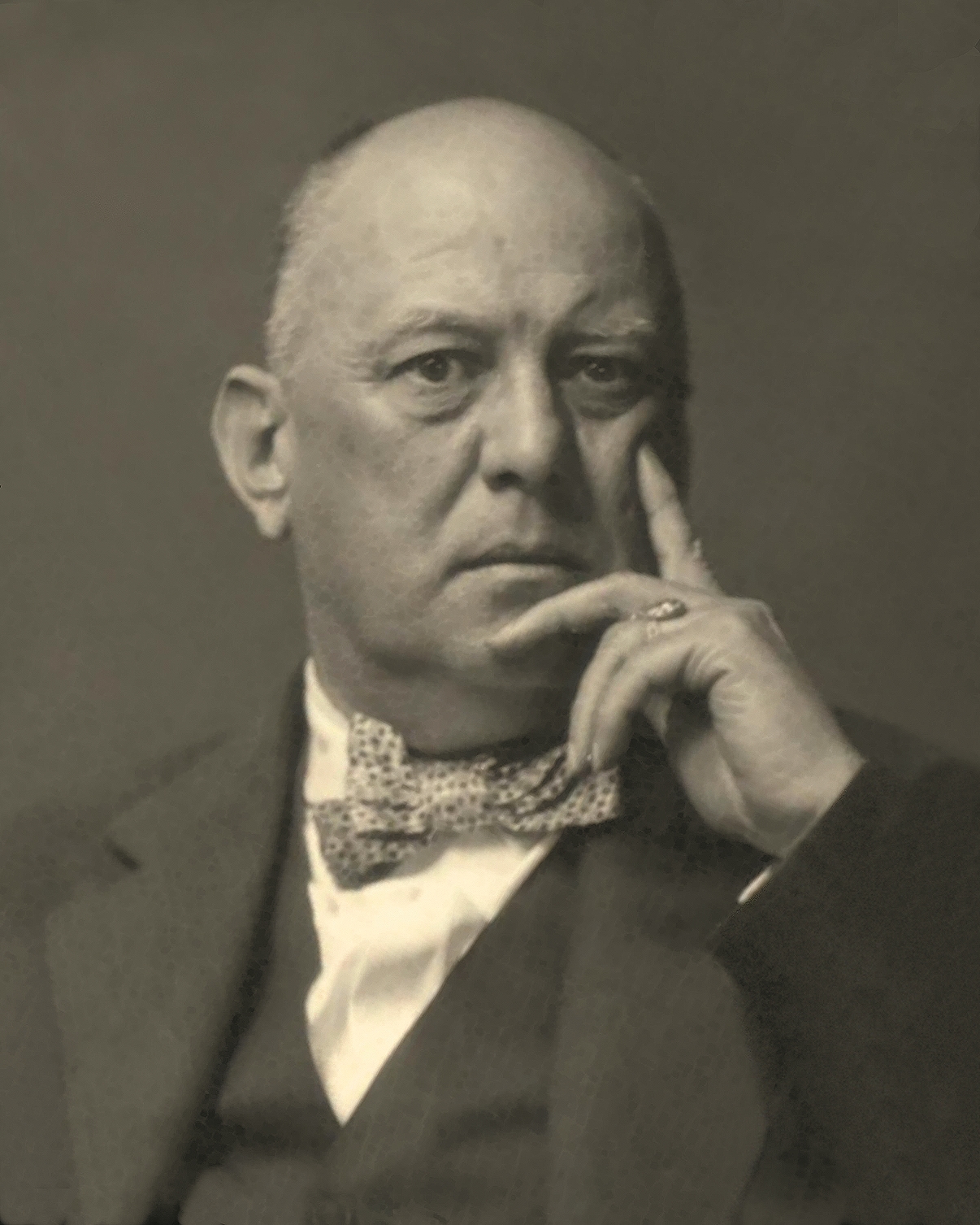
Edward Alexander Crowley took the name Aleister at Cambridge. In November 1898 MacGregor Mathers initiated him into the Hermetic Order of the Golden Dawn at the Mark Mason's Hall in London. He bought Boleskine House on the south shore of Loch Ness in 1899 as the working base for the Abramelin ritual. On 8, 9 and 10 April 1904, in a flat in Cairo, his then-wife Rose Edith Kelly began telling him that an entity who called himself Aiwass had something to dictate. The text Crowley wrote down across those three afternoons is Liber AL vel Legis, the Book of the Law. Thelema, the doctrinal system he built around it, was the rest of his life. He founded the British and American sections of the Ordo Templi Orientis from 1912, ran the Abbey of Thelema at Cefalu in Sicily from April 1920 until Mussolini expelled him in April 1923, and held the OTO Outer Headship from 1925 until his death at Hastings in December 1947. The 1946 Pasadena Babalon Working (Jack Parsons and L. Ron Hubbard on Orange Grove Avenue) was conducted under his American Agape Lodge.
A Life
Crowley was born Edward Alexander Crowley on 12 October 1875 at 30 Clarendon Square in Leamington Spa, the only son of Edward Crowley, a Quaker-raised Plymouth Brethren convert and retired brewery partner of considerable means, and Emily Bertha Bishop, also of strict Plymouth Brethren faith. The Plymouth Brethren upbringing was the working religious framework of his childhood through to his father's death of tongue cancer in 1887; his mother subsequently called him "the Beast" in reference to Revelation 13, a designation Crowley adopted and inverted across his subsequent career. He was educated at Malvern College, Tonbridge School, and from October 1895 at Trinity College Cambridge, where he read for the moral sciences tripos for three years from 1895 to 1898 without taking a degree. The Cambridge years produced his published poetry (the 1898 Aceldama), his abandonment of his birth surname as a working name in favour of Aleister (the Gaelic form of Alexander), and his first contact with the Hermetic Order of the Golden Dawn through Julian Baker at Wasdale Head in the summer of 1898.
The Golden Dawn initiation took place at the Mark Mason's Hall in London on 18 November 1898 under MacGregor Mathers as the Order's Chief. Crowley took the Neophyte motto Perdurabo ("I shall endure") and proceeded through the grades to Adeptus Minor by 1900. He purchased Boleskine House on the south shore of Loch Ness in 1899 as the operating base of the Abramelin ritual he had begun under Mathers's instruction, a six-month working derived from The Book of the Sacred Magic of Abramelin the Mage that Mathers had translated and published in 1898. The Abramelin working at Boleskine was interrupted by the 1900 Golden Dawn schism between Mathers and the London circle around W. B. Yeats, Florence Farr and Annie Horniman, in which Crowley sided with Mathers and was excluded by the London side from further Golden Dawn participation.
The decisive event of his life came in Cairo in April 1904. Crowley had been travelling with his first wife Rose Edith Kelly (the sister of the Edwardian painter Gerald Kelly, married in Scotland in August 1903) through Cairo en route from a honeymoon trip to Ceylon. Rose entered an altered mental state on 16 March 1904 announcing that "they are waiting for you" and identifying the Egyptian god Horus as the entity attempting to communicate. Crowley conducted a verification ritual at the Boulaq Museum in which Rose identified, without prior knowledge, the Stele of Ankh-ef-en-Khonsu (the funerary stele of a 26th-Dynasty Theban priest of Mentu, museum exhibit number 666) as the relevant object. On the afternoons of 8, 9 and 10 April 1904, Crowley sat at a desk in the Cairo apartment writing for one hour per afternoon while a voice from over his left shoulder dictated the text. The resulting three chapters, totalling approximately 220 verses, became Liber AL vel Legis, the Book of the Law, the founding doctrinal text of Thelema. The voice identified itself as Aiwass.
The Book of the Law announced a New Aeon, the Aeon of Horus, succeeding the previous Aeon of Osiris (the dying-and-rising-god aeons of Christianity and the major Levantine religions) and the prior Aeon of Isis (the matriarchal pre-Hellenic aeon). The central axiom set out in the Law was "Do what thou wilt shall be the whole of the Law. Love is the law, love under will." The part of Crowley's subsequent forty-three years of working life was an extended doctrinal elaboration, ritual instantiation, and missionary propagation of the Thelemic framework.
The 1907 founding of the A.A. (Astrum Argenteum or the Silver Star), Crowley's own initiatory order, the 1909 to 1913 Equinox journal that ran the published Thelemic doctrinal corpus, and the 1912 appointment by Theodor Reuss as the OTO British X° (the Outer Head of the Order for the British Empire and the United States) brought Crowley into the principal organisational role he held for the rest of his life. He moved across the United States, Italy, Tunisia, Switzerland, Germany, Portugal, and France through the 1914 to 1947 period as residences. He was the OTO Outer Head of the Order from 1925 (succeeding Reuss on Reuss's death) through to his own death.
The Abbey of Thelema at Cefalu in Sicily was the working centre from April 1920 to April 1923. It was housed in a rented farmhouse near the coast that Crowley named the Collegium ad Spiritum Sanctum. The community at peak numbered approximately twelve adults plus children. The Raoul Loveday death of 16 February 1923 (of typhoid from a contaminated mountain spring, while Loveday and his wife Betty May were resident at the Abbey) produced the London press scandal of February to April 1923 that led the Italian Fascist government under Mussolini to expel Crowley from Italy on 23 April 1923. He left for Tunis the same day and did not see Cefalu again.
The American Agape Lodge of the OTO at Pasadena from the mid-1930s to the late 1940s, under successively Wilfred Talbot Smith and then Jack Parsons as Lodge Master, was the American OTO branch under Crowley's authority as Outer Head. Crowley corresponded with Parsons across the 1940s and held a working but increasingly critical position on Parsons's 1946 Pasadena Babalon Working. The Babalon Working was conducted by Parsons across January and February 1946 with L. Ron Hubbard as the working scribe; Crowley wrote to Karl Germer in May 1946 that "Apparently Parsons or Hubbard or somebody is producing a Moon-child. I get fairly frantic when I contemplate the idiocy of these louts."
The closing years of his life were lived in increasing physical decline at Netherwood, a boarding house at Hastings that he took in 1945. He suffered chronic bronchitis and asthma exacerbated by his thirty-year heroin and cocaine habits and by the cumulative privations of his Sicily, Tunisia and pre-war Germany periods. He died at Netherwood on the morning of 1 December 1947, age seventy-two. He was cremated at Brighton on 5 December 1947 in a ceremony conducted by his OTO successor Louis Wilkinson at which Crowley's own "Hymn to Pan" was read.
Do what thou wilt shall be the whole of the Law. Love is the law, love under will.The Book of the Law (Liber AL vel Legis), I:40 and I:57, Cairo, 8-10 April 1904
The 1946 Pasadena Babalon Working
The Pasadena Babalon Working of January and February 1946 is the documented intersection between Crowley's Thelemic system and the figures whose work appears elsewhere in this archive. Jack Parsons, the JPL co-founder and Agape Lodge Master, conducted the Working at his Pasadena house at 1003 South Orange Grove Avenue across the January and February 1946 ritual sequence. L. Ron Hubbard, then a 35-year-old naval officer recently demobilised from war service in the Pacific, served as the working scribe (the technical term for the participant whose role is to record the visions and announcements of the working magician under altered state of consciousness).
The stated working aim was the incarnation of Babalon, the Thelemic Scarlet Woman figure, into a human female partner. The Working sequence ran in two phases: the Initial Working from 4 to 18 January 1946, and the Babalon Working proper from 18 February to 4 March 1946. The Working concluded with the appearance of Marjorie Cameron at the Parsons house on 19 February 1946, whom Parsons identified as the elemental partner the Working had produced and who would marry Parsons in October 1946.
Crowley's response from London was sceptical and dismissive. The 22 May 1946 letter to Karl Germer, his OTO successor in the United States, is the documented Crowley position: "Apparently Parsons or Hubbard or somebody is producing a Moon-child. I get fairly frantic when I contemplate the idiocy of these louts." The Hubbard subsequent break with Parsons (Hubbard left Pasadena with Parsons's then-partner Sara Northrup in May 1946 with much of Parsons's working capital from the Allied Enterprises partnership; Parsons recovered approximately half through court action in July 1946) ended the Crowley-Parsons-Hubbard documented working relationship. Hubbard subsequently developed Dianetics in 1950 and Scientology in 1953 without further documented Thelemic content; Parsons continued his Thelemic and rocketry work until his death in the Pasadena home laboratory explosion of 17 June 1952.
The 1946 Babalon Working is documented in the existing Jack Parsons biography and the L. Ron Hubbard biography. The Crowley-Parsons documented correspondence places Crowley as Outer Head of the Order and Parsons as American Lodge Master across the 1942 to 1946 period. The Crowley 22 May 1946 letter to Karl Germer is the principal documented Crowley statement on the Working.
Photographs
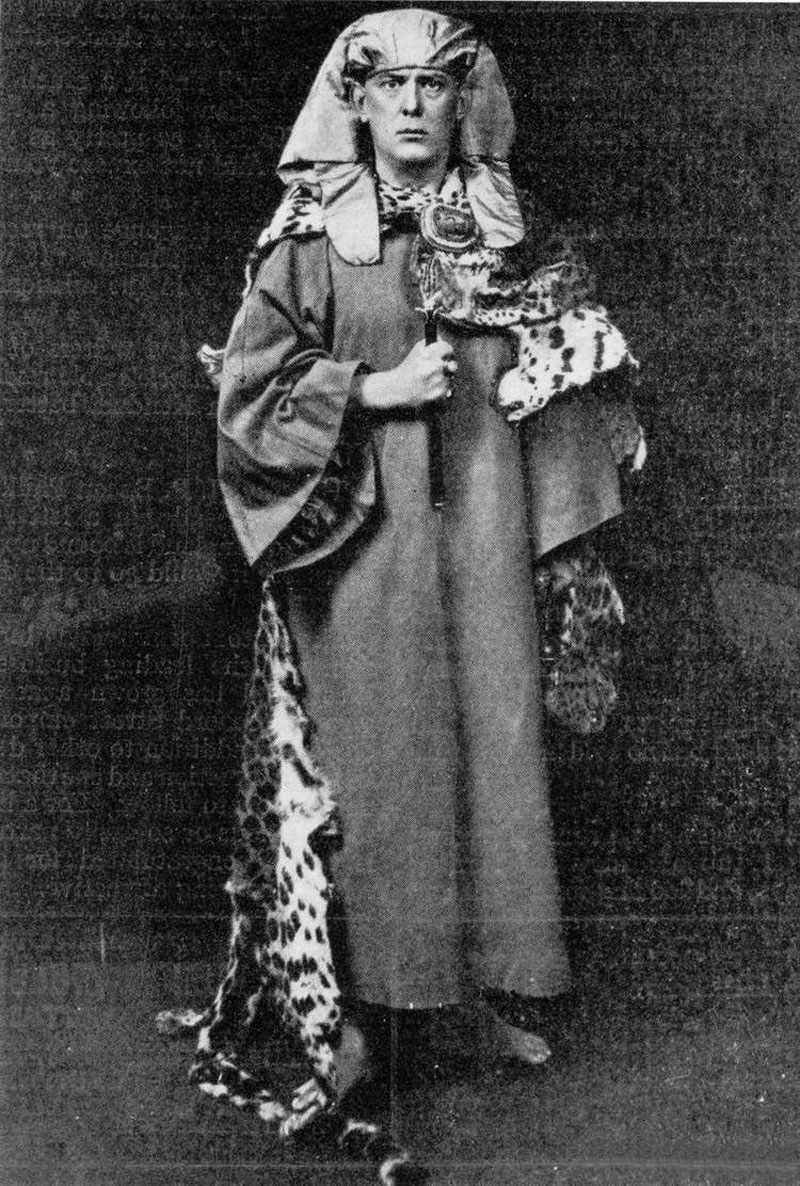
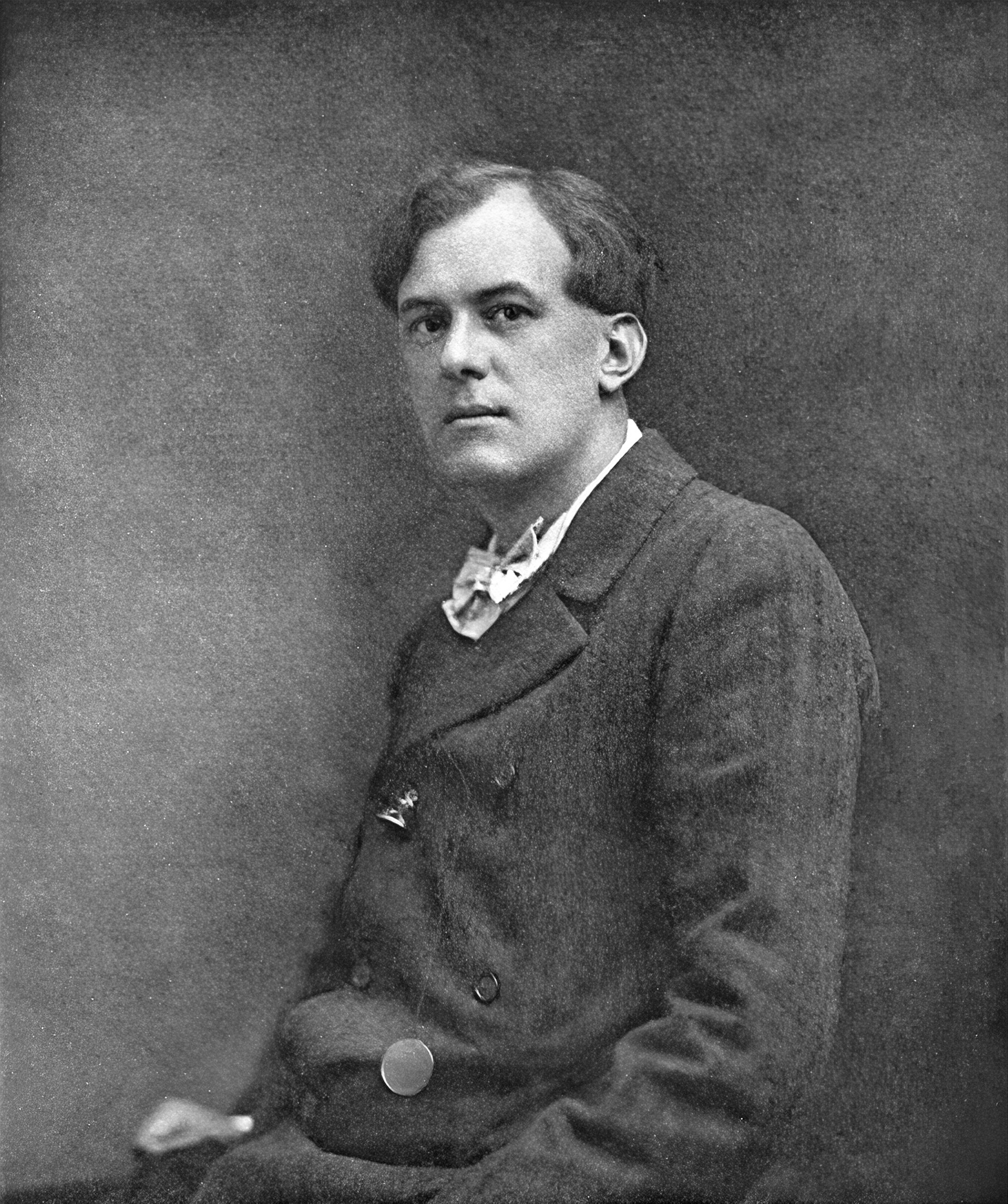
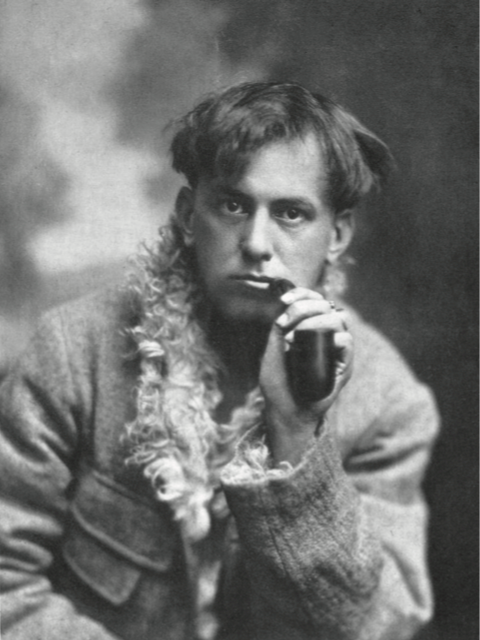
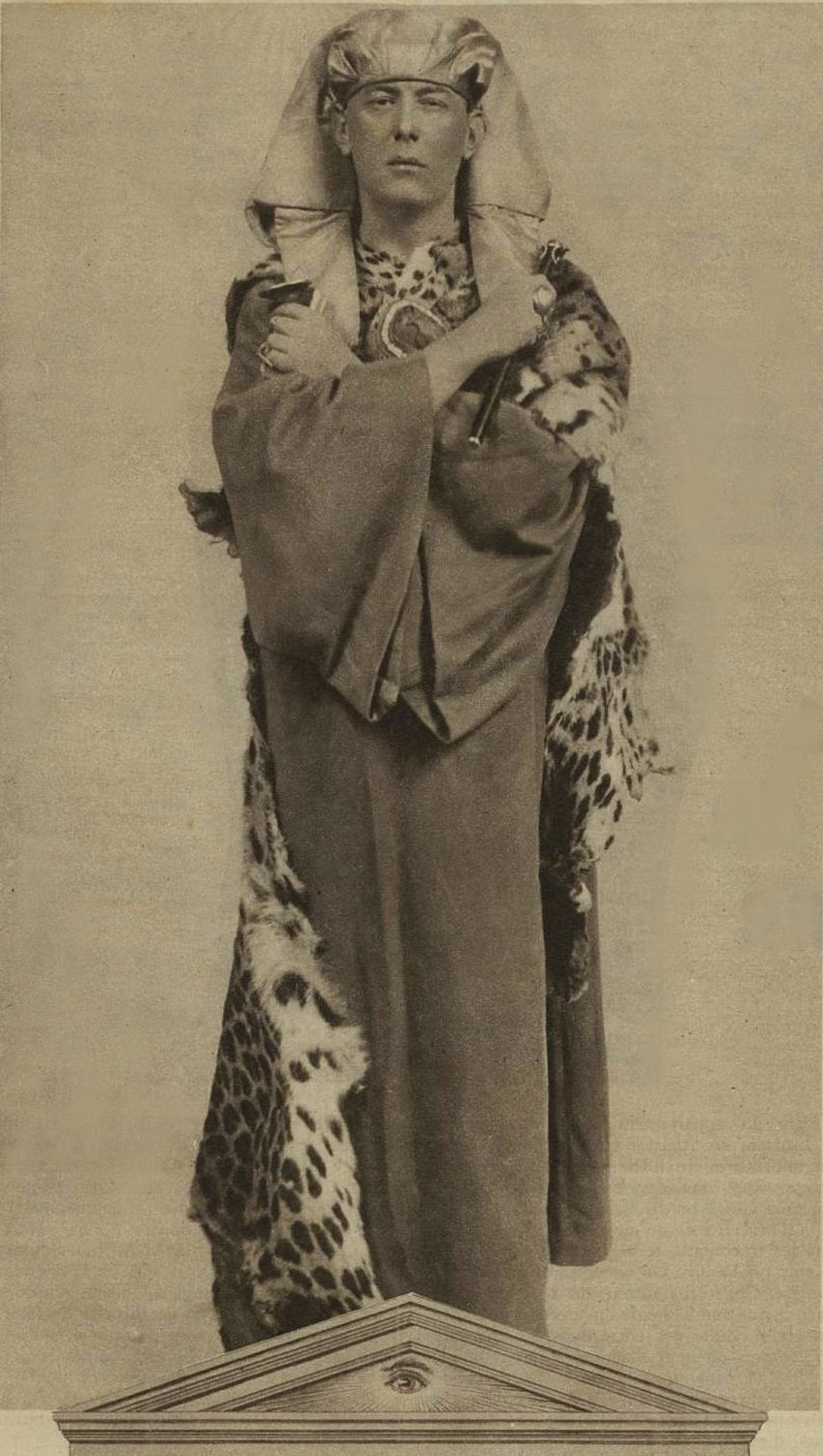
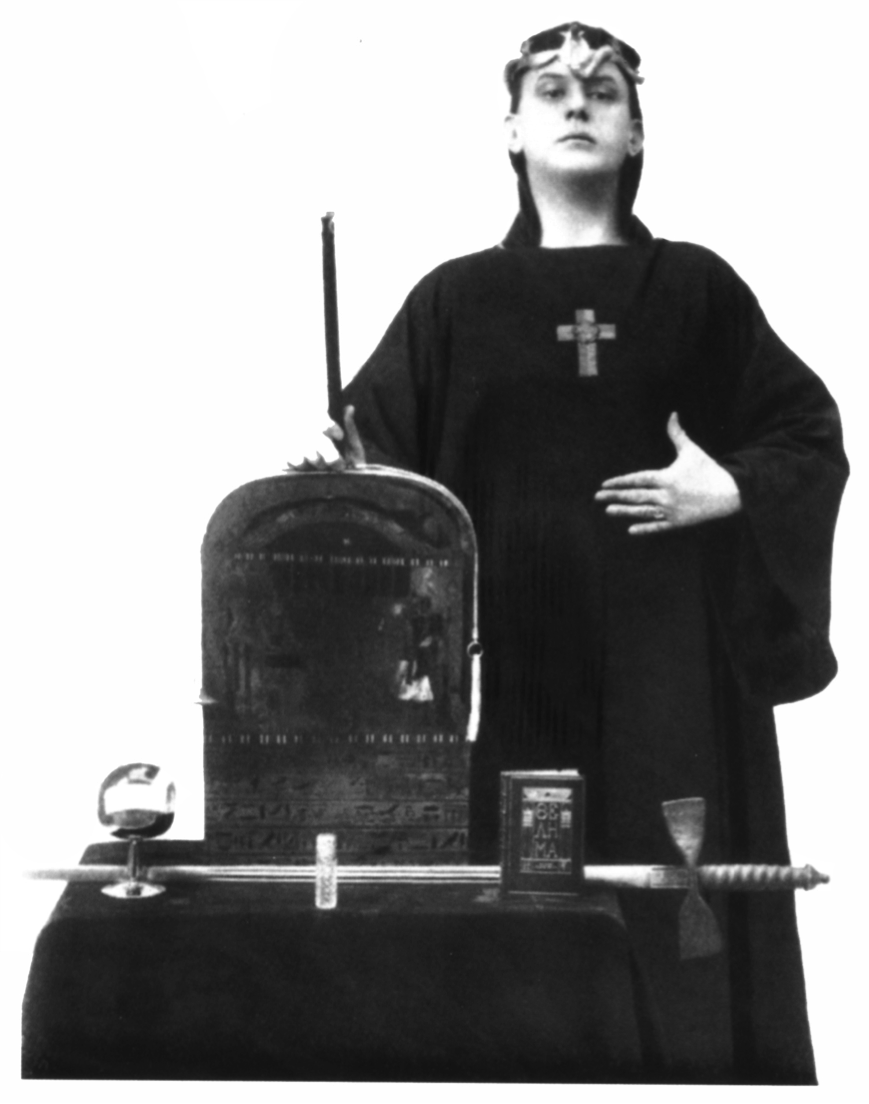
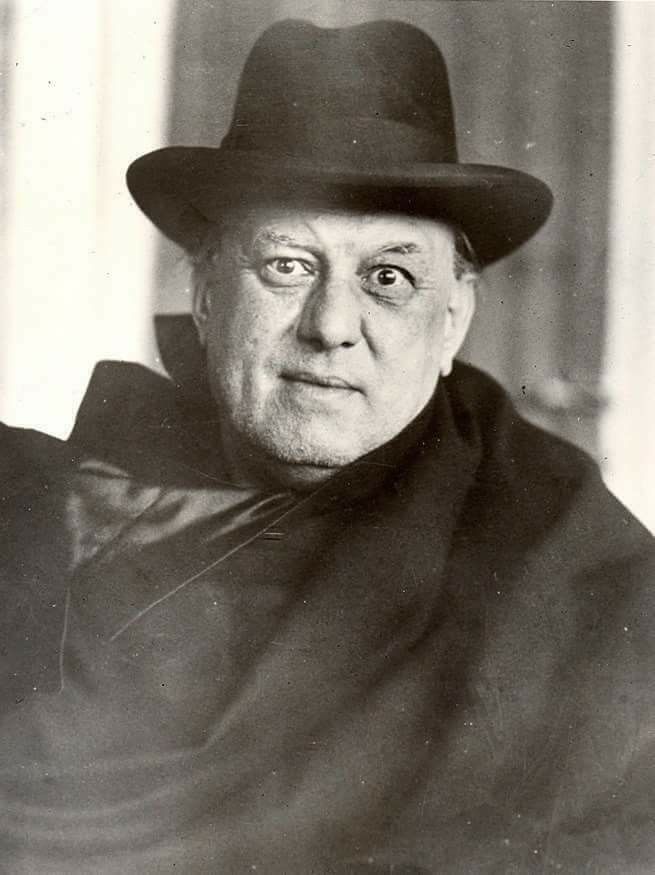
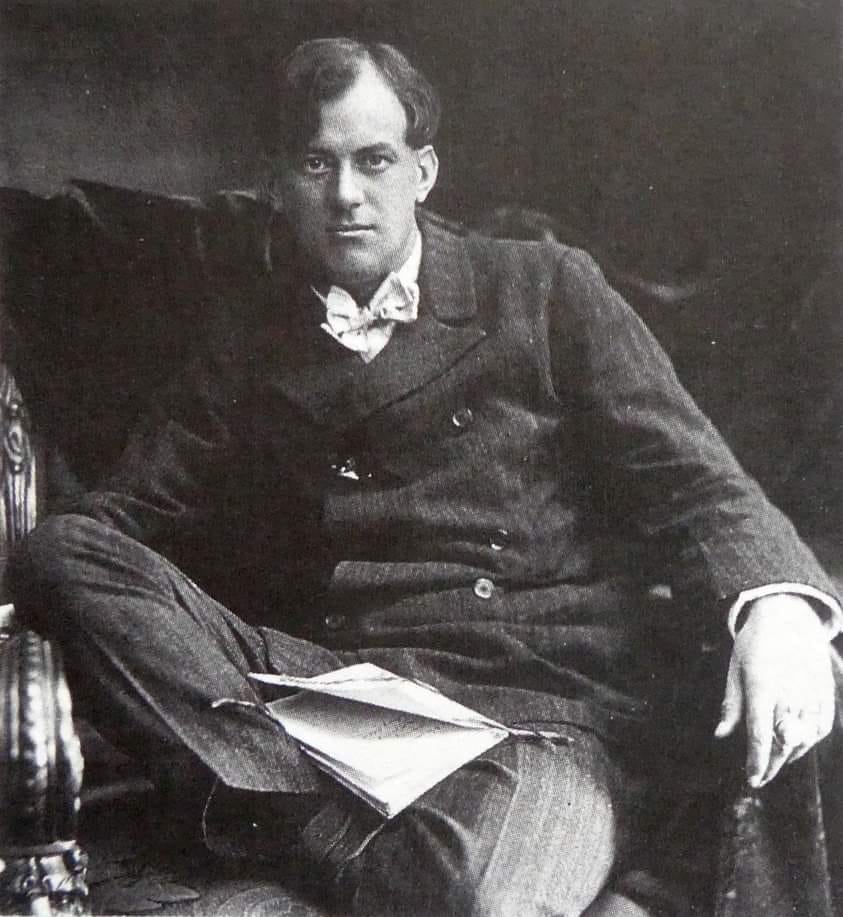
Significance to the Archive
Crowley matters to this archive for two specific reasons. First, the 1946 Pasadena Babalon Working is the documented intersection between his Thelemic system and the figures whose work appears elsewhere in the archive: Jack Parsons, the JPL co-founder and OTO Agape Lodge Master, and L. Ron Hubbard, the founder of Dianetics and Scientology. The Working connects directly into the existing Parsons biography and the documented Pasadena Thelemic period the archive records.
Second, the Thelemic doctrinal framework set out in the 1904 Book of the Law and elaborated across Crowley's forty-three subsequent working years is one of the documented twentieth-century esoteric traditions that fed into the postwar American occult-and-contactee literature. The doctrinal lineage from the Helena Blavatsky Theosophical material the archive's Blavatsky biography documents, through the Hermetic Order of the Golden Dawn (which Crowley entered through Mathers in 1898), through Thelema (which Crowley founded in 1904), into the postwar American occult-and-contactee period that the archive's mid-twentieth-century collections document, runs through Crowley's documented position as a major working figure of the late-nineteenth and twentieth-century English-language Western esoteric tradition.