Jacques Vallée
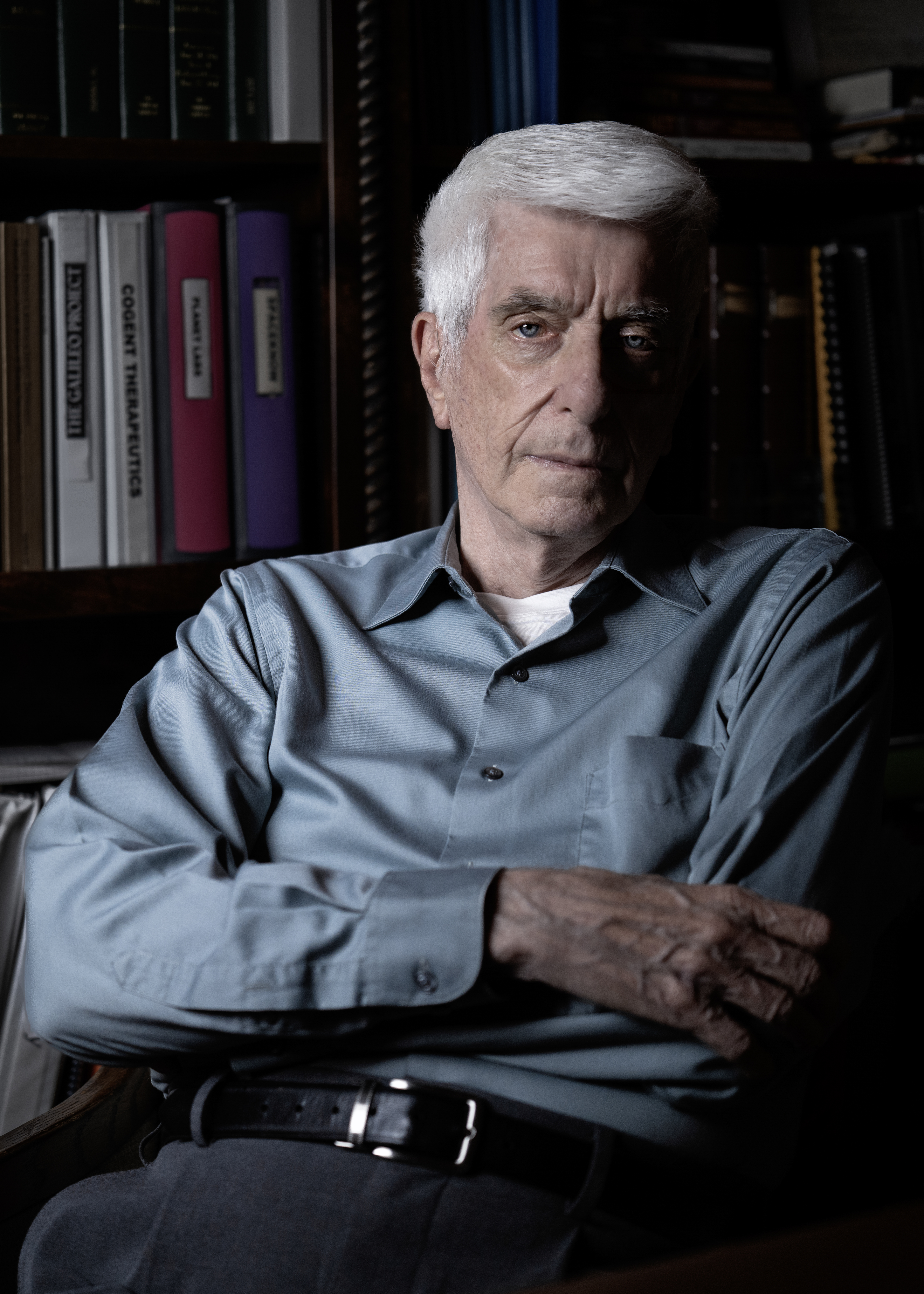
Jacques Fabrice Vallée has run two distinct working careers in parallel for fifty years. He is the principal English-language successor to J. Allen Hynek as the working figure of the post-1950s civilian UFO research community, author of Passport to Magonia (1969) which proposed the folklore-and-UFO synthesis the field's subsequent literature has worked from, of Anatomy of a Phenomenon (1965), Challenge to Science (1966), Messengers of Deception (1979), Dimensions (1988), Confrontations (1990), Revelations (1991), and the multi-volume Forbidden Science journal series running from 1992 to the present. He served as the technical model for the Lacombe character played by François Truffaut in the 1977 Spielberg film Close Encounters of the Third Kind. He is also the working Silicon Valley venture capitalist who founded Sofinnova Ventures in the United States in 1981 and has held senior partner positions in the technology investment field for forty-three years. The portrait above was taken by Christopher P. Michel at San Francisco on 12 December 2024.
A Life
Vallée was born on 24 September 1939 at Pontoise outside Paris, the son of Charles Vallée, a French Army officer, and Marie-Berthe Vallée. The Pontoise upbringing placed him at the working edge of the German occupation of France and his earliest documented memories were of the Allied liberation of August 1944. He took the licence ès sciences mathématiques at the Sorbonne in 1961 at twenty-one and the master's degree in astrophysics at the University of Lille in 1962. He worked at the Paris Observatory from 1961 to 1962 cataloguing artificial Earth satellites, where he observed (with the working consensus of his observatory colleagues) an artificial Earth satellite in retrograde orbit at a time before the first US or Soviet retrograde launch had been recorded; the observatory director ordered the working notes destroyed. The episode is documented in Forbidden Science Volume I.
Vallée moved to the United States in 1962 to take up a position as a computer programmer at the McDonnell-Douglas aerospace company in Saint Louis. He met Janine Saley in 1962 at McDonnell-Douglas (Janine was a French-born computer programmer of the same office), and married her in the same year; the marriage produced a son Olivier and remained the working personal partnership of Vallée's life. He moved to Evanston Illinois in 1963 to read for the Northwestern University PhD in computer science under the working supervision of the Northwestern astronomy department chair J. Allen Hynek, the same Hynek who was then serving as the principal scientific consultant to the United States Air Force Project Blue Book UFO investigation. He took the PhD in 1967.
The Hynek connection ran from 1963 to Hynek's death in 1986. Vallée was Hynek's principal European-language and computational collaborator across the closing years of Project Blue Book (which the Air Force terminated in December 1969), the founding of the Center for UFO Studies (CUFOS) at Hynek's house in Evanston in 1973, and the post-CUFOS working investigation. The working collaboration produced the joint book The Edge of Reality (1975) and the parallel personal-journal record Vallée began keeping in the 1960s that subsequently became the Forbidden Science multi-volume series from 1992 onwards.
The publishing career opened in 1965 with Anatomy of a Phenomenon (Chicago: Henry Regnery), the first book-length English-language Vallée treatment of the UFO question. Challenge to Science: The UFO Enigma followed in 1966 with Janine Vallée as co-author. The decisive break with the working extraterrestrial-hypothesis position of the post-1947 American UFO research community came with Passport to Magonia: From Folklore to Flying Saucers (Chicago: Henry Regnery, 1969). The Magonia thesis proposed that the post-1947 UFO encounter literature shared working morphological features with the pre-twentieth-century folklore corpora of fairy abductions, religious apparitions, and similar liminal encounters; the encounter phenomenon was neither extraterrestrial in any straightforward engineering sense nor straightforwardly fraudulent, but was the working contemporary expression of a phenomenon the human cultural record had been engaging with for centuries. The Magonia thesis is the principal Vallée contribution to the field's working theoretical literature and has been the most-cited single position in the post-1969 civilian-research debate.
The technical career ran in parallel. Vallée served as a principal investigator on the ARPANET project at Stanford Research Institute from 1972 to 1976, where he developed the Group Communications Network protocol that became one of the working precedents of the modern internet. He worked at the Institute for the Future (Menlo Park) and at Stanford Research Institute's Center for the Study of Social Policy across the 1970s. He took the senior research position at the McDonnell Foundation across the 1980s. He founded Sofinnova Ventures (the United States branch of the French Sofinnova group) in 1981 and has held senior partner positions in the technology investment field for forty-three years across to the present.
The Lacombe model is documented through the working personal acquaintance Steven Spielberg and Vallée formed during the 1976 pre-production of Close Encounters of the Third Kind. Spielberg had read Passport to Magonia in 1972 and incorporated working elements of the Vallée biographical position into the Lacombe character (the French scientific working figure, the computational and folklore interests, the documented French-American working continuity). François Truffaut played Lacombe; Vallée served as the principal technical consultant on the working scientific framing of the film. The film premiered on 16 November 1977.
The post-1977 Vallée publishing career covered Messengers of Deception (1979, the documentary investigation of contactee-and-cult abuse patterns in the post-1947 UFO subculture), Dimensions (1988, the first volume of the Alien Contact trilogy), Confrontations (1990, the second volume), Revelations (1991, the third volume), UFO Chronicles of the Soviet Union (1992, with Martine Castello), and the working Forbidden Science journal series, published volumes I through V from 1992 to 2019 covering the working journal record from 1957 onwards. The Forbidden Science volumes are the documentary record of the post-1957 civilian UFO research community from inside the working participant position. He continues working at the present (2026) at age eighty-six.
The phenomenon is not simply unidentified flying objects. It is a process of social conditioning, of which the UFO is only the symbol.Jacques Vallée, Messengers of Deception (Berkeley: And/Or Press, 1979), Introduction
Passport to Magonia
Passport to Magonia: From Folklore to Flying Saucers appeared from Henry Regnery at Chicago in 1969 as a 372-page book-length argument for the folklore-and-UFO synthesis. The Magonia thesis took the working position that the UFO encounter literature of the post-1947 American period (the Adamski-Williamson contactee material, the abduction reports beginning with the September 1961 Betty and Barney Hill case, the 1947 to 1969 sighting corpus the Air Force Project Blue Book had catalogued) shared working morphological features with the European fairy and apparition literature of the medieval and early-modern periods.
The structural Magonia argument was that humanity had been encountering the same phenomenon under different cultural framings for at least two thousand years: the Sumerian Anunnaki, the Greek daimones, the medieval European fairy and elven encounters, the Marian apparitions of the Catholic tradition, the spiritualist materialisation phenomena of the late-Victorian psychical-research tradition (the Borderland-era figures the archive's pre-1947 reference layer documents), and the post-1947 UFO encounter reports were the working manifestations of a single phenomenon humanity had engaged across recorded history. The Magonia thesis is the principal twentieth-century challenge to the working extraterrestrial-hypothesis position that the post-1947 American civilian UFO research community had adopted as default.
The thesis has been the most-cited single position in the post-1969 civilian-research debate. It has been adopted by John Keel (The Mothman Prophecies, 1975, and the related work), by Whitley Strieber across the post-1987 Communion period, by John Mack across the Harvard Medical School abduction research of the 1990s, and by the post-2017 American disclosure community across the working positions of Garry Nolan, Diana Pasulka, and the Skinwalker Ranch investigation. The Vallée position is the working theoretical framework the contemporary post-2017 disclosure period has absorbed.
The Magonia thesis runs forward from the Borderland-period folklore-and-psychical-research engagement the archive's pre-1947 reference layer documents through F. W. H. Myers, Oliver Lodge, and the wider late-Victorian SPR community, through the J. Allen Hynek post-1959 civilian engagement the archive's Round Robin and BSRA collections document, into the post-1969 working Vallée position the archive's mid-twentieth-century-to-present collections inherit.
Photograph
Significance to the Archive
Vallée matters to this archive as the principal English-language successor to J. Allen Hynek as the working figure of the post-1950s civilian UFO research community, the author of the Magonia thesis the post-1969 civilian-research debate has worked from, and the documentary chronicler of the post-1957 civilian-research period through the Forbidden Science journal series. The Magonia thesis is the principal theoretical framework the contemporary post-2017 American disclosure community has absorbed, and the working continuity from the Borderland-era psychical-research community the archive's pre-1947 reference layer documents through to the contemporary period runs through the Vallée position.
He is the documented working bridge figure between the European folklore-and-psychical-research tradition the archive's pre-1947 reference layer engages and the American post-1947 civilian UFO research community the archive's mid-twentieth-century collections document. The Lacombe Close Encounters of the Third Kind technical-model role in 1977 is the documented intersection between the working civilian-research community and the working English-language cultural-imagination apparatus the archive engages.