Lonnie Zamora
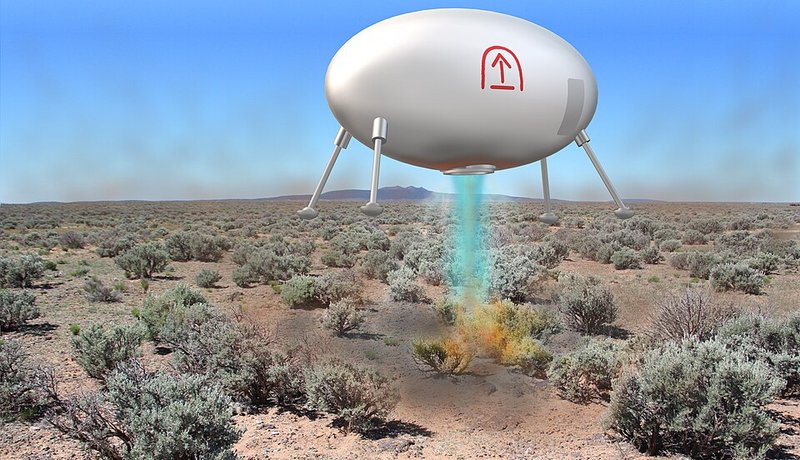
Dionicio Eduardo 'Lonnie' Zamora was a Socorro Police Department officer with twenty-three years of New Mexico National Guard service when, at approximately 5:45 p.m. on 24 April 1964, he broke off pursuit of a speeding Chevrolet south of Socorro to investigate what he believed was a dynamite explosion and observed a shiny egg-shaped object on the ground in an arroyo with two figures in white coveralls beside it. The case became Project Blue Book Case 8766. Of the 12,618 reports the programme catalogued, fewer than seven hundred received the Unidentified classification. Blue Book director Captain Hector Quintanilla called Socorro 'the best-documented case on record.' Project Blue Book's scientific consultant J. Allen Hynek wrote to astronomer Donald Menzel that the case 'may be the Rosetta stone' and that 'there has never been a strong case with so unimpeachable a witness.' Zamora served his community for thirty-six years and shunned interview requests for the rest of his life.
A Life
Dionicio Eduardo Zamora, known throughout his life as Lonnie, was born on 7 September 1933 in Magdalena, New Mexico, to Domingo Zamora and Rafelita Gomez Zamora. Before joining the police he worked in the machine shop at the New Mexico Institute of Mining and Technology in Socorro. He served in the New Mexico National Guard for twenty-three years.
Zamora joined the Socorro Police Department and served for fifteen years. After leaving the department he was appointed Landfill Supervisor for the City of Socorro, a position he held for twenty-one years. His total service to the city spanned approximately thirty-six years. City Clerk Patrick Salome observed that Zamora "never capitalized on what he saw that day, and I really think he could have." Zamora came to shun interview requests. Three weeks before his death he met with city officials to discuss erecting a historical marker at the sighting location.
He died of a heart attack on 2 November 2009 in Socorro, aged 76.
On UAP
At approximately 5:45 p.m. on 24 April 1964, Zamora was driving his patrol car south on Park Street in Socorro, pursuing a speeding black Chevrolet. He heard a loud roar and saw a flame in the sky to the southwest. "Flame was bluish and sort of orange too," he wrote in his report filed that day. Believing the nearby dynamite storage building may have exploded, he broke off the pursuit and turned onto a gravel road toward the source. Cresting a hill, he saw a shiny white object on the ground in an arroyo approximately 150 to 200 yards away. He described it as egg-shaped, smooth, approximately the size of a car, "like aluminum, whitish against the mesa background, but not chrome." Beside it stood two figures in white coveralls. "One of these persons seemed to turn and look straight at my car and seemed startled," he wrote. He described them as "normal in shape, but possibly they were small adults or large kids."
Zamora radioed the sheriff's office and approached on foot. He heard two thumps. The roar resumed, rising in pitch. A light blue flame appeared under the object. It rose, cleared the dynamite shack by approximately three feet, and accelerated away across country. Zamora ran, struck his leg on his car's rear fender, dropped his glasses, ducked behind the vehicle. When the roar stopped he watched the object depart at speed. He radioed the dispatcher: "It looks like a balloon."
Sergeant M. S. Chavez of the state police was the first officer to reach Zamora. He found brush fires still smouldering in the arroyo and four trapezoidal depressions in the ground, each approximately twelve to sixteen inches long by six to eight inches wide, consistent with landing gear. FBI Agent Arthur Byrnes Jr. arrived at Socorro police headquarters that evening. Army Captain Richard Holder from White Sands Missile Range cordoned off the site with military police. Project Blue Book's T/Sgt David Moody arrived on 26 April, followed by J. Allen Hynek, the programme's scientific consultant.
This case may be the "Rosetta stone." There has never been a strong case with so unimpeachable a witness.J. Allen Hynek, letter to astronomer Donald Menzel, September 1964, on the Socorro case. Cited in Jerome Clark, The UFO Encyclopedia, 2nd ed. (Omnigraphics, 1998).
The Air Force's June 1964 interim report found no foreign material, no radiation above background levels, and no evidence of a propulsion mechanism at the site. Project Blue Book classified the case as "Unidentified" under Case Number 8766, one of fewer than seven hundred cases out of 12,618 to receive that designation. Blue Book director Captain Hector Quintanilla later described it as "the best-documented case on record."
Zamora described "red lettering of some type" on the side of the object, approximately two and a half feet high and two feet wide. Two versions of the insignia exist in the record: an inverted V topped with a horizontal arc, which appears in the Blue Book files signed by Zamora, and a variant with three horizontal bars, which appeared in contemporary newspaper accounts. Ray Stanford of NICAP, who arrived on 28 April and assisted Hynek with sample collection, later disclosed after Zamora's death that Zamora and Captain Holder had agreed to substitute a modified symbol in public accounts as a test for any future reports of the same craft.
Career Record
- 1933, Born 7 September, Magdalena, New Mexico.
- Machine shop worker, New Mexico Institute of Mining and Technology, Socorro.
- New Mexico National Guard. Twenty-three years of service.
- Socorro Police Department. Fifteen years of service.
- 24 April 1964, Encounter south of Socorro. Filed police report the same day.
- 26 to 28 April 1964, Investigated by FBI (Agent Byrnes), US Army (Captain Holder), Project Blue Book (T/Sgt Moody, J. Allen Hynek), and NICAP (Ray Stanford).
- June 1964, Air Force interim report classified the case as "Unidentified." Project Blue Book Case 8766.
- Post-police career, Landfill Supervisor, City of Socorro. Twenty-one years.
- 2 November 2009, Died, Socorro, New Mexico.
Document Trail
Project Blue Book Case 8766 files are held at the National Archives and Records Administration. The case documents, including Zamora's written report, Hynek's field notes, the Air Force interim report, and the Quintanilla assessment, are indexed at nicap.org and accessible through Fold3.
Ray Stanford, Socorro "Saucer" in a Pentagon Pantry (Austin, Texas: Blueapple Books, 1976). WorldCat OCLC 2524239. The primary published investigation account. Hector Quintanilla, "UFOs: An Air Force Dilemma," Studies in Intelligence (CIA journal), 1966, contains Quintanilla's assessment of the Socorro case.
The Mountain Mail (Socorro, NM) published Zamora's obituary in November 2009. The El Defensor Chieftain (Socorro, NM) published a memorial article by Valerie Kimble on 11 November 2009.
In the Archive
- Socorro Landing, case exhibition.
- J. Allen Hynek, who investigated the case for Project Blue Book and described Zamora as "unimpeachable."
- Coral Lorenzen, whose APRO investigated the case in parallel with Blue Book.
- APRO Bulletin, contemporary civilian-research coverage.
- United States country profile.