Peter Whish-Wilson
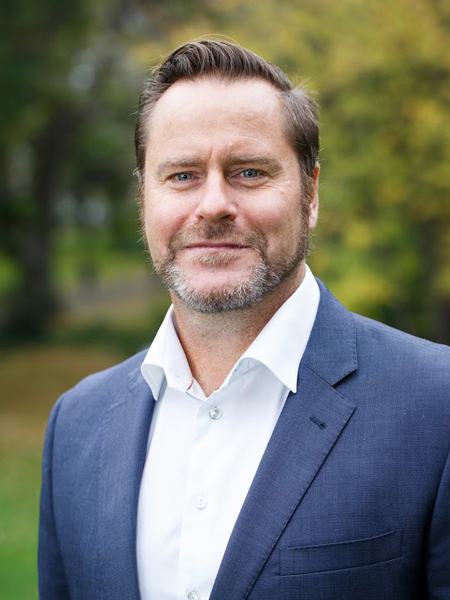
Peter Whish-Wilson is the Australian Greens Senator for Tasmania, an ADFA graduate, an economist, and a marine conservation advocate. On 27 October 2021, during Senate Estimates, he placed the Australian Department of Defense's unidentified aerial phenomena reporting posture on the parliamentary record by directly questioning Air Marshal Mel Hupfeld on the matter. The exchange was the first sustained Australian parliamentary engagement with UAP since the closing of the RAAF Department of Air investigation period decades earlier.
A Life
Early life and military education
Peter Stuart Whish-Wilson was born on 24 February 1968 in Singapore, to Australian parents. He grew up to attend the Australian Defence Force Academy in Canberra from 1986 to 1988, where he completed a Bachelor of Arts in Economics and Politics. ADFA, established in 1986 as the joint-service undergraduate institution for the Australian Defence Force, was in its inaugural years when Whish-Wilson enrolled. He proceeded to the Royal Military College, Duntroon, in 1989. He was medically discharged from the Australian Army shortly afterwards.
The ADFA background would prove a recurring thread in Whish-Wilson's public career. Decades later, as a senator holding the Australian Greens Defence portfolio, he would draw on that institutional familiarity in his scrutiny of military procurement and veterans' services. The Greens' official biography notes simply that "Peter was a graduate of ADFA."
Whish-Wilson completed a Master of Economics at the University of Western Australia in Perth between 1991 and 1992. The degree provided the quantitative foundation for a career that would move through global capital markets before arriving, by a circuitous route, in the Australian Senate.
Global finance
Whish-Wilson's post-graduate career took him into international capital markets. He joined Merrill Lynch in 1994, working out of the firm's New York and Melbourne offices in equity capital markets. He rose to the position of Vice-President by 1998. He then moved to Deutsche Bank, where he spent six years in international sales, from 1998 to 2004.
The arc from military officer candidate to Wall Street investment banking was unusual, but the two worlds shared structural features: institutional hierarchies, protocols for managing risk, and the discipline of operating within systems larger than any individual participant. Whish-Wilson worked in equity capital markets during the period that saw the Asian financial crisis of 1997, the collapse of Long-Term Capital Management in 1998, and the dot-com expansion of the late 1990s. His experience of financial markets at scale would later inform his Senate work on corporate regulation, trade policy, and environmental finance.
When the Greens announced his Senate appointment in May 2012, New Matilda described his "mixture of activist and professional credentials" as resembling those of Senators Penny Wright and Richard di Natale, "who appeal to both the traditional Greens activist base and the new groundswell of inner-city professionals." South Australian Greens Senator Penny Wright told the publication: "I'm very happy that he has an economics background. He's eminently qualified with his masters' degree and experience."
Tasmania: vineyard, university, and environmental finance
By 2003, Whish-Wilson had left global finance for northern Tasmania. He and his family established Three Wishes Vineyard in the Tamar Valley, a wine-growing region along the tidal Tamar River between Launceston and Bass Strait. He served as director of the vineyard from 2003 to 2012. The business has since been sold and is no longer operating.
The Tamar Valley in the early 2000s was a region of competing visions: a growing wine and tourism economy alongside a long-established forestry and extractive industry base, with the proposed Gunns pulp mill about to catalyse a political confrontation that would define Tasmanian public life for the remainder of the decade.
Alongside the vineyard, Whish-Wilson took up a lectureship in Economics and Finance at the University of Tasmania's School of Business and Economics in 2005. He held the position for seven years. During that time he established one of Australia's first environmental finance courses, a programme that examined spot, futures, and derivative markets in areas including carbon credits, fishing quotas, water rights, fuels, and commodities. The course description, as quoted in the New Matilda profile published at the time of his Senate appointment, stated it covered "alternative models available for financing in the debate on global climate change."
The environmental finance course placed Whish-Wilson at the technical boundary between financial markets and environmental policy, a position that few Australian academics occupied at the time. It also connected him to the Surfrider Foundation Australia and to coastal conservation networks that would draw him into direct political advocacy.
The combination of academic rigour and applied environmental economics shaped the political career that followed. Whish-Wilson was not a conservation activist who acquired economic language; he was an economist and former military officer who arrived at environmental policy through markets and data. That distinction would colour his approach to the Senate: he pursued corporate accountability, trade regulation, and marine conservation through institutional channels and committee processes, not through protest politics.
The Gunns pulp mill campaign
Northern Tasmania in the mid-2000s was defined by a single industrial proposal: the plan by timber company Gunns Limited, with the support of the Tasmanian Labor government, to construct one of the world's largest eucalypt kraft pulp mills on the Tamar River Estuary. The proposed chlorine dioxide mill would have discharged up to 30 billion litres of industrial effluent annually into Bass Strait, including an estimated 220 tonnes of organochlorines and 1,100 tonnes of suspended solids. The proposed outfall point at 5 Mile Bluff sat within ten kilometres of several surfing beaches and point breaks on the north coast, including Bell Buoy Beach, East Beach, and a string of reef breaks along the Bass Strait coast.
Whish-Wilson, a lifelong surfer, served as President of the Surfrider Foundation Australia, Northern Tasmanian Branch. The role placed him at the operational centre of the marine conservation campaign against the mill. The Surfrider Foundation, a non-profit organisation dedicated to the protection of Australia's oceans, waves, and beaches, had 29 branches nationwide and international affiliates in the United States, Japan, Brazil, and Europe.
In August 2007, Whish-Wilson organised, in collaboration with the Save the Waves Coalition, a fact-finding tour of pulp mill facilities in Chile for Ruth Forrest, an independent Member of the Tasmanian Legislative Council representing the seat of Murchison. The delegation visited communities surrounding the recently established Nueva Aldea pulp mill, meeting with local vineyard owners, agricultural workers, fishermen, health professionals, marine scientists, and the mayor of the fishing town of Cobquecura.
"There are two sides to every story," Whish-Wilson stated in a Surfrider Foundation media release dated 17 August 2007. "This day of meetings was deliberately designed to show different perspectives on the potential impacts of this proposed Pulp Mill in Tasmania that Ms Forrest may not have received on the official tour with the other parliamentarians."
Forrest voted against the mill proposal at the end of August 2007. The Tasmanian parliament nonetheless approved the project, though it was never constructed. Gunns Limited entered voluntary administration in 2012.
The campaign drew Whish-Wilson toward electoral politics. In 2007 he considered standing as an independent candidate in the federal seat of Bass, before joining the Australian Greens. He contested a seat in the Tasmanian Legislative Council in 2009 without success; the Tasmanian Times described him as "an excellent local candidate."
Senate appointment and election
On 13 April 2012, Bob Brown resigned as leader of the Australian Greens and announced he would leave the Senate, concluding a parliamentary career that had defined the party's national identity for two decades. The casual vacancy triggered a selection process within the Tasmanian Greens. Whish-Wilson prevailed in a field of ten candidates. On 20 June 2012, the Parliament of Tasmania chose him under section 15 of the Australian Constitution to fill the vacancy.
"I'm also very conscious of the responsibility that will go with this position, both to Greens voters and all Tasmanians, in fact all Australians," Whish-Wilson said at a media conference in Hobart on 4 May 2012, the day his selection was announced. Brown, standing alongside him, told reporters: "He has a multiple gold medal-winning vineyard in the north and he will be a gold medal senator for Tasmania."
Greens leader Christine Milne praised his appointment: "Peter will be a superb representative for Tasmania. As an economist, business owner and campaigner to stop a polluting pulp mill in the Tamar Valley, he brings great experience and an excellent skills-set to the Senate and the Greens party room."
Whish-Wilson disclosed, to laughter, that he was wearing Brown's shirt. "I'm actually wearing Bob's shirt today because I spilt coffee on my collar on the way, and it fits perfectly."
He won election to the Senate in his own right at the 2013 federal election, with his term beginning on 1 July 2014. He was re-elected in 2016 and again in 2022.
Marine conservation in the Senate
Over his Senate tenure, Whish-Wilson held portfolios for the Australian Greens spanning Treasury, Consumer Affairs, Defence, Veterans Affairs, Small Business and Competition, Finance, Tourism, Trade, Marine (Tasmania), Fisheries, Whaling and Antarctica, Agriculture, Science, Industry and Innovation, Trade and Tourism, Healthy Oceans, and Waste and Recycling. The breadth reflected the Greens' practice of distributing policy responsibilities across a small party room, but the marine and environmental portfolios dominated his public profile.
In 2012, his first year in the chamber, Whish-Wilson raised the issue of plastic pollution in the oceans in the Australian Parliament, the first senator to do so. He subsequently established two Senate inquiries through the Senate Environment and Communications References Committee: one into Australia's waste and recycling crisis, examining the structural failures of the national recycling system, and one into the threat of marine plastic pollution in Australian and Australian territorial waters, examining the effects of plastics and microplastics on marine ecosystems.
The inquiries reflected his approach: using the committee system to build a documentary record, hear expert testimony, and produce recommendations that could inform legislative or regulatory action. The pattern was consistent across his environmental work.
He pursued opposition to Japanese whaling operations in the Southern Ocean and to illegal fishing in Australian and international waters. He scrutinised the environmental practices and regulatory oversight of the Tasmanian salmon farming industry, an issue of particular local significance given the rapid expansion of industrial aquaculture in Tasmanian waters during the 2010s. He challenged the licensing of super-trawlers in Australian waters.
He worked to protect Aboriginal heritage sites in takayna/Tarkine, in northwestern Tasmania, drawing parliamentary attention to damage from industrial logging operations in one of the largest temperate rainforest areas in the Southern Hemisphere. The Tarkine campaign placed him alongside Indigenous traditional owners and conservation organisations in a long-running dispute over the management of public land.
The marine advocacy earned him the informal title "the surfing senator," a nickname used in parliamentary press coverage and by colleagues. His personal website, senatorsurfer.com, framed his Senate work through the lens of coastal and ocean conservation.
He chaired the Senate Environment and Communications committees (Legislation and References) from February to September 2017. He served on the Rural and Regional Affairs and Transport committees (References and Legislation) from 2020. He chaired the Senate Select Committee on Information Integrity on Climate Change and Energy from August 2025 to March 2026. He also served on the Senate Select Committee on PFAS (per- and polyfluoroalkyl substances) from August to November 2024, examining contamination of water and land from firefighting chemicals used at military and civilian airports.
Defence portfolio
Whish-Wilson held the Australian Greens Defence portfolio during portions of his Senate tenure. He served on the Joint Standing Committee on Foreign Affairs, Defence and Trade from December 2013 to May 2016 and again from August 2017 to June 2018. He served on the Senate Standing Committees on Foreign Affairs, Defence and Trade (Legislation and References) in various terms across his Senate career, participating in oversight of defence procurement, international agreements, and veterans' affairs.
He scrutinised expenditure on the Lockheed Martin F-35 Lightning II Joint Strike Fighter programme, questioning the cost escalation and capability delivery timeline of Australia's largest defence acquisition. He advocated for improved mental health services for returned military personnel, a position informed by his background as an ADFA graduate and his familiarity with the institutional culture of the Australian Defence Force.
Unidentified aerial phenomena and the public record
On 27 October 2021, at a hearing of the Senate Foreign Affairs, Defence and Trade Legislation Committee (Senate Estimates), Whish-Wilson questioned Chief of Air Force, Air Marshal Mel Hupfeld, about the report published on 25 June 2021 by the United States Office of the Director of National Intelligence, titled "Preliminary Assessment: Unidentified Aerial Phenomena."
The exchange, recorded in the Hansard transcript of the committee proceedings, placed several facts about Australia's defence posture on unidentified aerial phenomena onto the formal parliamentary record. It was, so far as the Hansard record indicates, the first occasion on which a member of the Australian Parliament raised the ODNI preliminary assessment in a committee proceeding with a serving Chief of Air Force.
"I know we have close ties with the US. We share intelligence," Whish-Wilson began. "My questions relate to the release of the report on 25 June 2021 by the Office of the Director of National Intelligence, Preliminary assessment: unidentified aerial phenomena. This is an issue that has been raised in Congress; the Department of Defense has submitted a report. It's become a significant matter of public interest. I suppose my first question is: are you aware of that report?"
"I'm not formally aware of the report," Air Marshal Hupfeld replied. "I think there was an article in the newspapers and commentary about that at some stage. But I'm not quite sure of the content of the report."
Asked whether the Department of Defense had any protocols for reporting unidentified aerial phenomena in Australian airspace, Hupfeld stated: "I'm not familiar with, nor have seen any reports or information regarding UAPs in an Australian airspace context, and there's no air-force-led task force that looks into the phenomena."
Whish-Wilson asked whether the Jindalee Operational Radar Network, Australia's over-the-horizon radar system covering the northern and western approaches, could detect such phenomena. Hupfeld responded: "It's not possible for me to determine whether the JORN would see something like an unusual airborne phenomenon, without knowing the construction materials, and other performance parameters of such an object, if indeed it was an object."
Following the hearing, Whish-Wilson submitted additional written questions to the Department of Defense on notice. The department's responses, designated Senate Estimates Question No. 90 and dated 5 November 2021, established the following on the parliamentary record:
The Department of Defense had not formally reviewed the ODNI report. The Department had not sought guidance on its publication or its implications for Australian aerospace. The Unusual Aerial Sightings Policy, last reviewed in November 2003, had been cancelled on 25 March 2013. The Air Force had ceased handling reports of unidentified aerial phenomena or unidentified flying objects in 1996, "after determining that there was no scientific or other compelling reason for the Air Force to continue to devote resources to the recording and investigation of UAP or UFO." The Department did not have a protocol for reporting or recording of UAP by defence personnel.
The department also addressed a long-standing records question: a UAP file confirmed in 2008 to be held at the National Archives of Australia had subsequently been unable to be located. Defence "cannot confirm its current existence."
These responses, obtained through the formal parliamentary questions-on-notice process, constitute the most recent comprehensive statement by the Australian Department of Defense on its UAP reporting posture. They confirmed that Australia maintained no active UAP investigation programme, no formal reporting protocol, and no institutional mechanism for assessing unidentified phenomena in Australian airspace, more than 25 years after the RAAF ceased its reporting function.
UAP researcher Grant Lavac subsequently located the Department of Defense's written responses to Whish-Wilson's follow-up questions through separate Freedom of Information requests, making the full documentary trail accessible beyond the parliamentary record.
Julian Assange advocacy
In September 2023, Whish-Wilson was part of a cross-party delegation of six Australian members of parliament who travelled to Washington, D.C., to lobby the United States Department of Justice to abandon its prosecution of Australian publisher Julian Assange and to drop its extradition request to the United Kingdom. The delegation comprised Whish-Wilson, Liberal Senator Alex Antic, former Deputy Prime Minister Barnaby Joyce, Member for Kooyong Monique Ryan, Greens Senator David Shoebridge, and Labor Member for Makin Tony Zappia. The group met with officials at the Department of Justice and with members of the United States Congress during a closed-door session, as reported by the ABC's Steve Cannane in June 2024.
The delegation represented a rare instance of cross-party alignment: a Greens senator, a Liberal senator, a Nationals former deputy prime minister, a teal independent, another Greens senator, and a Labor backbencher, travelling together on a civil liberties matter that cut across conventional partisan lines. Assange was released from Belmarsh Prison in June 2024 after reaching a plea agreement with the United States Department of Justice.
Retirement
On 18 October 2025, after more than thirteen years in the Senate, Whish-Wilson announced his retirement from federal politics at the Australian Greens state conference in Launceston. He was 57 years old. The announcement drew on language that echoed the environmental and democratic themes of his Senate career.
"Never forget this, the forces rigging our economy, undermining our democracy, polluting and destroying our planet, and stoking hatred for their own political ends," Whish-Wilson told conference attendees. "They are counting on you, me, all of us, to give up. That is their strategy, there is nothing complicated about it."
Tasmanian state Greens leader Rosalie Woodruff responded: "Pete, you've been an unrelenting champion for the marine environment. A shining light for nature. This island and its waters are so much the better for your brave, honest advocacy."
On 14 April 2026, the Australian Greens confirmed environmental lawyer Vanessa Bleyer as Whish-Wilson's successor, following a membership ballot conducted by the Tasmanian Electoral Commission. Bleyer won 42.25 per cent of the primary vote in a four-candidate contest, defeating Bob Brown Foundation campaigners Alistair Allan and Scott Jordan, and Tasmanian Greens state MP Tabatha Badger.
Bleyer had first met Whish-Wilson in 2007 during the Gunns pulp mill campaign and had run second on his Senate ticket. "I have known Vanessa for nearly 20 years, as a friend, lawyer, staunch activist and advocate for nature and communities," Whish-Wilson stated in the party's media release. "I couldn't be more thrilled that the Tasmanian Greens membership has chosen her to fill my casual vacancy in the Senate."
Greens leader Larissa Waters noted: "We will all dearly miss Senator Surfer, who has worked tirelessly for the people of Tasmania, for our environment, our oceans, and for a fairer future for everyone."
As of June 2026, Whish-Wilson remains a sitting senator. He is expected to formally resign during the first week of August 2026, with Bleyer expected to take her Senate seat on 11 August 2026. His departure will end a Senate career that began as a replacement for Bob Brown and concluded after three successful elections, spanning fourteen years of continuous service to the people of Tasmania.
Personal life
Whish-Wilson is married to Natalie. They have two children. The family has lived in northern Tasmania since the early 2000s, when they relocated from Melbourne to establish the Tamar Valley vineyard.
His brother is the Australian author David Whish-Wilson, whose published works include crime fiction set in Western Australia. A distant cousin, also named Peter Whish-Wilson, is a professional classical tubist in Australia.
In July 2023, Whish-Wilson spoke publicly about his use of medical cannabis to manage chronic pain from shingles, a condition that had threatened to end his Senate career. He told The Guardian's Amy Remeikis that an open-minded general practitioner had prescribed the treatment, enabling him to continue working.
Career Record
| Date | Event |
|---|---|
| 24 February 1968 | Born in Singapore to Australian parents |
| 1986-1988 | Australian Defence Force Academy, Canberra (BA Economics and Politics) |
| 1989 | Royal Military College, Duntroon; medically discharged from the Australian Army |
| 1991-1992 | Master of Economics, University of Western Australia |
| 1994-1998 | Vice-President, Merrill Lynch (New York and Melbourne) |
| 1998-2004 | International sales, Deutsche Bank |
| 2003-2012 | Director, Three Wishes Vineyard, Tamar Valley, Tasmania |
| 2005-2012 | Lecturer in Economics and Finance, University of Tasmania |
| Pre-2012 | President, Surfrider Foundation Australia, Northern Tasmanian Branch |
| August 2007 | Organised Chile pulp mill fact-finding tour with Save the Waves Coalition |
| 2009 | Contested Tasmanian Legislative Council seat (unsuccessful) |
| 20 June 2012 | Chosen by Parliament of Tasmania under s.15 Constitution to fill Senate vacancy (vice Bob Brown) |
| 2013 | Elected to the Senate for Tasmania |
| 2012 | First senator to raise plastic pollution in the Australian Parliament |
| February-September 2017 | Chair, Senate Environment and Communications committees (Legislation and References) |
| 2016 | Re-elected to the Senate |
| 27 October 2021 | Senate Estimates: questioned Air Marshal Hupfeld on ODNI UAP report |
| 5 November 2021 | Senate Estimates Question No. 90: written questions to Defence on UAP reporting posture |
| 2022 | Re-elected to the Senate |
| September 2023 | Cross-party delegation to Washington, D.C., on Julian Assange extradition |
| August 2025-March 2026 | Chair, Senate Select Committee on Information Integrity on Climate Change and Energy |
| 18 October 2025 | Announced retirement from federal politics |
| 14 April 2026 | Vanessa Bleyer confirmed as successor |
Notable Public Statements
On the ODNI UAP report (Senate Estimates, 27 October 2021):
"I know we have close ties with the US. We share intelligence. My questions relate to the release of the report on 25 June 2021 by the Office of the Director of National Intelligence, Preliminary assessment: unidentified aerial phenomena. This is an issue that has been raised in Congress; the Department of Defense has submitted a report. It's become a significant matter of public interest."
Source: Hansard, Senate Foreign Affairs, Defence and Trade Legislation Committee, 27 October 2021
On his Senate appointment (media conference, 4 May 2012):
"I'm also very conscious of the responsibility that will go with this position, both to Greens voters and all Tasmanians, in fact all Australians."
Source: ABC News, "Greens name Brown's Senate replacement", 4 May 2012
On the Gunns pulp mill Chile tour (Surfrider Foundation media release, 17 August 2007):
"There are two sides to every story. This day of meetings was deliberately designed to show different perspectives on the potential impacts of this proposed Pulp Mill in Tasmania that Ms Forrest may not have received on the official tour with the other parliamentarians."
On retirement (Greens state conference, 18 October 2025):
"Never forget this, the forces rigging our economy, undermining our democracy, polluting and destroying our planet, and stoking hatred for their own political ends. They are counting on you, me, all of us, to give up. That is their strategy, there is nothing complicated about it."
On his successor (Australian Greens media release, 14 April 2026):
"I have known Vanessa for nearly 20 years, as a friend, lawyer, staunch activist and advocate for nature and communities. I couldn't be more thrilled that the Tasmanian Greens membership has chosen her to fill my casual vacancy in the Senate."
Source: Australian Greens, "Legal powerhouse Vanessa Bleyer confirmed as new Greens Senator", 14 April 2026
Document Trail
The primary sources consulted for this biography are listed in the accompanying sources.md document, with full bibliographic detail for each entry. The bibliography distinguishes between primary institutional sources (parliamentary records, departmental documents), named press coverage cited inline, organisational records, secondary sources consulted for context, and research gaps identified during preparation.