Richard Hodgson
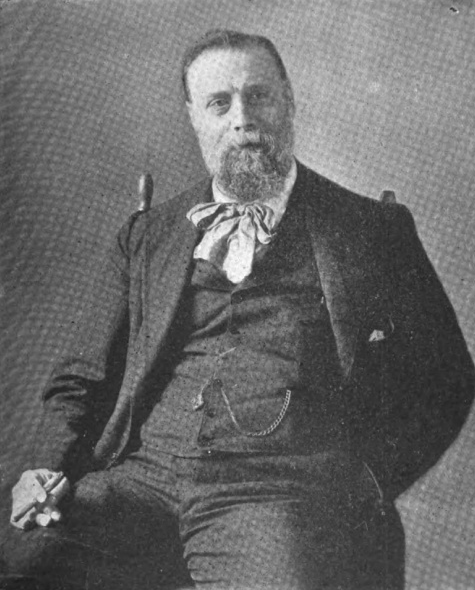
Hodgson was thirty when the SPR sent him out to Madras in late 1884 to investigate Helena Blavatsky. The report he came back with in 1885 ran 207 pages, dismissed the Mahatma letters as forgeries Blavatsky had written herself, and broke the SPR off from the Theosophical Society for the rest of his life. He had been hired as a fraud-buster and he kept that reputation. The American Society for Psychical Research brought him to Boston in 1887, and the file he inherited there was Leonora Piper. He spent the next eighteen years on it. The 1898 Report (Proceedings, Volume 13) is the long account of what he could not break. He died on 20 December 1905, age fifty, of a heart attack on the Boston handball court. The posthumous 1909 Report under Eleanor Sidgwick's editorship deals with the ostensible communications from him through Mrs. Piper that began the following year.
A Life
Hodgson was born on 24 September 1855 at West Melbourne, Victoria, the youngest of the five sons of Richard Hodgson, a Yorkshire-born Methodist merchant who had emigrated to the Port Phillip District in 1843, and Rebecca Phipps. He was educated at Wesley College Melbourne and at the University of Melbourne, where he took the BA in 1874, the MA in 1876 and the LL.B. in 1878. The Melbourne years marked him as the most promising student of his generation in the Australian colonies; he won the gold medal in classics and the gold medal in philosophy, and was the most successful student of his Melbourne intake.
He sailed for England in 1878 to read for the Trinity College Cambridge moral sciences tripos under Henry Sidgwick. The Cambridge connection was the decisive connection of his career. Sidgwick was the moral philosopher who would in February 1882 co-found the Society for Psychical Research, and Hodgson was one of the founding members of the Society from its inception. He took the Cambridge LL.D. in 1881 and the SPR membership in February 1882, and joined the SPR Committee on Theosophical Phenomena that the Society formed in November 1884 to investigate the claims being made for Helena Blavatsky at the Theosophical Society headquarters at Adyar, Madras.
The Society sent him to Madras at the end of November 1884 with the brief to investigate the Blavatsky phenomena at first hand. He was thirty. He spent three months at the Adyar premises, interviewed the principal Theosophical Society staff including Damodar K. Mavalankar, examined the famous Shrine cabinet in the upper room of the Madras headquarters from which the Blavatsky-Mahatma letters had purportedly materialised, and took written statements from the Coulombs (Alexis and Emma Coulomb, the housekeeper and her husband who had run the Adyar premises and were by then in open dispute with the Theosophical Society over the means by which the phenomena were produced). The Hodgson Report appeared in the SPR Proceedings for December 1885 as "Report of the Committee Appointed to Investigate Phenomena Connected with the Theosophical Society" with Hodgson named as the substantive author of the principal investigative section.
The Report rejected the Blavatsky phenomena as fraudulent in the substantive technical sense: the Shrine cabinet had concealed sliding panels, the materialised Mahatma letters had been delivered through those panels, and the handwriting of the Mahatma letters matched both Blavatsky's own hand and that of the Coulombs in respects the Committee documented. The Report concluded that Blavatsky was "one of the most accomplished, ingenious, and interesting impostors in history" and produced an institutional rupture between the SPR and the Theosophical Society that did not heal in Hodgson's lifetime. The Theosophical Society response, the 1885 Adyar Report by W. T. Brown, was the substantive Theosophical position. The Borderland Quarterly Volume 2 Number 8 of April 1895 covered the rupture in its W. Q. Judge Case sequence.
Hodgson moved to Boston in 1887 to take up the secretaryship of the American Society for Psychical Research, which the American branch of the SPR had established at Harvard in 1884 with William James as the founding figure. The Boston move was the decisive professional move of his life. He held the ASPR secretaryship from 1887 to his death in 1905. The principal continuing investigation of the American Society was the case of the Boston medium Leonora Piper, whom William James had identified as a serious investigative subject in May 1885 and whom Hodgson took over as principal investigator in 1887.
The Piper investigation ran for eighteen years. Hodgson conducted approximately one thousand sittings with Piper across the period, controlled the witness conditions, supervised the verbatim shorthand records of the trance utterances, and arranged for a substantial proportion of the Boston sittings to involve sitters whose identities Piper could not have known in advance. The 1898 Hodgson Report on the Piper case in SPR Proceedings Volume 13 and the posthumous 1909 Hodgson Report in Volume 23 are the substantive English-language documentary record of the investigation. Hodgson's position, set out in the 1898 Report, was that the Piper phenomena were not explicable on any fraud or normal-information hypothesis available to him, and that the survival hypothesis was the best fit to the documented record.
He died suddenly on 20 December 1905 while playing handball at the Boston Tennis and Racquet Club on Boylston Street. He was fifty. The death was attributed to heart failure following the heavy exertion. He had never married. His estate of approximately fifty thousand dollars was bequeathed to the Boston ASPR for the continuation of the Piper investigation. The 1909 posthumous Hodgson Report on the Piper case was completed by James Hervey Hyslop and Eleanor Sidgwick from Hodgson's working notes.
I had but one object, which was to ascertain the truth. I assumed nothing. I expected nothing. I tested everything by such tests as could be applied.Richard Hodgson, Report on Mrs. Piper, SPR Proceedings Volume 13 (1898), opening section
The 1885 Blavatsky Report
The Hodgson-Blavatsky Report of December 1885 was the substantive nineteenth-century institutional investigation of the Theosophical Society's principal claim, that Helena Petrovna Blavatsky was the chosen Western interlocutor of the Mahatma Brothers of the Himalayan Brotherhood. The investigation occupied Hodgson from November 1884 to March 1885 at Adyar, Madras, and the Report ran to approximately two hundred and fifty pages in the SPR Proceedings for December 1885.
The substantive technical claims of the Report were that the Madras Shrine cabinet contained sliding panels concealed in its back wall through which the Mahatma letters had been delivered, that the handwriting of the Mahatma Koot Hoomi letters had been analysed by experts and found to be Blavatsky's own disguised hand, and that the Coulomb correspondence with Blavatsky documented the means of production of the principal Adyar phenomena across the period 1880 to 1884. The Theosophical Society rejected the Report at the time and has continued to reject it; the substantive Theosophical refutation literature includes Vernon Harrison's H. P. Blavatsky and the SPR of 1986 (commissioned by the SPR itself a century after the original Report), which argued that Hodgson's handwriting-comparison methodology was inadequate by modern forensic standards.
The institutional consequence of the Report was the substantive Borderland-period rupture between the SPR and the Theosophical Society that the W. T. Stead Borderland Quarterly Volume 2 Number 8 of April 1895 covered in its W. Q. Judge Case sequence. The Borderland editorial position was to hold the two communities in editorial conversation across all four volumes of the periodical, carrying Theosophical contributors (Olcott, Besant, Sinnett, Leadbeater) alongside SPR contributors (Myers, Lodge, Crookes, Balfour) without taking sides on the Hodgson Report itself.
The Piper Investigation
Leonora Piper was the Boston trance medium William James first encountered through his mother-in-law in May 1885 and identified as a serious investigative subject the following year. James turned the case over to Hodgson when Hodgson arrived in Boston in 1887. The investigation that followed ran for eighteen years and is the most-investigated single mediumistic case in the SPR archive.
Hodgson's methodology was substantially stricter than the methodology applied to other mediums of the period. He controlled the sitter selection, frequently introducing sitters anonymously and tracking which spirit-control communications were produced through information channels Piper could not have accessed normally. He arranged for Piper to be brought to England in November 1889 and to be kept under surveillance by Frederic Myers and Henry Sidgwick at Cambridge and Liverpool, where her trance utterances were tested against sitters who had been unknown to her in any prior context. The English sittings of November 1889 to February 1890 produced the substantive transatlantic confirmation of the case that the 1898 Report relied on.
The principal spirit-control persona that Piper produced through the late 1880s and early 1890s was "Dr. Phinuit," a French physician who claimed to have lived in the late eighteenth century. From 1892 the control transferred to a deceased friend of Hodgson's named "George Pellew" (the Boston journalist George Pellew who had died of a fall in February 1892); the Pellew control produced the most evidentially substantive material of the investigation. The 1898 Hodgson Report dealt with the Pellew material at length and concluded that the survival hypothesis was the best fit to the documented record.
The Borderland Quarterly Volume 1 Number 3 of January 1894 carried the substantive English Gallery profile of Piper by Miss X. (Ada Goodrich-Freer) under the title "Mrs. Piper and Dr. Phinuit." The Borderland Volume 4 Number 4 of October 1897 closing number carried the substantive "A Visit to Mrs. Piper" account by a Travelling Borderlander, returning Piper to the journal at its closing moment as one of the two substantive transatlantic figures (the other being Annie Besant) on which the closing volume hinged.
Hodgson features in Borderland Quarterly Volume 1 Number 4 of April 1894 in the Stead American-tour portrait pairing, in the Volume 4 Number 4 of October 1897 closing editorial "Halt for the Present" where Stead noted Hodgson's then-imminent SPR Report on Mrs. Piper, and in the W. Q. Judge Case sequence of Volume 2 Number 8 of April 1895.
Photographs
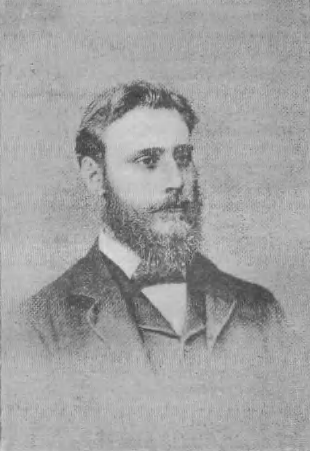
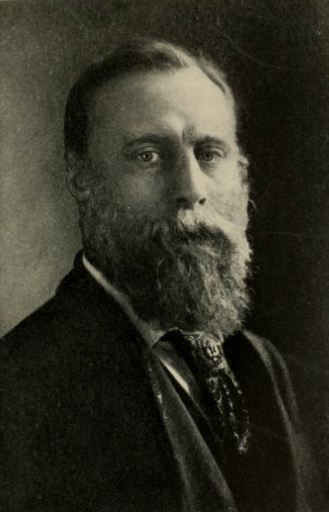
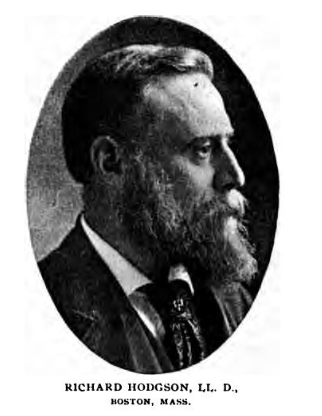
Significance to the Archive
Hodgson matters to this archive for two specific reasons. First, the Piper investigation he conducted across eighteen years is the most-documented single English-language mediumistic case of the late-Victorian and Edwardian period, and the methodology he developed for it (anonymous-sitter introduction, transatlantic control, verbatim shorthand records, prior-information tracking) is the immediate methodological forerunner of the post-1945 American civilian-research methodology applied to UAP witness investigation from the APRO and NICAP period onwards.
Second, the 1885 Blavatsky Report and the institutional rupture it produced between the SPR and the Theosophical Society shaped the late-Victorian psychical-research community's relationship with the contemporary occult and Theosophical traditions for the next twenty years. The Borderland Quarterly's substantive editorial achievement of holding both communities in editorial conversation across its eighteen-issue run was conducted against the background of the Hodgson Report's continuing institutional weight. The archive's pre-1947 reference layer needs both traditions: the SPR investigative tradition Hodgson exemplified and the Theosophical tradition the Hodgson Report had been written against.