Sir William Crookes
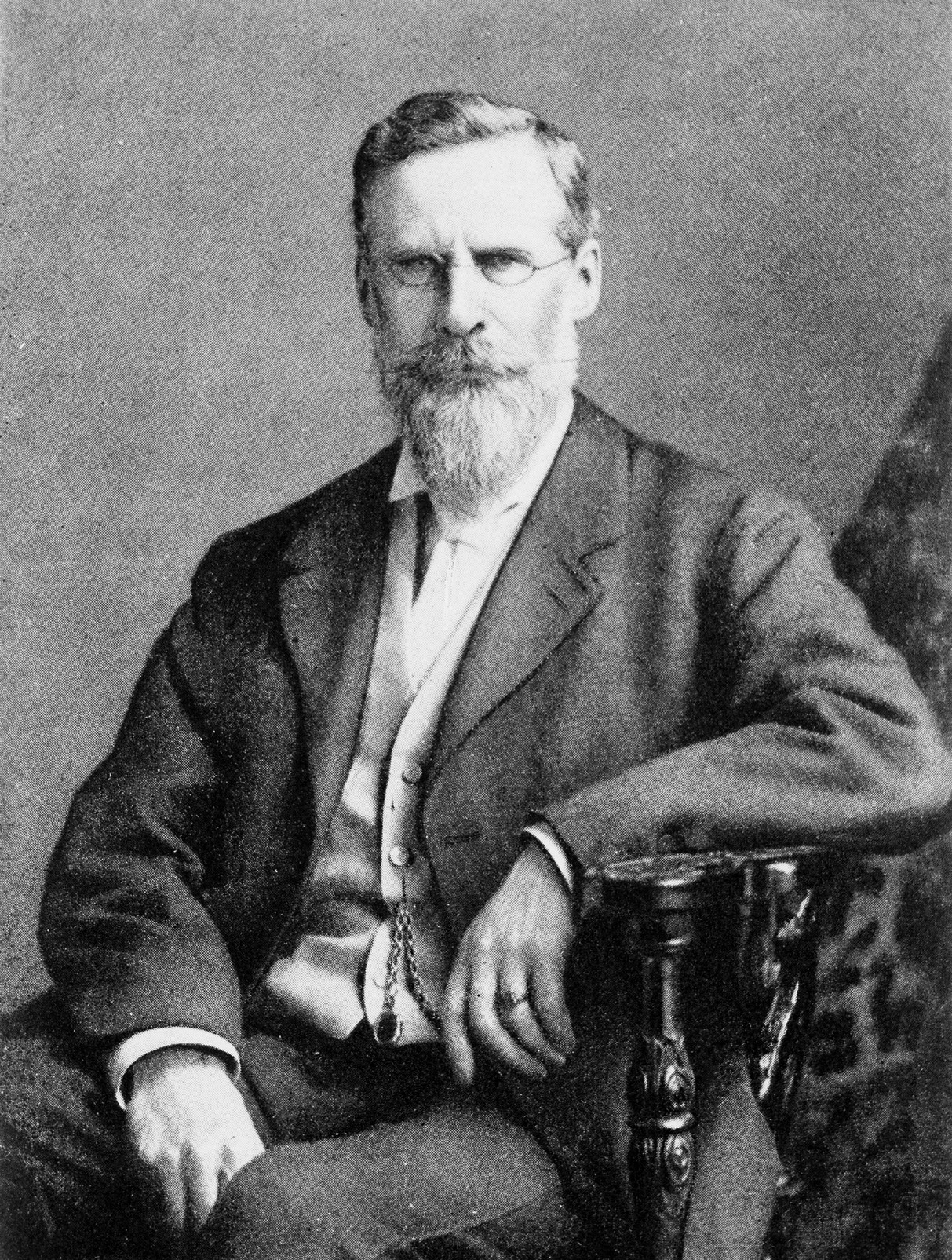
Crookes discovered thallium in 1861 and was made a Fellow of the Royal Society two years later, age thirty-one. He invented the Radiometer in 1872 and developed the high-vacuum cathode-ray tube that carries his name. The Crookes tube was the instrument Wilhelm Roentgen happened to be using at Würzburg in November 1895 when he noticed the X-ray. By the time the Roentgen paper appeared, Crookes had already spent four years (1870 to 1874) running mediumistic phenomena through the same Notting Hill laboratory where the radiant-matter work was done. He weighed Daniel Dunglas Home on a strain-gauge during the accordion trials. He photographed the materialised figure Florence Cook produced and called Katie King. He published his findings in the Quarterly Journal of Science under his own editorship in 1874 (Notes of an Enquiry into the Phenomena Called Spiritual) and never recanted them. He served as President of the Society for Psychical Research from 1896 to 1899, took the Order of Merit in 1910, and died in 1919 still holding the position that what he had recorded in the laboratory between 1870 and 1874 had occurred.
A Life
Crookes was born on 17 June 1832 in Regent Street, London, the eldest of the sixteen children of Joseph Crookes, a North Country tailor who had moved south and prospered, and Joseph's second wife Mary Scott. He had no university education in the formal sense. He went straight at sixteen to the Royal College of Chemistry, then in Hanover Square, as a pupil of the German chemist August Wilhelm von Hofmann. He won the Ashburton Scholarship at seventeen and was kept on as Hofmann's assistant for two years, then senior assistant for two more, until 1854. He left the College in 1854 to superintend the meteorological department of the Radcliffe Observatory at Oxford and from there moved to the Chair of Chemistry at the Training College in Chester in 1855.
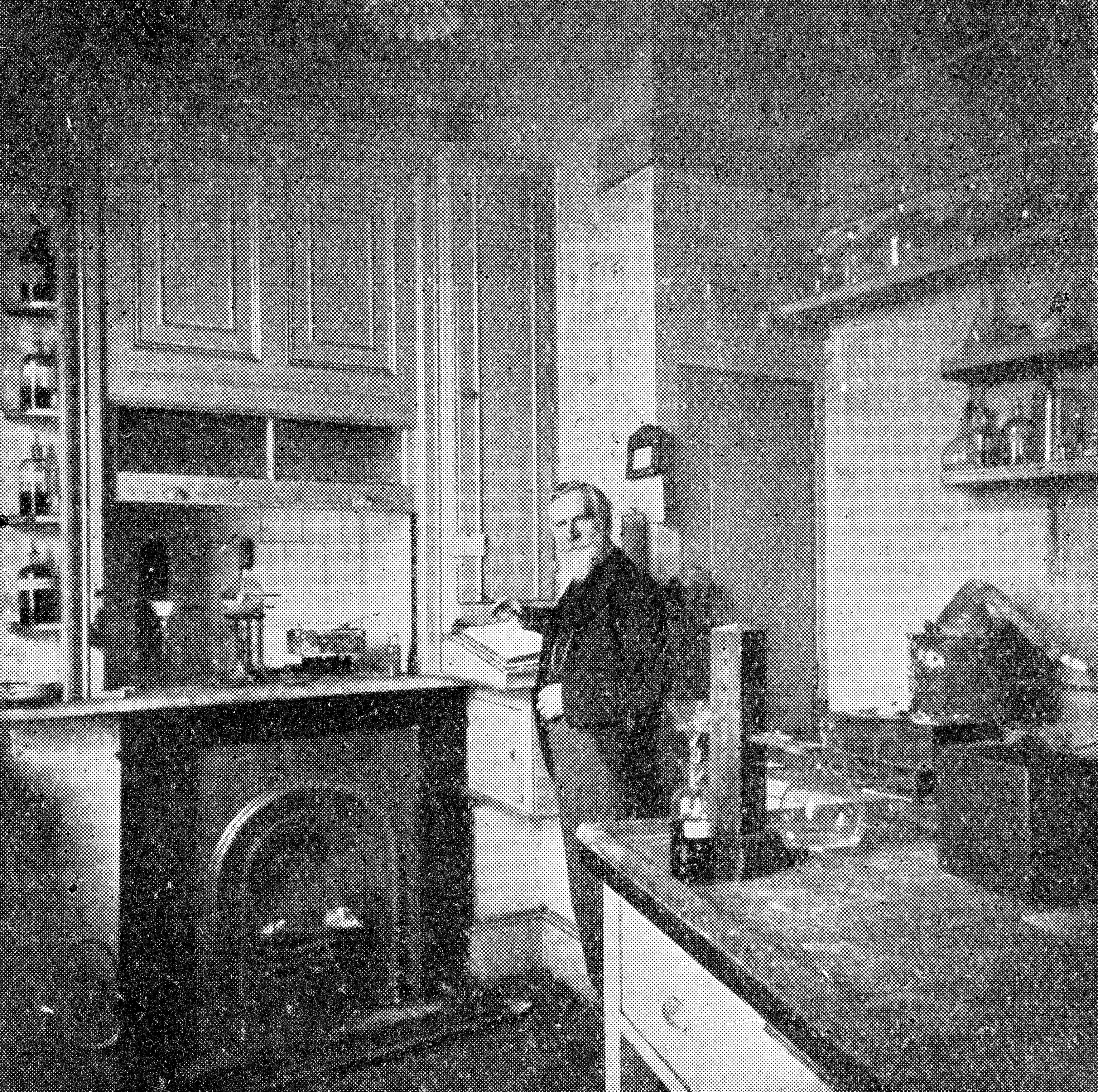
He returned to London in 1856, married Ellen Humphrey of Darlington the same year, and built his private laboratory at 7 Kensington Park Gardens in Notting Hill. He kept the house and the laboratory for the rest of his life. He founded the weekly Chemical News in 1859 from the laboratory premises and remained its proprietor and editor for the next fifty years. He took on the editorship of the Quarterly Journal of Science in 1864. The two journals together carried much of the working scientific journalism of the second half of the nineteenth century, and gave Crookes a public platform that no other working chemist of his generation possessed.
The discovery of thallium came in March 1861. Crookes was running spectrum-observation work on selenium-cyanide residues left over from a sulphuric-acid factory at Tilkerode in the Harz mountains. A bright green line at 535 nanometres in the residue spectrum had no known elemental origin. He named the green line after the Greek thallos, a budding shoot, and presented the discovery to the Chemical Society in May 1861. The atomic weight determinations he ran on thallium over the following decade made his scientific reputation. He was elected a Fellow of the Royal Society in 1863 at the age of thirty-one, an unusually early election for a chemist with no academic post.
The Radiometer came in 1872. He had been working on the question of why his thallium-weighing balance gave different readings depending on whether the room was lit by sunlight or candlelight. The answer turned out to be that light itself was exerting a pressure on the balance arm. Crookes built a four-vane mill in a partial vacuum with the vanes blackened on one side and silvered on the other; the mill rotated when sunlight fell on it, the blackened sides receding from the light. The instrument went into commercial production at Cox & Sons of Long Acre, became an Optician's window-window curiosity across the West End in the 1870s, and gave Crookes the substantive popular reputation that the thallium discovery had not. W. T. Stead first encountered Crookes through a Radiometer in a Darlington shop window opposite the post office in the late 1870s, while he was editing the Northern Echo, and recalled the experience in his 1897 Borderland Gallery profile of Crookes.
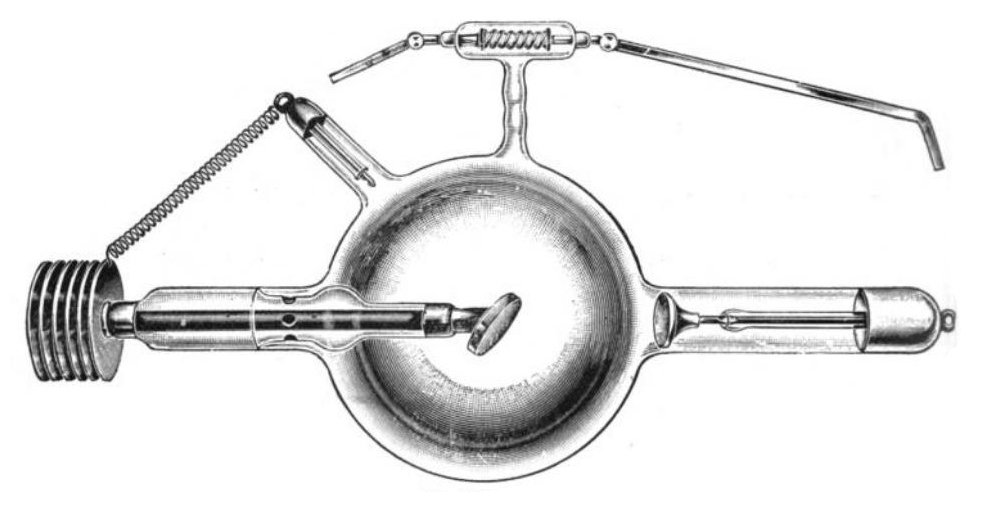
The high-vacuum cathode-ray tube research followed from the Radiometer work and ran from 1873 to the 1890s. Crookes was working on the question of what happened to gas in a high vacuum when an electrical current was passed through it. He demonstrated that at sufficiently low pressures the gas became what he termed "radiant matter," a fourth state of matter distinct from solid, liquid, and gaseous states, and characterised by molecular trajectories long enough to behave like rays rather than as a gas. The Crookes tube, his apparatus for producing radiant matter, became the standard cathode-ray-research tool of the 1880s and 1890s across European laboratories. On 8 November 1895 Wilhelm Roentgen, working at Würzburg with a Crookes tube, observed that the discharge produced rays capable of penetrating black cardboard and exposing photographic plates inside it. The discovery of X-rays was announced on 28 December 1895 and published in Nature on 23 January 1896.
Crookes was at Cape Town in November 1895 leading the Expedition of the British Association to South Africa when Roentgen's discovery was announced. He never claimed any priority. The Borderland Volume 4 Number 2 Gallery profile of April 1897 noted the connection without overstatement: the rays were obtained by use of a Crookes tube, but Crookes himself had not pursued the X-ray application beyond the laboratory. The Roentgen rays were the principal popular science story of the late 1890s and gave Crookes a second wave of public recognition. He was knighted on 12 February 1897 and elected President of the Society for Psychical Research the same year. He received the Order of Merit in 1910 and the Presidency of the Royal Society from 1913 to 1915. He died at 7 Kensington Park Gardens on 4 April 1919, in his eighty-seventh year. The laboratory was in continuous use for the last fifty years of his life.
I have rather a strong desire to disengage myself from this work. The most I can say is the unanswered questions still survive: but I shall hold myself open to enquiry.Sir William Crookes, Inaugural Address as President of the Society for Psychical Research, 1897, reproduced in Borderland Volume 4 Number 2
The 1870 to 1874 Spiritualism Investigation
Crookes opened his Spiritualism investigation in 1870 with an article in the Quarterly Journal of Science setting out the editorial position he held to the end of his life. The phenomena claimed by Spiritualists were either real and warranted laboratory investigation or were illusory and warranted laboratory disproof. Either way, the question belonged to working scientists rather than to commentators. The investigation he conducted over the next four years at 7 Kensington Park Gardens was conducted under conditions he set himself: in his own house, in the presence of trustworthy witnesses, under what he termed "the strictest test conditions" he could devise.
His principal subjects were Daniel Dunglas Home (with whom he conducted the seances of 1870 to 1872 that produced the substantive published material in the Quarterly Journal of Science for July 1871) and Florence Cook (with whom he conducted the materialisation series of 1873 to 1874 at the Cook family house in Hackney and in his own house at Notting Hill). The Cook material produced the most contested element of his career: the "Katie King" materialised figure who Cook claimed to channel and whom Crookes photographed under his own laboratory conditions across forty-four sittings in 1874.
Crookes summarised his findings in a paper for the January 1874 Quarterly Journal of Science titled "Notes of an Enquiry into the Phenomena called Spiritual." He listed thirteen categories of phenomena he had verified under his own conditions, beginning with the movement of heavy bodies without contact and ending with miscellaneous occurrences of a complex character, and adding the handling of red-hot coals by the Medium and the materialization of spirit forms as further categories. The Borderland Volume 4 Number 2 Gallery profile of April 1897 reproduced the substantive Fire Test seance of 9 May 1871 at the house of Miss Douglas of 81 South Audley Street, with D. D. Home as the medium, where Crookes documented Home holding a piece of red-hot charcoal in a folded cambric handkerchief which Crookes then took to his laboratory and confirmed had undergone no chemical preparation to render it fire-proof.
The investigation was not received well by the Royal Society. Crookes was repeatedly accused, both publicly and privately, of having been deceived by Cook in particular. He never retracted the published findings and never claimed to have been wholly convinced of the spiritualist interpretation. His position, held consistently across the rest of his career, was that the phenomena were real, that their cause was unknown, and that the question warranted continuing scientific investigation. The Society for Psychical Research, founded in 1882, was the institutional form that investigation took, and Crookes accepted its Presidency in 1896.
The Crookes Gallery profile in Borderland Quarterly Volume 4 Number 2 of April 1897 carries the substantive English-language editorial treatment of Crookes's psychical-research work, including the 9 May 1871 D. D. Home Fire Test seance at Miss Douglas's 81 South Audley Street and the laboratory analysis of the unburned cambric handkerchief. Stead's profile also carries his own personal Northern Echo Darlington 1870s recollection of first seeing the Crookes Radiometer in a shop window opposite the post office.
The Crookes Tube and the X-Rays
The Crookes tube was the chemistry-and-physics laboratory apparatus Crookes had built across the 1870s to produce radiant matter at low pressure. By the mid-1890s it was the standard cathode-ray-research instrument across European university laboratories. Wilhelm Roentgen, Professor of Physics at Würzburg, was using a Pluecker-Crookes-Hittorf vacuum tube on 8 November 1895 to investigate the cathode-ray fluorescence question when he noticed that a barium platinocyanide screen on his laboratory bench was glowing despite being shielded from the tube by black cardboard. The rays passing through the cardboard were the X-rays.
Roentgen's 28 December 1895 paper "Über eine neue Art von Strahlen" set out the discovery and the photographic-imaging applications that followed within weeks. Within seven months, the Borderland Volume 3 Number 13 of July 1896 carried the substantive article "From the Roentgen Rays to the Existence of the Soul" in Article VIII, taking the Roentgen rays as the demonstration that invisible energies were physically detectable and arguing that the soul might therefore be similarly detectable through an analogous laboratory programme. The Borderland Volume 4 Number 1 of January 1897 then carried the closing piece "Roentgen's Vindication of Reichenbach" at page 35, taking the X-ray as confirmation of Carl von Reichenbach's odylic-force hypothesis of the 1840s.
The Crookes-tube to X-ray to psychical-research lineage is the substantive late-Victorian intersection of physics and the investigation of the invisible. It runs forward through the early-twentieth-century radium-and-clairvoyance literature, through the inter-war SPR research, and through the mid-twentieth-century Borderland Sciences Research Associates "etheric" framework that Meade Layne and the Round Robin circle inherited from the same documentary precedent.
Photographs
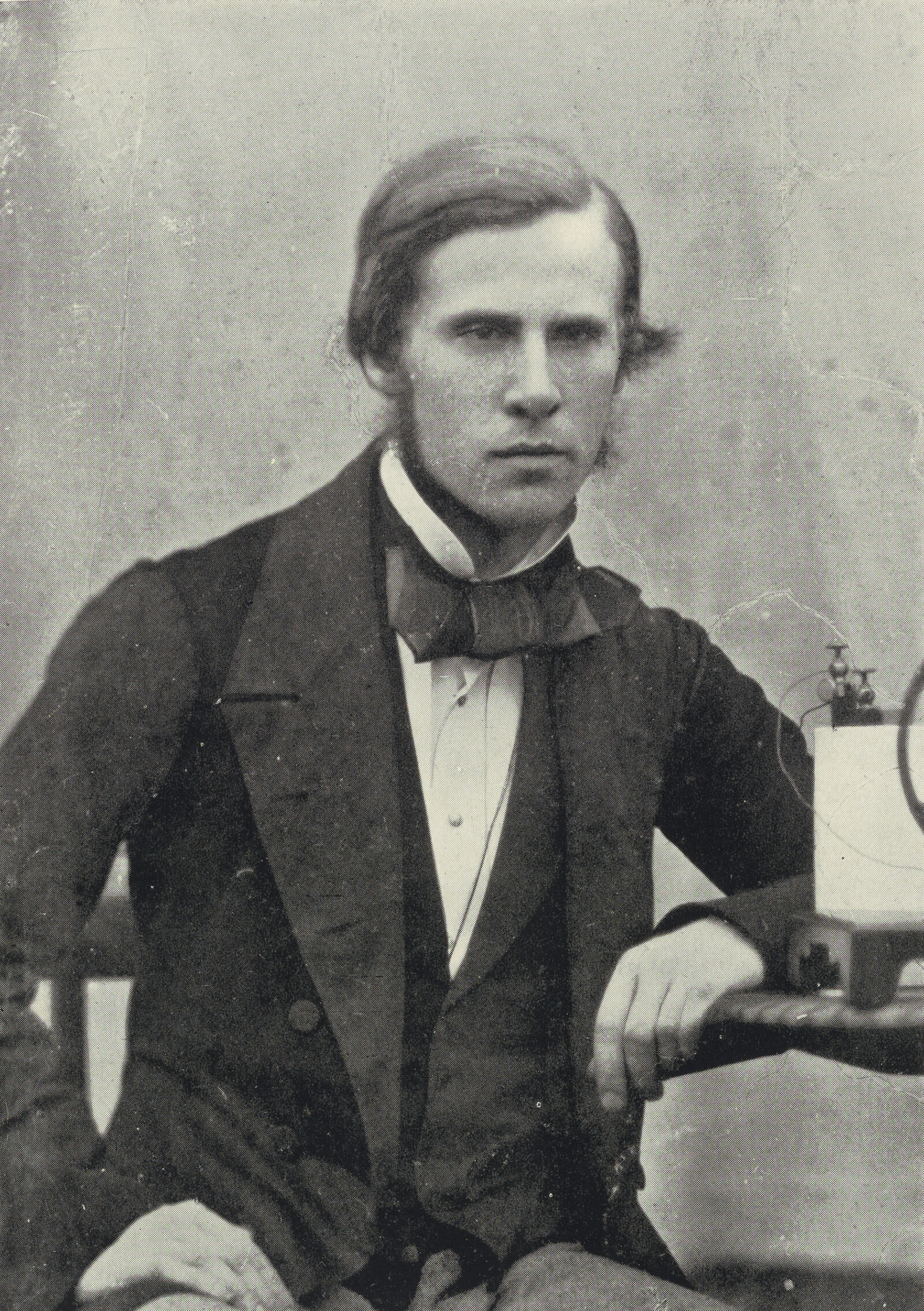
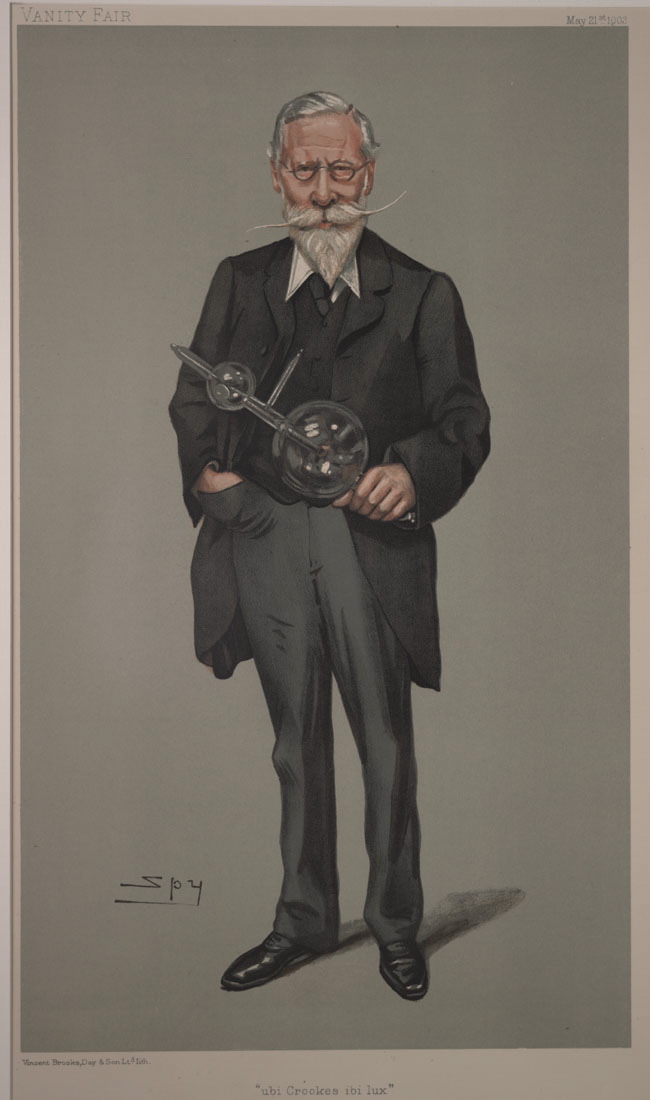
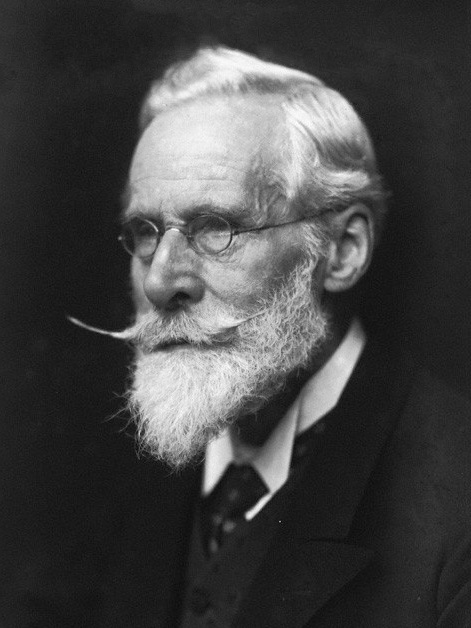
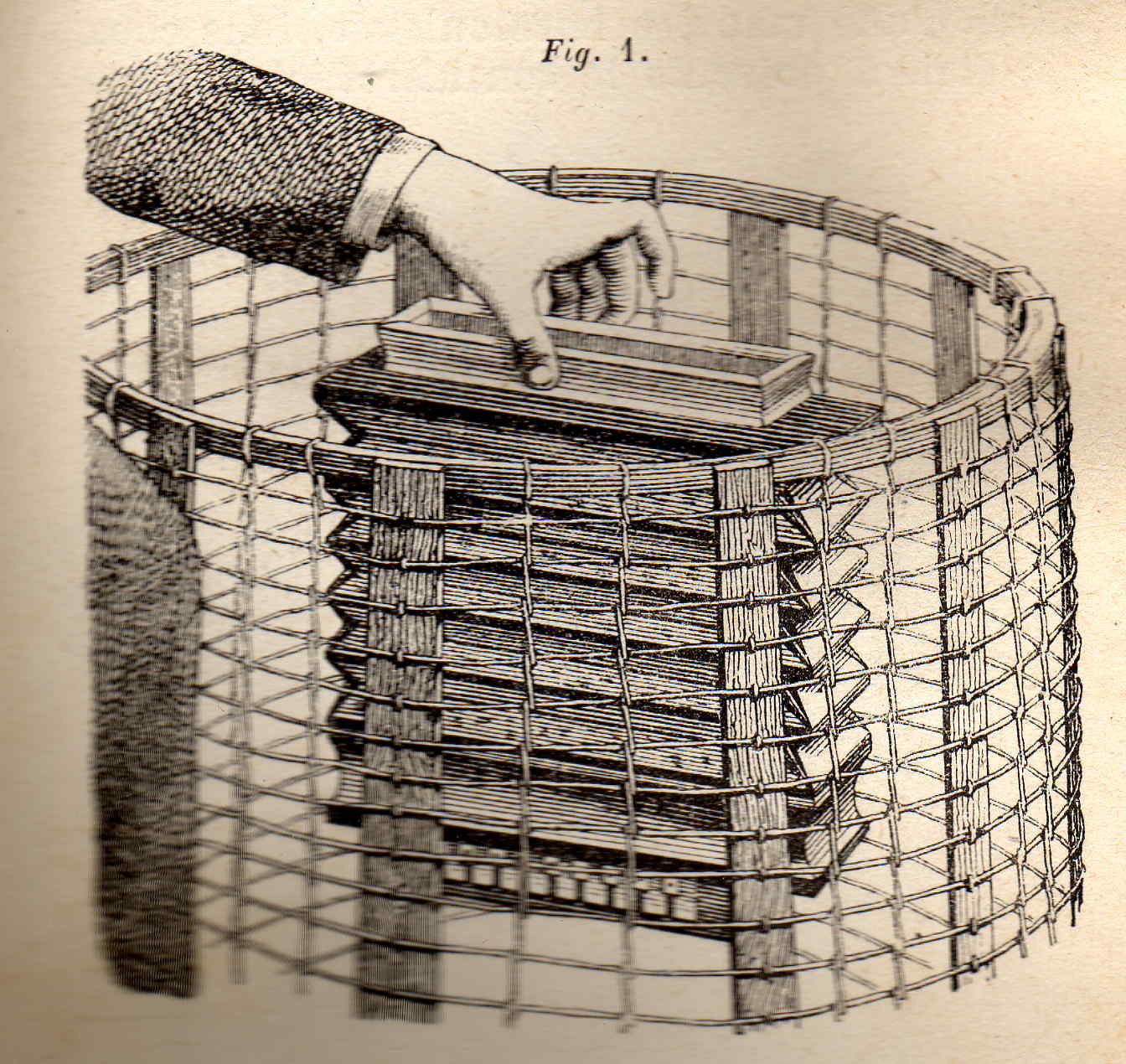
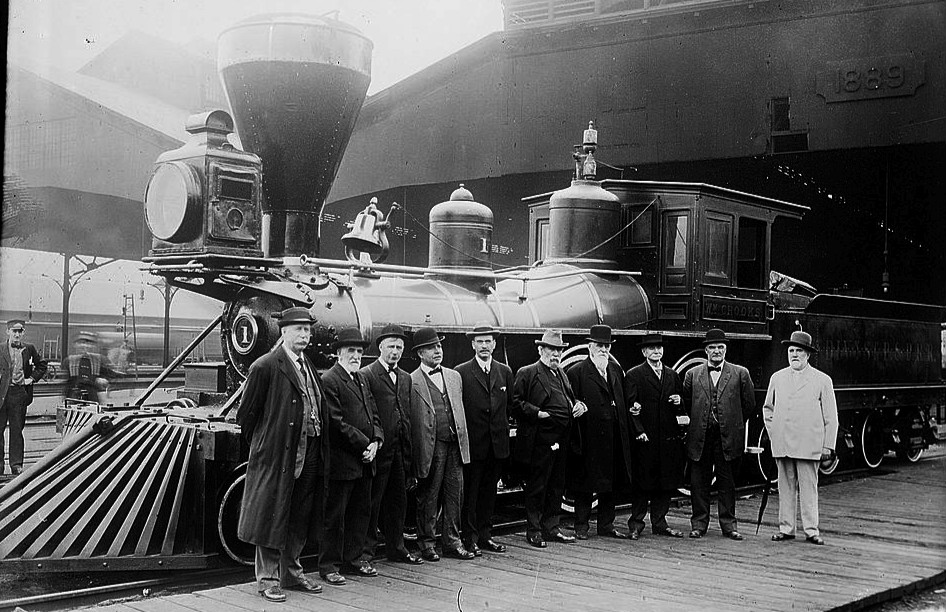
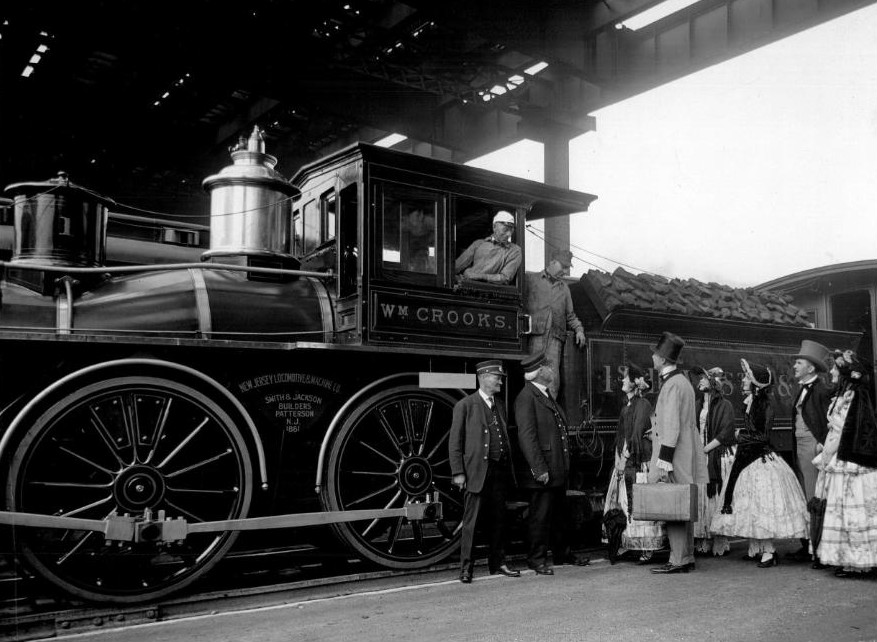
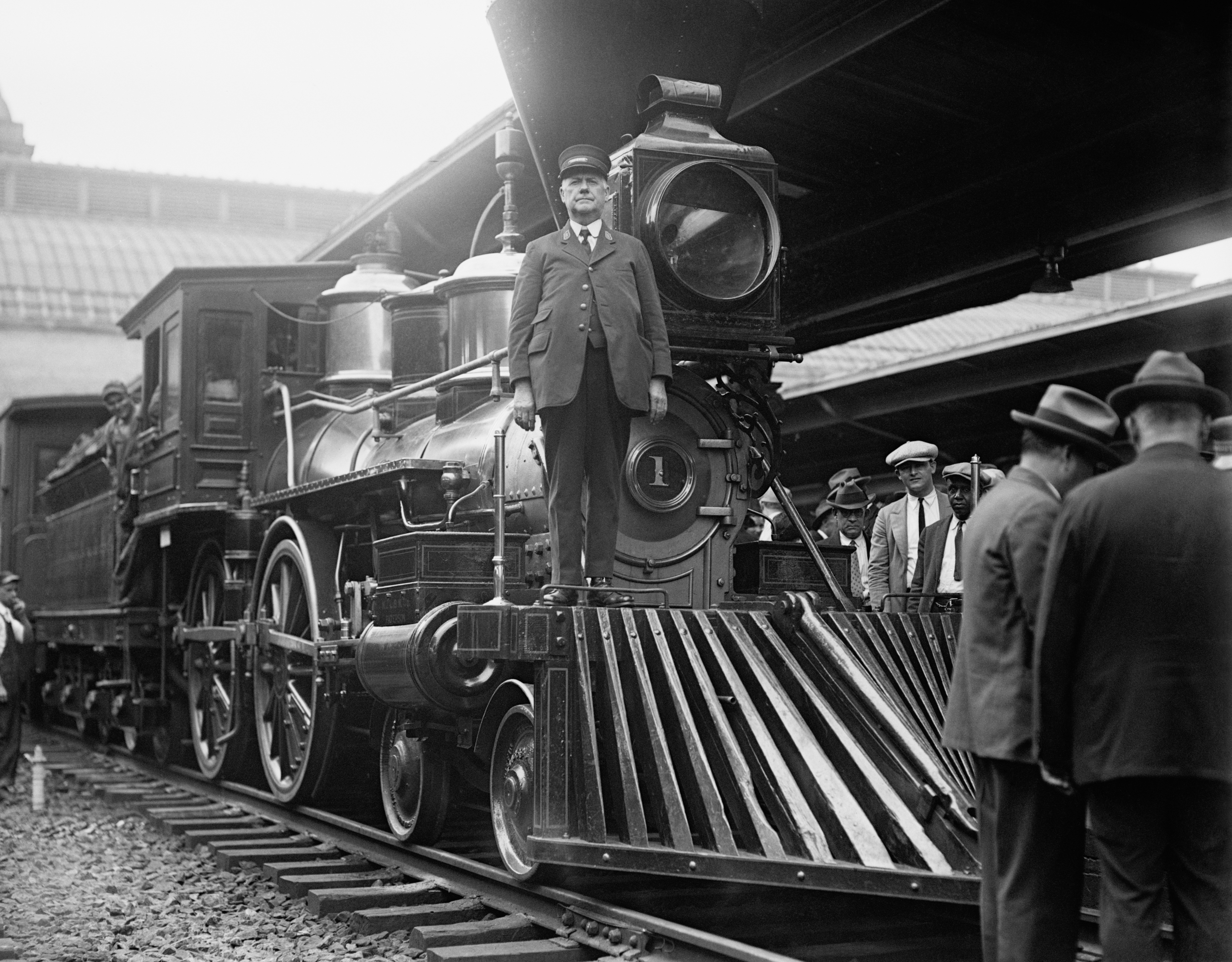
Crookes was a heavily-photographed figure of the late-Victorian scientific establishment. The Wellcome Collection holds the principal portrait used here. The Vanity Fair Leslie Ward caricature of 21 May 1903, the late-life portrait of 1906, and the studio portrait reproduced below cover his last two decades. The young-Crookes portrait from his Royal College of Chemistry years under Hofmann shows him before the thallium discovery.
Significance to the Archive
Crookes sits at the substantive intersection of late-Victorian working laboratory science and the English-language psychical-research investigation programme. He held the position from the 1870 Spiritualism investigation through to his death in 1919 without retraction and without the institutional cost a working chemist of his generation would normally have paid for it. The Royal Society Presidency from 1913 to 1915 was the highest scientific office in Britain. He held it nineteen years after the publication of his Spiritualism findings, with no internal contradiction.
The Crookes-tube to Roentgen X-ray to Borderland-period psychical-research lineage documented in the Borderland Volume 4 Number 2 Gallery profile of April 1897 is the substantive editorial connection that the archive's pre-1947 reference layer runs through. Crookes was the laboratory figure W. T. Stead chose as the centrepiece of the Borderland closing volume. His Inaugural Address as SPR President was the longest reproduction of any text Borderland carried across its eighteen-issue run. The Borderland Bibliographical lineage to BSRA Round Robin runs through Crookes's "radiant matter" framework as one of its two principal English-language sources (the other being F. W. H. Myers).