Skip to content
Exhibition Documentary deep-dive: primary sources, witness accounts, government records, cross-collection braiding
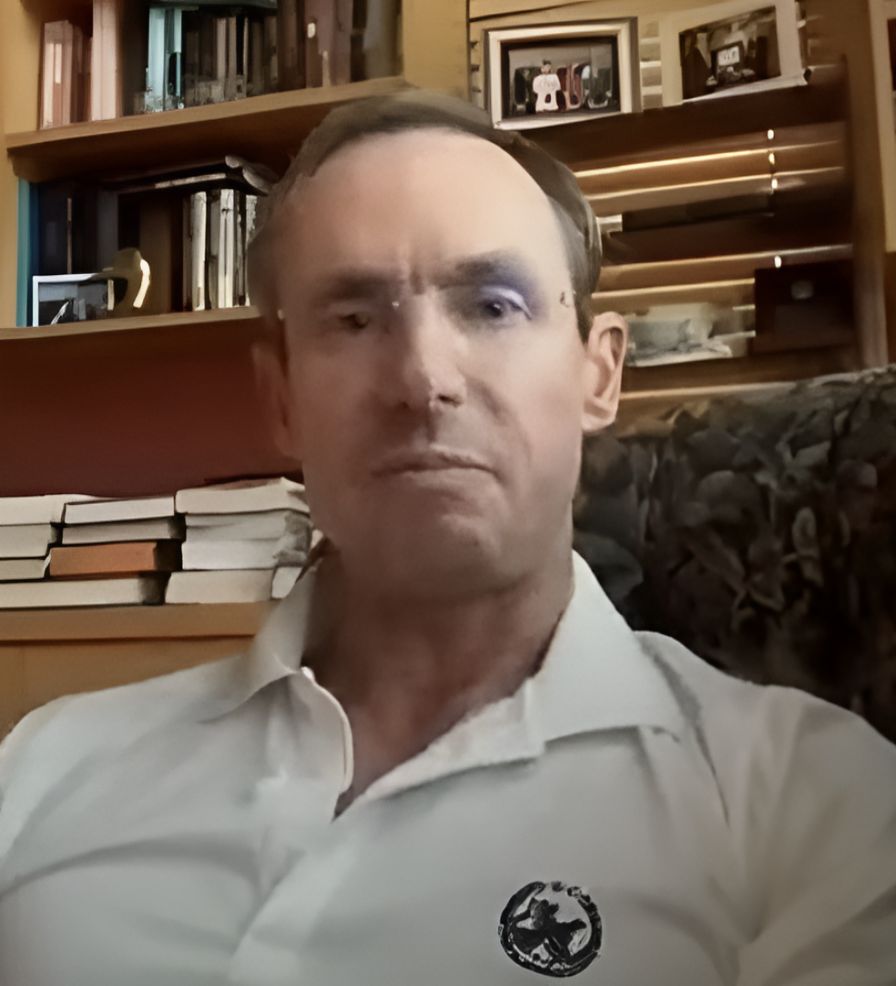
Portrait of Christopher Mellon (Wikimedia Commons)

Profile · United States

Christopher K. Mellon

Former DASD · Intelligence Senate Intelligence Committee · 1985 to 1995 Adviser · TTSA Senior Adviser · Galileo Project 🇺🇸 United States

Bio

Christopher K. Mellon is a former United States senior intelligence official whose Washington career spans the Senate intelligence-oversight system in the late Cold War period and the post-Cold-War reorganisation of US defence intelligence under two administrations. He is a member of the Mellon banking-and-industrial family of Pittsburgh; his great-grandfather was Andrew W. Mellon, US Secretary of the Treasury from 1921 to 1932. Mellon holds an MA in International Studies from Yale University.

Mellon spent a decade on the staff of the Senate Select Committee on Intelligence between 1985 and 1995, serving in successively senior staff roles and as the committee's minority staff director by the end of the period. The decade covers the post-Iran-Contra reorganisation of intelligence oversight, the end of the Cold War, the dissolution of the Soviet Union, the first Gulf War, the establishment of the Intelligence Community Whistleblower Protection Act, and the Aldrich Ames damage-assessment cycle. Mellon's portfolio during the period included sensitive compartmented information access programmes and special access programmes.

From 1998 to 2002 Mellon served as Deputy Assistant Secretary of Defense for Intelligence under President Bill Clinton, with the portfolio extended into the early George W. Bush administration through 2004. The Deputy Assistant Secretary role at OUSD(I) carries responsibility for intelligence collection, analytic priorities, and oversight of the special access programme system inside the Department of Defense. The position is one of the small number of civilian appointments with formal visibility into the full DoD special-access programme catalogue.

After leaving federal service in 2004 Mellon joined the boards of intelligence-related private and non-profit entities including In-Q-Tel, the strategic investment firm operated for the Central Intelligence Agency. He has published occasional analysis on intelligence-policy questions in the mainstream press across the period. The systematic UAP-focused writing began in March 2018.

From 2017 onwards Mellon has functioned as the most consistent senior-credentialed Washington voice in the public UAP disclosure conversation. He served on the founding advisory board of To The Stars Academy of Arts and Science alongside Luis Elizondo, Hal Puthoff, Jim Semivan and Steve Justice. He is widely understood within the disclosure-research community to have played a coordinating role in the public release of the FLIR1, GIMBAL and GOFAST Navy gun-camera videos that became the basis of the 16 December 2017 New York Times article. Mellon has neither confirmed nor denied the specific role on the public record but has stated publicly that he supported the broader effort to bring the videos into the public domain.

Mellon publishes a regular column in The Debrief. He has placed analysis pieces and op-eds in the Washington Post, Politico, The Hill, the New York Times, and The Atlantic. He is a senior adviser to the Galileo Project at Harvard under Avi Loeb and a regular speaker at the SOL Foundation symposia, Salt iConnections conferences, and the Society for Scientific Exploration annual meetings.

On UAP

Mellon's public position is that compartmented United States programmes have been working on recovered non-human craft outside the standard congressional oversight system, and that the substance of David Grusch's 26 July 2023 sworn testimony to the House Oversight Subcommittee is consistent with information he received during his time at the Pentagon and from subsequent sources who have approached him after leaving government.

His framing is procedural and institutional. He emphasises which congressional committees have jurisdiction, which security-clearance categories the relevant material is held under, which legislative mechanisms could compel further disclosure, and which Pentagon offices have effective veto power over public release. The framing distinguishes his contribution from the substantive-claim emphasis of Grusch and Elizondo: Mellon is the procedural Washington voice in the post-2017 cycle.

Mellon has been one of the most consistent public critics of the AARO Historical Record Report Volume I (March 2024) under Sean Kirkpatrick's directorship. He and Scientific Coalition for UAP Studies analyst Robert Powell flagged factual errors and sourcing problems in the AARO report on the public record. His March 2024 op-ed in The Debrief identified specific paragraphs of the AARO Volume I that he stated misrepresented the underlying documentary record.

He has called for the implementation of the Schumer-Rounds UAP Disclosure Act of 2023 in its original July 2023 form, including the eminent-domain provision for recovered non-human technology and the presidential review board modelled on the JFK Records Act. He has been publicly critical of the conference-committee revisions of December 2023 that stripped substantial portions of the original legislative text.

Career Record

  • 1985 to 1995. Staff, Senate Select Committee on Intelligence. Minority staff director by the end of the period.
  • 1998 to 2002. Deputy Assistant Secretary of Defense for Intelligence, Clinton administration.
  • 2002 to 2004. Continued DASD role into the early George W. Bush administration.
  • 2004 onwards. Board service, intelligence-related private and non-profit entities including In-Q-Tel.
  • 2017. Co-founder, advisory board of To The Stars Academy of Arts and Science.
  • March 2018 onwards. Public-press UAP advocacy. Washington Post, Politico, The Hill, New York Times, The Atlantic.
  • 2021 onwards. Regular columnist, The Debrief.
  • 2022 onwards. Senior adviser, Galileo Project at Harvard.
  • March 2024. Public critique of AARO Historical Record Report Volume I.

Selected Writings

Mellon, Christopher K. "The Military Keeps Encountering UFOs. Why Doesn't the Pentagon Care?" Washington Post, 9 March 2018.

The first major op-ed pressing for institutional UAP investigation post-AATIP-disclosure

Mellon, Christopher K. "The UFO Issue Won't Go Away. Congress Is Tackling It." Politico, 13 May 2021.

Op-ed preceding the June 2021 ODNI Preliminary Assessment

Mellon, Christopher K. "Inside the Pentagon's Secret UFO Program." The Debrief column, 2021 to present.

The ongoing analytical column on which Mellon's substantive case has been built

Mellon, Christopher K. Public testimony to congressional staff briefings, classified channel, 2022 to 2024.

Multiple closed-door congressional briefings referenced in subsequent reporting

Notable Public Statements

"I served as a Deputy Assistant Secretary of Defense for Intelligence with regular access to special access programs. I am confident, based on extensive personal interviews with direct observers, that information has been withheld from Congress on this subject."

Politico op-ed · 13 May 2021

"What David Grusch has alleged under oath aligns with what credible sources have communicated to me independently. The proper response to his testimony is investigation, not dismissal."

The Debrief column · July 2023

"The AARO Historical Record Report Volume I is, in several specific paragraphs, factually inaccurate. The corrections required are not opinions. They are documentary."

The Debrief column · March 2024

Where to Find Them

In the Archive

Editorial note. Mellon is one of the most-quoted figures in the post-2017 disclosure cycle, but the substance of his most important briefings remains classified or compartmented. This profile draws from his published columns at The Debrief, his op-eds in the Washington Post, Politico, The Hill, and the New York Times; his public conference appearances at SOL Foundation, Salt iConnections, and the Society for Scientific Exploration; and his role as identified in the public record of TTSA's founding and the 2017 New York Times article cycle. His own website redirects readers to The Debrief, where the current corpus of his analysis is published. If anything on this profile needs correcting, please get in touch.

Legend