Eusapia Paladino
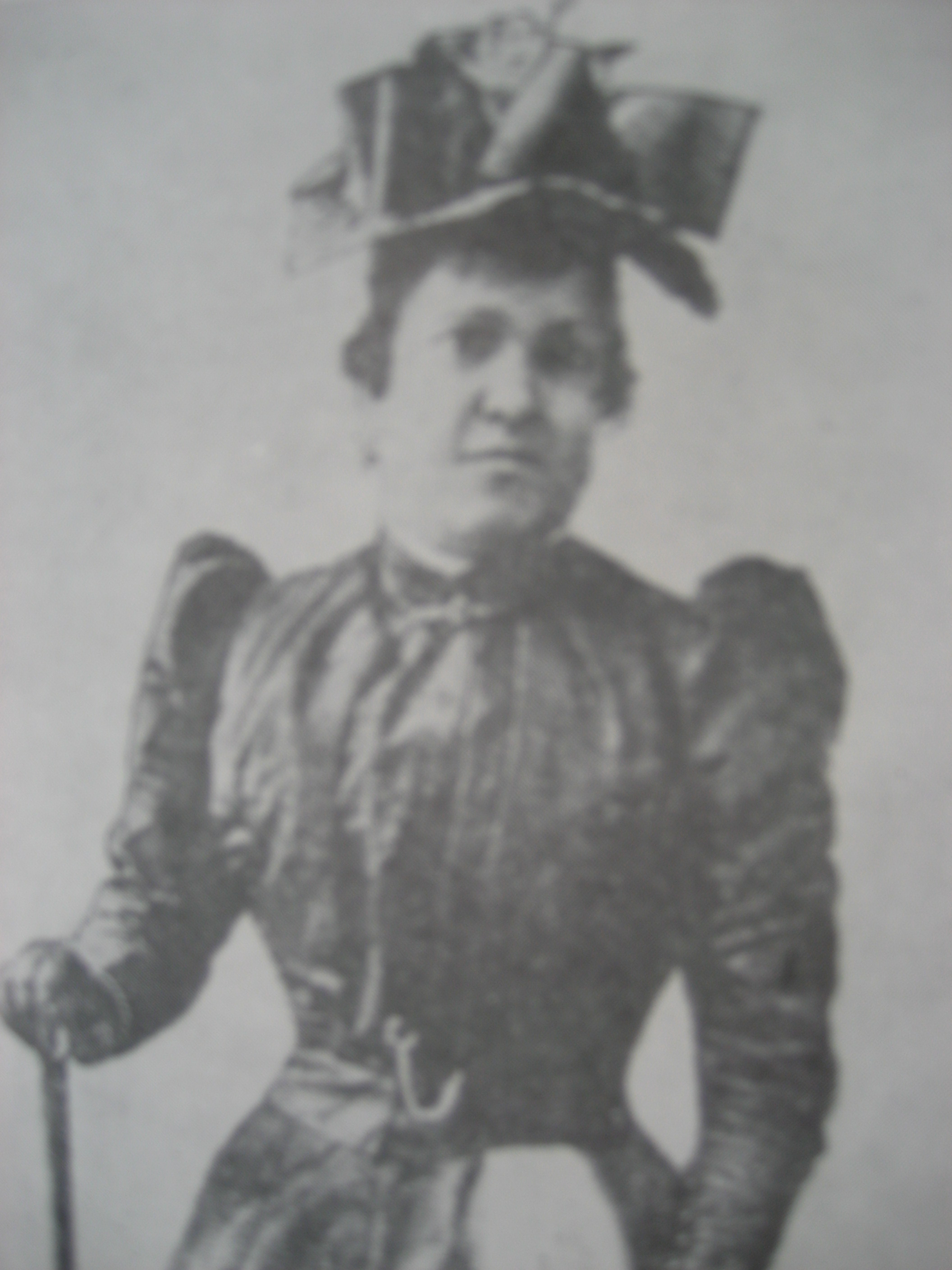
Paladino was born to a peasant family at Minervino Murge in the Puglia heel of Italy in January 1854. She was orphaned at twelve. At eighteen Giovanni Damiani, a Naples spiritualist, brought her into the séance trade. The Cesare Lombroso sittings began in 1891 and made her European: a Nobel laureate physiologist, Charles Richet, took over the investigation through the Île Roubaud trials of 1894 with Myers and Lodge. In August 1895 the SPR Cambridge Commission of Henry Sidgwick, Richard Hodgson and Myers caught her cheating. The published Cambridge Report ended her standing inside the SPR. She kept working another fifteen years in Italy and Poland and France, with Pierre and Marie Curie among her sitters in 1905, and the contemporary verdict among investigators who saw her late was that she defrauded when she could and produced genuine phenomena when she could not. She died at Naples in 1918.
A Life
Paladino was born on 21 January 1854 at Minervino Murge, a hilltop town in the Bari Province of the Kingdom of Italy. Her father was killed by bandits when she was eight; her mother died of disease at the same period. She was placed at twelve with relatives at Naples and worked as a domestic servant in the city through her teens. She was introduced to the Naples spiritualist circle by Giovanni Damiani, an English-Italian businessman of the city, in 1872 at eighteen. The first sittings ran at Damiani's Naples house through 1872 and produced the rapping-and-table-tipping phenomena that defined the early years of her practice.
She was investigated across the 1870s and 1880s by figures in the Italian spiritualist community of the period, including Damiani himself, Ercole Chiaia of the Naples academic community, and the Roman lawyer Adolfo Rossi. The breakthrough to international attention came in 1888 when Chiaia sent an open letter to Cesare Lombroso, the Turin criminologist and proponent of the positivist Italian school of criminology, inviting him to investigate the Paladino phenomena and offering to fund the investigation. Lombroso accepted in late 1891 and conducted his first sittings at Naples in March 1892. The Lombroso published account in Annales des Sciences Psychiques for July 1892 placed her at international scientific attention and produced the Milan Commission investigation of October to December 1892.
The Milan Commission of October 1892 was the first major international scientific investigation of her phenomena. The Commission membership included Cesare Lombroso of Turin, Giovanni Schiaparelli of the Brera Observatory (the discoverer of the Mars canali), Alexander Aksakof of Saint Petersburg (the founder of Russian psychical research), Carl du Prel of Munich, Charles Richet of the Collège de France, and the Italian psychiatrist Angelo Brofferio. The Commission held seventeen sittings at the Milan residence of Dr. Ercole Brera between 8 October and 6 November 1892. The published Commission report of December 1892 concluded that the Paladino phenomena included genuine elements unexplained by fraud, while acknowledging that fraud had been detected at several sittings. The Milan report produced the position the European psychical-research community held across the next decade: that Paladino was a mixed case in which genuine phenomena were interleaved with conscious fraud.
The Île Roubaud sittings of summer 1894 at Charles Richet's Mediterranean island residence brought the English SPR investigation into the case. Richet held the sittings at the Île Roubaud villa from 21 July to 4 August 1894 with F. W. H. Myers and Oliver Lodge as the English investigators alongside Richet. Lodge's report on the Île Roubaud sittings was published in the SPR Proceedings for 1894 and again in Borderland Quarterly Volume 2 Number 7 of January 1895 at page 46. Myers's report appeared in the SPR Journal. The Île Roubaud investigation produced the English SPR positive position on Paladino across late 1894 and early 1895 that the Cambridge Commission of 1895 then reversed.
The Cambridge Commission of August 1895 was the reversal of the SPR position. The Commission was chaired by Henry Sidgwick and included Richard Hodgson, Frederic Myers, Oliver Lodge, and Eleanor Sidgwick as the principal investigators. The sittings were held at the Sidgwick residence at Cambridge across nineteen sittings between 5 August and 11 September 1895. Hodgson, who had been brought into the investigation specifically to apply his Boston anti-fraud methodology developed in the Piper case, recorded substantial evidence of trick phenomena across the Cambridge sittings, including detected use of her free foot under the seance table to produce the table-tipping phenomena. The Commission's joint report appeared in the SPR Proceedings for November 1896 as "On Some Phenomena Associated with the Mediumship of Eusapia Palladino" and concluded that the Cambridge phenomena had been substantially or wholly fraudulent. Myers reversed his earlier positive Île Roubaud position; the SPR adopted a closed position on Paladino that ran for the next decade.
She continued to be investigated by Continental European figures across the late 1890s and 1900s after the SPR closed its position. The substantial continuing investigators of the 1900s included Camille Flammarion (the French astronomer who conducted sittings at his Paris observatory across 1898 to 1908), Pierre Curie and Marie Curie (who attended sittings at Charles Richet's house in spring 1905 and at the Curie laboratory in 1905 and 1906; Pierre Curie wrote favourably of the Paladino phenomena in his letter to Georges Gouy of 24 July 1905 shortly before his death in April 1906), and Hereward Carrington (who conducted the New York Columbia investigation of November 1909 to January 1910 that detected substantial fraud and reopened the SPR position).
The closing investigative period was the New York Columbia University sittings of 1909 to 1910. Hereward Carrington had organised the substantial American investigation under the patronage of the New York philanthropist Howard Thurston and the American press. The Columbia sittings detected widespread fraud through close observation and produced the American closing position on Paladino. She returned to Naples in spring 1910 and gave occasional private sittings through the next eight years to her death. She died at Naples on 16 May 1918, age sixty-four. The cause of death was not recorded in detail.
If you don't watch me I cheat. But what I do besides cannot be explained.Eusapia Paladino, conversation with Charles Richet, reported in Richet's Thirty Years of Psychical Research (1923)
The 1895 Cambridge Debacle
The Cambridge Commission of August 1895 was the decisive English-language scientific investigation of the Paladino case. The SPR had taken the substantial positive position on Paladino across late 1894 and early 1895 on the strength of the Île Roubaud sittings Lodge had reported in Borderland Volume 2 Number 7 of January 1895. Richard Hodgson was brought into the Cambridge investigation specifically to apply the anti-fraud methodology he had developed in the eight-year Piper investigation at Boston. The Cambridge sittings were conducted under conditions stricter than the Île Roubaud sittings had been: Hodgson and Sidgwick controlled the table, the sitter arrangement, and the light conditions across the nineteen sittings between 5 August and 11 September 1895.
The Hodgson Cambridge sittings recorded substantial evidence of conscious fraud, including detected use of her free foot under the seance table to produce table-tipping and the substituting of her hands and feet under the cover of darkness. The joint Cambridge Commission report appeared in SPR Proceedings for November 1896 and concluded that the Cambridge phenomena had been substantially or wholly fraudulent. Myers, who had reported positively on the Île Roubaud sittings and had been the SPR figure most identified with the early Paladino positive position, reversed his position publicly in the Commission report. The SPR adopted a closed position on Paladino that ran across the next decade until the Carrington Columbia investigation of 1909 to 1910.
W. T. Stead referenced the Cambridge debacle in his Volume 4 Number 4 of October 1897 closing Borderland editorial as "the temporary set-back of the Eusapia Paladino incident," framing the Cambridge SPR closure as a temporary investigative reversal rather than as a permanent rejection of the case. The Italian and French continental psychical-research community continued to investigate Paladino after the Cambridge debacle on the position that the Cambridge sittings had detected the partial fraud Italian and Continental investigators had already documented at Milan in 1892, but that the phenomena that had not been so explained warranted continuing investigation. The Continental position held across the next decade until the New York Columbia investigation of 1909 to 1910 produced the closing American negative finding.
The Paladino material features across Borderland Quarterly: in Volume 2 Number 7 of January 1895 in Lodge's Île Roubaud Report at page 46, in multiple Continental coverage articles across all four volumes, and in the Volume 4 Number 4 of October 1897 closing editorial reference to "the temporary set-back of the Eusapia Paladino incident." The case features in the Lodge biography, the Myers biography, and the Hodgson biography.
Significance to the Archive
Paladino matters to this archive as the most contested mediumistic case of the late-Victorian European period, as the case across which the SPR Cambridge methodology was developed in opposition to her phenomena, and as the case W. T. Stead identified in his Borderland closing editorial of October 1897 as the principal SPR reversal of the period. The mixed Cambridge finding (fraud detected but not all phenomena explained) was the template the SPR carried forward into the twentieth century for cases where genuine and fraudulent material were interleaved.
The Continental investigation of Paladino across the 1890s and 1900s brought figures of substantial scientific standing (Lombroso, Schiaparelli, Aksakof, Richet, Flammarion, Pierre and Marie Curie) into the documented psychical-research investigation record. The Pierre Curie 24 July 1905 letter to Georges Gouy on the Paladino phenomena, written nine months before his death, is the documented late-life Curie position on the case. The Italian and French Continental psychical-research community position on Paladino held across the period was the documented Continental counterweight to the SPR Cambridge closure.