Leonora Piper
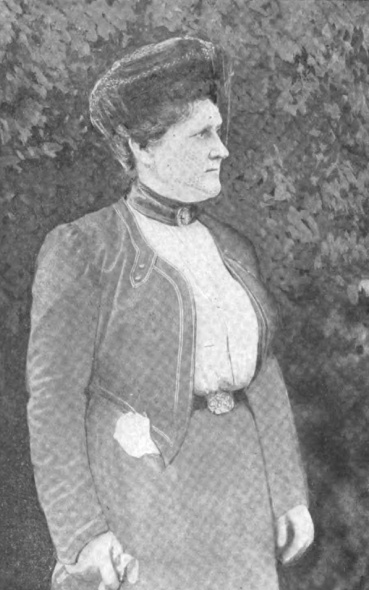
William James was the first investigator to take her seriously. His mother-in-law Eliza Gibbens had sat with her at the family house in Cambridge in May 1885 and come away certain. James started his own sittings the next month. By 1887 Richard Hodgson, who had been sent over from England specifically to expose American mediums in fraud, had taken over the file. He spent the next eighteen years running roughly a thousand controlled sittings with her until his own death in 1905. The transatlantic confirmation trip in the winter of 1889-90 put her in front of Myers, Henry Sidgwick and Oliver Lodge at Cambridge, Liverpool and London with all her American sitters left behind. The 1898 Hodgson Report (Proceedings of the SPR, Volume 13) is the long published record of what he could not explain by fraud. The posthumous 1909 Hodgson Report in Volume 23 is what was published after his own ostensible communications through her began in 1906. She stopped sitting in 1911 and died at Brookline in July 1950, age ninety-three.
A Life
Piper was born Leonora Evelina Simonds on 27 June 1857 at Nashua, New Hampshire. She was raised in modest circumstances at Nashua and was educated at the local public schools through to her mid-teens. She moved to Boston in her late teens, married William R. Piper, a tailor's salesman at the Jordan Marsh department store, in 1881 at twenty-four, and was the respectable Boston working-class wife of the early 1880s when her first mediumistic phenomena began.
The opening phenomena ran in 1884 to 1885 from her own self-induced light trance sittings, initially as informal home circles among her own family. The entry-point to the Society for Psychical Research investigation came in May 1885 when her mother-in-law Eliza Gibbens, the mother-in-law of the William James household at Cambridge, attended a sitting at the Piper house and reported the result to James's wife Alice Howe Gibbens James. William James attended his own first sitting at the Piper house at 17 Pinckney Street, Boston on 21 May 1885 and immediately identified the case as a serious investigative subject. James conducted approximately twenty-five sittings across 1885 to 1887 and produced the 1886 SPR Proceedings first report on the Piper material that brought the case to international attention.
Richard Hodgson arrived in Boston as Secretary of the American Society for Psychical Research in 1887 and took over the Piper investigation as principal investigator. The Hodgson methodology of anonymous sitter introduction, verbatim shorthand records, and prior-information tracking that he developed across the Piper investigation became the SPR mediumistic-investigation method of the late-Victorian and Edwardian period. He conducted approximately one thousand sittings with Piper across the eighteen-year working relationship that ran from 1887 to his death in December 1905.
The decisive transatlantic confirmation came in the English sittings of November 1889 to February 1890. Hodgson arranged for Piper to be brought to England under SPR supervision, where she was kept under surveillance at Cambridge, Liverpool, and London. The sittings were attended by F. W. H. Myers and Henry Sidgwick at Cambridge, by Oliver Lodge at the Liverpool physics laboratories, and by other SPR investigators. The English sittings produced the transatlantic confirmation of the case that the 1898 Hodgson Report relied on: Piper produced veridical communications about sitters whose identities she could not have known in advance and who had been introduced to her under anonymous protocols.
The Piper sittings continued at Boston through the 1890s and 1900s through to her 1911 retirement. After Hodgson's sudden death playing handball on 20 December 1905, the principal investigator role passed to James Hervey Hyslop of the new American Institute for Scientific Research and to Eleanor Sidgwick at the London SPR. The posthumous 1909 Hodgson Report on the Piper case in SPR Proceedings Volume 23 was completed from Hodgson's working notes by Hyslop and Eleanor Sidgwick. Piper retired from public mediumship in 1911 at fifty-four, citing the cumulative exhaustion of approximately twenty-five years of investigative sittings. She lived in retirement at Brookline, Massachusetts for the next thirty-nine years and died there on 3 July 1950 in her ninety-fourth year. She outlived Hodgson by forty-five years, William James by forty years, Myers by forty-nine years, and Lodge by ten years.
If you wish to see me, I cannot give the time when. The lady you sat by said you wished to see me.Communication purporting to come from George Pellew through Mrs. Piper, Boston sitting of 22 March 1892, recorded in Hodgson Report SPR Proceedings Volume 13
The Phinuit and Pellew Controls
The principal spirit-control persona Piper produced through her trance state from 1885 to 1892 was "Dr. Phinuit," a French physician who claimed to have lived in the late eighteenth century and to have practised at Marseilles and at Metz. The Phinuit material was the mediumistic-communication corpus the 1886 James report and the early Hodgson investigation drew on. Hodgson and the SPR investigators expended considerable effort across the 1888 to 1891 period attempting to verify Phinuit's historical existence and found no contemporary records of any French physician of that name; the SPR-internal conclusion was that Phinuit was a secondary personality of the Piper trance state rather than a discarnate French physician, but that the veridical communications Phinuit produced about the sitters in the room continued to require explanation.
The shift to the George Pellew control came in February 1892 following the death of George Pellew on 18 February 1892 at New York. Pellew, a thirty-two-year-old Boston journalist and member of the ASPR sitter pool, had attended one sitting with Piper at Boston in May 1888 under the pseudonym "John Hart" and had died from a fall down the steps of his New York lodgings four years later. Within six weeks of Pellew's death, a control persona claiming to be Pellew began appearing through Piper's trance state, supplanting Phinuit as the principal communicator. The Pellew control produced the evidential material the 1898 Hodgson Report relied on: across approximately 150 sittings between February 1892 and March 1898, the Pellew control identified 30 of Pellew's friends out of 150 sitters introduced anonymously, named no false positives, and produced personal communications that Hodgson considered evidentially more substantial than the prior Phinuit material.
The Piper Gallery profile in Borderland Quarterly Volume 1 Number 3 of January 1894 was by Miss X. (Ada Goodrich-Freer) under the title "Mrs. Piper and Dr. Phinuit." The closing Borderland Volume 4 Number 4 of October 1897 carried the "A Visit to Mrs. Piper" account by a Travelling Borderlander as part of the closing-number editorial bookends. The Piper material features in the Richard Hodgson, F. W. H. Myers, and Oliver Lodge biographies.
Significance to the Archive
Piper matters to this archive as the most-investigated single mediumistic case in the SPR archive across the late-Victorian and Edwardian period, and as the working subject through whom the Hodgson investigative methodology of anonymous-sitter introduction, verbatim shorthand records, and prior-information tracking was developed. The methodology became the English-language mediumistic-investigation method of the period and is the immediate methodological forerunner of the post-1945 American civilian-research methodology applied to UAP witness investigation from the APRO and NICAP period onwards.
The Piper case features in three of the principal pre-1947 biographies the archive now holds: in the Hodgson biography as the lifework, in the Myers biography as the transatlantic confirmation case, and in the Lodge biography as the principal investigative subject of Lodge's late-1880s and 1890s SPR work. The Borderland Quarterly Volume 1 Number 3 January 1894 Gallery profile and the Volume 4 Number 4 October 1897 closing-number return are the two editorial bookends of the Borderland-period Piper material.