William Stainton Moses
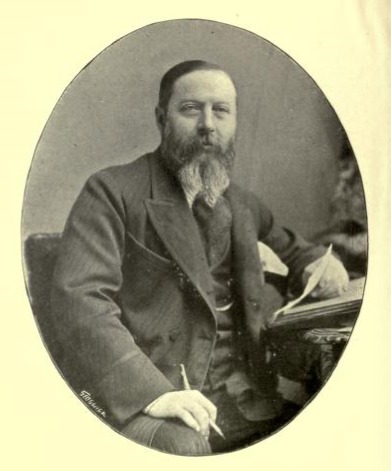
Stainton Moses was an Anglican clergyman who taught at University College School in London for eighteen years from 1871. He had taken the Oxford BA in 1863 and held curacies in the Isle of Man and in Dorset before health drove him out of parish work. The automatic writing started in 1872. Under the pen name M.A. Oxon. he filled twenty-four notebooks with what he took to be dictated communications from a group of communicators headed by an entity who called himself Imperator. The Spirit Teachings (1883) and Spirit Identity (1879) are the published part of the corpus. He founded the spiritualist weekly LIGHT in January 1881 and ran it to his death in September 1892. He was a co-founder of the SPR in February 1882 with Sidgwick and the Cambridge circle, and he resigned from the SPR Council in 1886 over the Hodgson Report on Blavatsky. The Imperator scripts are the immediate textual precedent for the channelled-communication tradition that runs through the Probert circle and the BSRA work from San Diego in 1948.
A Life
Moses was born on 5 November 1839 at Donington, near Boston, Lincolnshire, the only son of William Moses, the Lincolnshire schoolmaster who served as headmaster of the Donington Grammar School, and Eliza Stainton. The family moved to Bedford in 1852 when his father took the headmastership of the Bedford Grammar School; he was educated at the school and proceeded to Exeter College Oxford in October 1858 at eighteen. He took the Oxford BA in 1863 in classical moderations and theology, the Oxford MA in 1865, and was ordained Deacon by the Bishop of Oxford in 1863 and Priest in 1864.
The curacy years of 1863 to 1870 placed him at Kirk Maughold on the Isle of Man under the patronage of the Maughold rector and then at Maugherson in Dorset and at St George's, Douglas, Isle of Man. The health crisis of 1869 to 1870 (acute fatigue and the nervous-breakdown sequence that would recur across his life) produced his withdrawal from active parish ministry and his resolution to take a teaching post instead. He took a temporary post at University College School London in 1870 and was offered the permanent appointment as a master of the school in 1871, which he held for the next eighteen years through to ill-health-enforced retirement in 1889.
The mediumistic investigation period opened in April 1872 with the first table-tipping sittings at the Kilburn lodgings he had taken. He had been sceptical of the spiritualist movement to that point but the 1872 sittings produced phenomena he could not explain on any normal-information hypothesis available to him. The automatic-writing period began in March 1873 with the first Imperator script delivered through his own right hand under what he described as a controlled state of altered consciousness. The Imperator-script corpus ran from March 1873 to October 1883 across approximately twenty-four substantial manuscript notebooks and produced the English-language medium-script corpus of the period.
The published treatment of the Imperator material began with the Human Nature articles of 1874 onwards (Human Nature was the English spiritualist monthly edited by James Burns) and produced the book-length works Psychography of 1878 (Boston: Colby and Rich), Spirit Identity of 1879 (London: W. H. Harrison), Higher Aspects of Spiritualism of 1880 (London: E. W. Allen), and the posthumous Spirit Teachings of 1883 (London: Psychological Press; subsequently published as the standard 1898 Spiritualist edition) and More Spirit Teachings of 1908 (London). The book-length output across the 1878 to 1898 period made him the English-language medium-author of the late-Victorian period.
The editorial work opened in January 1881 with the founding of LIGHT, the English spiritualist weekly newspaper, with Moses as the founding editor and Edmund Dawson Rogers as the proprietor. He held the editorship through to his death in September 1892. LIGHT ran the English-language spiritualist editorial coverage of the 1881 to 1892 period and is the predecessor publication of the modern LIGHT: Journal of Spiritual Communication and Spiritual Phenomena the College of Psychic Studies continues to publish to the present day.
The Society for Psychical Research co-founding took place at the 6 February 1882 meeting at the rooms of Edmund Gurney at 14 Dean's Yard, Westminster. Moses was one of the founding members alongside Henry Sidgwick, F. W. H. Myers, Edmund Gurney, Frank Podmore, William F. Barrett of the Royal College of Science Dublin, and Edward Dawson Rogers from the LIGHT proprietorship. Moses served on the SPR Council from 1882 to 1886. He resigned from the Council in 1886 over the Hodgson Report on Blavatsky of December 1885, which Moses considered to have applied double standards to the Theosophical phenomena that the SPR was not applying to its own preferred subjects.
The late-Moses period from 1886 to 1892 ran the LIGHT editorship and the continuing UCS schoolmastership through to his ill-health retirement of 1889. He retired to Bedford in 1889 to live with his sister and brother-in-law and died there on 5 September 1892 of nephritis and the complications of his lifelong nervous-and-renal illness. He was fifty-two. The obituary tributes across the spiritualist and the SPR press of September and October 1892 placed him as the English-language medium of the late-Victorian period. The Borderland Quarterly Volume 1 Number 5 of July 1894 carried the Gallery profile of Stainton Moses by Miss X. (Ada Goodrich-Freer) as the posthumous Borderland-period treatment.
If we are to advance at all, we must investigate; if we are to investigate at all, we must be prepared to be patient, to be tolerant, to be open-minded.William Stainton Moses, LIGHT editorial, January 1881 opening number
The Imperator Scripts
The Imperator-script corpus produced through Moses across the 1873 to 1883 ten-year period ran to approximately twenty-four substantial manuscript notebooks and the published volumes Spirit Teachings, More Spirit Teachings, Psychography, and Spirit Identity. The control persona "Imperator" claimed to be the overseeing spirit of a band of forty-nine other spirit-control personae the script identified by individual names (including "Rector," "Doctor," "Prudens," and the Plotinus, Plato, Aristotle and St John the Baptist communicators that took occasional turns in the script).
The doctrinal content of the Imperator scripts placed them at the English-language spiritualist orthodoxy of the 1870s and 1880s: a belief in the survival of bodily death, in the moral and ethical continuity of the post-mortem personality, in the possibility of communication between the embodied and disembodied across the prepared mediumistic conditions, and in the Western religious tradition framed as the continuing record of the same investigative subject the SPR was approaching from the psychical-research methodology. The Imperator-Rector framework ran across the 1873 to 1883 corpus as the doctrinal continuity.
The 1894 Borderland Quarterly Volume 1 Number 4 of April 1894 carried F. W. H. Myers's 9 March 1894 SPR address on Stainton Moses, the Myers defence of the Imperator-script corpus against the SPR-internal scepticism of Frank Podmore. The Myers-Barkworth-Lodge controversy that Stead covered in the Number 4 Chronique was the SPR-internal dispute over the evidential weight of the Imperator material. The Stainton Moses material across the Borderland four-volume run is the English-language Borderland-period treatment of the medium.
The Imperator-script corpus is the documented immediate historical precedent that Mark Probert and the postwar Borderland Sciences Research Associates circle inherited from 1948 onwards. The Probert-circle Yada di Shi'ite material the BSRA Round Robin published from 1948 onwards was framed by Meade Layne as the American continuation of the Stainton Moses Imperator-script tradition. The Borderland Quarterly Volume 1 Number 5 of July 1894 Gallery profile by Stead's contributor Miss X. is the English-language Borderland-period editorial treatment of the medium.
Significance to the Archive
Stainton Moses matters to this archive as the documented immediate historical precedent of the postwar American Borderland Sciences Research Associates circle and the Mark Probert mediumistic apparatus the BSRA inherited from 1948 onwards. The Imperator-script corpus of 1873 to 1883 and the published Spirit Teachings tradition that ran forward through the late-Victorian and Edwardian period into the twentieth-century English-language spiritualist literature is one of the four principal English-language pre-1947 mediumistic traditions the archive's documentary record runs through (alongside the D. D. Home tradition, the Leonora Piper tradition, and the Eusapia Paladino tradition).
The English-language spiritualist weekly LIGHT that Stainton Moses founded in January 1881 and edited through to his death in September 1892 is the predecessor publication of the modern LIGHT: Journal of Spiritual Communication and Spiritual Phenomena the College of Psychic Studies continues to publish to the present day. The English-language psychical-research and spiritualist editorial tradition the archive's pre-1947 reference layer documents runs through the Stainton Moses editorial period.